Moroccan food: a traveler’s guide to flavors, dishes & dining culture
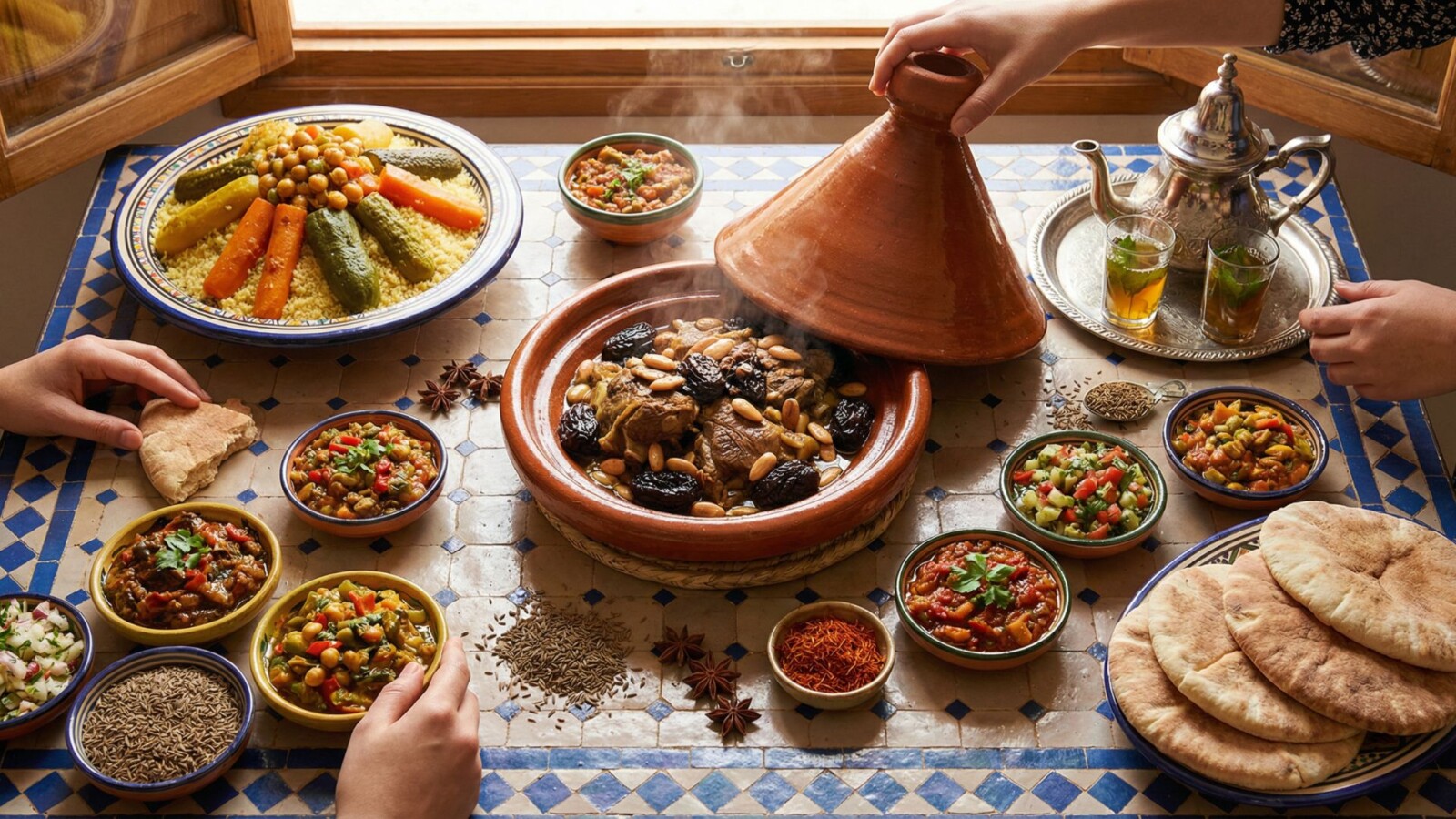
I moved to Morocco five years ago expecting good food. What I found exceeded every expectation. The first tagine I ate in a tiny Fes medina cafe, steam rising from the conical lid as the waiter lifted it to reveal lamb with prunes and almonds, changed how I understood cooking entirely. That single dish captured centuries of Berber, Arab, and Mediterranean influences in one earthenware pot.
Moroccan food operates on a different logic than Western cuisine. Sweet and savory merge without apology. Spices layer rather than compete. Meals unfold as social events rather than fuel stops. Understanding this cuisine opens doors that remain closed to travelers who stick to hotel restaurants and familiar dishes. The country reveals itself through its food in ways that monuments and museums cannot match.
The diversity packed into Morocco’s culinary landscape reflects its geography and history. Coastal cities serve seafood prepared with chermoula marinade. Mountain villages offer simple Berber dishes built around whatever grows in terraced gardens. The imperial cities of Fes and Marrakech developed elaborate court cuisines that required days of preparation. Desert communities created foods that travel well and keep without refrigeration. Each region contributes something distinct to the national table.
For travelers, Moroccan food presents both opportunity and challenge. The opportunity lies in experiencing flavors unavailable anywhere else, prepared by cooks whose families have refined recipes over generations. The challenge involves navigating unfamiliar customs, understanding what you’re eating, and finding quality among the tourist traps. This guide addresses both, providing the foundation needed to eat well throughout the country.
What follows covers the essential knowledge every food-focused traveler needs. The signature dishes that define the cuisine. The street food scene that feeds daily life. The spices that make everything taste distinctly Moroccan. The mint tea ritual that punctuates every interaction. The regional variations that reward travelers who venture beyond the obvious destinations. The dining customs that turn eating into cultural exchange. Consider this your roadmap to one of the world’s great food cultures.
Signature Moroccan dishes every traveler must try
The foundation of Moroccan food rests on a handful of dishes that appear everywhere from roadside stalls to palace restaurants. Mastering this core vocabulary transforms random ordering into informed choosing, letting you seek out the best versions rather than accepting whatever lands on your table.
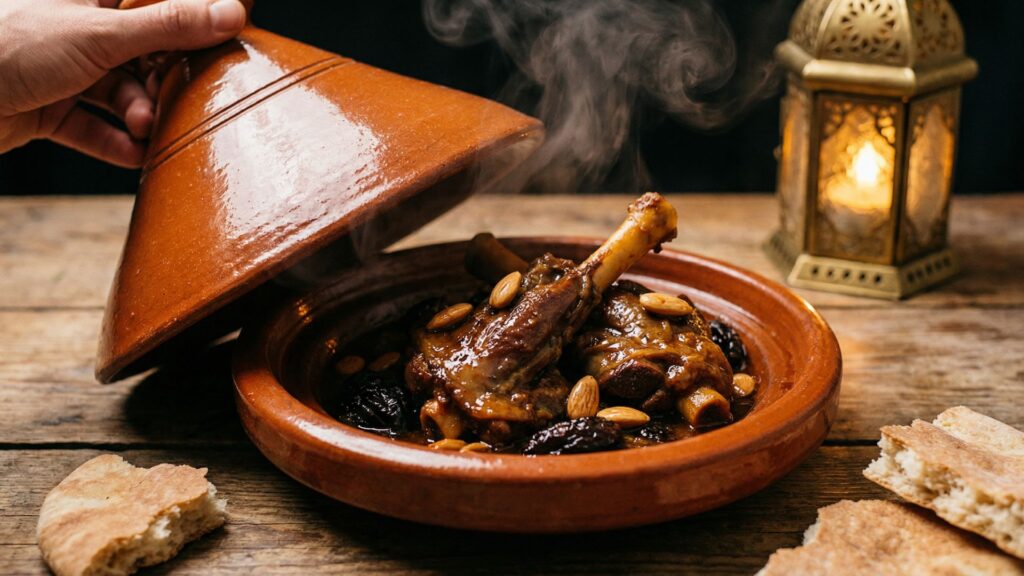
Tagine dominates the culinary landscape so completely that understanding it is essentially mandatory. The name refers both to the conical clay cooking vessel and the stew prepared inside it. The distinctive cone-shaped lid traps steam and returns moisture to the dish, creating tender meat and concentrated flavors with minimal liquid. This cooking method developed as a practical solution in areas with limited water and fuel, proving that necessity really is the mother of invention.
The variety of tagines available demonstrates the format’s flexibility. Lamb with prunes and almonds balances savory meat with sweet dried fruit and crunchy nuts. Chicken with preserved lemons and olives delivers bright, briny flavors that cut through the richness. Kefta tagine features spiced meatballs in tomato sauce, often with an egg cracked on top during the final minutes of cooking. Fish tagines appear along the coast, while vegetable versions showcase seasonal produce with the same aromatic treatment.
What makes tagine distinctly Moroccan is the flavor profile built from specific spice combinations. Most versions include a base of onions, garlic, and olive oil. From there, cumin, ginger, turmeric, cinnamon, and saffron build complexity in ways that seem impossible until you taste them working together. The slow cooking over charcoal melds everything into something greater than the individual parts. Mopped up with bread, tagines can be unbelievably delicious.
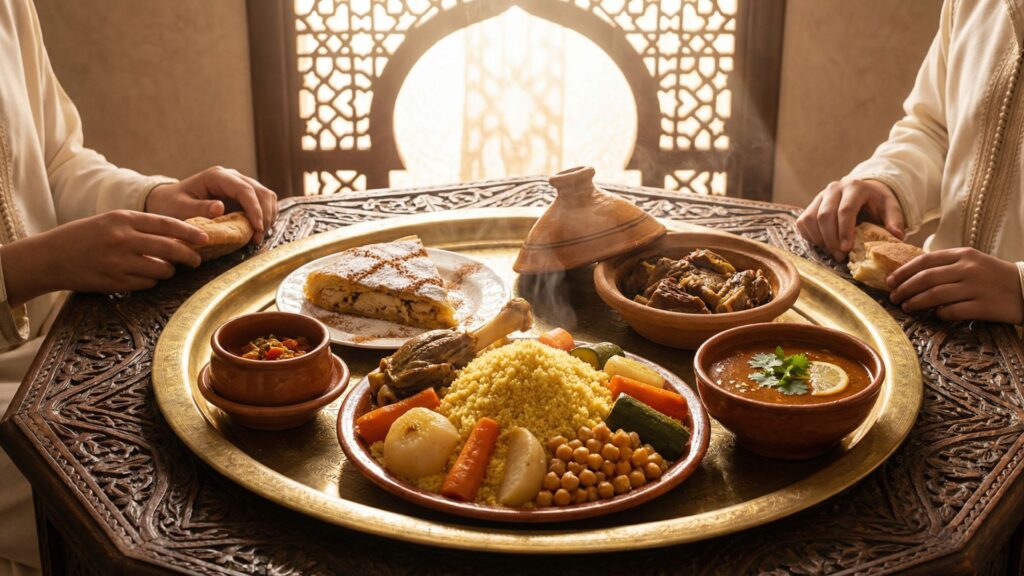
Couscous might be the most famous Moroccan dish internationally, though its role in daily life is more ceremonial than casual. This Berber creation consists of tiny steamed semolina granules piled high with vegetables and meat. Traditionally prepared at home for Friday lunch after midday prayers, couscous marks the weekly gathering of families in a ritual as social as it is culinary.
Restaurant couscous tends to disappoint precisely because the dish belongs to home cooking. There is no real tradition of going out to eat couscous in Morocco. The preparation takes hours, requiring multiple steamings to achieve properly fluffy grains. Every Moroccan’s mother cooks the finest couscous in the kingdom, or so they will tell you. The classic version features seven vegetables including carrots, turnips, zucchini, and chickpeas, crowned with lamb or chicken and moistened with the cooking broth.
Pastilla represents Moroccan cuisine at its most elaborate and surprising. This pie layers paper-thin warqa pastry with shredded pigeon or chicken, scrambled eggs, almonds, and a generous dusting of cinnamon and powdered sugar. The combination sounds strange on paper but works beautifully in practice, the sweet and savory elements creating something greater than either alone.
Fes claims pastilla as its particular specialty, and the city produces what many consider the finest versions. The dish requires significant skill and time to prepare properly, which traditionally reserved it for special occasions like weddings and religious celebrations. Modern restaurants serve smaller individual portions, making this elaborate creation accessible any day of the week.
Harira provides Morocco’s ultimate comfort food, a hearty soup that appears daily but takes on special significance during Ramadan. When the sun sets and the fast breaks, harira is often the first thing touching millions of lips across the country. The soup combines tomatoes, lentils, chickpeas, and often small pasta or rice in a broth thickened with flour and sometimes egg. Fresh herbs like cilantro and parsley brighten the flavor while spices including ginger and turmeric add warmth without overwhelming heat.
Mechoui appears at celebrations and the most expensive tourist restaurants, offering whole lamb roasted on a spit or in clay pits until the meat falls from the bone. The preparation requires space, time, and expertise that most home cooks lack, making it a communal event often handled by specialists. The meat arrives torn into portions, meant for eating with hands and bread rather than utensils.
Tanjia is Marrakech’s bachelor dish, a preparation unique to the red city. The technique involves filling a clay urn with lamb, preserved lemons, spices, and olive oil, then sealing it and cooking for hours in the embers of a public hammam furnace. The result is impossibly tender meat that falls apart at the touch. Finding authentic tanjia requires asking around, as it is not widely advertised to tourists.
For detailed exploration of these foundational preparations including where to find the best versions, the guide to traditional Moroccan dishes provides comprehensive coverage.
Moroccan street food: a walking tour of flavors
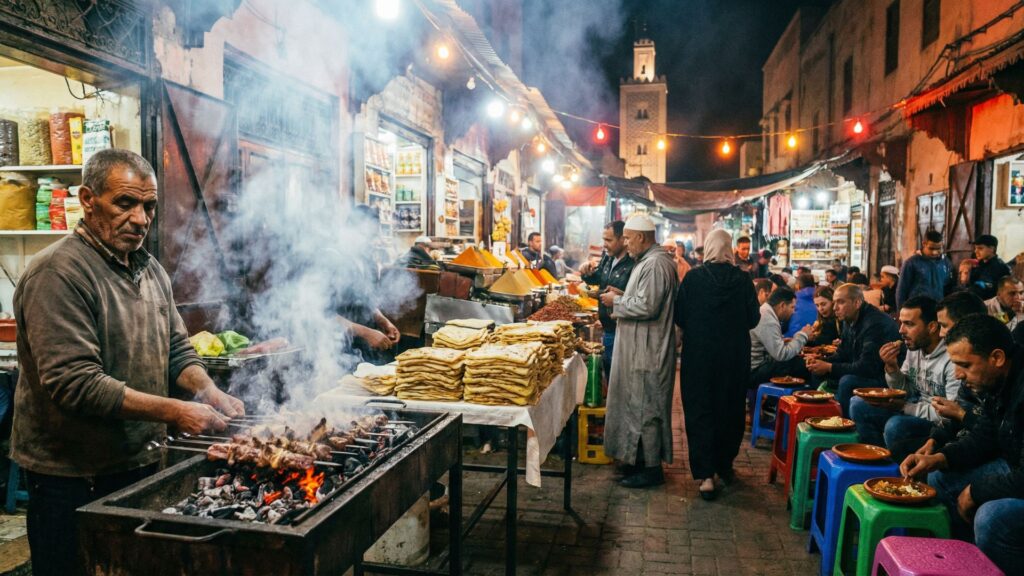
The real pulse of Moroccan food beats strongest at street level. Forget the white tablecloths and tourist menus. The flavors that define daily life come from vendors working charcoal grills, women selling griddle breads from plastic-covered tables, and night market stalls where smoke and shouting create controlled chaos. Street food is where Morocco feeds itself, and travelers who skip this scene miss half the culinary story. For a taste of it, follow this street food journey from Casablanca to Agadir.
Djemaa el-Fna in Marrakech operates as the most famous outdoor food court on the planet. As sunset approaches, the square transforms from daytime marketplace into something approaching theater. Vendors wheel in carts and assemble stalls in roughly the same spots each night. Smoke rises from dozens of grills. Lights flicker against the darkening sky. The energy borders on overwhelming, which is precisely the point.
The setup at Djemaa el-Fna follows patterns repeated at night markets throughout the country, just amplified to spectacular scale. Each stall specializes in specific items rather than offering everything. Grilled lamb chops at one spot. Fried fish at another. Fresh orange juice squeezed while you watch. Snail soup ladled from massive pots. The specialization means vendors perfect their particular offerings rather than spreading attention across too many dishes.
Brochettes anchor the grilled meat category, skewered lamb, beef, or chicken charred over screaming-hot coals. The best vendors maintain fires intense enough to sear exteriors while keeping interiors juicy. Simple seasoning with cumin and salt lets meat quality shine. Kefta brochettes use spiced ground meat shaped around skewers, offering different texture while following the same cooking logic.
Msemen might be the street food you encounter most frequently. These square layered flatbreads come off griddles crispy outside and chewy within. Vendors fold them around cheese, honey, or kefta for handheld meals requiring no utensils. Morning msemen with butter and honey alongside mint tea constitutes breakfast for millions of Moroccans daily.
Sfenj are Moroccan doughnuts, rings of fried dough sold by vendors who materialize on corners during morning hours. Unlike American doughnuts, sfenj carry minimal sweetness, relying on light sugar dustings or honey drizzles rather than heavy glazes. They demand eating while warm, which means buying from vendors with steady customer turnover.
Harsha resembles English muffins made from semolina rather than wheat flour. The slightly gritty texture and golden crust make perfect vehicles for soft cheese or jam. Street vendors sell harsha throughout the day, though morning remains prime time when the griddles run hottest.
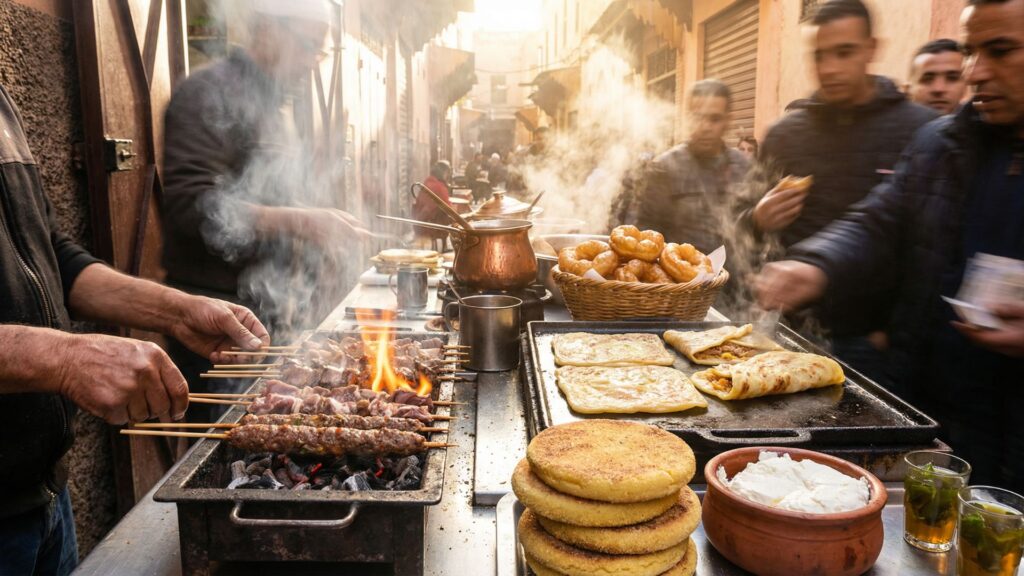
The adventurous eating starts with babbouche, snail soup that proves far more popular than outsiders expect. Vendors ladle small snails in cumin-heavy broth into ceramic bowls, providing toothpicks for extraction. The broth itself delivers the real pleasure, warm and earthy with depth from hours of simmering. Locals swear by medicinal properties curing everything from colds to digestive troubles. The snail carts draw crowds of slurping customers, steam rising around them in the evening air.
Bocadillos reveal Spanish influence on northern Morocco, particularly around Tangier. These sandwiches stuff crusty baguettes with grilled meat, fried fish, or the beloved combination of fried potato and egg. The sandwich stalls near Tangier’s port serve versions that rival anything across the strait in Spain.
Regional variations add texture to the national street food scene. Essaouira centers everything on seafood, with harbor-side stalls grilling the morning’s catch with chermoula marinade. You pick your fish from the display, negotiate price, and wait while it cooks over charcoal. Fes offers more refined street eating, with vendors selling briouat, crispy phyllo triangles stuffed with spiced meat or cheese. Casablanca embraces cosmopolitan diversity, mixing traditional Moroccan fare with French-influenced sandwiches and fried fish straight off Atlantic boats.
Navigating street food safely requires common sense rather than excessive caution. Watch the turnover at any stall before ordering. Busy vendors move food quickly, meaning less time for problems to develop. Freshly grilled meats and just-fried breads carry less risk than items sitting in the open air. Starting slow gives your stomach time to adjust before going all-in on adventurous choices.
Prices at street stalls remain remarkably affordable. A full meal of brochettes, bread, and drink rarely exceeds a few dollars at neighborhood spots away from tourist centers. Even Djemaa el-Fna, with its inevitable markup, delivers substantial eating for modest investment. The value proposition alone justifies embracing street food, but the flavors seal the deal.
The complete guide to Moroccan street food covers specific vendors, regional specialties, and practical strategies for eating safely while maximizing deliciousness.
The spices and ingredients that define Moroccan cooking
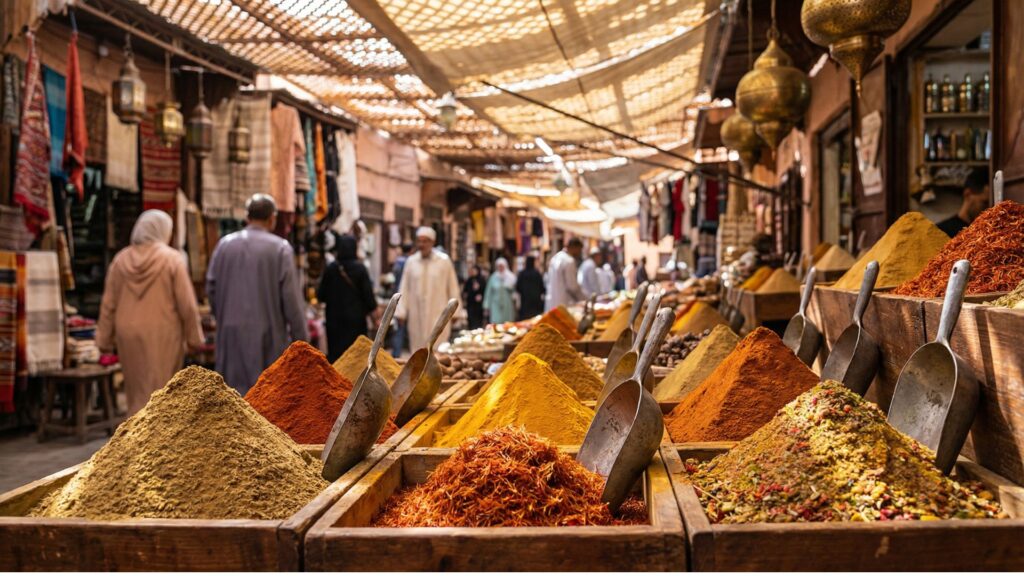
Walk through any Moroccan souk and the air announces what makes this cuisine special before you taste a single bite. Pyramids of golden cumin, crimson paprika, and amber saffron threads create visual spectacle while releasing aromas that penetrate every corner of the market. These spices do more than season food. They define regional identities, mark celebrations, and carry traditions refined over centuries.
Cumin ranks as the single most essential spice in the Moroccan kitchen. The earthy, slightly smoky flavor appears in virtually everything from elaborate tagines to simple grilled meats. Street vendors dust it over brochettes. Home cooks add it to vegetable dishes. The small bowls of cumin and salt offered alongside mechoui demonstrate its fundamental role. Moroccans use cumin with intensity that might surprise visitors accustomed to more restrained seasoning. Traditional kitchens toast whole seeds and grind them fresh, releasing oils that pre-ground versions cannot match.
Paprika provides the warm red color characteristic of many Moroccan preparations. The local variety tends toward sweetness rather than heat, contributing color and subtle depth without overwhelming other flavors. Those dramatic pyramids in souk displays serve practical purposes beyond photography, allowing customers to assess freshness and quality before purchasing.
Ginger appears in dried powdered form rather than fresh in most Moroccan cooking. The dried version delivers sharper, more concentrated flavor that stands up to long cooking times. Tagines rely on ginger’s warmth to balance sweet elements like dried fruits and honey. The spice also features prominently in harira and other soups where its gentle heat adds complexity.
Saffron represents luxury in the spice world, and Morocco produces excellent quality primarily in the Taliouine region of the Anti-Atlas mountains. The threads come from crocus flowers harvested by hand during a brief autumn window, with roughly 150,000 flowers required for a single kilogram. This labor explains the price, making saffron the world’s most expensive spice by weight. The flavor defies simple description, somehow floral and earthy and slightly metallic all at once. A small pinch transforms rice, tagines, and even tea.
Ras el hanout translates roughly as “head of the shop,” implying the finest spices the merchant offers. This signature blend can include twenty, thirty, or even fifty different ingredients, with recipes guarded as closely as family secrets. Common components include the foundation spices plus cardamom, nutmeg, mace, allspice, cloves, and dried flowers like rose petals and lavender. Some versions incorporate more exotic additions including grains of paradise and monk’s pepper. The complexity creates flavor that exceeds the sum of its parts, tasting distinctly Moroccan in ways no single spice achieves alone.
Preserved lemons function like a spice despite being technically a prepared ingredient. Salt-cured for weeks or months, these lemons develop fermented intensity impossible to replicate with fresh citrus. The rind becomes the prize, chopped and added to tagines where it cuts through rich meats and fatty sauces with brightness that fresh lemon cannot match. The classic chicken tagine with preserved lemons and olives demonstrates this ingredient at its finest.
Argan oil comes exclusively from Morocco, where argan trees grow in the semi-arid region around Essaouira and Agadir. Two versions exist for different purposes. Culinary argan oil from roasted nuts has deep amber color and intense nutty flavor, drizzled over couscous or mixed into amlou, a dip combining the oil with almonds and honey. Cosmetic argan oil from raw nuts serves skin and hair rather than the table. The production process involves cracking extremely hard nuts by hand, explaining both the price and the women’s cooperatives that have built sustainable businesses around this labor-intensive work.
Shopping for spices in Moroccan souks offers both opportunity and risk. Quality varies dramatically between vendors, and tourist-oriented stalls often sell stale products at inflated prices. The key indicators of quality are straightforward. Fresh spices have vibrant aromas that announce themselves immediately. Staleness shows through flat, dusty smells lacking life. Colors should be bright and varied rather than faded or uniform. Buying whole spices when possible ensures longer shelf life and better flavor, since pre-ground versions lose potency faster.
The spice merchants worth patronizing welcome questions and enjoy discussing their products. They will explain differences between varieties, recommend blends for specific dishes, and often provide samples. Their confidence comes from knowing their quality. The vendors who pressure sales without allowing inspection usually have something to hide.
Bringing spices home extends the Morocco experience through cooking. A starter collection might include cumin seeds, paprika, ginger, and a quality ras el hanout blend. These four items enable most classic preparations. Adding saffron threads, preserved lemons, and culinary argan oil opens possibilities for more elaborate dishes. Proper storage in airtight containers away from heat and light preserves potency for months.
The comprehensive guide to Moroccan spices covers sourcing, storing, and using these essential flavors to recreate the cuisine at home.
Moroccan mint tea and traditional beverages
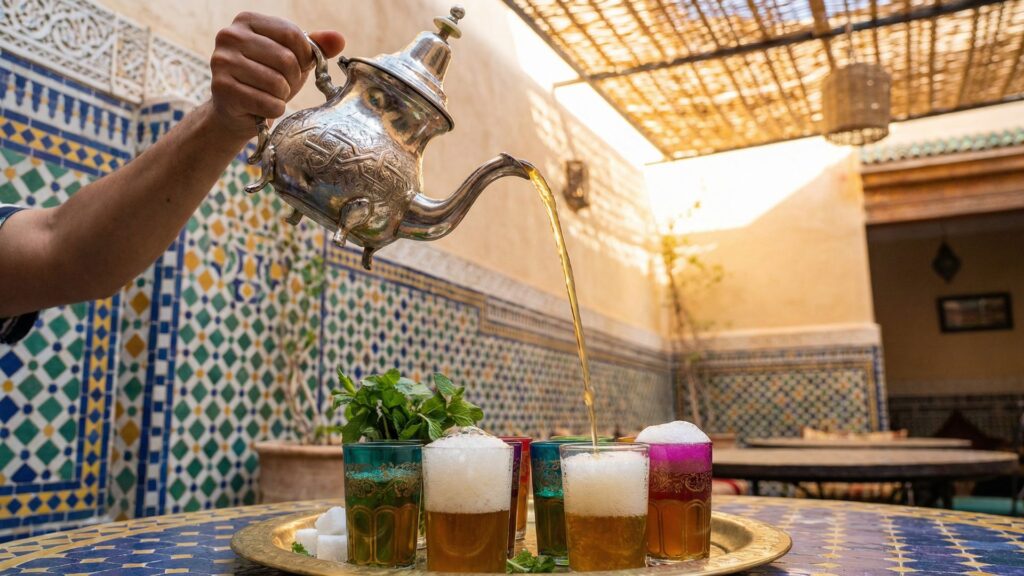
No experience in Morocco is complete without mint tea. The drink appears everywhere, from grand riads to roadside cafes to family living rooms, marking hospitality in ways no other gesture quite matches. Moroccans call it “Berber whiskey” with knowing smiles, acknowledging the central role tea plays in a culture where alcohol remains largely absent from daily life.
The offering of tea carries meaning that visitors should understand. When someone invites you to drink tea, they extend hospitality that should not be casually refused. Saying no can cause genuine offense, especially in home settings where the invitation represents generosity and welcome. Even if you have already consumed three glasses and your teeth are floating, accepting another pour shows respect for the host. The traditional saying claims you should drink at least three glasses, the first gentle as life, the second strong as love, the third bitter as death. In practice, the three-glass minimum reflects how Moroccan tea ceremonies unfold over time, with conversation flowing between refills.
The ingredients are simple but specific. Chinese gunpowder green tea forms the base, named for the tightly rolled pellets resembling gunpowder grains that unfurl during steeping. This style has enough body to stand up to sugar and mint without becoming bitter when brewed strong. Fresh spearmint called nana provides the signature flavor, sweeter and less aggressive than peppermint. The leaves should be bright green and fragrant, added generously enough to pack the pot. Sugar completes the trinity, used liberally by local standards. Traditional preparation includes hard sugar cones that must be chipped apart, though granulated sugar has become common. The sweetness level strikes many Westerners as excessive, but the sugar balances tannins in strong tea and creates the characteristic flavor profile.
The brewing process elevates tea making into ritual. First, a small amount of boiling water rinses the dry tea leaves, swirled briefly then discarded. This first rinse removes dust and begins waking up the leaves without extracting bitter compounds. Fresh boiling water then covers the rinsed tea for a proper steep of two to three minutes. Mint gets stuffed into the pot along with sugar, both in quantities that seem alarming to the uninitiated. A brief second steep integrates everything before the pour test, where tea flows into a glass and returns to the pot several times, aerating the liquid and checking flavor balance.
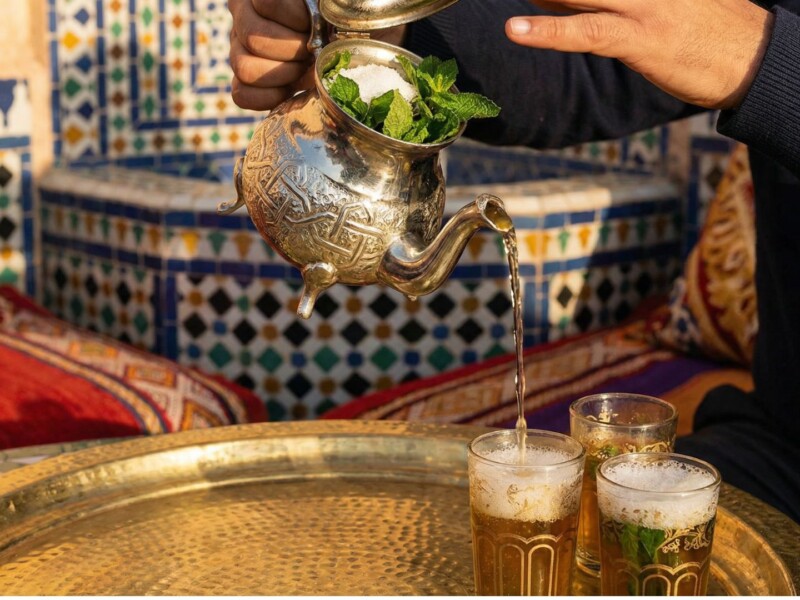
The theatrical pour itself demonstrates skill while serving practical purposes. The tea maker holds the pot high above the glasses, sometimes a foot or more, while maintaining a steady stream that fills without splashing. The height aerates the tea, creating slight froth on top while cooling the liquid to drinkable temperature. Watching an experienced tea pourer work is genuinely impressive, the stream controlled despite the distance, starting and stopping precisely as glasses fill. The froth indicates proper aeration and suggests correct preparation. A flat pour lacking bubbles implies something went wrong.
Tea punctuates Moroccan life so consistently that its absence would feel stranger than its presence. Shopping in the medina involves tea with merchants who may or may not sell you anything. Visiting homes means tea before, during, and after any meal. Business meetings begin with tea service regardless of the agenda. The drink creates space for connection in ways that transcend its simple ingredients.
Beyond tea, Morocco offers a range of traditional beverages worth seeking out. Fresh-squeezed orange juice appears at cafes and street stalls throughout the country, the quality varying with the season and the vendor’s honesty about adding sugar. Almond milk, banana milkshakes, and mixed fruit combinations called panaché provide refreshment during hot months. Leben, soured milk, tastes better than it sounds and does wonders for upset stomachs.
Bisara straddles the line between beverage and food, a thick pea soup served in bowls for breakfast and topped with full-flavored green olive oil. The hearty preparation fuels mornings for workers throughout the country. Some places serve it from massive pots all day long, indicated by piles of bowls stacked at the front.
Coffee exists but occupies secondary status to tea. French-style cafes serve it noir, cassé with a drop of milk, or au lait with plenty. The quality in proper cafes can be excellent, though instant Nescafé dominates in simpler establishments. Herbal infusions including aniseed and verbena provide caffeine-free alternatives.
Regional variations add interest for travelers exploring different areas. Winter tea in some regions includes wormwood called chiba, adding slight bitterness that locals claim keeps out the cold. Saffron tea appears around Taliouine during harvest season, the precious threads steeping into golden liquid with distinctive floral notes. Fresh verbena called louiza replaces mint in some mountain areas during warmer months, creating lighter tea popular for evening drinking.
The complete guide to Moroccan mint tea covers preparation techniques, serving rituals, and the cultural significance that makes this drink far more than simple refreshment.
Regional Moroccan food: how cuisine changes across the country
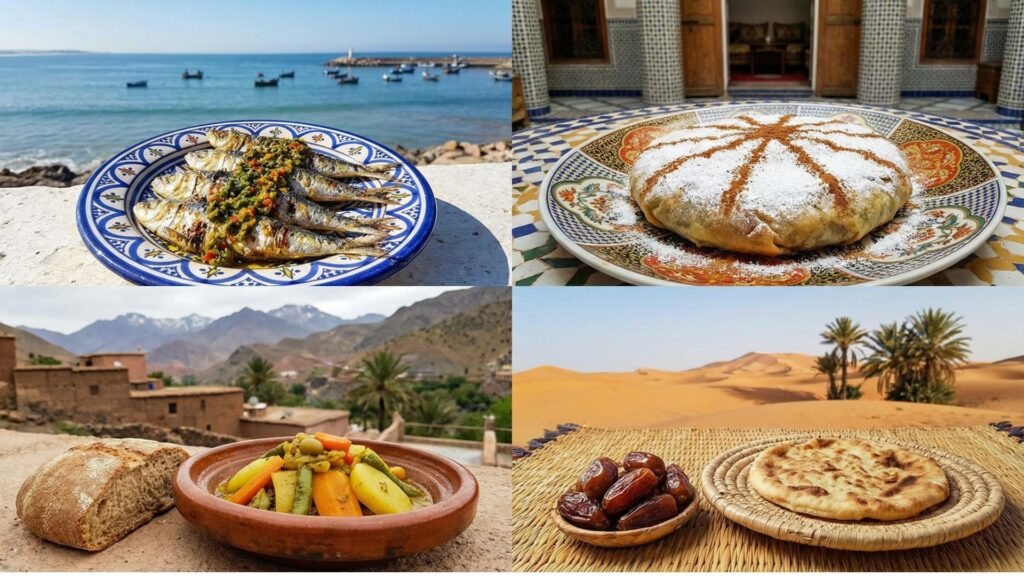
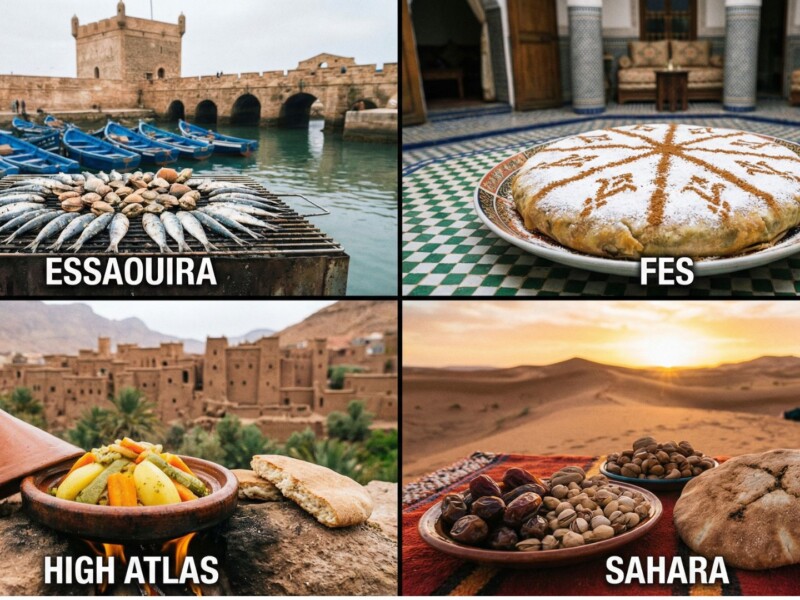
Morocco packs remarkable culinary diversity into its borders. The grilled sardines of Essaouira bear little resemblance to the elaborate pastilla of Fes or the simple Berber preparations of High Atlas villages. Traveling through the country means eating through it too, with regional variations revealing how geography, history, and local ingredients shape what ends up on the plate.
Fes stands as Morocco’s undisputed culinary capital. The ancient medina has maintained cooking traditions for centuries, with recipes passed through families who take fierce pride in their heritage. Fassi cuisine emphasizes complexity, featuring dishes with dozens of ingredients and techniques requiring years to master. Pastilla reaches its highest expression here, the paper-thin warqa pastry wrapping shredded pigeon in preparations that demand extraordinary skill. The tagines of Fes tend toward the sweeter end of the spectrum, with lamb and prunes, chicken with pears and cinnamon, beef with quinces and almonds reflecting Andalusian influences that arrived with refugees from Spanish persecution centuries ago.
Marrakech shares refinement with Fes but delivers bolder, more direct flavors. The city’s position as a trading hub brought spices from across Africa, and local cooks use them generously. Tagines here tend spicier and more robust than their Fassi counterparts. Tanjia remains uniquely Marrakchi, the bachelor’s dish of lamb slow-cooked in clay urns buried in hammam furnace embers. The street food scene at Djemaa el-Fna represents Marrakech eating at its most democratic, serving everyone from workers grabbing dinner to tourists seeking adventure.
The Atlantic coast centers its cuisine on seafood in preparations that showcase freshness above all else. Essaouira operates as the purest expression of coastal cooking, with harbor-side grills serving the morning’s catch with minimal interference. Chermoula marinade appears throughout, the blend of cilantro, parsley, garlic, cumin, paprika, and lemon seasoning fish before grilling or saucing it after. Each cook maintains their own proportions, but the herb-forward, slightly spicy character remains consistent. Sardines get particular attention along this coast, grilled whole or stuffed and prepared in dozens of variations.
Casablanca offers the most diverse coastal dining, reflecting its status as Morocco’s largest city and economic center. French influence shows in brasseries serving fruits de mer platters alongside traditional Moroccan fish preparations. The central market area provides excellent casual seafood at local prices, where following workers at lunchtime leads to the best value.
The Atlas Mountains shelter communities that developed cuisine around available ingredients and harsh conditions. Mountain Moroccan food tends toward simplicity and sustenance rather than the complexity of lowland cooking. Berber tagines differ from city versions, using whatever grows locally in terraced gardens, meat from sheep and goats grazing the slopes, dried fruits and nuts stored for winter. The spicing is restrained compared to urban preparations, letting ingredients taste like themselves.
Tafernout is mountain bread baked in clay ovens or over open fires, dense and hearty enough to sustain hard physical labor. The bread serves as plate, utensil, and sustenance rolled into one. Amlou might be the most addictive product of mountain kitchens, combining argan oil, ground almonds, and honey into something resembling Moroccan peanut butter. The proportions vary by maker, some preferring more honey, others heavier on nuts. Slathered on bread for breakfast, amlou provides fuel for mountain days.
The desert south developed cuisine around limited ingredients and preservation techniques necessary for survival. Medfouna is desert pizza, a stuffed flatbread encasing spiced ground meat with onions, cooked over fire or in ash-covered sand. The result travels well and provides complete nutrition in convenient form. Dates function as more than snacks in southern cooking, appearing in tagines, couscous, pastries, and as accompaniment to virtually every meal. The oasis towns around Erfoud and Zagora produce varieties ranging from common to exceptional.
The Mediterranean north shows Spanish and Andalusian influences most clearly. Tangier operates as the most cosmopolitan city in the country, with French, Spanish, and Moroccan cooking coexisting and sometimes fusing. The cafes along the Petit Socco serve small plates that would fit comfortably across the strait in Andalusia. Tetouan maintains perhaps the strongest Andalusian heritage in its cooking, with families descended from expelled Moors preserving recipes for centuries. The pastries here rival anything in Fes.
Chefchaouen in the Rif Mountains combines mountain Berber traditions with Mediterranean influences. Fresh goat cheese from surrounding villages appears throughout local cooking, brought to market by women who make the products themselves.
Understanding regional differences transforms trip planning. A food-focused itinerary might start in Marrakech for street food and tanjia, head to Essaouira for coastal seafood, cross the Atlas with stops in Berber villages, continue to the desert for dates and simple preparations, then finish in Fes for pastilla and refined tagines. Each stop adds flavors impossible to find elsewhere.
The comprehensive guide to regional Moroccan food maps these culinary differences in detail, helping travelers know what to eat where.
Moroccan dining customs: etiquette every visitor should know
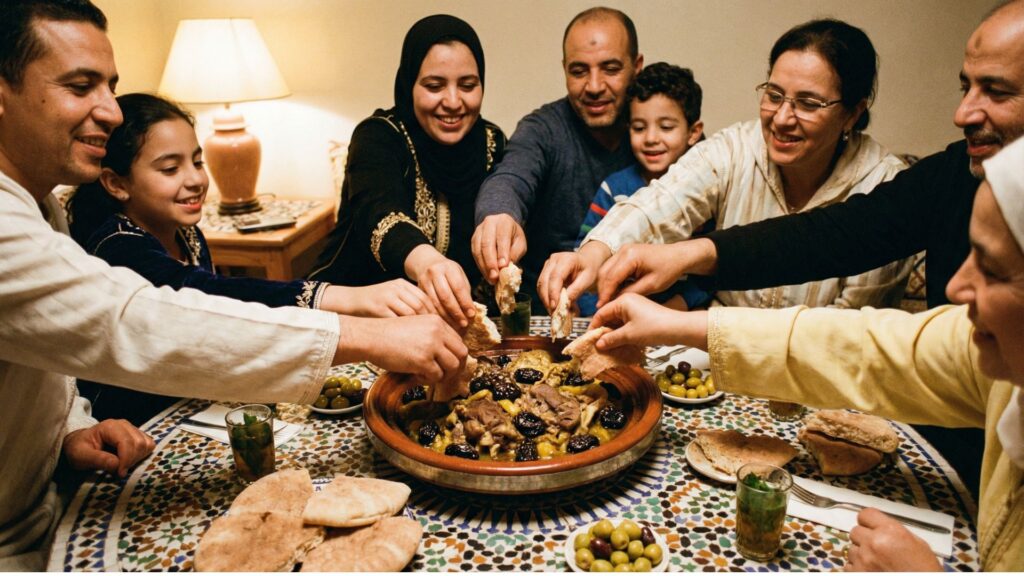
Eating in Morocco involves more than choosing what to order. The country maintains dining traditions that can surprise visitors unfamiliar with communal plates, hand eating, and hospitality expectations that border on insistence. Understanding these customs transforms potentially awkward moments into opportunities for genuine connection.
The right hand rule stands as the single most important dining custom for visitors to grasp. In Morocco and throughout the Islamic world, the right hand handles food while the left hand is reserved for less clean purposes. This distinction runs deep, and violating it causes genuine discomfort for those sharing your table. Eating with your right hand exclusively takes practice for those accustomed to using both. The left hand typically rests in your lap or holds bread steady while the right does all the work of tearing, scooping, and delivering food to your mouth.
The practical challenge comes when eating dishes that seem to require two hands. Tearing bread, pulling meat from bones, managing slippery tagine vegetables must all be accomplished one-handed. Watching Moroccans eat reveals techniques developed over lifetimes that visitors can only approximate. The key is trying your best rather than achieving perfection. In tourist restaurants, the expectation relaxes considerably. Staff understand that foreign visitors have different customs. But in home settings and traditional establishments, using your right hand shows respect for local culture.
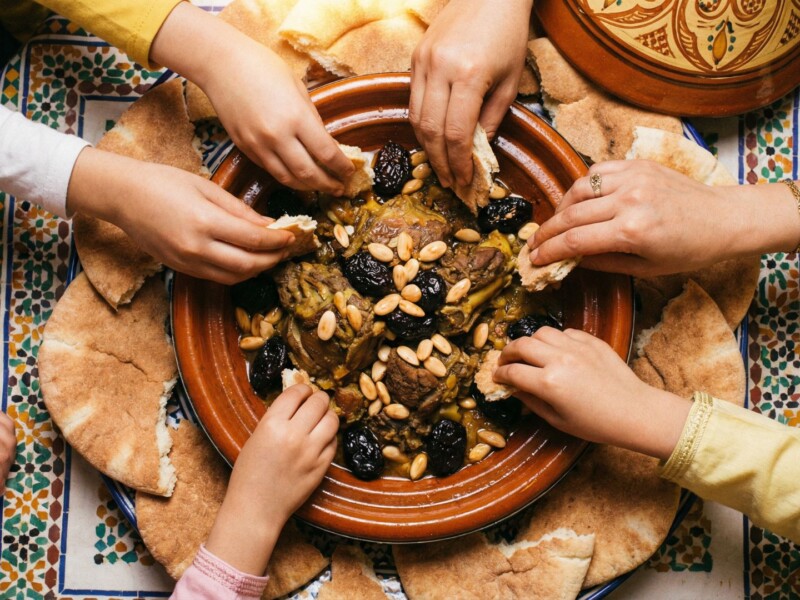
Communal eating defines the Moroccan table. Meals traditionally arrive on large platters meant for sharing rather than individual portions. Everyone eats from the same dish, reaching into their section of the plate and working toward the center. This approach reinforces social bonds and ensures equal access to the food.
The imaginary boundaries of the communal plate matter. Each person eats from the area directly in front of them, never reaching across to another’s section. The center of the plate, usually containing the best pieces of meat, remains neutral territory until the host distributes choice morsels to guests. Receiving a tender piece of lamb or particularly nice vegetable from the host’s hand is a compliment that should be accepted graciously. Refusing these offerings insults the generosity being extended.
Bread serves as your primary utensil in traditional settings. Hold it between the fingers and use your thumb as a scoop. Many Moroccans discard the soft center and use only the crust, which provides better structural integrity for scooping. The bread arrives fresh throughout the meal, so running out is never a concern.
Moroccan hospitality operates on principles that can overwhelm visitors unprepared for the intensity. Hosts feel genuine obligation to feed guests generously, and guests are expected to eat generously in return. The back and forth of offering and accepting food follows patterns that seem excessive by Western standards but make perfect sense within local culture.
Expect to be urged to eat more regardless of how much you have already consumed. The host offering additional food expresses continued care for your wellbeing rather than suggesting you have not had enough. Accepting more food honors this generosity even when you are already full. The polite response involves gradually slowing down while continuing to accept small amounts. An abrupt declaration of fullness implies the food was not good enough to continue eating.
Complimenting the food enthusiastically is expected and appreciated. Moroccan hosts take pride in their cooking and want confirmation that guests enjoy themselves. Specific compliments about particular dishes show attention and respect. Leaving a small amount of food on the plate signals satisfaction rather than waste, communicating that you have had plenty without suggesting the host failed to provide enough.
Home invitations deserve special consideration. Being invited to eat in a Moroccan home represents a significant gesture of welcome that should not be refused casually. If you truly cannot accept, provide a genuine reason rather than vague excuses. Accepting and then not showing up causes far greater offense than declining directly. Bringing a gift of pastries or fruit when visiting shows appreciation without implying the host cannot provide adequately.
Restaurant versus home dining follows different rules. Tourist restaurants cater to international expectations with individual plates, utensils, and familiar service styles. Local restaurants where Moroccans actually eat maintain more traditional approaches. Communal plates are common, utensils may require requesting, and the pace follows local patterns. The food is typically better and cheaper than tourist spots, and the experience more authentic.
Ramadan transforms the dining landscape entirely. During the holy month, most restaurants close during daylight hours. Those remaining open serve discreetly to non-fasting visitors. Eating, drinking, or smoking in public during fasting hours shows disrespect regardless of your own religious practices. The sunset meal breaking the fast, called iftar, offers beautiful experiences to share. Moroccans often invite visitors to join family iftars, which begin with dates and harira soup before expanding into full meals.
The complete guide to Moroccan dining customs covers hand-eating technique, tipping norms, and strategies for navigating both restaurant and home dining situations.
Your Moroccan food adventure starts now
The flavors waiting in Morocco reward travelers who arrive with curiosity and appetite. The cuisine operates on logic different from Western cooking, blending sweet and savory, layering spices in combinations that seem impossible until they work perfectly, treating meals as social events rather than simple fuel stops. Understanding this foundation transforms eating from random sampling into purposeful exploration.
The practical first step involves choosing where to focus your culinary attention. Travelers with limited time might concentrate on a single city, exploring its restaurants, street stalls, and markets thoroughly rather than rushing between destinations. Those with several weeks can craft routes that move logically between regions, experiencing coastal seafood in Essaouira, refined palace cooking in Fes, mountain Berber simplicity in Atlas villages, and desert preparations in the south. Either approach works better than trying to taste everything in a hurried week.
Quality varies dramatically across Morocco’s dining options. Tourist areas serve simplified versions adjusted for foreign palates, while neighborhood spots frequented by locals maintain more authentic preparations. A few indicators suggest where to find the good stuff. Restaurants specializing in one or two dishes usually do them better than places with enormous menus. Crowds of Moroccan families signal trust in the kitchen. Prices that seem surprisingly low for the portion size often mean home-style cooking rather than tourist markup.
The street food scene deserves serious attention regardless of your budget. The flavors encountered at market stalls and night vendors represent Moroccan cooking at its most immediate and honest. A plastic stool at a busy grill offers experiences that white-tablecloth restaurants cannot replicate. The chaos is part of the charm. Accepting that you might not know exactly what you are ordering, that prices require occasional negotiation, that seating happens on shared benches, this acceptance opens doors that resistance keeps closed.
Accepting invitations to eat in Moroccan homes provides the most authentic experiences available. The hospitality culture means such invitations come relatively easily, and home cooking typically surpasses restaurant food in both flavor and generosity. These meals connect you to people rather than just places, creating memories that outlast any dish however delicious.
The spices purchased in souks extend the journey through cooking back home. Even basic dishes become transportive when seasoned with cumin, paprika, and ras el hanout carried across an ocean in your luggage. A starter collection of whole spices, preserved lemons, and perhaps some saffron threads enables recreating the flavors that made the trip memorable.
Moroccan food tells stories that monuments cannot. The tagine slow-cooked over charcoal connects to centuries of practical necessity. Friday couscous reinforces family bonds across generations. Pastilla preserves Andalusian heritage carried by refugees five hundred years ago. Mint tea creates hospitality in every interaction. Each dish links to something larger than its ingredients.
The dining customs that govern Moroccan tables reflect deeper values worth understanding. Community over individualism. Generosity over calculation. Presence over efficiency. These principles shape meals in ways that transform eating into cultural exchange. The right hand rule, the communal plate, the insistent hospitality, all express worldviews that food makes tangible.
For travelers ready to dive deeper before arriving, the guide to traditional Moroccan dishes provides the essential vocabulary for eating with intention. Understanding tagine, couscous, pastilla, and harira before your first meal means recognizing quality when you encounter it and knowing what to seek out in each new city.
Morocco has fed travelers for centuries along routes connecting Africa, Europe, and the Middle East. The cuisine that developed from these crossings remains vibrant, delicious, and accessible to anyone willing to sit down and eat. Your table is waiting.