Best Time to Visit Dakhla: Wind, Weather and Crowds Month by Month
In Dakhla, the weather forecast is almost boring. Sun, a steady breeze and temperatures that barely budge from one season to the next.
That consistency is exactly what makes timing tricky. When every month looks pleasant on paper, the real differences hide in the details: how hard the wind blows, when the Atlantic swell arrives, when the flamingos show up and when half of Europe books the same kite camp you had your eye on. For a broader overview of the destination, see our complete Dakhla travel guide. This guide breaks the year down so you can match the month to the trip you want.
Dakhla’s climate at a glance
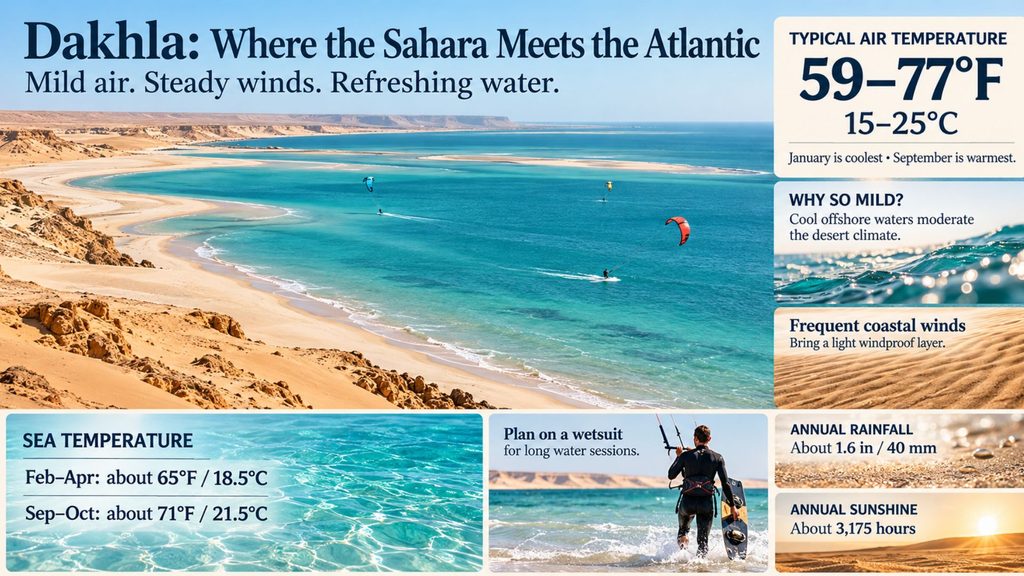
Dakhla sits on a peninsula on the Atlantic coast of the Sahara, and a cold ocean current flowing offshore keeps the climate remarkably mild. Desert heat waves are rare, and the wind blows almost constantly.
Over the course of a year, temperatures typically range from about 59°F to 77°F and rarely drop below 55°F or climb above 81°F. January is the coolest month, with an average around 65°F, while September is the warmest, averaging about 74°F. Rain is almost a rumor. The city gets roughly 1.5 inches in an entire year and enjoys around 3,175 hours of sunshine.
The ocean follows its own calendar. Sea temperatures bottom out near 65°F from February through April and peak around 71°F in September and October. That’s refreshing rather than tropical, so plan on a wetsuit for long sessions in the water most of the year.
If you’re comparing Dakhla with the rest of the country, our best time to visit Morocco guide shows how different the far south is from Marrakech or the Atlas Mountains, where summer heat and winter snow shape every decision.
Month by month in Dakhla
| Month | Wind | Waves | Crowds | Highlights |
|---|---|---|---|---|
| January | Lightest of the year | Good | Moderate | Mild winter sun, birdwatching |
| February | Light to moderate | Good | Moderate | Winter escape, flamingos |
| March | Building | Good | Moderate | Birdwatching wraps up |
| April | Reliable | Fading | Moderate | Start of prime kite season |
| May | Reliable | Small | Moderate | Sweet spot for learners |
| June | Strong | Small | Busy | Long, windy days |
| July | Strongest, gusty | Small | Busiest | Wind almost every day |
| August | Strongest, gusty | Small | Busiest | Dakhla Downwind Challenge |
| September | Reliable | Building | Moderate | Warmest air and water |
| October | Reliable | Excellent | Busy around the World Cup | Pro kite tour, wave season |
| November | Moderate | Excellent | Moderate | Waves, birds return |
| December | Light | Good | Busy over the holidays | Festive winter sun |
Spring: April and May
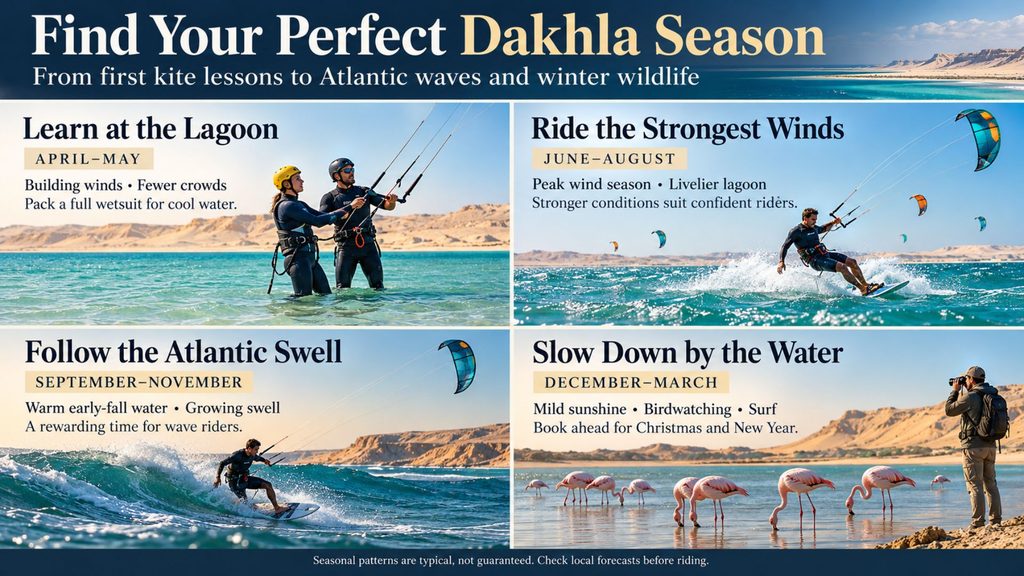
Spring is when Dakhla’s prime kite season kicks in, and it’s arguably the most balanced time of year. The wind becomes reliable, the summer crowds haven’t arrived and temperatures sit comfortably in the 70s. Beginners especially love these months. The lagoon is lively without being packed, and instructors aren’t stretched thin.
The water is still at its coolest, so a full wetsuit is the smart call. If you’re planning your first kite lessons, our guide to kitesurfing in Dakhla explains which spots suit each level.
Summer: June to August
Summer is Dakhla’s wind season in its purest form. July and August bring a wind chance above 90 percent, with gusts that can reach 35 knots. For experienced riders on small kites, it’s paradise. For nervous beginners, it can feel like too much of a good thing, and the lagoon gets choppy and crowded.
The upside for non-riders is that Dakhla stays surprisingly comfortable while much of Morocco bakes. The ocean breeze keeps the heat in check, and nights in the desert can even feel cool.
Summer also brings the Dakhla Downwind Challenge, a multi-day kite expedition along the coast. In 2026 it ran from August 14 to 20, launching on the anniversary of the region’s return to Morocco, a date marked with celebrations in town.
Fall: September to November
Many regulars consider fall the best time to visit Dakhla. September has the warmest air and water of the year, the midsummer gusts ease off and the Atlantic swell starts to build. By October, the wave spots on the ocean side come alive.
That’s why the GKA Kite-Surf World Cup lands at West Point in early October. The 2026 event is scheduled for October 4 to 11, and it’s a fantastic spectacle even if you never step on a board. Just book early. Camps fill up weeks ahead, and prices climb.
November is quieter, with excellent waves, fewer riders and the return of migratory birds to the lagoon.
Winter: December to March
Winter is Dakhla’s quiet season for kiters. December and January bring the lightest wind of the year, though you can still ride plenty of days on bigger kites. Wave riders, on the other hand, are in their element, since the best surf runs from October through March.
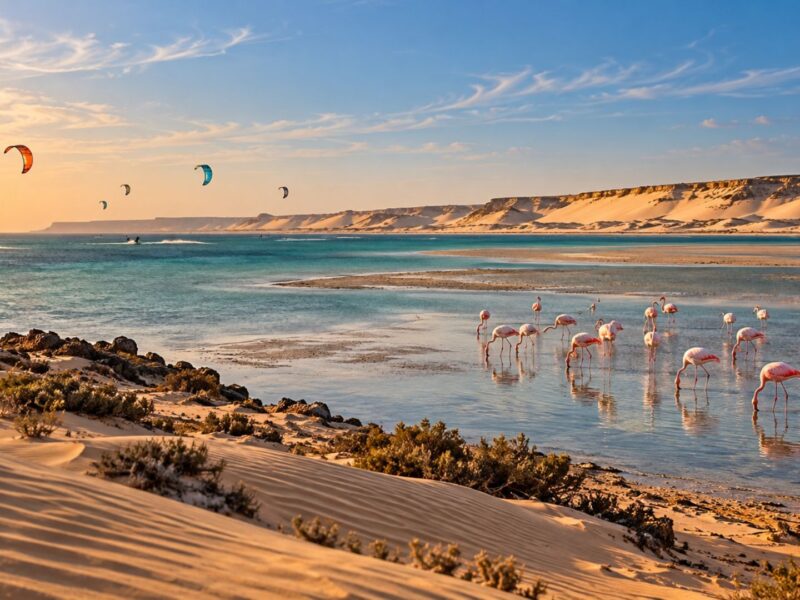
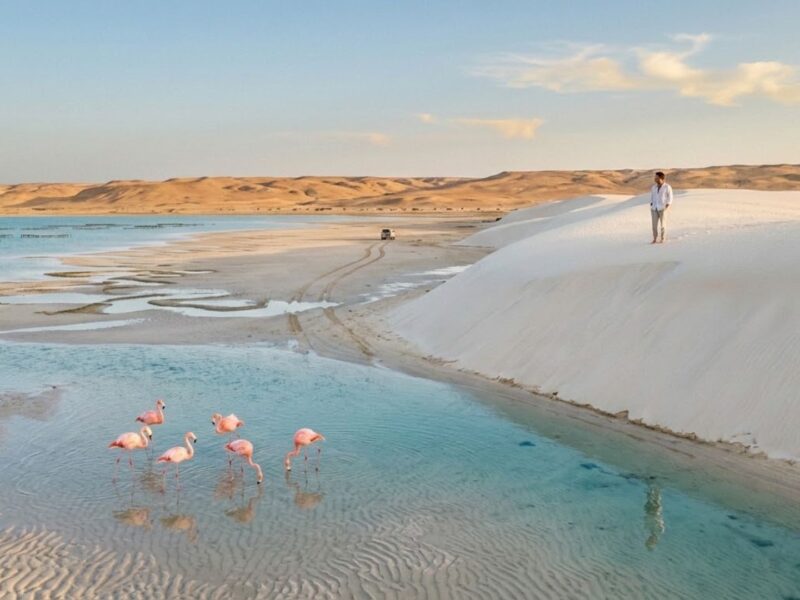
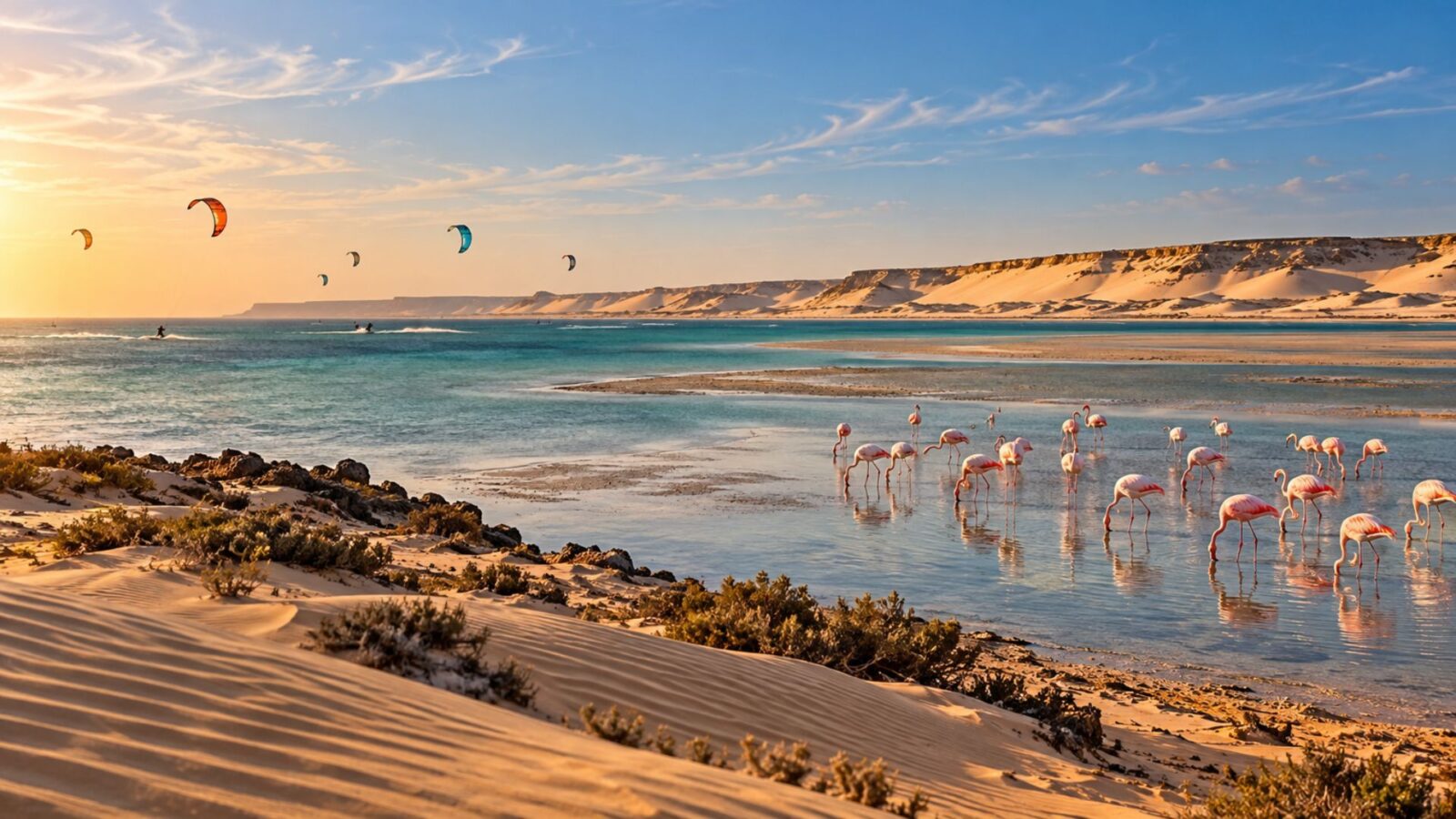
For everyone else, winter is a gift. While Europe and much of North America shiver, Dakhla offers mild sunshine, calm lagoon days and some of the best birdwatching in Morocco. Flamingos and other migratory birds are most visible from November to March, making it a perfect time for a boat trip to Dragon Island or a walk out to the White Dune.
Expect a busy stretch around Christmas and New Year, when European travelers arrive for a winter sun break and some hotels add holiday dinners to the bill.
Ramadan and holidays
Ramadan shifts about 11 days earlier each year. In 2027 it’s expected to begin around February 8, lasting roughly a month. Kite camps and tourist hotels operate normally, but daily life in town slows during the day and comes alive after sunset, when families gather to break the fast. It’s a wonderful time to experience local hospitality, as long as you stay respectful about eating and drinking in public during daylight hours.
Matching the month to your trip
| Traveler type | Best months | Why |
|---|---|---|
| Beginner kiters | April, May, September | Reliable wind without summer gusts |
| Experienced kiters | June to August | Strongest, most consistent wind |
| Wave riders and surfers | October to March | Best Atlantic swell |
| Birdwatchers | November to March | Flamingos and migratory birds |
| Non-riders and couples | September to November | Warmest water, calmer days |
| Budget travelers | January, February, November | Fewer crowds, easier bookings |
Finding your window
Dakhla doesn’t really have a bad month, which is part of its quiet magic. It simply has different personalities. Summer belongs to the wind chasers, fall to the wave riders and spectators, winter to the birdwatchers and sun seekers, and spring to anyone learning the ropes. The trick is knowing which version of Dakhla you want to meet.
Once you’ve picked your dates, the next question is what the trip will actually cost. Our breakdown of Dakhla trip cost covers flights, accommodation, lessons and everyday expenses so you can plan with confidence.
Which season would you choose for Dakhla: summer wind, fall waves or winter flamingos?