Kitesurfing in Dakhla: Best Spots, Wind Seasons & Schools for Every Level
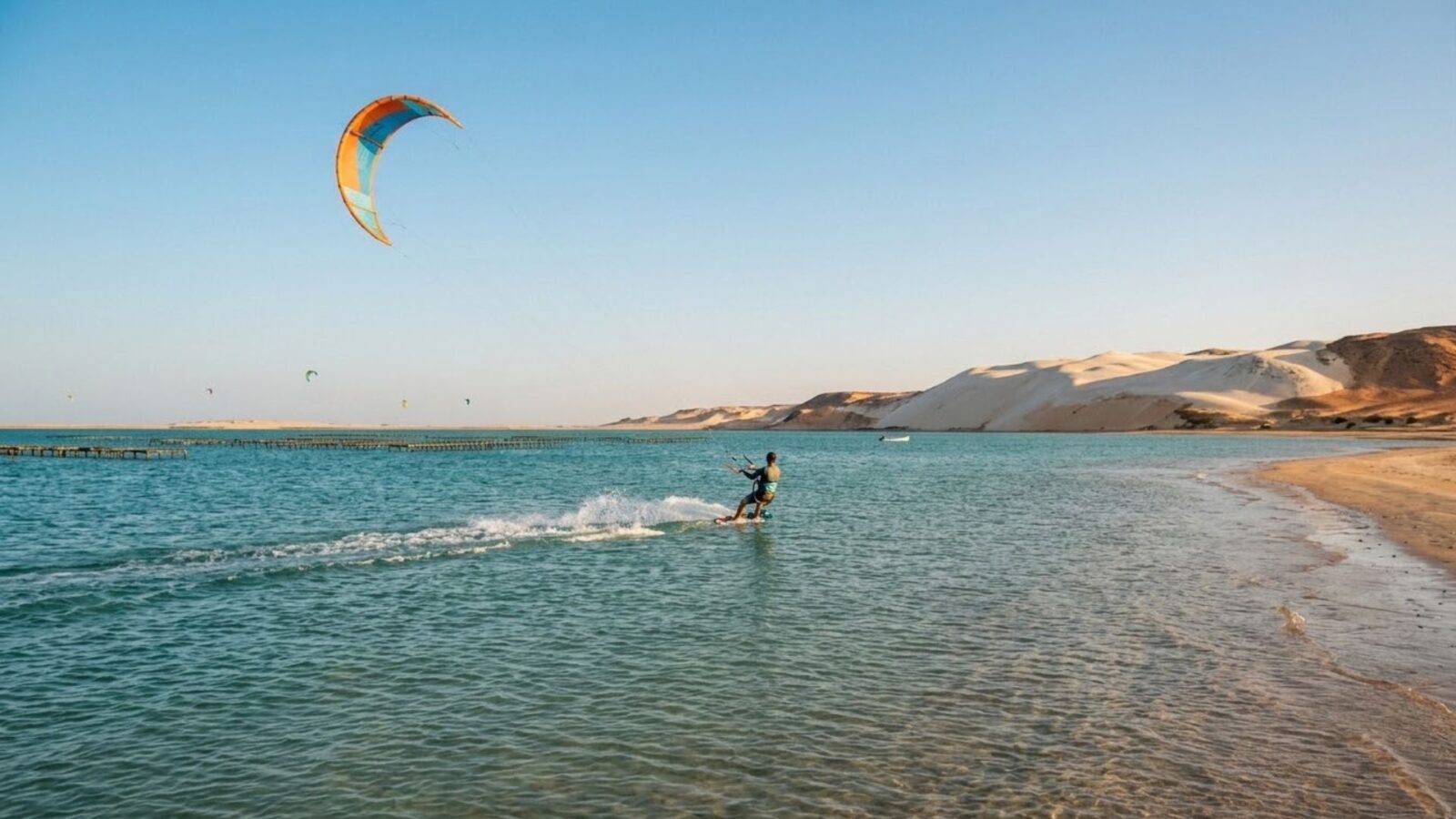
The first thing you notice in Dakhla is not the water. It’s the sound of wind snapping through a hundred kite lines at once, a low steady hum that starts before breakfast and rarely quits before sunset.
That wind is the reason a quiet former Spanish garrison on a sliver of Saharan sand now pulls in riders from Brazil, Germany and Texas. If you’re still sketching out the bigger picture of your trip, our complete Dakhla travel guide covers the city, the food and the logistics. This piece is about the thing most people fly all this way for.
Why Dakhla works so well for kitesurfers
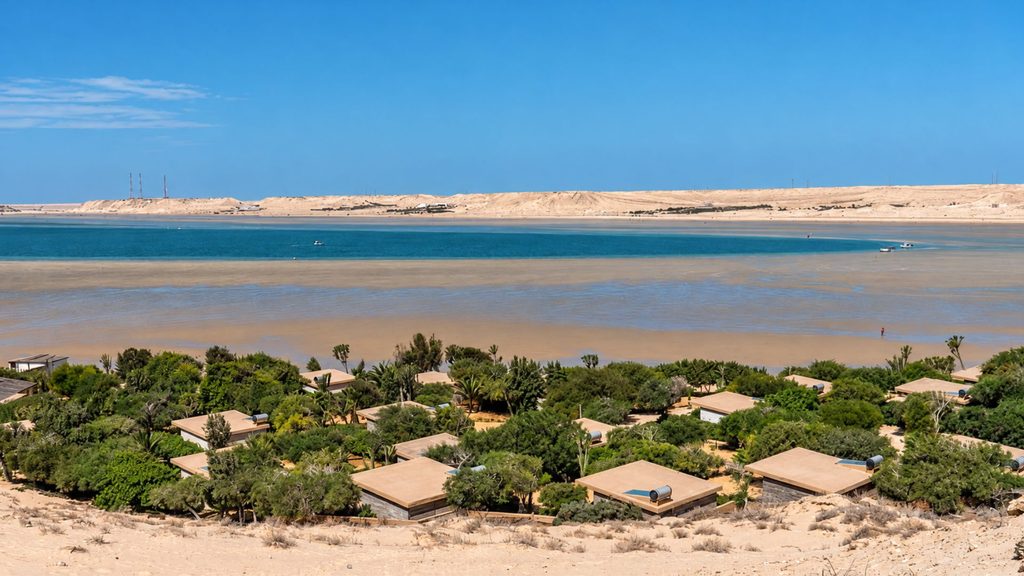
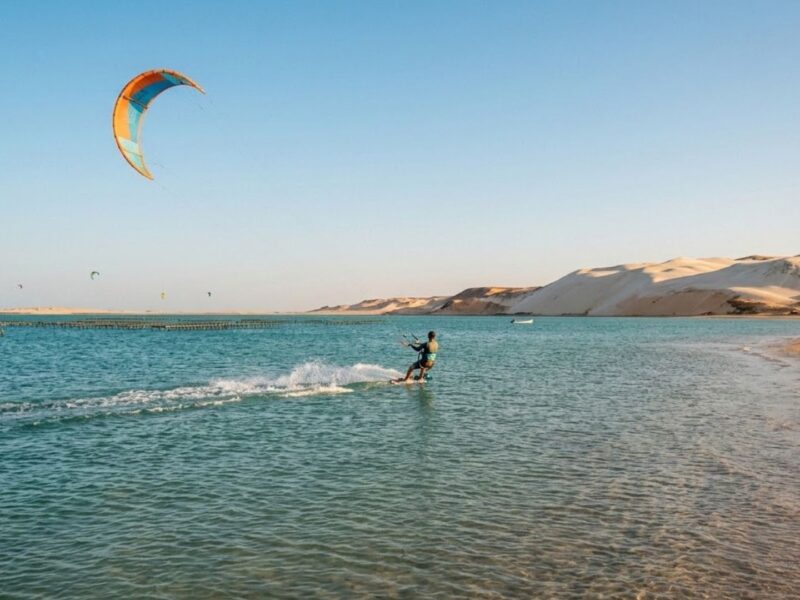
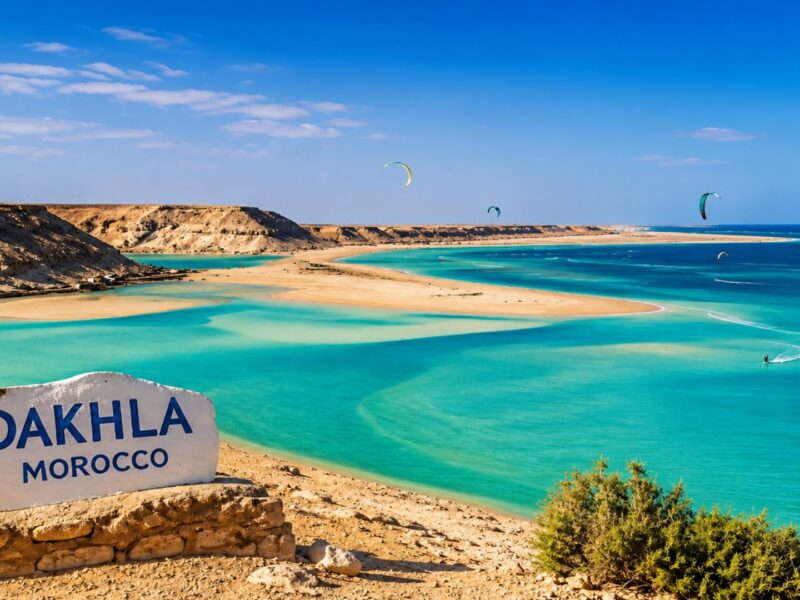
Picture a long finger of desert pointing south into the Atlantic. On its outer edge the ocean throws real swell. On its inner side sits a lagoon roughly 25 miles long, shallow and sandy and sheltered from the waves. Trade winds sweep down the coast from the Canary Islands and funnel across that lagoon almost every single day.
Local centers report winds of 15 to 25 knots on more than 300 days a year. One IKO center goes further and promises around 320 kiteable days. Even if you shave those numbers a little, very few places on earth come close.
Tourism in Dakhla is surprisingly young. When windsurfing pro Rachid Roussafi opened the first camp on the lagoon in the early 2000s, only one flight a week landed in town. He later told reporters the region had nothing to offer except sun, wind and waves, so locals turned those harsh elements into their greatest asset. Visitor numbers climbed from about 25,000 in 2010 to roughly 100,000 by the end of that decade, and kitesurfing carried much of that growth.
The best kitesurfing spots in Dakhla
Dakhla is not one spot. It’s a small constellation of them, each with its own personality, and the right choice depends on your level and the tide.
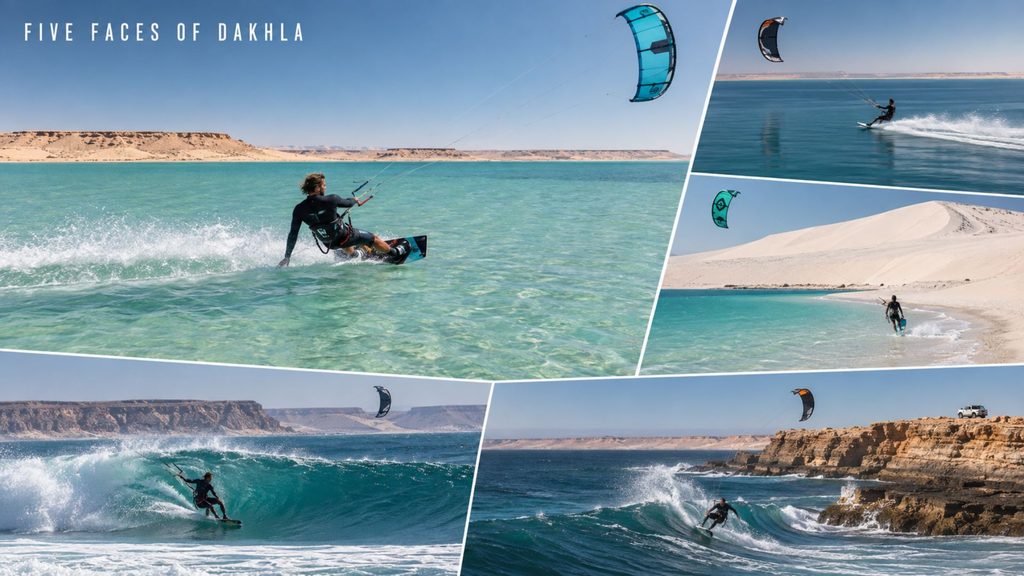
The lagoon
This is the main arena and the place where most kite camps sit right on the shore. Wide standing areas near the launch zones make it one of the friendliest places in the world to learn. At low tide the edges turn flat and shallow. As the tide rises and the wind builds, the surface gets choppy and busy.
Two local quirks are worth knowing. Gusts tend to get stronger around the full moon, and some launch zones sit behind dunes that stir up turbulent air close to the beach. Beginners often need a hand getting out, so don’t be shy about asking.
Speed Spot
Just south of the main area on the eastern side of the lagoon, Speed Spot is the most exposed and windiest stretch of water in Dakhla. At low tide it turns butter-flat, perfect for speed runs, freestyle and foiling. The catch is an offshore wind, which is why Morocco’s national tourist office flags it for experienced riders only. Ride with boat support and keep your wits about you.
Dune Blanche (White Dune)
Dune Blanche is a bank of pure white sand with its own miniature lagoon tucked inside. Most riders reach it on a downwinder of about 8 miles from Speed Spot, a trip that takes around three hours and that camps organize almost daily with a safety boat. Floating across turquoise water with dunes on one side and open desert on the other is the image that stays with most visitors long after they fly home.
Oum Lamboiur and West Point
On the Atlantic side, about 30 minutes from the lagoon camps, the mood changes completely. Oum Lamboiur, often called West Point, delivers a long right-hand point break and gustier wind. It’s also the stage for the GKA Kite-Surf World Cup, and the 2026 stop is scheduled for October 4 to 11. October is the standout month for kiting waves at this spot, although surf rolls in reliably from October through March.
Point de l’Or
The “golden point” is a point break that wraps around a small cliff and can give you rides of up to about 400 yards. You’ll need a 4×4 to get there, and the rocks at the start of the point become a real hazard at low tide. Bring booties and ride with someone who knows the break.
| Spot | Water | Wind | Level | Best for |
|---|---|---|---|---|
| Lagoon | Flat at low tide, choppy at high tide | Steady, gusty near dunes | All levels | Lessons, freeride |
| Speed Spot | Butter-flat at low tide | Offshore, strongest in the lagoon | Advanced | Freestyle, speed, foiling |
| Dune Blanche | Flat mini lagoon | Steady | Intermediate and up | Downwinders |
| Oum Lamboiur / West Point | Waves, choppy | Gusty, cross-shore | Advanced | Wave riding |
| Point de l’Or | Point break, rocks at low tide | Cross-shore | Advanced | Long wave rides |
Wind seasons in Dakhla
The prime kite window runs from April to October. June through August brings the heaviest wind, sometimes up to 35 knots, with a wind chance above 90 percent. That reliability comes at a price, since the air gets gusty and the lagoon fills up fast.
December and January are the quietest months. You can still kite plenty of days on bigger kites, but check the forecast and book closer to your travel dates.
| Period | Wind | Crowds | Best for |
|---|---|---|---|
| April to May | Reliable | Moderate | Lessons, freeride |
| June to August | Strongest, gusty, up to 35 knots | Busiest | Experienced riders on small kites |
| September to October | Reliable, wave season begins | Moderate, busy around the World Cup | All levels, waves |
| November to March | Lighter, lowest in December and January | Quiet | Big kites, wave riding |
Water temperatures hover between roughly 66 and 73°F. A shorty or a 3/2 wetsuit handles summer, while a full suit makes sense the rest of the year. Nights in the desert get chilly even in July, so pack a fleece for the walk back from dinner.
Choosing a kite school in Dakhla
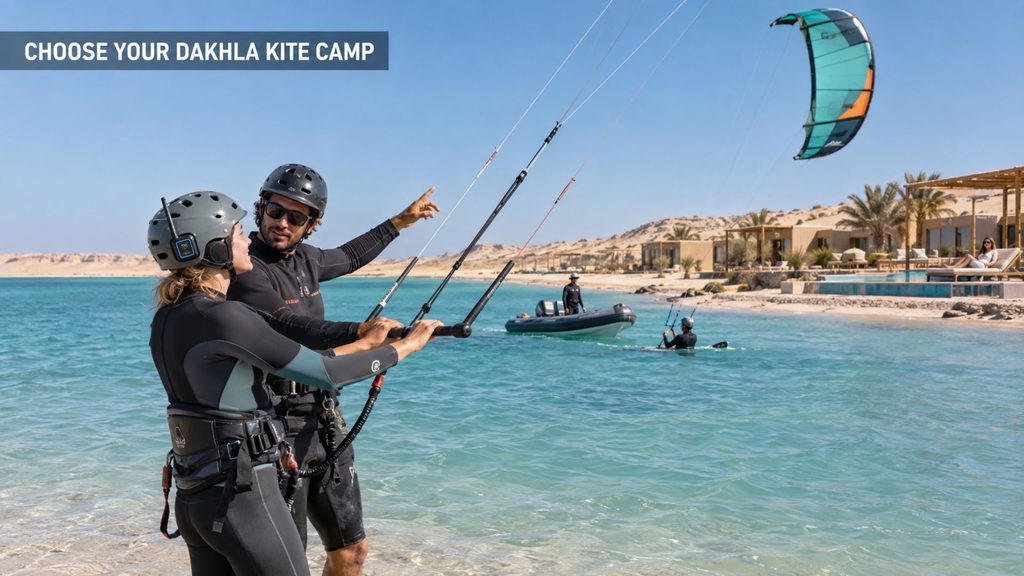
Almost every school in Dakhla is attached to a camp, so picking a school often means picking where you sleep. Look for IKO or VDWS certification, a rescue boat on the water, radio helmets for beginners and instructors who teach comfortably in English. French and Spanish are common in the camps, but English is widely spoken.
A few names come up again and again. KBC Dakhla is an IKO Pro center with bungalows, a freshwater pool and a hammam, a good fit if a non-kiting partner is coming along. Dakhla Kite Planet is IKO-affiliated and runs private coaching with boat support. Paraiso Dakhla sits just a few tacks from Speed Spot, while camps at West Point put wave riders right on the break.
Prices vary by season and format. Group lessons start around 60 euros (roughly $70) for two hours, a standard two-hour lesson booked online runs about $100, and private coaching with an IKO instructor starts near 200 euros for two hours. Most complete beginners need somewhere between nine and twelve hours of instruction before riding on their own, so plan your budget around a full course rather than a single taster.
If you’re a beginner, stay in the lagoon, take lessons at low tide and resist the urge to rush. Intermediates should book the Dune Blanche downwinder and consider a foil lesson on the flat water. Advanced riders will find their playground at Speed Spot at low tide and on the Atlantic breaks when the swell shows up.
Americans won’t find direct flights to Dakhla. Most travelers connect through Casablanca on Royal Air Maroc, so check the airline’s sports equipment policy before you pack a kite bag. And if you’re aiming for October, book early. The World Cup crowd and the season’s best conditions fill camps weeks ahead.
Where the wind takes you
I understood Dakhla’s appeal on my second morning at the lagoon. The wind had strengthened after breakfast, and I spent nearly 20 minutes falling before the board finally held its edge. Then, for perhaps 100 yards, everything went quiet: the instructor’s voice faded behind me, the lagoon slid by in shades of jade and pale gold, and the desert on the far shore looked close enough to touch. Nobody needed to say anything that night at dinner. My legs were still shaking, my wetsuit full of sand, and I could not stop smiling.
That small breakthrough captures what makes Dakhla special. The lagoon can feel forgiving, but the wind, the tide, and the choice of spot shape every session more than the equipment does. Before you lock in your dates, read our guide to the best time to visit Dakhla and match the season to the rider you want to become.
Would you rather spend your first Dakhla day learning in the flat lagoon or chasing the long right-hander at West Point?