Dakhla, Morocco: The Complete 2026 Travel Guide to Africa’s Kitesurf Capital
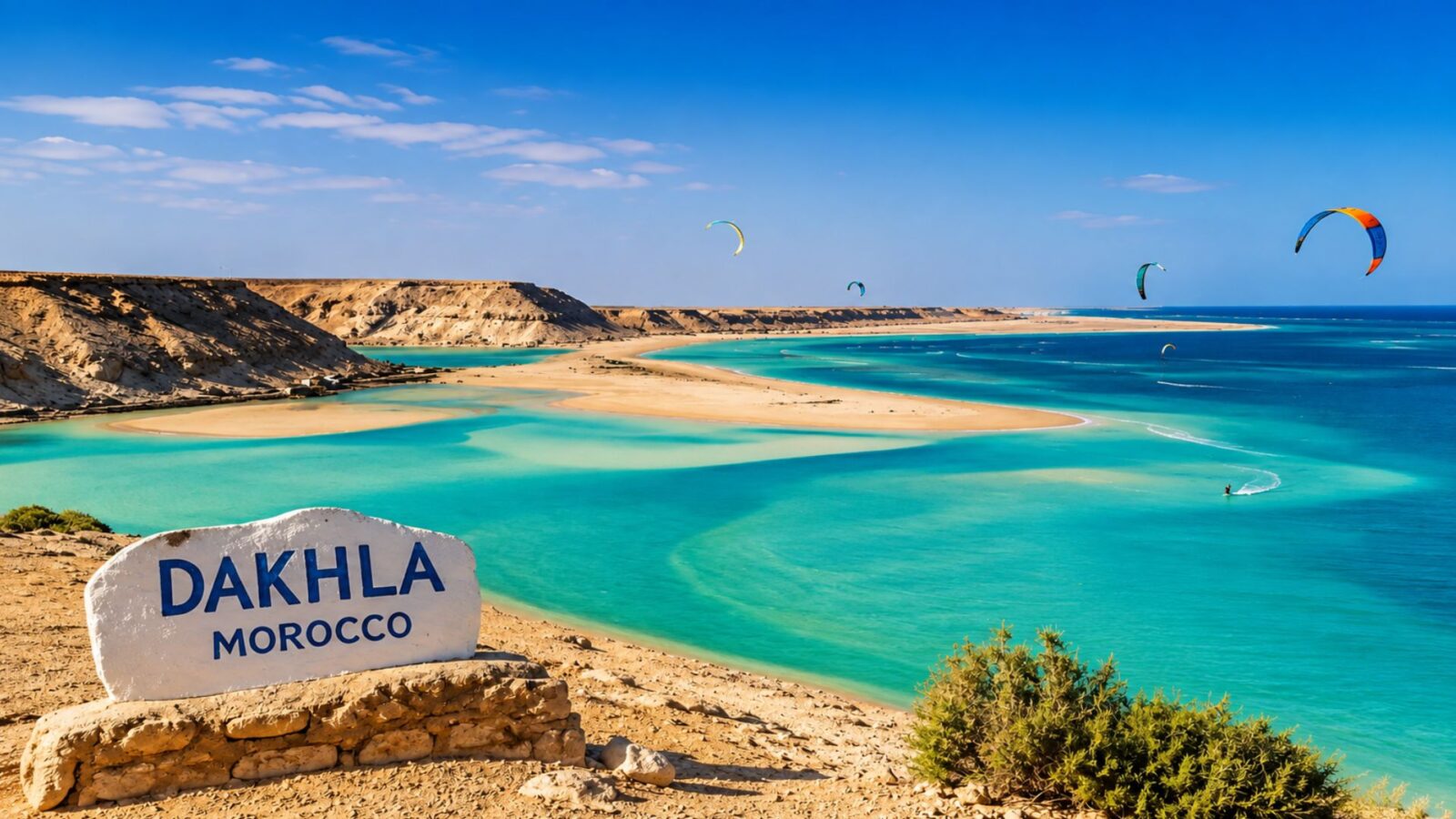
The plane drops out of a hazy sky, and for a long minute there is nothing below but sand. Then a sudden slash of turquoise appears, so bright it looks like a printing error on the map.
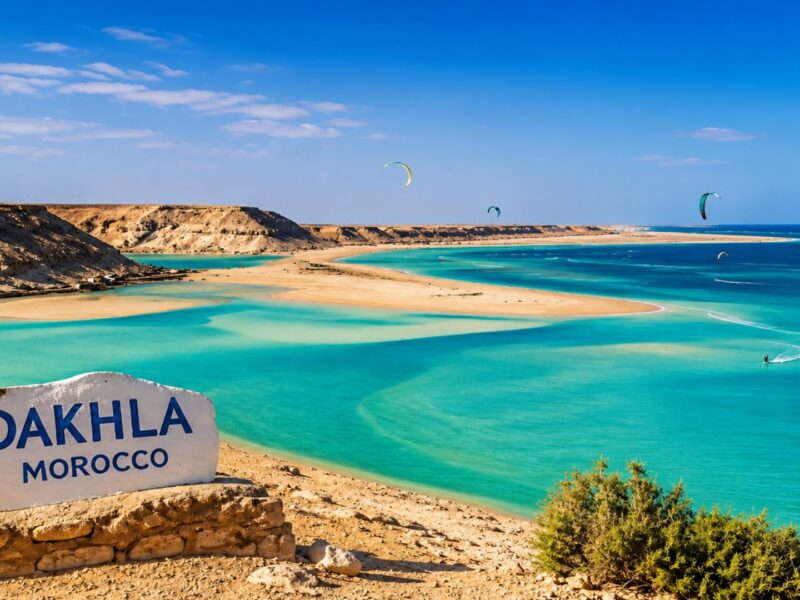
That’s your first glimpse of Dakhla, Morocco, a thin finger of Saharan desert pointing south into the Atlantic, with a lagoon of shallow blue water tucked along its inner side. It sits roughly 715 miles south of Agadir, closer to Mauritania than to Marrakech, and for most of the twentieth century it was known mainly as a Spanish garrison town and a fishing port. Few travelers had a reason to come.
The wind changed that. When windsurfing pro Rachid Roussafi opened the first tourist camp on the lagoon in the early 2000s, a single flight a week reached the town. He later told AFP that the region had nothing to offer but sun, wind and waves, so locals learned to treat those harsh elements as an asset. Visitor numbers grew from about 25,000 in 2010 to roughly 100,000 by the end of that decade, and kitesurfers from Brazil, Germany, France and the United States now arrive to ride one of the most reliable wind spots on the planet.
Today Dakhla is riding a much bigger wave. Morocco welcomed more than 14.1 million visitors in the first eight months of 2026, and August crossed two million monthly arrivals for the first time. Official figures for the first half of the year singled out Dakhla, alongside Marrakech and Agadir, as one of the destinations driving that growth. Four airlines now connect the city to nine airports, a rebuilt highway links it to the rest of Morocco and new resorts keep appearing along the lagoon.
A quick word on context. Dakhla lies in a territory whose status has been the subject of long-running United Nations diplomacy. For visitors, day-to-day travel works as it does anywhere else in Morocco, with Moroccan entry rules, currency, airlines and infrastructure.
What makes Dakhla worth your attention right now is timing. It’s still raw enough to feel like a discovery. There are no crowded medinas, no souvenir gauntlets and nightlife amounts to a beach bar and a few seafood grills. Yet the logistics have finally caught up with the scenery. That combination rarely lasts long, and Dakhla is at exactly that point.
This guide covers everything you need to plan a trip in 2026: how the wind and the seasons shape every decision, how to get there and where to stay, and what to do and spend once you arrive.
The wind that built a destination: kitesurfing and the best time to visit Dakhla
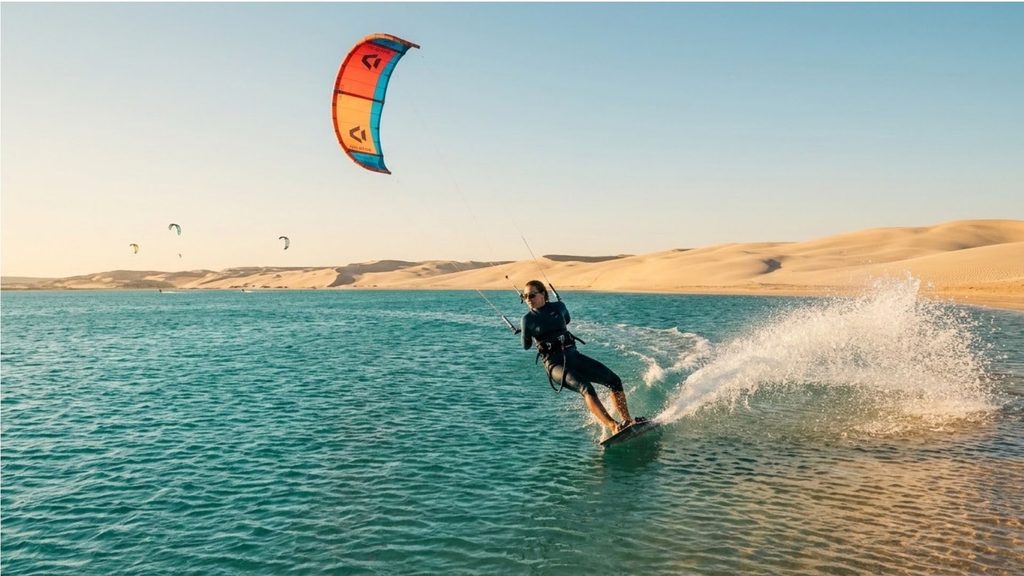
Every conversation about Dakhla eventually comes back to the wind. It decides when people come, where they sleep and how their days unfold. Understanding it is the key to planning a great trip, whether or not you ever strap on a board.
A lagoon made for riders
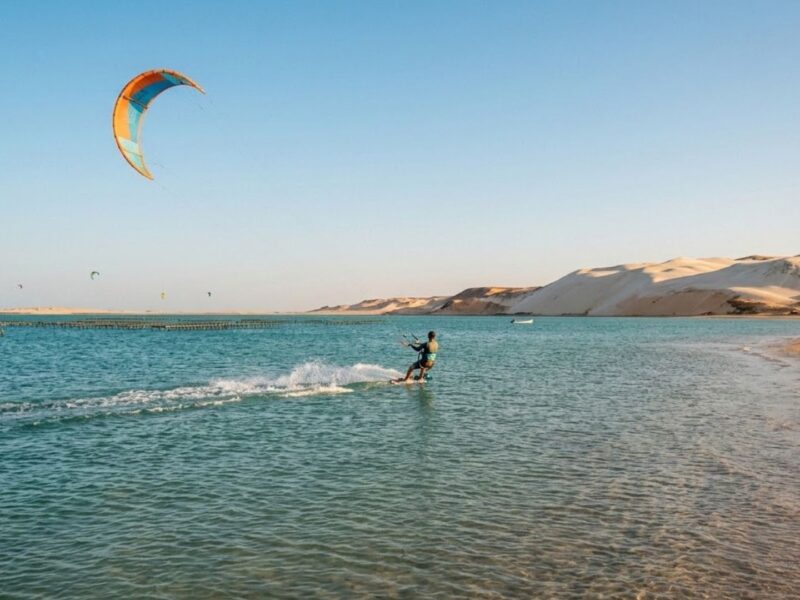
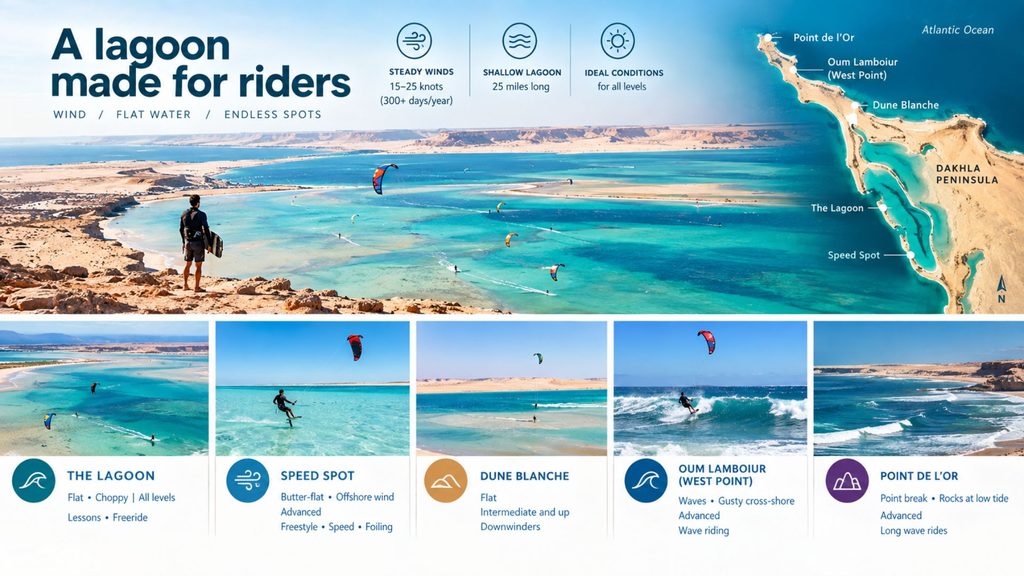
The geography does most of the work. The Dakhla peninsula shelters a lagoon about 25 miles long, shallow and sandy, protected from Atlantic swell. Trade winds sweep down the coast from the Canary Islands and funnel across the water with a regularity that borders on eerie. Local centers report winds of 15 to 25 knots on more than 300 days a year, and some push that estimate even higher.
That combination of flat water, steady wind and endless space is why Dakhla has become one of the best places in the world to learn. Beginners find wide standing areas near the launch zones. Freestylers find butter-flat water at low tide. And wave riders only have to cross the peninsula to find long Atlantic point breaks.
Five spots, five personalities
Dakhla is not a single kite spot but a small constellation of them, each with its own mood.
| Spot | Water | Level | Best for |
|---|---|---|---|
| The lagoon | Flat at low tide, choppy at high tide | All levels | Lessons, freeride |
| Speed Spot | Butter-flat at low tide, offshore wind | Advanced | Freestyle, speed, foiling |
| Dune Blanche (White Dune) | Flat mini lagoon | Intermediate and up | Downwinders |
| Oum Lamboiur / West Point | Waves, gusty cross-shore wind | Advanced | Wave riding |
| Point de l’Or | Point break with rocks at low tide | Advanced | Long wave rides |
The main lagoon is where most camps sit and where almost everyone learns. Speed Spot, just to the south, is the windiest stretch of the lagoon and a playground for experienced riders only, since the offshore wind leaves little margin for error. The downwinder to Dune Blanche covers about eight miles of turquoise water and has become a rite of passage for intermediate riders. Out on the Atlantic side, West Point delivers a long right-hand break that hosts the world’s best strapless riders every October.
Choosing between these spots matters more than choosing gear. Our in-depth guide to kitesurfing in Dakhla breaks down each spot, the tides that shape them and the schools that teach there.
Learning without the guesswork
Dakhla’s schools are mostly attached to camps, so choosing where to learn often means choosing where to sleep. The best ones share a few traits: IKO or VDWS certification, a rescue boat on the water, radio helmets for beginners and instructors comfortable teaching in English.
Most complete beginners need nine to twelve hours of instruction before riding on their own. That’s a realistic goal for a week in Dakhla, which is part of the town’s appeal. In many kite destinations, a week of lessons can be derailed by three windless days. In Dakhla, that scenario is rare enough to feel like bad luck rather than bad planning.
Reading Dakhla’s calendar
The climate itself barely changes. A cold ocean current keeps temperatures remarkably stable, typically between about 59°F and 77°F (15°C to 25°C) year-round, with rain so scarce that a full year delivers only about an inch and a half. What changes is the character of the wind, the swell and the crowds.
| Season | Wind | Waves | Crowds | Best for |
|---|---|---|---|---|
| Spring (April to May) | Reliable | Fading | Moderate | Beginners, freeride |
| Summer (June to August) | Strongest, gusty | Small | Busiest | Experienced riders |
| Fall (September to November) | Reliable | Building to excellent | Busy in early October | Waves, spectators, all levels |
| Winter (December to March) | Lightest | Good to excellent | Quiet except holidays | Wave riders, birdwatchers |
Summer is Dakhla’s wind season in its purest form. July and August deliver a wind chance above 90 percent, with gusts that can reach 35 knots. For seasoned riders on small kites, it’s paradise. For nervous beginners, it can be a lot.
Fall is when many regulars prefer to come. September brings the warmest air and water of the year, while the Atlantic swell starts building toward its peak. In early October, the GKA Kite-Surf World Cup lands at West Point. The 2026 event is scheduled for October 4 to 11, and watching the world’s best riders launch off Atlantic waves is worth planning a trip around, even if you’ve never touched a kite.
Winter is quieter on the water but beautiful on land. Flamingos and other migratory birds are most visible from November to March, and the sunshine is a welcome escape for anyone leaving a North American winter behind.
Spring may be the most balanced season of all. The wind turns reliable, prices haven’t peaked and the lagoon feels lively without being crowded.
Matching the month to your goals is the single most useful planning decision you’ll make. Our month-by-month guide to the best time to visit Dakhla covers wind, waves, water temperatures, events and crowds so you can pick your dates with confidence.
Reaching the edge of the map: getting to Dakhla and choosing your base
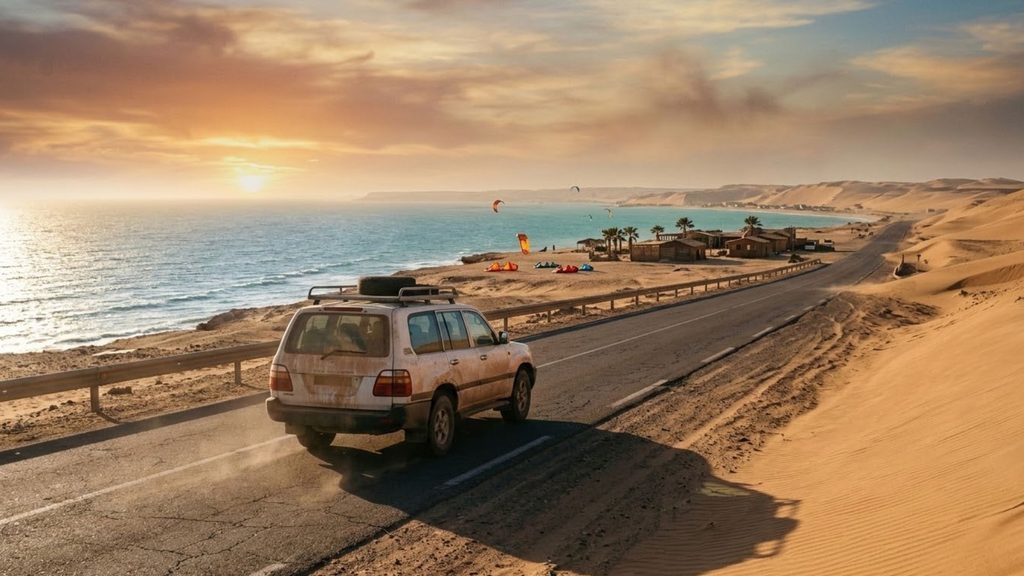
For years, the hardest part of a Dakhla trip was simply getting there. That has changed faster than most travelers realize, and the way you arrive now shapes the kind of trip you’ll have almost as much as where you sleep.
Flying in
Dakhla Airport (VIL) is small, relaxed and just a couple of miles from the city center. As of September 2026, four airlines connect it to nine airports. The international routes all come from Europe: Transavia from Paris Orly and Marseille, Royal Air Maroc from Paris Orly, Binter Canarias from Gran Canaria and Ryanair from Madrid. Inside Morocco, Royal Air Maroc flies direct from Agadir, Casablanca, Laayoune, Marrakech and Rabat.
There are no direct flights from North America, so every American traveler connects at least once. The simplest routing is Royal Air Maroc all the way through Casablanca on a single ticket, which protects you if a connection runs late. Budget-minded travelers often fly to Madrid and hop on Ryanair, whose Dakhla fares have dipped as low as about $40 round trip. A third option runs through Paris Orly, where the nonstop flight to Dakhla takes around three and a half hours.
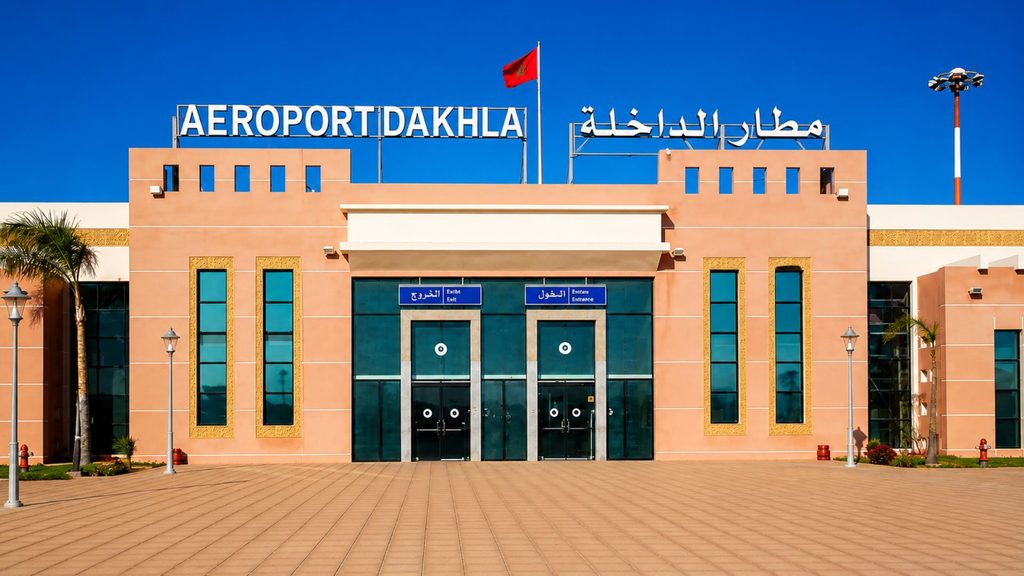
That growth in air access is a quiet turning point. When Ryanair launched its Madrid route in early 2025, it became the fourth airline to partner with Morocco’s national tourism office on direct international flights to Dakhla, and the new connections were expected to double the airport’s international capacity. For travelers, more seats mean more competition and more realistic fares.
US citizens can enter Morocco without a visa for up to 90 days. If you’re bringing a kite or surfboard, check each airline’s sports equipment fees before you book, since they can erase the savings on a cheap fare.
The road south
Driving to Dakhla is one of the great overland journeys in North Africa, and it has never been easier. The N1 runs south from Agadir through Tiznit, Guelmim, Tan-Tan, Tarfaya, Laayoune and Boujdour before swinging onto the peninsula, a total of roughly 715 miles.
The road itself has been transformed. A major upgrade covering about 655 miles between Tiznit and Dakhla turned the Tiznit to Laayoune stretch into a divided four-lane expressway and widened the rest into a broader two-lane road. Officials declared the works complete in July 2026, although a long bypass viaduct around Laayoune is still under construction. American travelers may also notice a new name on maps and in the headlines, since the route was renamed the President Donald J. Trump Highway in August 2026.
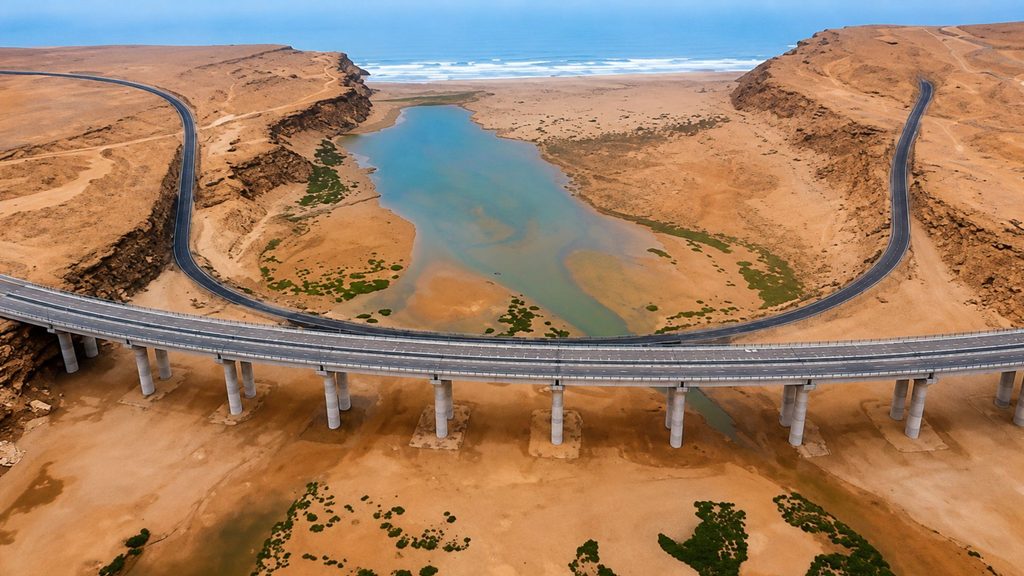
Most drivers split the trip into three days, with overnight stops in Tan-Tan and Laayoune. Tarfaya deserves a pause along the way. Antoine de Saint-Exupéry ran an airmail station on this coast in the late 1920s, and the ruined Spanish fort of Casa del Mar still sits in the surf offshore.
If you’d rather someone else drive, long-distance buses run by CTM, Supratours and Satas reach Dakhla from as far north as Casablanca and Marrakech. From Agadir, the ride takes about 20 hours and costs around 350 dirhams, or roughly $38.
| Option | Time from Agadir | Rough cost | Best for |
|---|---|---|---|
| Domestic flight | Under 2 hours in the air | Varies by season | Short trips, travelers with gear |
| Bus | About 20 hours | About $38 | Budget travelers with time |
| Car | 2 to 3 days | Rental plus fuel | Slow travelers, photographers |
A popular compromise is to fly one way and drive the other, trading a day of convenience for the full sweep of the Saharan coast. Our complete guide on how to get to Dakhla covers flight routings from the US, bus schedules, checkpoint tips and a three-day road trip itinerary.
Lagoon, wave coast, town or desert
Once you’ve figured out how to arrive, the next decision is where to wake up. In Dakhla, this choice matters more than in most destinations, because the town and the lagoon camps can be 30 to 40 minutes apart by car.
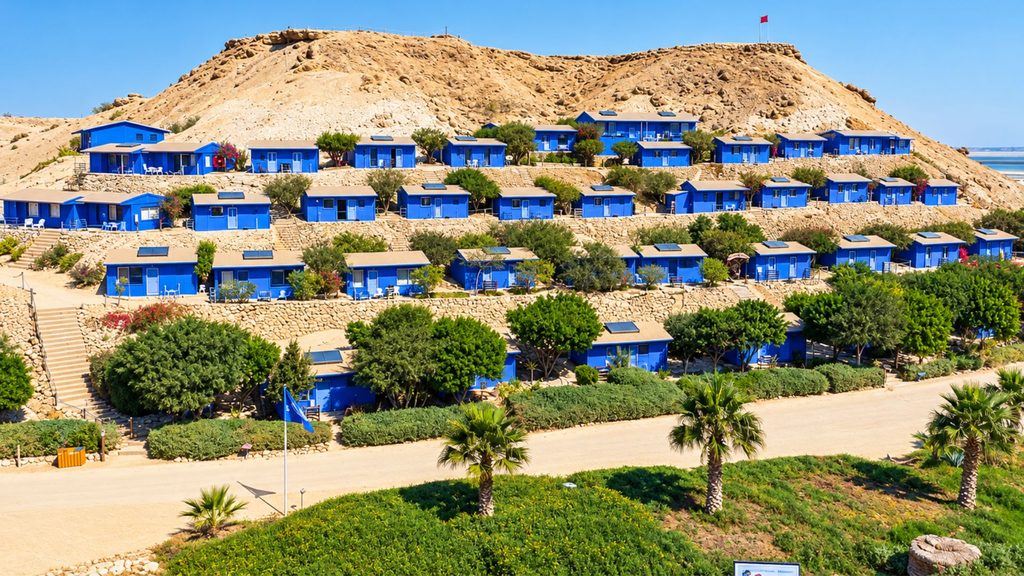
The lagoon kite camps are the default for anyone coming to ride. You walk from your bungalow to the water, eat most meals on site and never touch a car. Dakhla Attitude, one of the largest water sports centers in the region, sits close to Speed Spot and the White Dune downwinder. PK25 offers 32 lagoon-facing bungalows and a relaxed atmosphere that suits beginners and families. Lagon Energy leans toward eco design, yoga and healthy food. The trade-off is isolation: little nightlife, few independent restaurants and not much to do if the wind drops.
The wave coast belongs to Westpoint, whose 40 eco cottages face the Oum Lamboiur break across two floors. It’s the natural base for surfers and experienced wave kiters, with transfers to sister hotels on the lagoon when you want flat water.
Dakhla town is the budget and social choice. Guesthouses and city hotels are generally cheaper, and you’re within walking distance of seafood grills, the night market and the waterfront promenade at sunset. The catch is transport. If you plan to ride daily, you’ll almost certainly need a rental car.
The newest category is the desert and wellness retreat. Properties like Dunes de Dakhla, with luxury tents and a pool, or La Crique, which focuses on spa treatments, appeal to couples and non-riders who want the scenery without the kite scene.
| Base | Best for | Distance to the lagoon | Budget |
|---|---|---|---|
| Lagoon kite camps | Kiters, wingfoilers, beginners | On the water | Mid-range, often full board |
| Westpoint (wave coast) | Surfers, wave kiters | About 30 minutes | Mid-range |
| Dakhla town | Budget and social travelers | Up to 40 minutes by car | Lowest |
| Desert and wellness retreats | Couples, non-riders | About 10 minutes or more | Highest |
One piece of local wisdom applies everywhere. Ownership and management of Dakhla properties change often, and service quality can shift with them. Read reviews from the past few months rather than relying on a reputation built years ago, and ask whether airport transfers and gear storage are included before you commit.
Our side-by-side guide to where to stay in Dakhla compares the lagoon camps, wave-spot cottages, town hotels and desert retreats in detail so you can match your base to the trip you have in mind.
Beyond the wind: what to do in Dakhla and what it really costs
Plenty of visitors spend a week in Dakhla and never look past the lagoon. That’s their loss. The landscape around this peninsula is one of the strangest in Morocco, and a few days off the water often produce the memories people talk about longest.
Where the desert meets the sea
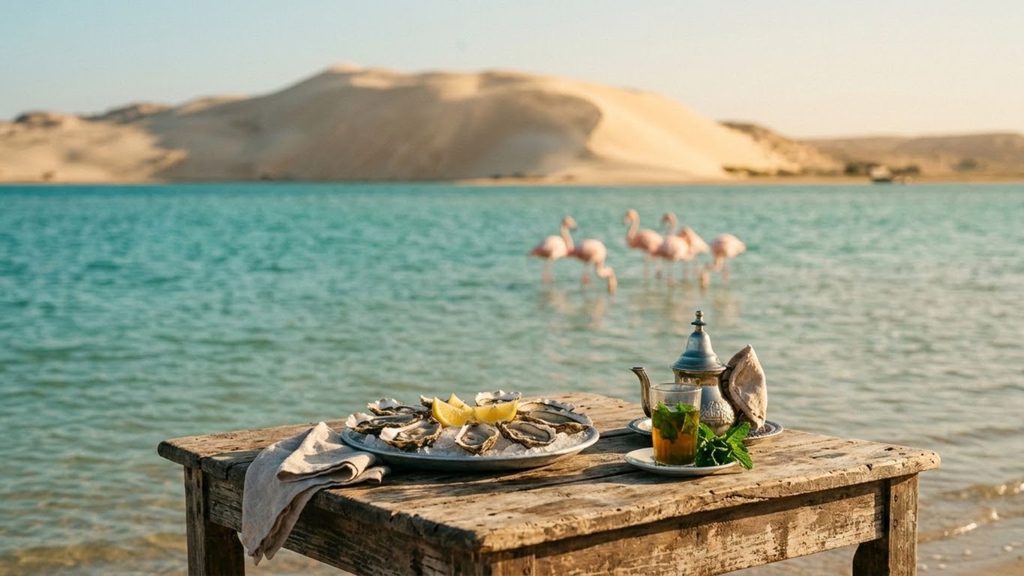
The White Dune, or Dune Blanche, is Dakhla’s signature landmark. It rises from the southern lagoon, a mound of sand so pale it almost glows, and depending on the tide it can become a temporary island ringed by turquoise shallows. Unlike most dunes, it barely moves, anchored by the waterlogged ground beneath it. Climb to the top and you’ll see desert and ocean meeting in every direction, often with flamingos feeding below.
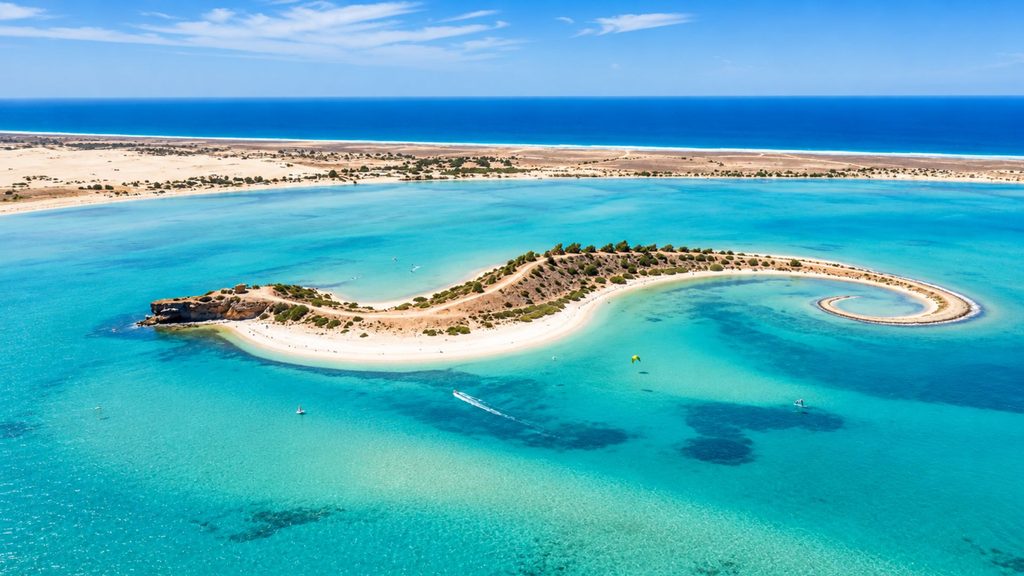
Dragon Island sits inside the lagoon and can only be reached by boat. The crossing is half the pleasure, and the summit offers a 360-degree view of the dunes, beaches and inland water. It’s also one of the best perches for watching migratory birds.
About 22 miles from town, at the end of a long sandy track, warm water gushes out of the desert at the Asmaa hot spring. Don’t expect a spa. Expect a small building, a powerful jet of water around 100°F and a surreal contrast with the empty land around it. Most half-day 4×4 tours pair the spring with the White Dune.
For a full day of adventure, the Imlili sebkha delivers something genuinely unusual: a desert wetland with more than 160 small pools, some of them home to fish. Tours usually add Porto Rico beach, a wild stretch of Atlantic coast, on the way back.
The taste of the lagoon
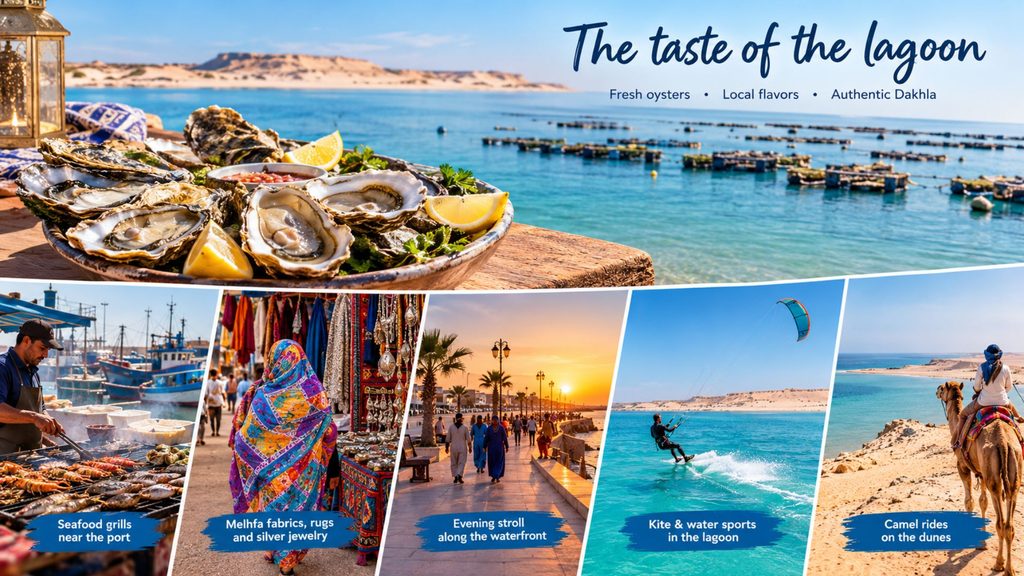
The same clean water that makes the lagoon so pleasant to ride also makes it ideal for shellfish. Dakhla’s oyster farms produce some of the best oysters in Morocco, much of the harvest destined for export. Several farms welcome visitors, and eating a freshly shucked oyster on the edge of the lagoon, for a fraction of what you’d pay in New York or Boston, is one of the small joys of the trip.
In town, the evening rhythm is simple and appealing. Families stroll the waterfront, seafood grills fire up near the port and the souk sells melhfa fabrics, the colorful wraps worn by Sahrawi women, alongside rugs and silver jewelry. It’s a local scene that feels miles away from the kite camps, which is exactly why it’s worth an evening or two.
| Experience | Time needed | Best for |
|---|---|---|
| White Dune and Asmaa hot spring | Half day | Photographers, nature lovers |
| Dragon Island by boat | Half day | Wildlife, panoramic views |
| Oyster farm visit | 1 to 2 hours | Food lovers |
| Imlili pools and Porto Rico beach | Full day | Adventurous travelers |
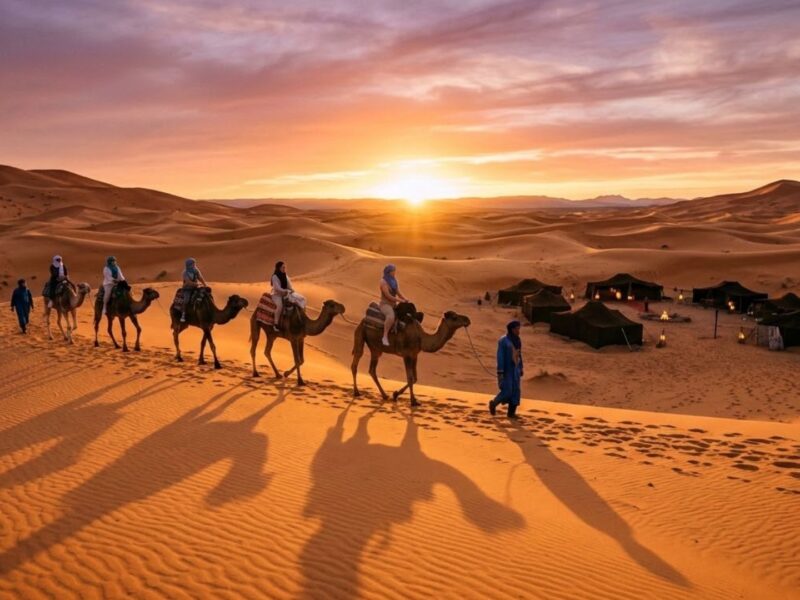
| Horse or camel ride | 2 to 3 hours | Couples, families |
Our guide to things to do in Dakhla covers each of these experiences in more depth, with tips on tides, timing and choosing a guide.
What a Dakhla trip really costs
Dakhla can be surprisingly affordable or quietly expensive, and the difference comes down to three choices: how you arrive, where you sleep and how much time you spend in lessons.
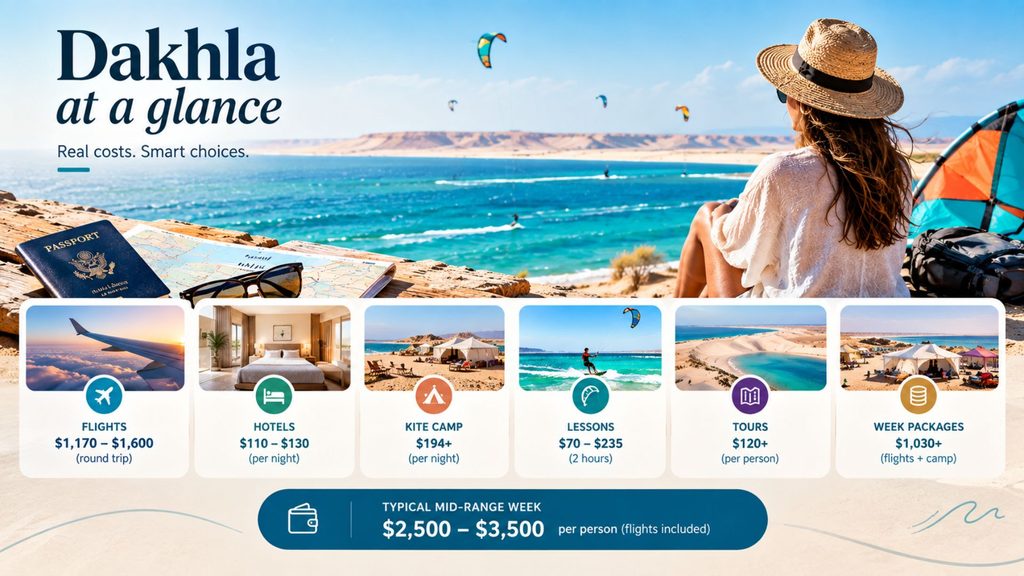
For Americans, the flight is the largest single cost. Recent round-trip fares from Washington Dulles to Dakhla started around $1,170 and climbed past $1,600 over the Christmas holidays. Building your own route through Madrid or Paris can save money, as long as you leave a generous buffer between separate tickets.
On the ground, the dirham makes budgeting straightforward. In early September 2026, one US dollar bought about 9.3 dirhams. Many camps and tour operators quote prices in euros, reflecting their mostly European clientele.
| Item | Typical cost (USD) |
|---|---|
| Mid-range town hotel, double room | About $110 to $130 per night |
| Lagoon kite camp room | From about $194 per night |
| Kite camp week package from Europe (flights, shared tent, full board) | From about $1,030 per person |
| Group kite lesson (2 hours) | About $70 |
| Private kite lesson (2 hours) | About $235 |
| Private White Dune and hot spring tour | From about $120 |
Lessons deserve special attention in your planning. A full beginner course of nine to twelve hours can run from roughly $350 in a group to more than $1,100 with a private instructor. Some camps also charge a daily fee to store your own gear, so ask before you book.
Put it all together and a comfortable mid-range week in Dakhla typically lands between about $2,500 and $3,500 per person for American travelers, flights included. Shoestring travelers staying in town can spend far less, while a private coaching week at a lagoon camp can easily push past $4,000.
The smartest savings come from timing. April, May and November offer good conditions without peak-season premiums, while early October and the Christmas holidays bring higher prices and scarce rooms. Our detailed Dakhla trip cost breakdown covers flights, accommodation, lessons, tours and three sample budgets so you can plan with real numbers.
Why Dakhla stays with you
Most destinations reveal themselves slowly. Dakhla does the opposite. It hands you everything at once: the wind in your face as you step off the plane, the lagoon glowing on the horizon, the desert running straight into the sea. What takes time is understanding why the place feels so different.
Part of the answer is scale. Dakhla, Morocco, is still small enough that a local fisherman, a French kite instructor and a family from Casablanca can all share the same stretch of beach at sunset. Part of it is momentum. New flights, a rebuilt highway and a steady stream of new resorts mean the Dakhla of five years from now will look different from the one you can visit today. Travelers who come now will remember it before the secret fully spread.
And part of it is simply the rhythm. Days here are shaped by tides and trade winds, not by opening hours or tour bus schedules. You ride when the wind blows, eat when you’re hungry and watch the sky turn pink over the dunes because there’s nothing more important to do.
If you’re ready to turn the idea into a plan, start with the one decision that shapes everything else. Our guide to the best time to visit Dakhla will help you choose the season that matches the trip you’re dreaming of, whether that means summer wind, fall waves or winter flamingos.
What would draw you to Dakhla first: the promise of steady wind, the silence of the desert or the chance to see it before the rest of the world catches on?