Traditional Moroccan dishes: tagine, couscous the flavors you cannot miss
Moroccan cooking transforms simple ingredients into layered, aromatic dishes that have earned admirers worldwide. The slow-cooked tagine, the celebratory couscous, the sweet and savory pastilla, each tells a story of Berber, Arab, and Mediterranean influences blending over centuries. Understanding these traditional Moroccan dishes provides the foundation for appreciating everything else on the table. This knowledge forms an essential part of any complete guide to Moroccan food and helps travelers eat with intention rather than just curiosity.
Tagine: the soul of Moroccan cooking
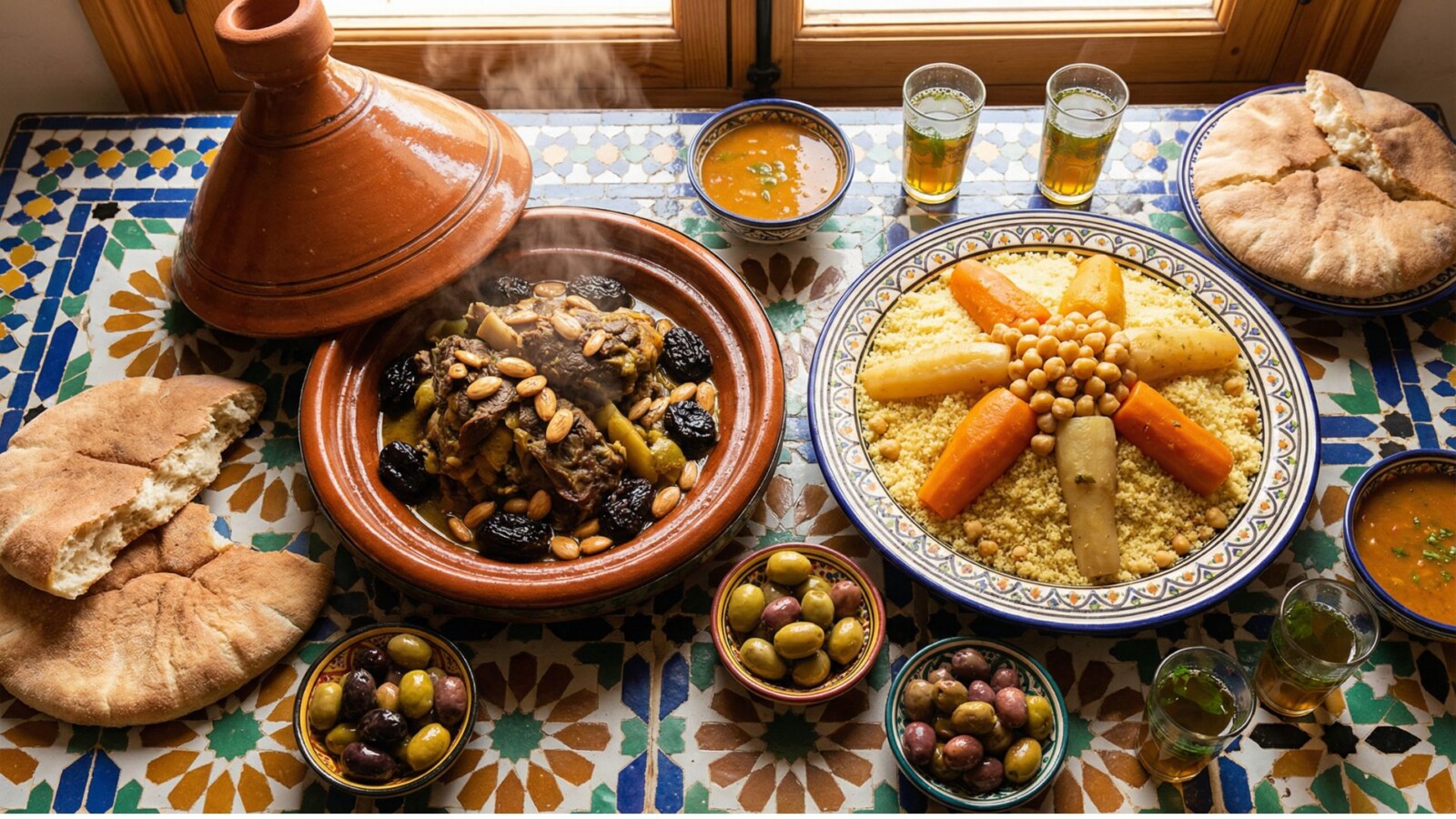
If Morocco had a national dish, tagine would win by a landslide. The name refers both to the conical clay pot used for cooking and the stew prepared inside it. The distinctive cone-shaped lid traps steam and returns it to the dish, creating tender meat and concentrated flavors without requiring much liquid. This cooking method developed centuries ago as a practical solution for areas with limited water and fuel.
The beauty of tagine lies in its versatility. Walk into any Moroccan restaurant and you’ll find a dozen variations on the menu. Lamb with prunes and almonds balances savory and sweet. Chicken with preserved lemons and olives delivers bright, briny flavors. Kefta tagine features spiced meatballs poached in tomato sauce, often with an egg cracked on top during the final minutes. Vegetarian versions showcase seasonal produce with the same aromatic spice treatment.
What makes tagine distinctly Moroccan is the flavor profile. Most versions include a base of onions, garlic, and olive oil. From there, spices like cumin, ginger, turmeric, cinnamon, and saffron build complexity. Preserved lemons add a fermented brightness impossible to replicate with fresh citrus. The slow cooking melds everything together until individual ingredients become part of something greater.
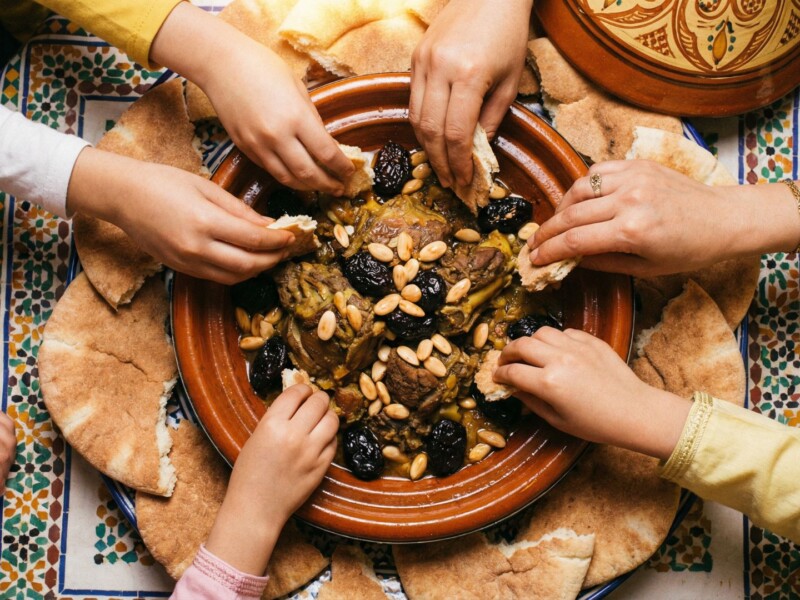
Eating tagine properly involves bread. Moroccans use khobz, a round flatbread, to scoop food directly from the communal pot. The bread serves as both utensil and starch, soaking up the flavorful sauce that pools at the bottom. Asking for a fork isn’t offensive, but embracing the traditional approach connects you more directly to the food and the culture.
| Popular Tagine Varieties | Key Ingredients | Flavor Profile |
| Lamb with Prunes | Lamb shoulder, prunes, almonds, cinnamon | Sweet and savory |
| Chicken with Preserved Lemon | Chicken, preserved lemons, olives, saffron | Bright and briny |
| Kefta | Spiced meatballs, tomato, egg | Rich and comforting |
| Fish Tagine | White fish, tomatoes, peppers, chermoula | Light and herby |
| Vegetable Tagine | Seasonal vegetables, chickpeas, ras el hanout | Earthy and aromatic |
Couscous: Friday’s sacred tradition
Couscous holds a special place in Moroccan culture that goes beyond mere nutrition. Families gather every Friday after midday prayers to share this dish together, making it as much a social ritual as a meal. UNESCO recognized the cultural significance of couscous in 2020, adding it to the Intangible Cultural Heritage list shared by Morocco, Algeria, Tunisia, and Mauritania.
The couscous itself consists of tiny granules of semolina wheat, steamed multiple times until fluffy and separate. Traditional preparation involves a couscoussier, a two-part pot where broth simmers below while steam rises through perforated holes to cook the grains above. The process takes hours and requires attention, which explains why it became a weekly rather than daily tradition.
Toppings vary by region and season, but the classic Moroccan version features seven vegetables. Carrots, turnips, zucchini, cabbage, tomatoes, onions, and chickpeas commonly appear, though the specific mix depends on what’s available. Lamb or chicken typically crowns the mound of couscous, with the cooking broth ladled over everything. Sweet caramelized onions with raisins and a dusting of cinnamon often garnish the top.
The communal aspect of couscous eating reinforces its cultural importance. The dish arrives on a massive platter meant for sharing. Everyone eats from their section of the plate, working from the outside toward the center. The host traditionally places choice pieces of meat in front of honored guests, a gesture of respect that continues throughout the meal.
Restaurants serve couscous throughout the week, but finding it on Friday feels more authentic. Many establishments prepare an especially elaborate version for the traditional day, and the atmosphere of families gathering adds something no other day can replicate.
Pastilla: sweet meets savory
Pastilla might be the most surprising dish for newcomers to Moroccan cuisine. This elaborate pie layers shredded pigeon or chicken with scrambled eggs, almonds, and a heavy dose of cinnamon and powdered sugar, all wrapped in paper-thin warqa pastry and baked until crispy. The combination sounds bizarre on paper but works beautifully in practice.
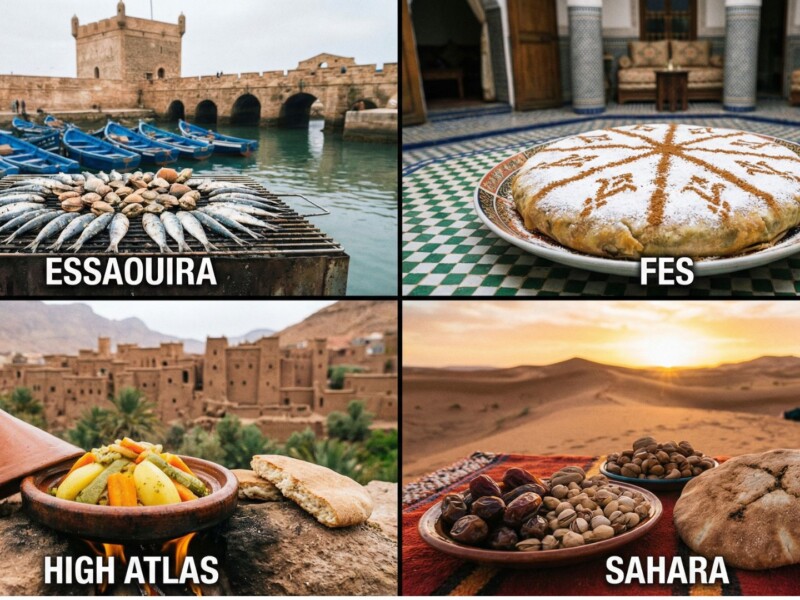
The dish traces its origins to Andalusian Spain, arriving in Morocco with the Moors expelled during the Reconquista. Fes became its adopted home, and the city still produces what many consider the finest pastilla in the country. The dish requires significant time and skill to prepare, which traditionally reserved it for special occasions like weddings and religious celebrations.
Modern restaurants serve smaller individual portions, making pastilla accessible any day of the week. The pigeon version remains more traditional and flavorful, but chicken has become common due to availability and cost. Some coastal restaurants offer seafood pastilla filled with shrimp and fish, a delicious variation on the original theme.
Eating pastilla involves navigating contrasts. The crackling exterior gives way to moist, richly spiced filling. Sweetness from the sugar and cinnamon plays against savory meat and eggs. The experience challenges Western expectations about what belongs together on a plate, which is exactly why adventurous eaters love it.
Harira: comfort in a bowl
Harira is Morocco’s ultimate comfort food, a hearty soup that appears daily but takes on special significance during Ramadan. When the sun sets and the fast breaks, harira is often the first thing to touch the lips of millions of Moroccans. The soup provides gentle nourishment after a day without food, preparing the stomach for the larger meal to follow.
The base combines tomatoes, lentils, chickpeas, and often small pasta or rice in a broth thickened with flour and egg. Lamb or beef adds richness, though vegetarian versions exist. Fresh herbs like cilantro and parsley brighten the flavor, while a spice blend including ginger, turmeric, and pepper adds warmth without overwhelming heat.
Street vendors and restaurants serve harira year-round, ladled from massive pots kept warm over low flames. A bowl typically comes with dates and chebakia, a sesame cookie drizzled with honey, recreating the traditional Ramadan combination even outside the holy month. The pairing of savory soup with sweet accompaniments follows the same logic as pastilla, balancing flavors in ways that define Moroccan cuisine.
During Ramadan, the experience of breaking fast with harira connects visitors to something larger than a meal. The shared anticipation as sunset approaches, the call to prayer signaling the end of the day’s fast, the first sip of soup, these moments create memories that outlast any restaurant dinner.
Mechoui: celebration on a spit
Mechoui represents Moroccan cooking at its most primal and celebratory. A whole lamb slow-roasted over coals or in a clay pit until the meat falls from the bone, served with nothing more than salt and cumin for dipping. The simplicity of preparation belies the skill required to achieve perfectly tender meat with crispy skin.
This dish appears at significant celebrations including weddings, religious holidays, and family gatherings. Preparing mechoui requires space, time, and expertise that most home cooks lack, making it a communal event often handled by specialists. The roasting can take five hours or more depending on the size of the lamb.
Travelers can find mechoui at specialty restaurants in major cities, particularly Marrakech. Some establishments let you see the lamb roasting in a traditional pit, adding theater to the experience. The meat arrives torn into portions, meant for eating with hands and bread rather than knife and fork. The ritual of gathering around a shared animal connects modern diners to traditions stretching back centuries.
Beyond the famous names
Several dishes deserve mention even if they lack the international recognition of tagine and couscous.
Tanjia is Marrakech’s bachelor dish, a clay pot filled with lamb, preserved lemons, spices, and olive oil then slow-cooked in the ashes of a public bathhouse oven. The preparation requires hours but minimal attention, supposedly allowing unmarried men to drop off their pot and return after the hammam to find dinner ready.
Rfissa layers shredded msemen flatbread with chicken in a fenugreek sauce, traditionally served to new mothers for its supposed restorative properties. The dish is rich, aromatic, and utterly satisfying even if you have no medical reason to eat it.
Zaalouk and taktouka are cooked salads that appear at the start of most meals. Zaalouk combines roasted eggplant with tomatoes and spices, while taktouka features tomatoes and peppers. Both showcase vegetables treated with the same care usually reserved for main dishes.
Finding authentic traditional dishes
Quality varies dramatically across Morocco’s restaurants and food stalls. Tourist areas often serve simplified versions adjusted for foreign palates, while neighborhood spots frequented by locals maintain more authentic preparations.
A few indicators suggest quality. Restaurants that specialize in one or two dishes usually do them better than places with enormous menus. Crowds of Moroccan families signal trust in the kitchen. Prices that seem surprisingly low for the portion size often mean home-style cooking rather than tourist markup.
Accepting invitations to eat in Moroccan homes offers the most authentic experience. The hospitality culture means such invitations come relatively easily, and home cooking typically surpasses restaurant food in both flavor and generosity. Bringing a gift of pastries or fruit shows appreciation without implying the host cannot provide enough food.
Experience the full tradition
Traditional Moroccan dishes tell the story of a cuisine shaped by geography, history, and culture. The slow-cooked tagine emerged from practical necessity. Friday couscous reinforces family bonds. Pastilla preserves Andalusian heritage. Each dish connects to something larger than its ingredients.
Understanding what you’re eating adds depth to every meal. The flavors become more interesting when you know the traditions behind them. The communal eating makes more sense when you understand the cultural values it represents. Food becomes a window into Moroccan life rather than just fuel for sightseeing.
Once you’ve grasped these foundational dishes, exploring the vibrant world of Moroccan street food reveals an entirely different side of the culinary culture, where vendors and night markets serve quick bites that locals eat daily between the bigger meals.