Regional Moroccan food: flavors from coast, mountains, and desert
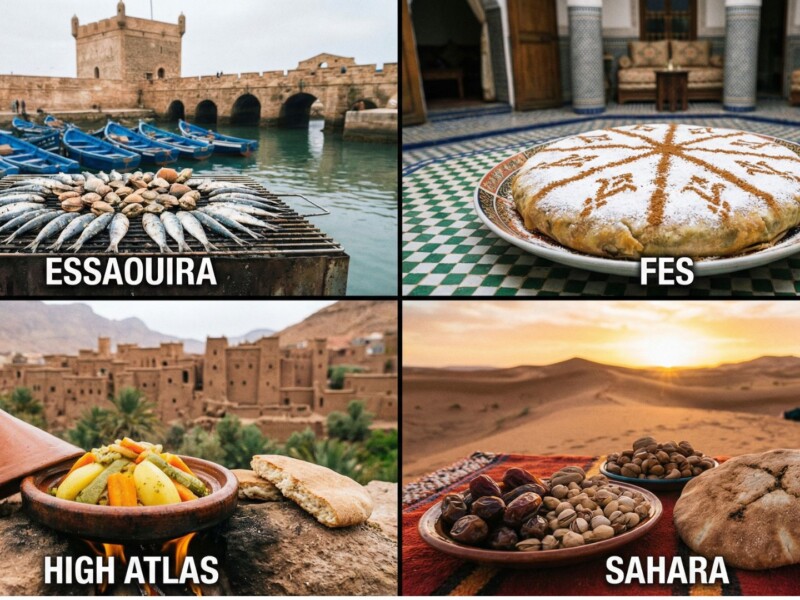
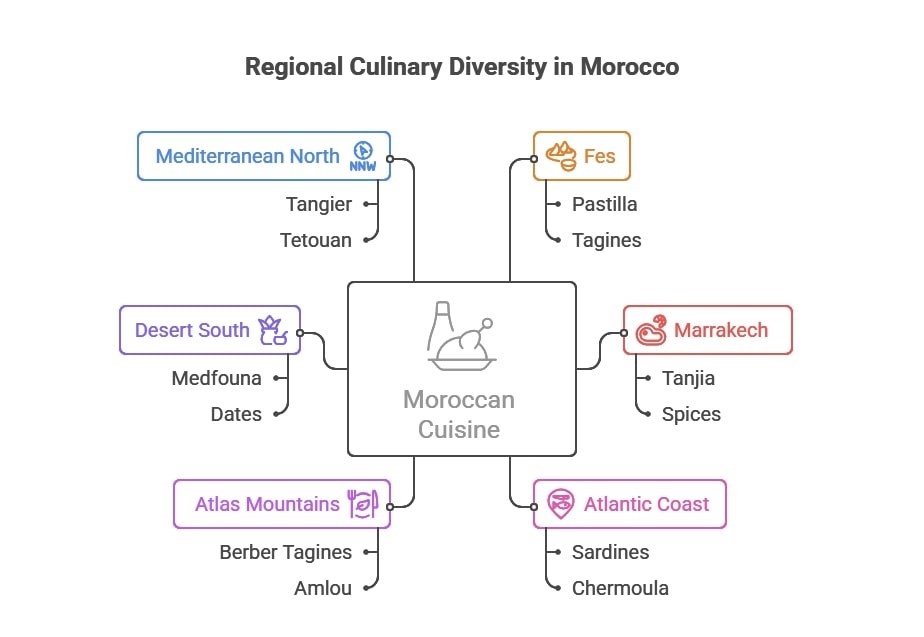
Morocco packs remarkable culinary diversity into its borders, with coastal cities, mountain villages, and desert towns each developing distinct food traditions. The grilled sardines of Essaouira bear little resemblance to the rich lamb dishes of Fes or the simple Berber preparations of the High Atlas. Traveling through the country means eating through it too, with regional Moroccan food revealing how geography shapes what ends up on the plate. This regional variety represents one of the most fascinating aspects of Moroccan food culture for curious travelers.
The imperial cities: where refinement meets tradition
The historic capitals of Fes, Marrakech, Meknes, and Rabat developed sophisticated cuisines that reflected their status as centers of power and culture. Royal courts demanded elaborate preparations, and the techniques developed for sultans eventually spread to wealthy households and special occasion cooking throughout these cities.
Fes stands as Morocco’s undisputed culinary capital. The ancient medina has maintained cooking traditions for centuries, with recipes passed through families who take fierce pride in their heritage. Fassi cuisine emphasizes complexity, with dishes featuring dozens of ingredients and techniques requiring years to master.
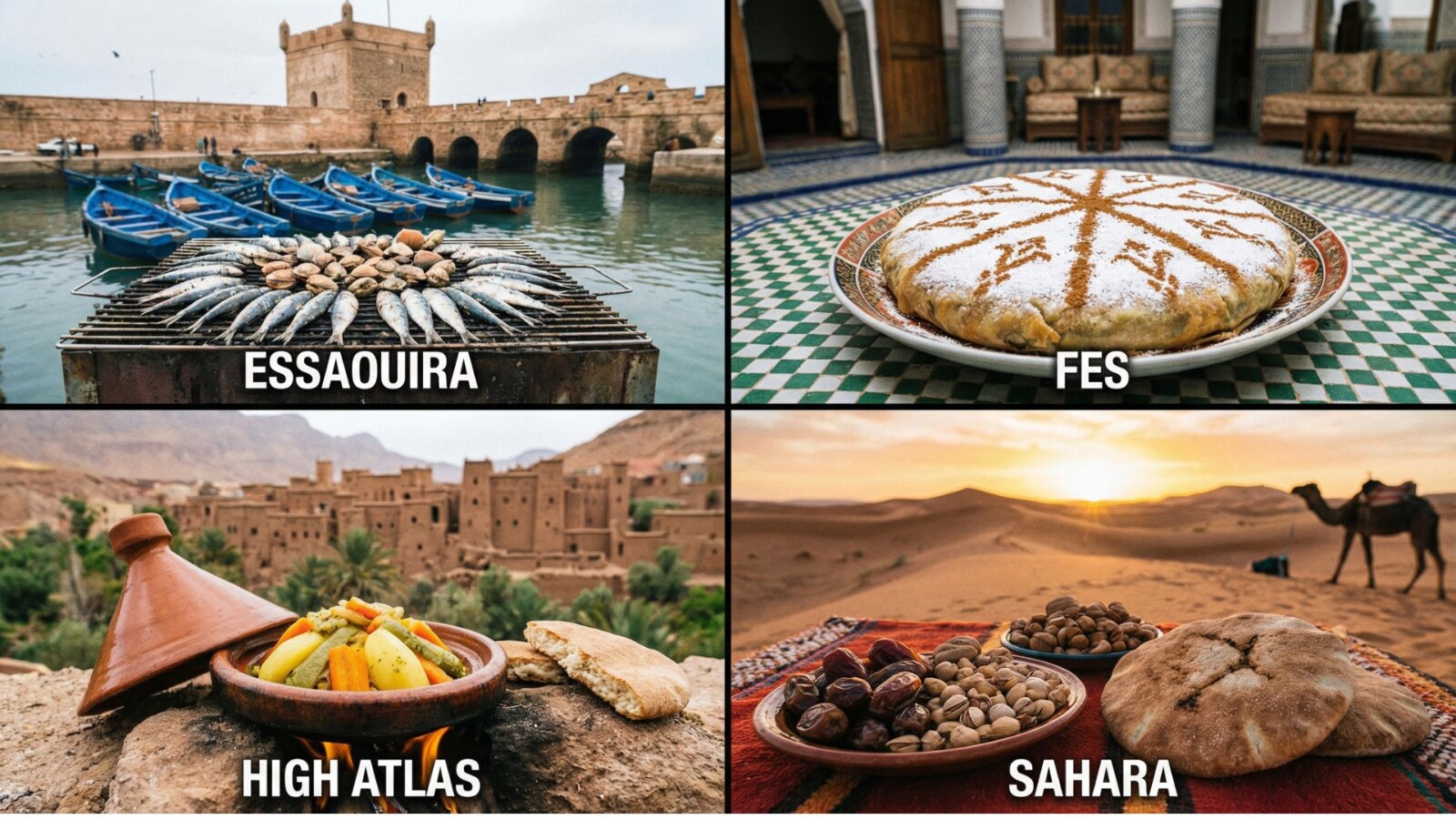
Pastilla reaches its highest expression in Fes. The paper-thin warqa pastry wrapping shredded pigeon, eggs, and almonds requires extraordinary skill to produce. Traditional cooks still make warqa by hand, dabbing dough onto hot pans in a technique that takes years to perfect. The finished dish balances savory filling with cinnamon and powdered sugar in ways that seem impossible until you taste them working together.
The tagines of Fes tend toward the sweeter end of the Moroccan spectrum. Lamb with prunes and honey, chicken with pears and cinnamon, beef with quinces and almonds, these combinations reflect Andalusian influence that arrived with refugees from Spanish persecution. The sweet and savory marriage defines Fassi cooking more than any other regional style.
Marrakech cooking shares the refinement of Fes but with bolder, more direct flavors. The city’s position as a trading hub brought spices from across Africa, and local cooks used them generously. Tagines here tend spicier and more robust than their Fassi counterparts.
Tanjia is uniquely Marrakchi, a bachelor’s dish that has no equivalent elsewhere. The preparation involves filling a clay urn with lamb, preserved lemons, spices, and olive oil, then sealing it and cooking for hours in the ashes of a public hammam furnace. The result is impossibly tender meat that falls apart at the touch. Finding authentic tanjia requires asking around, as it’s not widely advertised to tourists.
The street food of Djemaa el-Fna represents Marrakech eating at its most democratic. The night market serves everyone from workers grabbing dinner to tourists seeking adventure. The grilled meats, snail soup, and fried fish available there connect to deeper traditions while remaining accessible to newcomers.
Meknes is known for olive oil production, and the local cuisine makes generous use of this resource. The surrounding agricultural region supplies ingredients that feature in hearty preparations suited to a more working-class history than the other imperial cities.
Rabat as the modern capital has a more cosmopolitan food scene, with French influence more visible than in other cities. The dining options range wider, but traditional Moroccan preparations remain available for those seeking them.
| Imperial City | Signature Dishes | Flavor Profile | Dining Character |
| Fes | Pastilla, sweet tagines, rfissa | Complex, sweet-savory | Refined, traditional |
| Marrakech | Tanjia, spiced tagines, street food | Bold, spicy | Diverse, accessible |
| Meknes | Olive-oil based dishes, local tagines | Rich, hearty | Agricultural, unpretentious |
| Rabat | Mixed Moroccan and French | Varied, cosmopolitan | Modern, international |
The Atlantic coast: where the ocean feeds the table
Morocco’s Atlantic coastline stretches from Tangier to the Western Sahara border, and seafood dominates the cuisine throughout. The cold Canary Current sweeping down from the north creates productive fishing grounds that have fed coastal communities for millennia.
Essaouira represents Atlantic coast cooking at its purest. The harbor-side grills serve the morning’s catch with minimal interference, just charcoal heat and chermoula marinade allowing the quality of the fish to shine. Sardines, sea bass, shrimp, squid, and whatever else the boats brought in appear in simple preparations that let freshness speak for itself.
The chermoula marinade deserves special attention. This blend of cilantro, parsley, garlic, cumin, paprika, lemon, and olive oil appears throughout coastal Morocco, seasoning fish before grilling or saucing it after. Each cook has their own proportions, but the herb-forward, slightly spicy character remains consistent. Learning to make chermoula opens doors to recreating coastal Moroccan flavors at home.
Essaouira also has a Jewish culinary heritage that influences local cooking. The mellah (Jewish quarter) contributed dishes that remain popular despite the community’s near-complete departure decades ago. Fish stuffed with rice and herbs reflects this influence, as do certain pastry preparations.
Agadir and the southern Atlantic coast share the seafood focus with regional variations. The fishing industry here operates on a larger commercial scale, and the restaurants serving fresh catch cater heavily to tourists. Quality remains high, but the experience feels less artisanal than Essaouira.
Casablanca offers the most diverse coastal dining, reflecting its status as Morocco’s largest city and economic center. French influence shows in brasseries serving fruits de mer platters alongside traditional Moroccan fish preparations. The central market area provides excellent casual seafood at local prices.
The port areas throughout the coast follow similar patterns. Morning auctions supply restaurants that serve lunch and dinner crowds. Eating close to where boats unload ensures freshness, and prices drop the further you get from tourist centers. Following local workers at lunchtime often leads to the best value.
The Atlas Mountains: Berber traditions
The High Atlas, Middle Atlas, and Anti-Atlas ranges each shelter communities that developed cuisine around available ingredients and harsh conditions. Mountain Moroccan food tends toward simplicity and sustenance rather than the complexity of lowland cooking.
Berber tagine in the mountains differs from city versions. The ingredients are whatever is available locally: vegetables from terraced gardens, meat from sheep and goats grazing the slopes, dried fruits and nuts stored for winter. The spicing is restrained compared to urban cooking, letting ingredients taste like themselves rather than buried under complex blends.
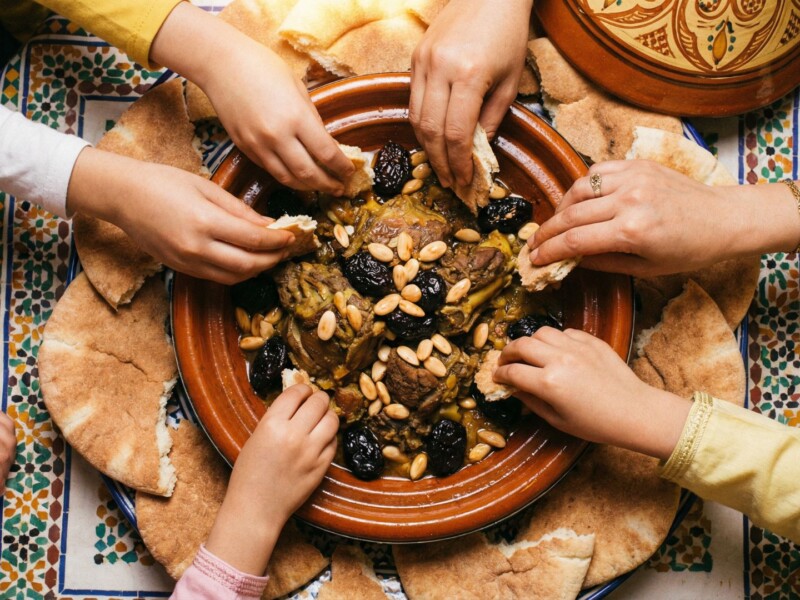
Tafernout is mountain bread baked in clay ovens or over open fires, dense and hearty enough to sustain hard physical labor. The bread serves as plate, utensil, and sustenance rolled into one. Travelers trekking through Berber villages encounter tafernout at every meal, often still warm from baking.
Amlou might be the most addictive product of mountain kitchens. This spread combines argan oil, ground almonds, and honey into something like Moroccan peanut butter. The proportions vary by maker, some preferring more honey, others heavier on the nuts. Slathered on bread for breakfast, amlou provides fuel for mountain days.
The Middle Atlas around Azrou and Ifrane features more dairy than other regions. The cooler, wetter climate supports cattle farming, and fresh cheese and butter appear more frequently. The cedar forests also provide wild ingredients including mushrooms and game that rarely appear in other Moroccan cooking.
Imlil and other trekking base camps in the High Atlas have developed tourist-friendly versions of mountain cooking. The quality varies, but the best village guesthouses serve authentic Berber meals that introduce trekkers to highland food traditions. Accepting meal invitations from families along the trail often provides the most memorable eating.
The desert south: scarcity breeds creativity
The regions approaching and entering the Sahara developed cuisine around limited ingredients and preservation techniques necessary for survival. Desert Moroccan food prizes simplicity and sustenance, with preparations designed to travel well and keep without refrigeration.
Medfouna is desert pizza, a stuffed flatbread that might be the region’s signature dish. The dough encases spiced ground meat with onions and sometimes eggs, cooked over fire or in ash-covered sand. The result travels well for nomadic journeys and provides complete nutrition in a convenient package.
Dates function as more than snacks in desert cuisine. The fruit appears in tagines, couscous, pastries, and as accompaniment to virtually every meal. The oasis towns around Erfoud and Zagora produce varieties ranging from common to exceptional, with the finest commanding premium prices. The date harvest in October and November brings festivals celebrating this essential food.
Camel meat appears in southern cooking where the animals are raised. The flavor resembles beef but leaner, and preparations mirror those used for lamb and goat elsewhere. Finding camel on menus requires being in the right region and asking specifically, as it’s not widely advertised to tourists.
Nomadic bread cooked directly on hot sand demonstrates desert cooking at its most resourceful. The technique involves burying dough in sand heated by fire, then brushing off the grains after cooking. The bread emerges slightly gritty but remarkably good, a novelty for visitors but daily sustenance for those who developed the method out of necessity.
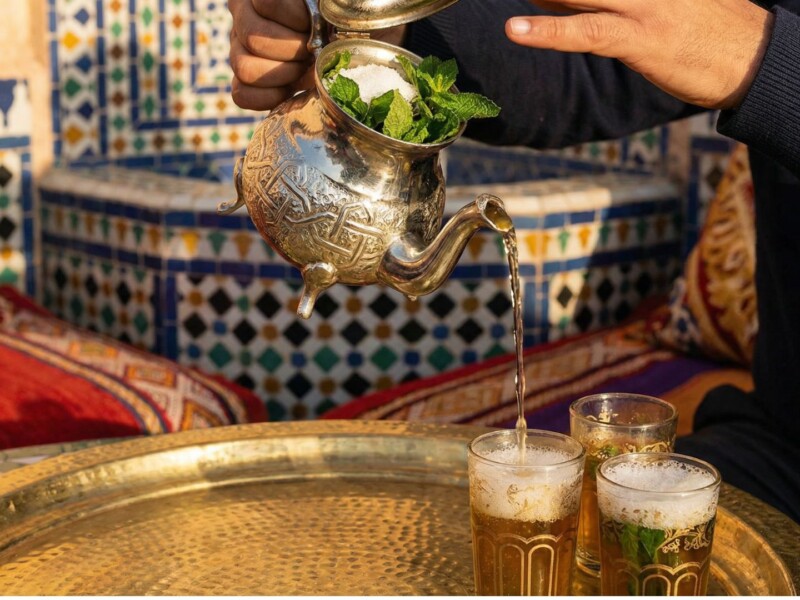
The desert also maintains tea traditions that exceed even other Moroccan regions in importance. The ritual of brewing and serving tea creates hospitality in landscapes where welcoming travelers was historically a matter of survival. Desert tea often includes wormwood (chiba) for a slightly bitter edge.
The Mediterranean North: Spanish and Andalusian echoes
Northern Morocco facing the Mediterranean has food traditions reflecting centuries of Spanish interaction. The Rif Mountains and coastal cities like Tangier, Tetouan, and Chefchaouen blend Moroccan and Iberian influences in distinctive ways.
Tangier is the most cosmopolitan city in Morocco, with food reflecting its history as an international zone. French, Spanish, and Moroccan cooking coexist, sometimes fusing and sometimes staying distinct. The cafes along the Petit Socco serve excellent people-watching alongside small plates that wouldn’t seem out of place across the strait in Andalusia.
Tetouan maintains perhaps the strongest Andalusian heritage in its cooking. Families descended from Moors expelled from Spain preserved recipes for centuries. The pastries here are exceptional, with almond-based sweets and honey-soaked cookies rivaling anything in Fes.
Chefchaouen in the Rif Mountains combines mountain Berber traditions with Mediterranean influences. Fresh goat cheese from surrounding villages appears throughout local cooking. The small blue city has become touristy, but the best restaurants maintain authentic preparations beneath the Instagram-ready facades.
The Mediterranean coast itself provides different seafood than the Atlantic. The warmer, calmer waters yield smaller catches, and fishing remains more artisanal. Grilled fish in towns like Al Hoceima tastes different from Essaouira’s Atlantic offerings, reflecting the distinct marine environment.
The oasis valleys: where water creates abundance
The river valleys cutting between mountains and desert support agricultural traditions that produce distinctive ingredients. The Draa Valley, Dades Valley, and Ziz Valley each have food cultures shaped by what grows in their particular microclimates.
Saffron from Taliouine in the Anti-Atlas foothills flavors dishes throughout Morocco but appears most prominently in local cooking. The harvest season in late October brings festivals and fresh saffron that perfumes everything from tagines to tea. Visiting during this window provides access to the ingredient at its peak.
Roses from the Dades Valley near Kelaat M’Gouna supply the rose water that perfumes Moroccan pastries and some savory dishes. The May festival celebrates the harvest with food, music, and more rose products than you could imagine. Rose-flavored everything is available, from obvious applications like desserts to unexpected items like rose-spiced kefta.
Dates from the Tafilalt around Erfoud have already been mentioned, but the sheer variety deserves emphasis. The region grows dozens of date varieties with different textures, sweetness levels, and culinary applications. Sampling different types at market stalls reveals a range most Westerners never encounter with the single variety typically exported.
The kasbahs throughout these valleys often operate guesthouses serving regional cuisine. Staying in these traditional structures and eating their food provides context that restaurants cannot match. The connection between the landscape outside the window and the ingredients on the plate becomes obvious in these settings.
Eating your way across Morocco
Understanding regional differences transforms eating in Morocco from random sampling into purposeful exploration. Planning routes with food in mind ensures you don’t miss the dishes that only appear in specific areas.
A two-week itinerary might start in Marrakech for street food and tanjia, head to Essaouira for coastal seafood, cross the Atlas with stops in Berber villages, continue to the desert for dates and medfouna, then finish in Fes for pastilla and refined tagines. Each stop adds flavors impossible to find elsewhere.
Shorter trips require choosing focus areas rather than trying to cover everything. A week centered on the imperial cities provides depth in urban cooking traditions. A week split between coast and mountains contrasts seafood and Berber simplicity. Even a long weekend in a single city yields meaningful culinary exploration if approached with intention.
The regional variety of Moroccan cuisine reflects the country’s geographic and cultural diversity. Mountains, deserts, coastlines, and fertile valleys each contributed traditions that remain distinct despite modern homogenizing pressures. Travelers who pay attention to these differences eat better and understand Morocco more deeply.
Part of eating well anywhere involves understanding the social customs that surround food. Morocco has particular dining etiquette traditions that visitors should know, from hand-eating technique to hospitality expectations that can catch newcomers off guard.