Moroccan dining etiquette: cultural rules every traveler should know
Eating in Morocco involves more than choosing what to order. The country maintains dining traditions that can surprise visitors unfamiliar with communal plates, hand eating, and hospitality expectations that border on insistence. Knowing these customs transforms potentially awkward moments into opportunities for genuine connection. Moroccan dining etiquette reflects deeper cultural values around generosity, community, and respect that inform every shared meal. These traditions form the social framework around Moroccan food and help travelers participate rather than simply observe.
The right hand rule
The single most important dining custom for visitors to understand involves which hand to use. In Morocco and throughout the Islamic world, the right hand handles food while the left hand is reserved for less clean purposes. This distinction runs deep and violating it causes genuine discomfort for those sharing your table.
Eating with your right hand exclusively takes practice for those accustomed to using both. The left hand typically rests in your lap or holds bread steady while the right does all the work of tearing, scooping, and delivering food to your mouth. Even left-handed people are expected to eat with their right hand in traditional settings.
The practical challenge comes when eating dishes that seem to require two hands. Tearing bread, pulling meat from bones, managing slippery tagine vegetables, all must be accomplished one-handed. Watching Moroccans eat reveals techniques developed over lifetimes that visitors can only approximate. The key is trying your best rather than achieving perfection.
In tourist restaurants and hotels, the expectation relaxes considerably. Staff understand that foreign visitors have different customs and won’t judge harshly. But in home settings, traditional restaurants, and anywhere you’re eating alongside Moroccans, using your right hand shows respect for local culture.
Utensils are available if you ask, and no host will refuse the request. Using a fork and knife marks you as foreign but doesn’t cause offense. The middle ground involves using bread as your utensil, scooping food without actually touching it with your fingers. This approach satisfies tradition while avoiding the learning curve of true hand eating.
The communal plate
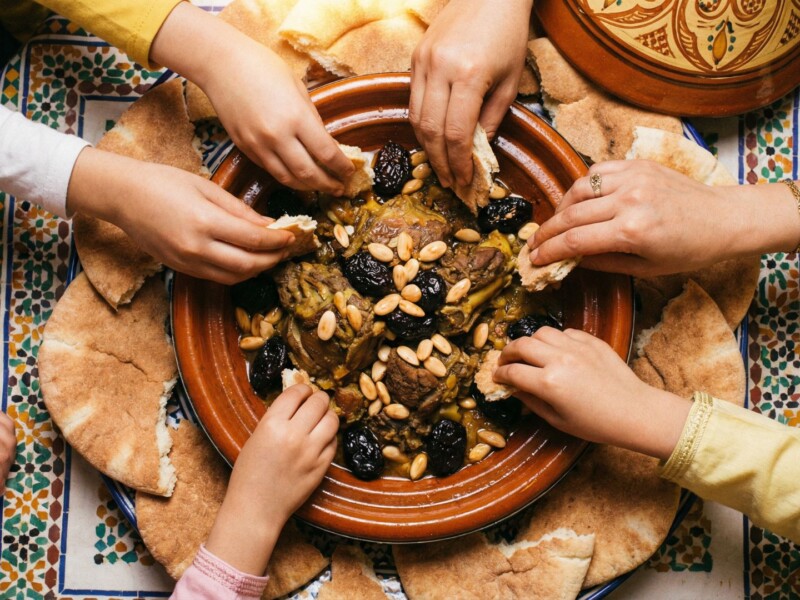
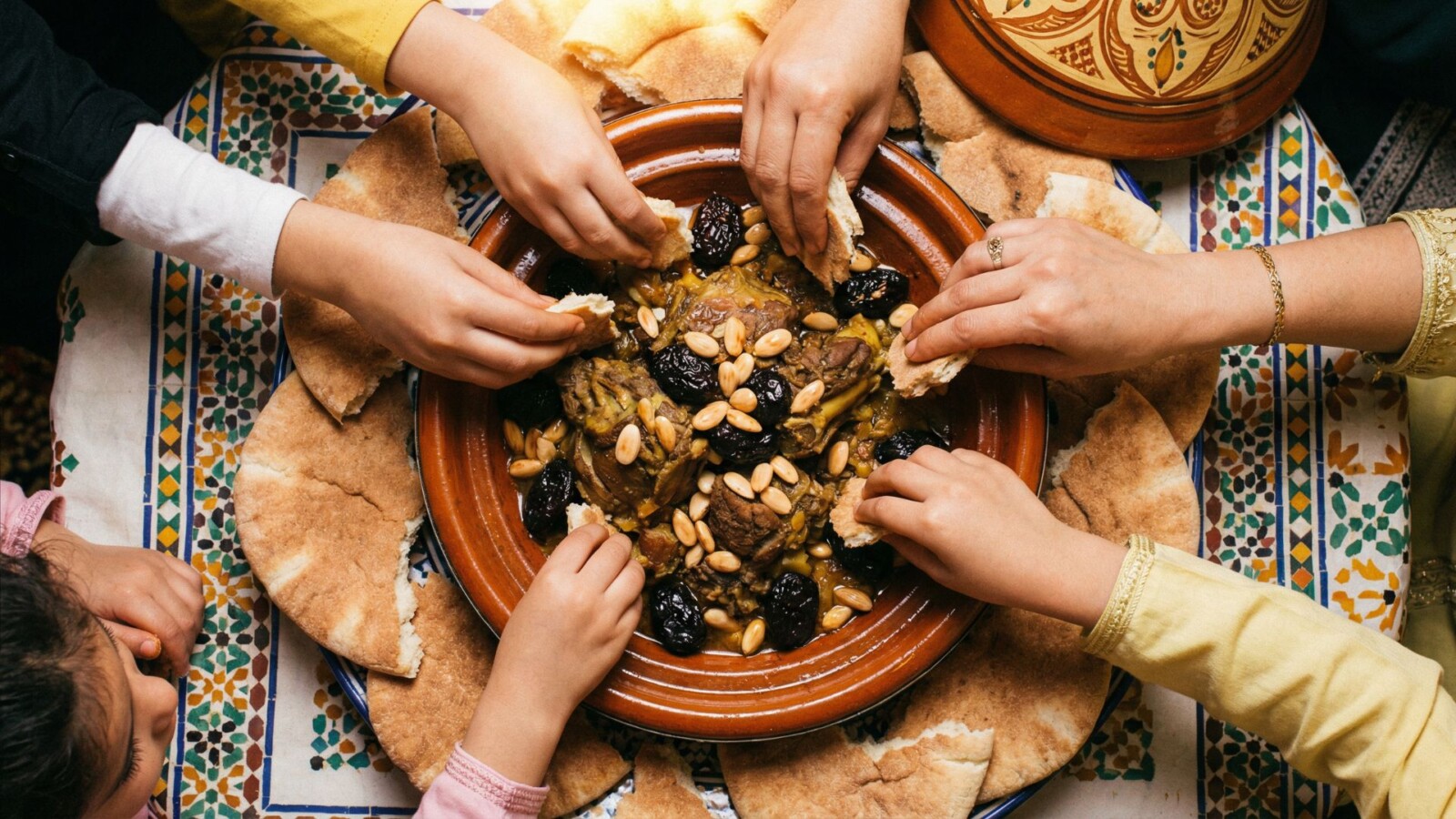
Moroccan meals traditionally arrive on large platters meant for sharing rather than individual portions. Everyone eats from the same dish, reaching into their section of the plate and working toward the center. This communal approach reinforces social bonds and ensures equal access to the food.
The imaginary boundaries of the communal plate matter. Each person eats from the area directly in front of them, never reaching across to another’s section. The center of the plate, usually containing the best pieces of meat, remains neutral territory until the host distributes choice morsels to guests.
The host plays an active role throughout the meal, placing particularly good pieces in front of honored guests. Receiving a tender piece of lamb or a particularly nice vegetable from the host’s hand is a compliment that should be accepted graciously. Refusing these offerings insults the generosity being extended.
Pace yourself with the group rather than racing ahead or lagging behind. Communal eating works best when everyone progresses together, with the meal ending naturally when the plate empties or the group collectively slows down. Finishing far before others suggests greed, while eating long after others stop implies the host didn’t provide enough.
The bread that accompanies every meal serves as your primary utensil. Tear off small pieces and use them to pinch bites of food, soaking up sauce in the process. The bread-as-utensil technique takes practice but becomes natural after a few meals. Fresh bread arrives throughout the meal, so don’t worry about running out.
| Communal Eating Guidelines | Do | Don’t |
| Hand usage | Use right hand only | Reach with left hand |
| Plate territory | Eat from your section | Reach across to others’ areas |
| Pace | Match the group’s speed | Race ahead or lag behind |
| Host’s offerings | Accept graciously | Refuse pieces offered to you |
| Bread | Use for scooping food | Let bread go to waste |
| Finishing | Slow down with the group | Keep eating when others stop |
Hospitality that won’t take no
Moroccan hospitality operates on principles that can overwhelm visitors unprepared for the intensity. Hosts feel genuine obligation to feed guests generously, and guests are expected to eat generously in return. The back-and-forth of offering and accepting food follows patterns that seem excessive by Western standards but make perfect sense within local culture.
Expect to be urged to eat more regardless of how much you’ve already consumed. The host offering additional food isn’t suggesting you haven’t had enough but rather expressing continued care for your wellbeing. Accepting more food honors this generosity even if you’re already full.
The polite response to being full involves gradually slowing down while continuing to accept small amounts. An abrupt declaration of fullness implies the food wasn’t good enough to continue eating. Better to take tiny portions and eat slowly than to refuse outright.
Complimenting the food enthusiastically is expected and appreciated. Moroccan hosts take pride in their cooking and want confirmation that guests are enjoying themselves. Specific compliments about particular dishes show attention and respect. Generic praise works too, but detailed appreciation lands better.
Leaving a small amount of food on the plate signals satisfaction rather than waste. An empty plate suggests the host didn’t provide enough, prompting offers of more food. Leaving a bite or two communicates that you’ve had plenty, though this varies by family and region.
Home invitations deserve special consideration. Being invited to eat in a Moroccan home is a significant gesture of welcome that should not be refused casually. If you truly cannot accept, provide a genuine reason rather than vague excuses. Accepting and then not showing up is far worse than declining directly.
Bringing a gift when visiting homes shows appreciation without implying the host cannot provide adequately. Pastries, fruit, or flowers are safe choices. Bringing main dish items suggests doubt about the host’s preparations, so stick to supplementary gifts.
Restaurant dining vs home dining
The rules shift depending on whether you’re eating in restaurants or homes, with restaurant settings generally offering more flexibility for foreign visitors.
Tourist restaurants cater to international expectations. Individual plates, utensils, and service styles familiar to Western diners are standard. The staff won’t judge you for eating with your left hand or asking for modifications. These establishments exist to make visitors comfortable, not to enforce traditional customs.
Local restaurants where Moroccans actually eat maintain more traditional approaches. Communal plates are common, utensils may require requesting, and the pace follows local patterns. The food is typically better and cheaper than tourist spots, and the experience more authentic. Observing other diners provides guidance on local expectations.
Home dining represents the most traditional setting with the strongest expectations. The host family has prepared food specifically for you, making the stakes higher than restaurant meals. Customs around hand usage, communal eating, and hospitality acceptance apply fully. The reward is access to cooking that restaurants rarely match and connection with people rather than just places.
Street food operates outside formal rules. Standing at a market stall eating from a paper wrapper, nobody expects formal dining etiquette. Use whatever hand is convenient, eat at whatever pace you like, and focus on enjoying the food. The informality is part of the appeal.
Cafes serving tea and light snacks fall somewhere in between. The tea service rituals apply, but food customs are relaxed. These spaces are meant for lingering and conversation, so the social element matters more than the eating element.
The tea ritual within meals
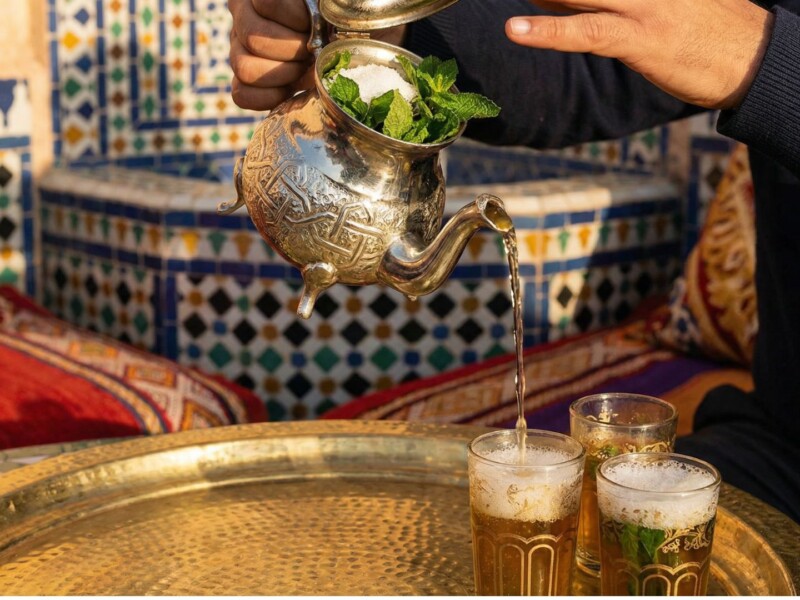
Mint tea appears before, during, and after meals, each serving a different purpose in the dining sequence. Understanding when and how tea fits into meals helps navigate the overall flow of Moroccan dining.
Tea before meals functions as welcome and transition. Guests arriving at a home receive tea immediately, allowing time to settle and converse before food appears. Rushing this phase seems impatient. The pre-meal tea might include cookies or nuts but isn’t meant to fill you up.
Tea with meals is less common than before or after, but some families serve it throughout. The sweet tea provides contrast to savory dishes and aids digestion according to local belief. Accepting refills during the meal follows the same patterns as accepting food, with gentle declining after several glasses.
Tea after meals is nearly universal. The post-meal tea session aids digestion and provides a social bridge between eating and departure. Leaving immediately after food would seem abrupt. The tea time allows conversation to continue and the meal to settle.
The three-glass minimum applies regardless of when tea is served. Drinking fewer suggests displeasure with either the tea or the company. More than three is welcome and often expected. The host controls pouring, so simply allowing your glass to be refilled is easier than tracking exact counts.
Tipping and payment customs
Navigating payment in Moroccan dining situations requires understanding expectations that differ from Western norms.
Restaurant tipping generally follows international patterns in tourist establishments. Ten to fifteen percent on top of the bill is appropriate for good service. Some restaurants include service charges, so check before adding more. Cash tips directly to servers ensure they receive the money rather than it disappearing into a general pool.
Local restaurants have less standardized tipping expectations. Rounding up the bill or leaving small change is common. Extravagant tips can create awkwardness rather than goodwill. Matching what local customers leave provides guidance.
Street food vendors don’t expect tips. The price quoted is the price paid. Rounding up small amounts is friendly but not required.
Home dining presents the trickiest situation. Offering money to a host who has cooked for you would cause profound offense. The hospitality is genuine, not commercial. Bringing a gift substitutes for payment, expressing thanks without transactional implications.
Paying for Moroccan friends at restaurants follows different rules than splitting the bill Western-style. The person who extended the invitation typically pays, and fighting over the check isn’t expected. Reciprocating with a future invitation balances the exchange over time rather than in the moment.
| Dining Context | Tipping Expectation | Payment Notes |
| Tourist restaurants | 10-15% | Check for included service charge |
| Local restaurants | Round up or small change | Match local behavior |
| Street food | None expected | Price quoted is final |
| Home dining | Never offer money | Bring a gift instead |
| Cafes | Small change appreciated | Included in price sometimes |
Dietary restrictions and preferences
Communicating dietary needs in Morocco requires some cultural navigation alongside the practical communication challenges.
Vegetarianism is understood but not always accommodated easily. Traditional Moroccan cooking uses meat stocks and animal fats liberally, even in dishes that appear vegetarian. Stating “no meat” might not exclude chicken broth in the rice or butter in the vegetables. Being specific about what you can and cannot eat helps, though complete vegetarian purity is difficult to guarantee outside dedicated vegetarian restaurants.
Veganism presents greater challenges. Dairy and eggs appear throughout Moroccan cuisine, and the concept of avoiding all animal products is less familiar than vegetarianism. Major cities have vegan-friendly restaurants catering to tourists, but traditional dining rarely offers vegan options.
Halal requirements are non-issues since virtually all meat in Morocco is halal by default. The Islamic dietary laws govern local production, making Morocco one of the easiest Muslim countries for observant Muslim travelers.
Pork avoidance is built into Moroccan cuisine. You won’t encounter pork in traditional cooking. Some Western-style restaurants and hotels serve it for international guests, but it’s never in Moroccan food.
Allergies require careful communication. The language barrier can complicate conveying serious allergies, and cross-contamination is hard to prevent in traditional kitchens. Carrying a card with allergies written in Arabic and French provides backup when verbal communication fails.
Alcohol is available in tourist restaurants, hotels, and licensed establishments but not in traditional Moroccan homes or local eateries. Asking for alcohol in the wrong setting causes awkwardness. The mint tea serves as the social beverage throughout Morocco, and expecting alcohol with meals shows unfamiliarity with local customs.
Ramadan considerations
Traveling during Ramadan transforms the dining landscape entirely. The holy month brings daytime fasting and evening feasting that affect everything about eating in Morocco.
During daylight hours, most restaurants close entirely. Those remaining open, typically tourist establishments, serve discreetly to non-fasting visitors. Eating, drinking, or smoking in public during fasting hours shows disrespect regardless of your own religious practices. Travelers should eat privately during the day and avoid visible consumption.
Iftar (the sunset meal breaking the fast) is a beautiful experience to share. Moroccans often invite visitors to join family iftars, which begin with dates and harira soup before expanding into full meals. The generosity is genuine, and accepting invitations provides insight into Ramadan traditions impossible to get otherwise.
The period after iftar until late night sees restaurants and cafes packed with celebratory crowds. The atmosphere is festive, and late-night eating becomes normal. Adjusting your schedule to match Ramadan rhythms makes the month easier to navigate and more rewarding to experience.
Suhoor (the pre-dawn meal before fasting begins) happens in the early hours and isn’t typically shared with visitors. The meal tends to be simple and quick, focused on providing energy for the fasting day ahead.
Restaurant prices sometimes increase during Ramadan due to special menus and higher ingredient costs. The food quality often increases too, as cooks prepare elaborate iftar spreads meant to reward the day’s sacrifice.
Embrace the customs
Moroccan dining etiquette might seem complicated from the outside, but the underlying principles are simple: show respect, accept generosity, participate fully, and don’t take yourself too seriously when you make mistakes. Moroccans appreciate visitors who try to follow customs even imperfectly far more than those who don’t try at all.
The communal nature of Moroccan dining creates connections that solo plates never could. Sharing food from the same dish with strangers-turned-friends produces memories that outlast any meal. The hospitality pressed upon you comes from genuine cultural values around generosity and welcome that deserve appreciation rather than resistance.
Mistakes happen and nobody expects foreign visitors to master lifelong customs during a short trip. A left-handed reach, an awkward bread-scoop, a miscalculated pace, these minor errors dissolve quickly and often generate laughter that brings people closer together. The effort matters more than perfection.
Understanding dining customs opens doors to understanding Moroccan culture more broadly. The values expressed at the table, community over individualism, generosity over calculation, presence over efficiency, appear throughout Moroccan life. Food becomes a lens for seeing the country more clearly.
For travelers wanting to dive deeper into Moroccan cuisine before their trip, understanding the core traditional Moroccan dishes provides context for everything you’ll encounter at the table, from family homes to fancy restaurants to street stalls in the medina.