The 10 most Andalusian-influenced cities in Morocco: where Spain’s lost heritage lives on
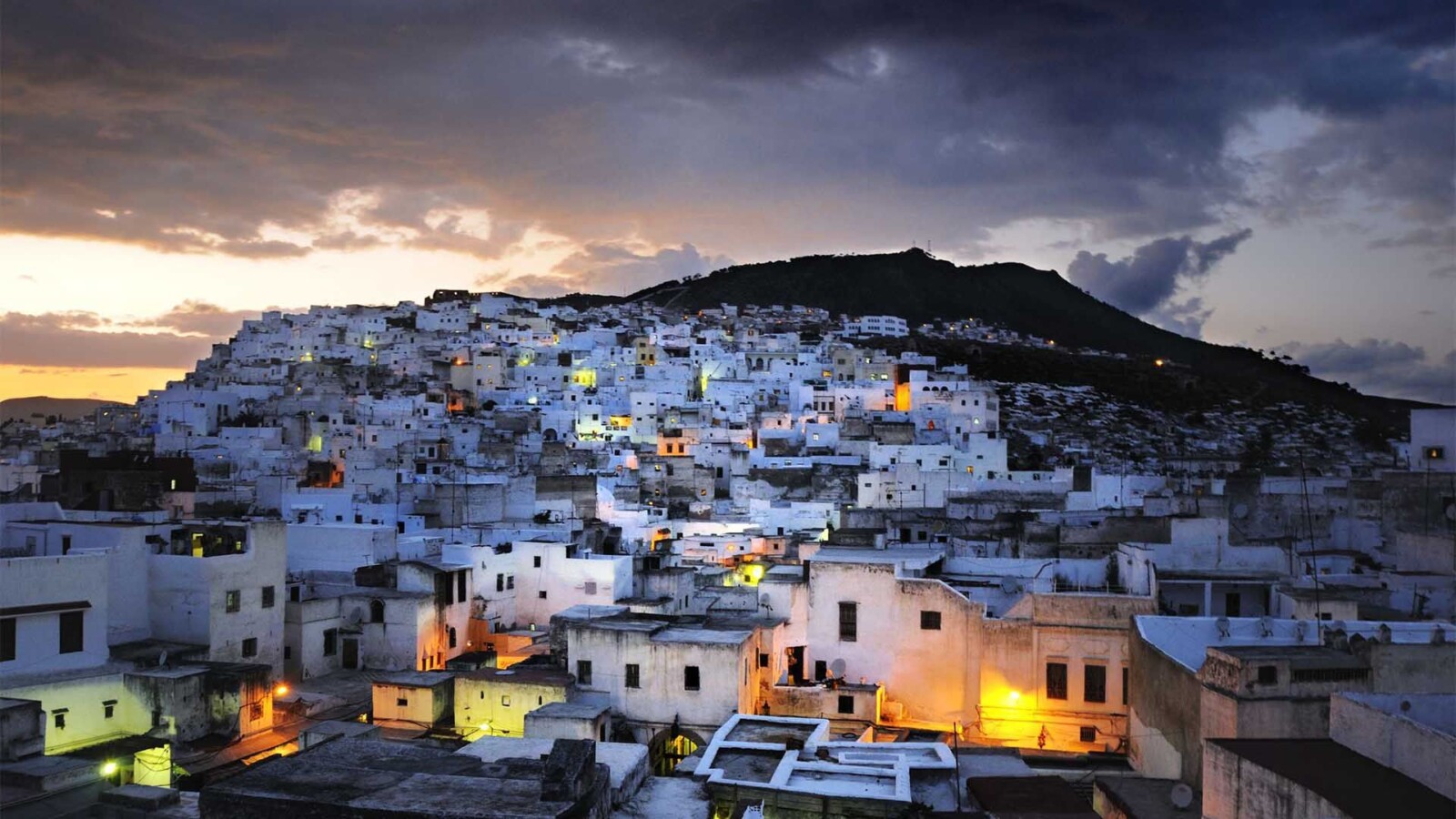
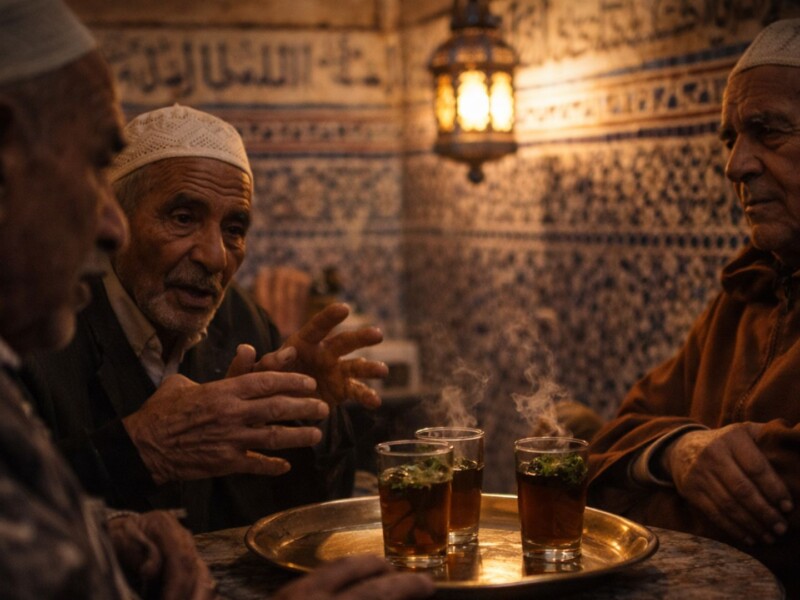
Somewhere around my fifth cup of mint tea in Tetouan, something clicked.
The white walls rising around me, the music drifting from upper windows, the particular way the streets curved and narrowed into shadow. None of it felt quite African or Arab in the way I had expected. It felt Spanish. Or more accurately, it felt like what Spain might have become if history had taken a different turn at some critical junction centuries ago.
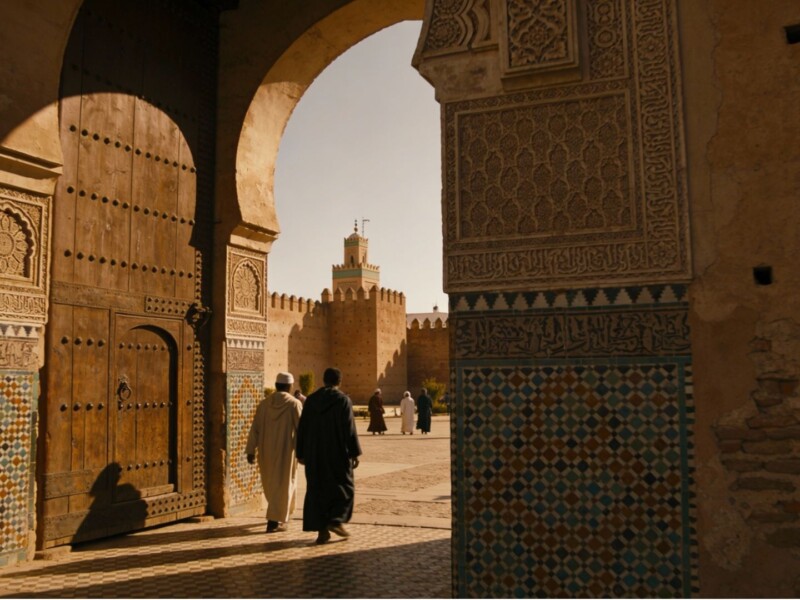
I spent three weeks hopping between Moroccan cities last spring, chasing a ghost that turned out to be very much alive. Morocco absorbed hundreds of thousands of refugees from Al-Andalus over several centuries, and those exiles didn’t simply blend into their new home. They built neighborhoods; they established traditions. They created pockets of Andalusian culture that persist to this day, hiding in plain sight across the kingdom.
For travelers seeking to understand this layered heritage, our comprehensive guide to Morocco’s Moorish heritage provides essential context. But if you want to experience that heritage firsthand, these ten cities offer the deepest immersion into what remains of Al-Andalus on African soil.
Some wear their Spanish-influenced past on their sleeve. Others keep it hidden in quieter corners, waiting for visitors patient enough to look. Here they are, ranked by how strongly that heritage shapes what you’ll actually experience as a traveler.
1. Tetouan: the most complete Andalusian city in North Africa
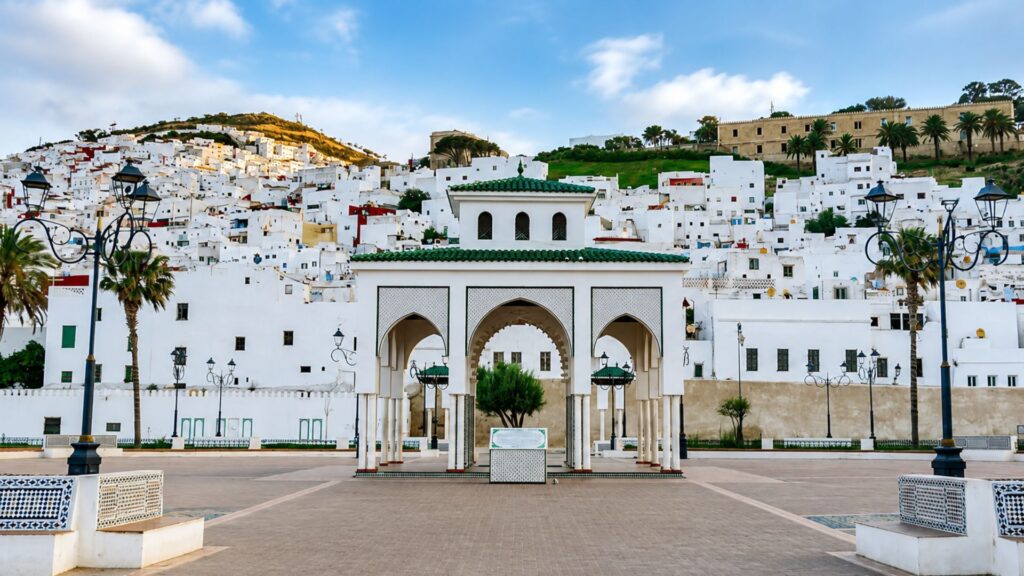
No city in Morocco feels more Andalusian than Tetouan. This isn’t opinion or romantic projection. UNESCO designated its medina as a World Heritage Site specifically for this reason. It represents the most complete and best-preserved example of Andalusian-influenced urban design anywhere in North Africa.
The connection is literal and direct. When General Ali al-Mandri rebuilt Tetouan starting in 1485, he populated it with refugees from Granada who deliberately recreated their lost neighborhoods stone by stone. The result is a white-walled maze that closely mirrors the Albaicin district of Granada. Spanish visitors sometimes report feeling genuinely disoriented, as if they’ve somehow teleported home without noticing.
What makes Tetouan exceptional among Moroccan destinations is that the medina still functions as a living city rather than a tourist attraction. Locals shop for vegetables and household goods in the same souks where their ancestors traded five centuries ago. Women in djellabas negotiate prices for fabric in covered passages that could have been lifted directly from medieval Andalusia. Children play in plazas that haven’t changed their fundamental character since the Reconquista drove their inhabitants’ forebears across the Strait of Gibraltar.
That authenticity can feel overwhelming compared to more tourist-oriented destinations. Tetouan lacks the Instagram infrastructure of Chefchaouen or the polished presentation of Fez’s tourist quarters. But it rewards patience with something increasingly rare: a genuine encounter with living history rather than its museum preservation.
2. Chefchaouen: the blue city’s Andalusian soul
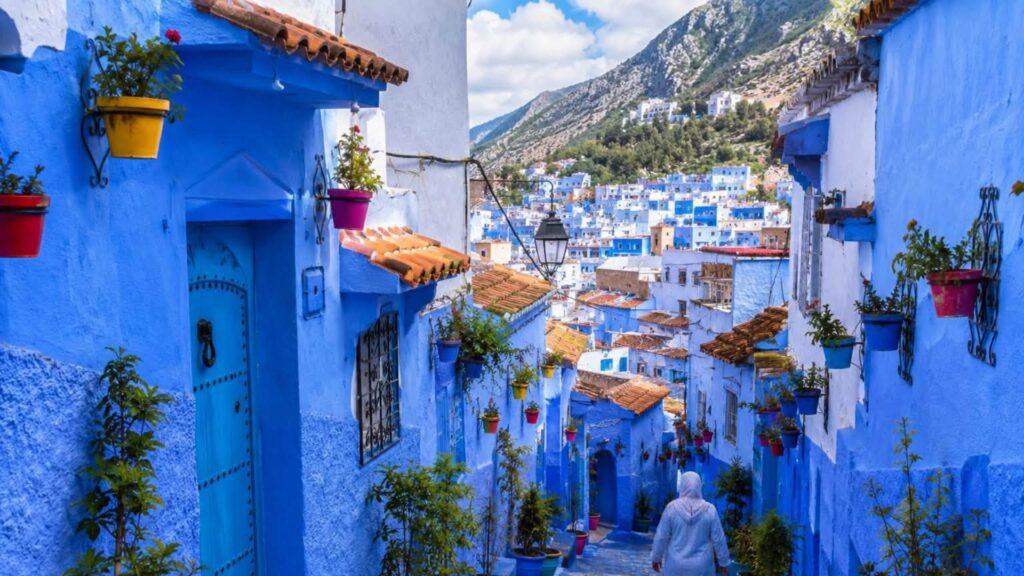
The blue city needs no introduction to anyone who has scrolled through travel photography in the past decade. Those iconic blue-washed walls have made Chefchaouen one of the most photographed places in Africa. The images launch a thousand bucket lists and fill countless Instagram feeds with their ethereal glow.
What the social media posts usually leave out is why the city looks this way. Chefchaouen was founded in 1471 by Moulay Ali Ben Rachid as a small fortress. It only became a real city after Andalusian refugees arrived following the fall of Granada in 1492. The Rif Mountains surrounding the settlement reminded them of the Sierra Nevada back home. They built accordingly, creating a miniature Andalusia in exile among the peaks.
The blue color itself carries competing origin stories. Some historians attribute it to Jewish refugees who considered the shade sacred, a reminder of the sky and the divine. Others point to practical origins, claiming the color repels insects or keeps buildings cool. Either explanation may contain truth. What matters for visitors is simple. The overall aesthetic owes everything to Andalusian sensibilities about light, space, and the relationship between buildings and landscape.
Chefchaouen is more touristy than Tetouan but also more immediately accessible. The medina is compact enough to explore in a day or two. Hassle stays relatively low by Moroccan standards. The surrounding mountains also offer excellent hiking for those who want to earn their mint tea. The trade-off is real, but for many travelers, the blue city delivers exactly what they came to Morocco hoping to find.
3. Fez: where Andalusian heritage became Moroccan identity
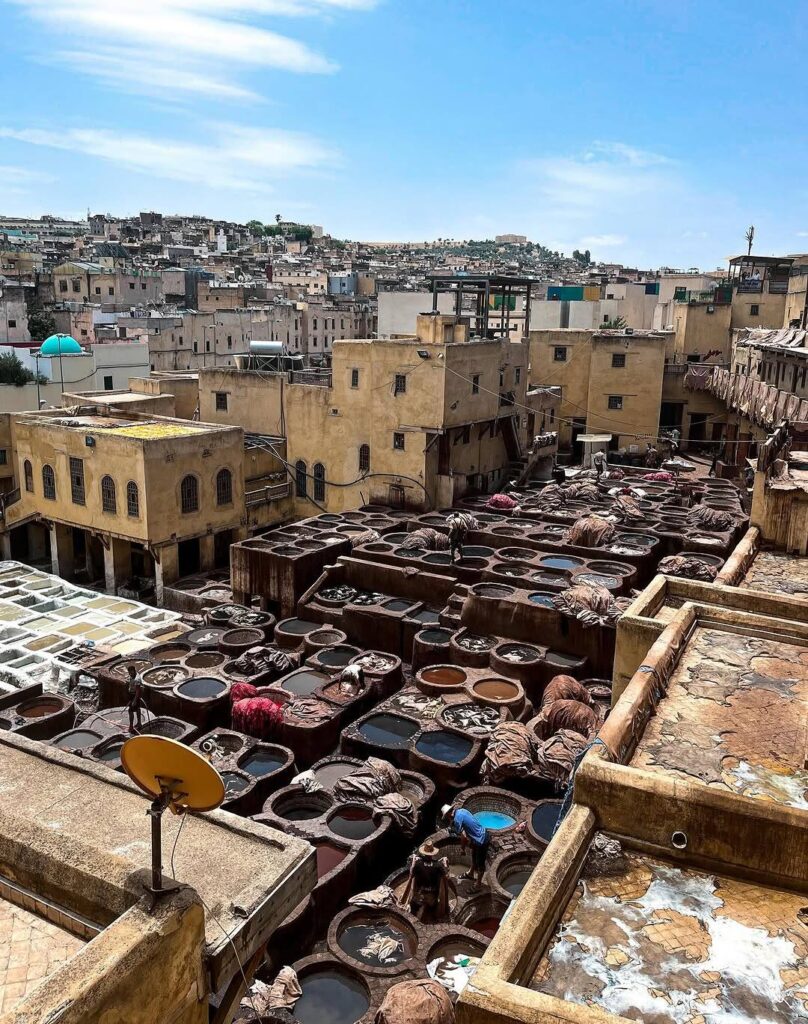
Fez predates the Andalusian migrations by several centuries, which might seem to disqualify it from this list. The city was founded in 789 CE, long before the Christian kingdoms of Spain began their slow reconquest of Iberian territory. Fez absorbed so many refugees over such a long period that Andalusian influence became woven into its fundamental character. It is inseparable from what makes the city distinctive.
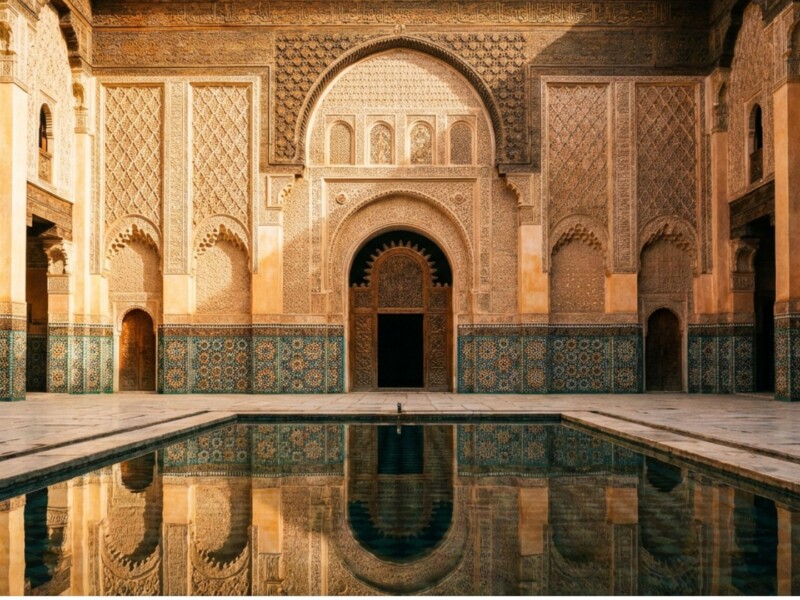
The Andalusiyyin Mosque dates to 859 CE, built by refugees from Cordoba who had arrived decades before the main exodus even began. Later waves of migrants settled in specific neighborhoods where they maintained distinct traditions, creating enclaves of Andalusian culture within the larger Moroccan urban fabric. The city’s famous madrasas, particularly the Bou Inania and Al-Attarine, showcase architectural techniques that traveled across the Strait of Gibraltar. Generations of craftsmen refined these methods, inheriting skills from both traditions.
| Fez Landmark | Andalusian Connection | Visitor Experience |
|---|---|---|
| Andalusiyyin Mosque | Built by Cordoba refugees, 859 CE | Exterior viewing only for non-Muslims |
| Bou Inania Madrasa | Andalusian architectural techniques | Open to visitors, stunning tilework |
| Al-Attarine Madrasa | Moorish decorative traditions | Intimate courtyard, photography allowed |
| Festival of Sacred Music | Features Andalusian orchestras | Annual event, May-June |
Fez is where Andalusian classical music, called Al-Ala, survives in its most refined form. The annual Festival of World Sacred Music regularly features Andalusian orchestras performing nuba suites that preserve melodies from medieval Spanish courts. Attending a performance in the courtyard of an ancient madrasa ranks among the most transportive experiences available in Morocco. Zellige tilework and carved stucco surround you on all sides. All of it could have graced the Alhambra.
The medina of Fez is enormous and genuinely confusing. Getting lost is inevitable. I recommend embracing it rather than fighting it, treating disorientation as part of the experience rather than a problem to solve.
4. Rabat: the capital’s hidden Andalusian enclave
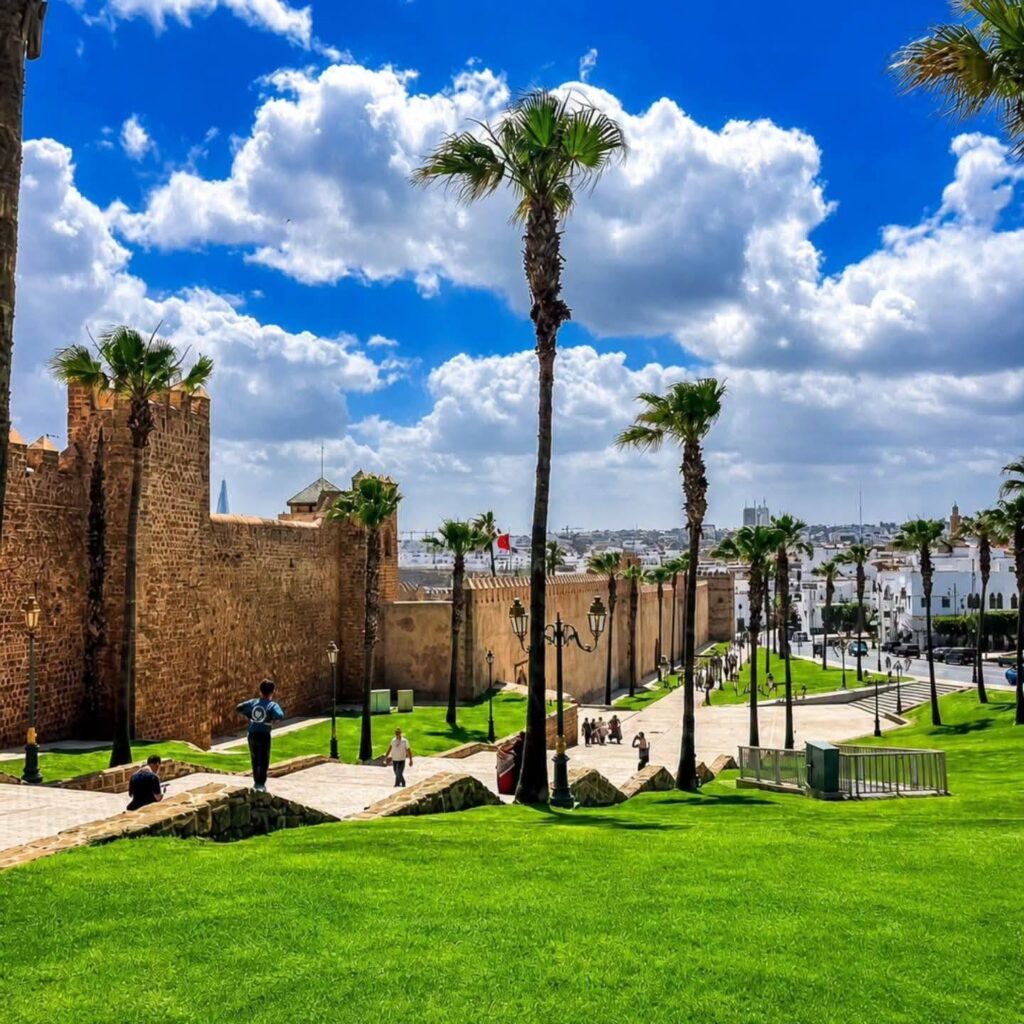
Morocco’s modern capital might seem like an odd inclusion on a list of historic Andalusian cities. Rabat functions as an administrative center, home to government ministries and embassies. Wide French-colonial boulevards and a contemporary cafe culture make it feel worlds away from medieval Granada.
Rabat’s Kasbah of the Udayas represents one of the most atmospheric Andalusian enclaves in the entire country. It hides in plain sight above the Atlantic.
The kasbah sits on a promontory overlooking the ocean and the mouth of the Bou Regreg River. Andalusian refugees settled here in the seventeenth century and transformed the former military fortress. They built a residential neighborhood of white and blue houses, narrow streets that twist without logic, and hidden gardens tucked behind unassuming doors. Walking through its passages feels like entering a village that time forgot, preserved within the larger modern city.
The Andalusian Gardens adjacent to the kasbah were designed in the early twentieth century during the French protectorate. They draw directly on Moorish garden traditions that originated in medieval Spain. Symmetrical paths, central fountains, citrus trees, and flowering hedges create the kind of contemplative space that Andalusian designers perfected centuries ago. Places like the Generalife Gardens of Granada set that standard. The French planners understood what they were referencing, even if they couldn’t fully replicate it.
Rabat offers an easier introduction to Moroccan city life than Fez or Marrakech. The pace is slower. Hassle is minimal. Historic sites are manageable in scale. For travelers intimidated by Morocco’s reputation for overwhelming medinas, the Udayas provides a gentler entry point into the Andalusian heritage trail.
5. Tangier: the gateway city’s mixed identity
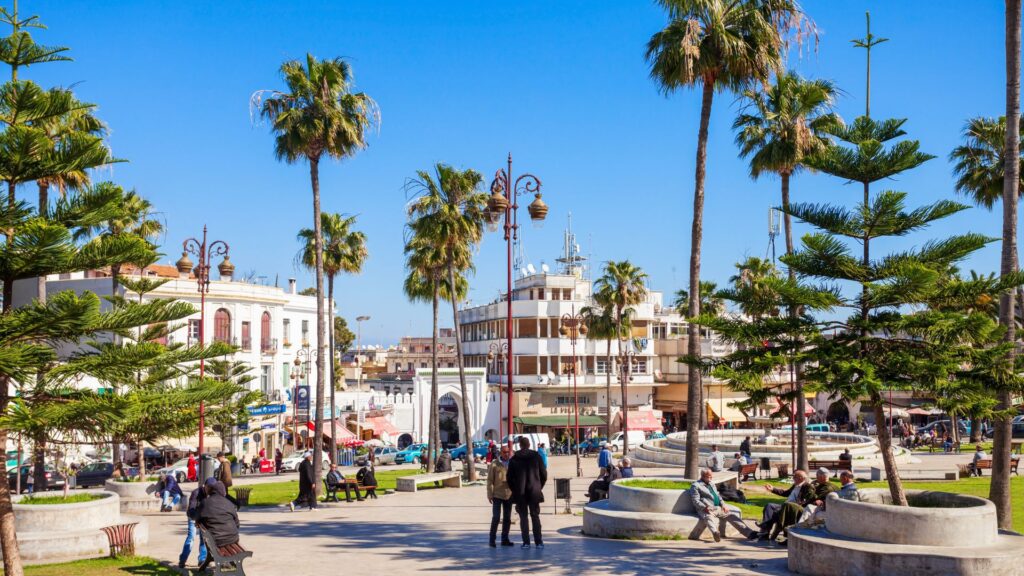
Tangier has always been a city of crossings and mixed identities. Sitting at the narrowest point of the Strait of Gibraltar, it has served as a gateway between continents for thousands of years. Africa nearly touches Europe at this precise spot. Phoenicians, Romans, Arabs, Portuguese, Spanish, and British all left their marks. The Andalusian contribution represents just one layer in a remarkably dense cultural stratification.
Andalusian refugees began arriving in significant numbers after 1492. Tangier’s Andalusian character really crystallized during its period as an international zone in the twentieth century. Spanish influence remained strong throughout this era. Spanish was widely spoken in streets and markets. The city developed a cosmopolitan atmosphere blending North African, European, and Andalusian elements into something entirely unique. It belonged fully to no single tradition.
The medina retains genuine Andalusian architectural details despite heavy tourist development in recent decades. The Kasbah Museum occupies a former palace that showcases Moorish decorative arts, providing context for what you’ll see throughout the city. On clear days, the views across the strait show Spain as a hazy line of mountains. They reinforce the geographic connection that made all this cultural exchange possible.
Tangier serves as the natural starting point for travelers arriving from Spain by ferry, and that arrival itself carries symbolic weight. You’re crossing the same water that Andalusian refugees crossed in the opposite direction five centuries ago, though under vastly different circumstances.
6. Meknes: imperial grandeur with Andalusian roots
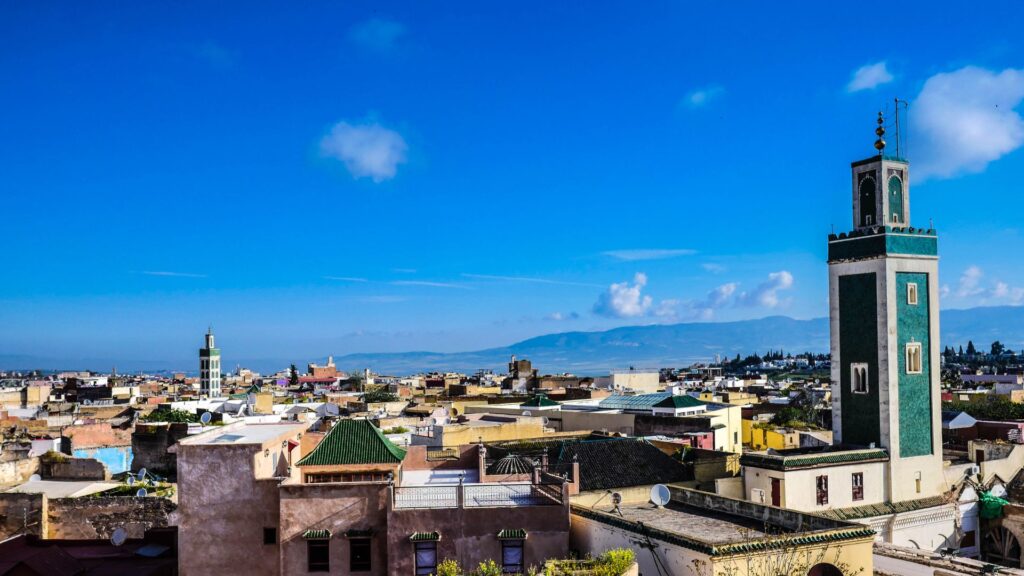
Meknes is sometimes called the Versailles of Morocco. The nickname refers to the massive building projects undertaken by Sultan Moulay Ismail in the seventeenth century. The comparison captures something real about the scale of ambition involved. Moulay Ismail wanted to create a capital that would rival anything in Europe. He nearly succeeded before death and changing political fortunes left many projects unfinished.
But the city’s Andalusian connections predate that imperial grandeur by centuries.
The medina contains neighborhoods established by Andalusian refugees who brought architectural traditions and craft skills that local builders adopted and adapted over generations. The monumental Bab Mansour gate, often cited as the finest in Morocco, incorporates design elements drawn from Andalusian precedents. It blends them with indigenous Moroccan motifs, honoring both traditions equally.
Meknes receives far fewer tourists than Fez or Marrakech. This makes it more rewarding for travelers interested in authentic urban life rather than Instagram opportunities. The souks still cater primarily to locals rather than visitors. Prices are more reasonable because competition for tourist dollars is less intense. The pace allows for actual contemplation of the historic sites rather than the rushed progression through highlights that crowded destinations often impose.
7. Larache: the gidden gem most travelers miss
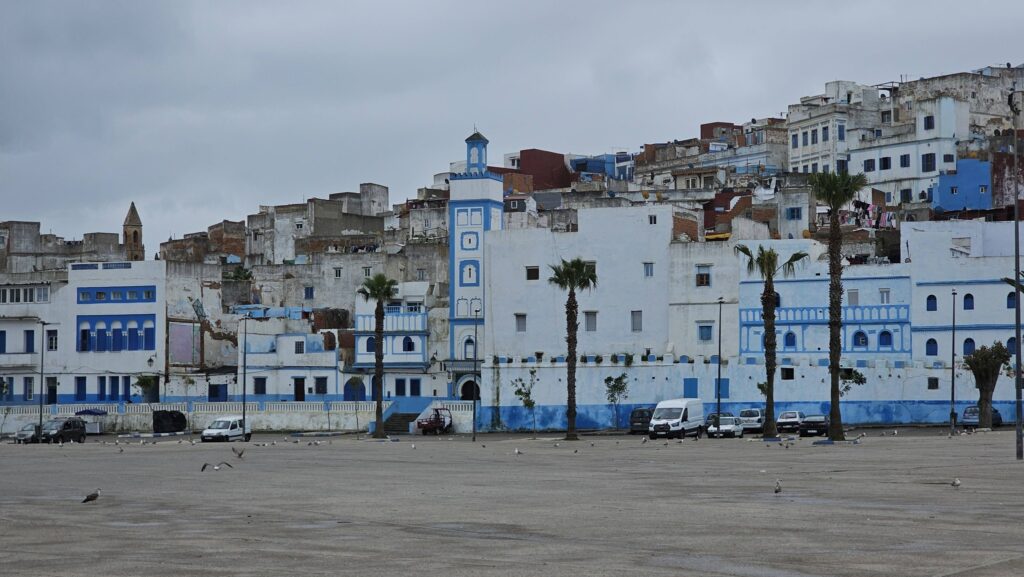
Most travelers have never heard of Larache, which is exactly why it deserves attention on a list like this. This small coastal city north of Rabat was heavily settled by Andalusian refugees. It later spent several centuries under Spanish colonial control. That double layer of Iberian influence still shapes daily life.
The Spanish connection means that older residents still speak Spanish fluently, sometimes more comfortably than French. Spanish signage remains common throughout the town. And the overall atmosphere blends Moroccan and Iberian influences in ways that feel natural rather than forced or performed for visitors.
The medina is compact and genuine. Seafood is excellent, drawn fresh from the Atlantic. The beach offers a break from inland sightseeing for travelers who need to reset after days of navigating crowded medinas.
Larache makes a logical stop between Tangier and Rabat for flexible travelers. It suits those with a taste for places that haven’t been optimized for tourism. What you lose in polish, you gain in authenticity.
8. Asilah: artists’ colony on ancient foundations
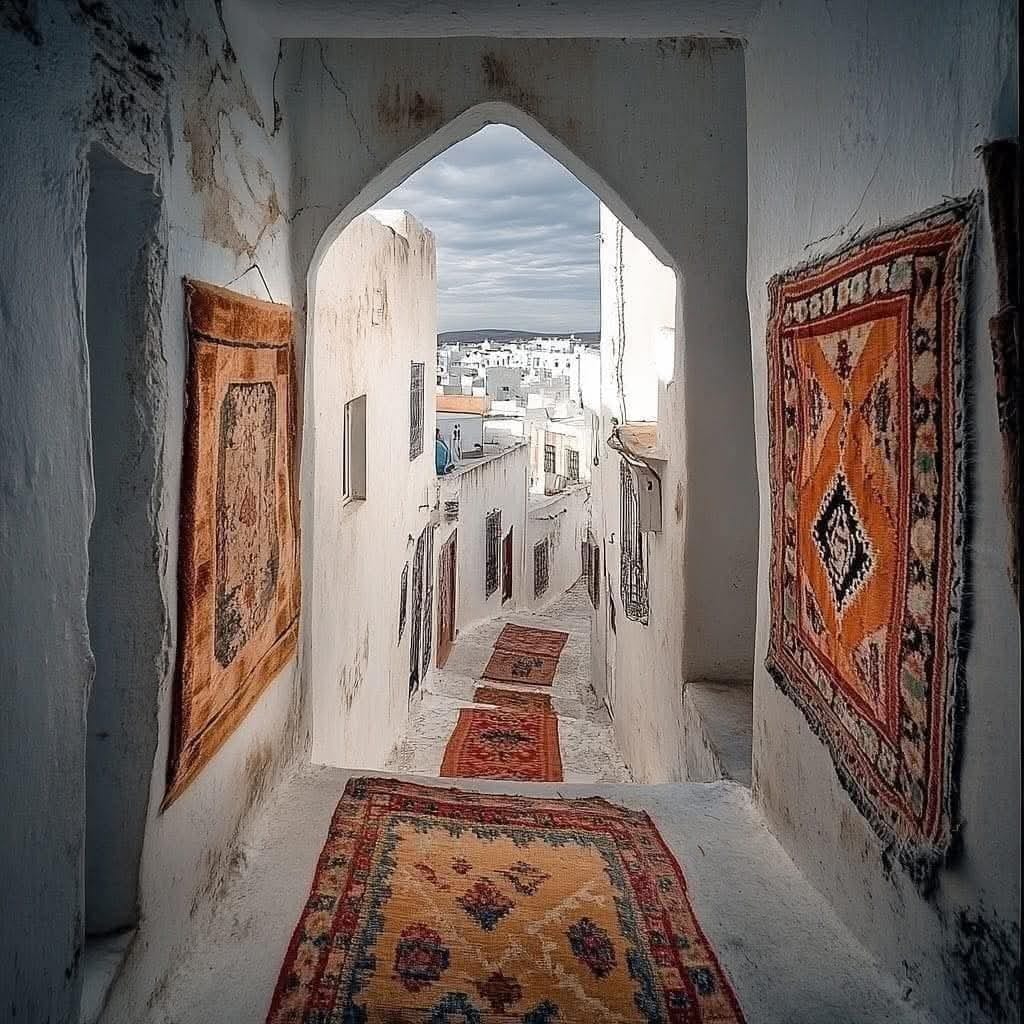
Like Larache, Asilah is a small coastal town with deep Andalusian and Portuguese roots. The medina features whitewashed walls and blue accents that echo Chefchaouen’s famous palette. It has the intimate scale that larger cities lost long ago to growth and modernization.
Asilah has developed a reputation as an artists’ colony over the past few decades, adding a contemporary layer to its historical foundations. Annual festivals bring muralists who paint directly on the medina walls, creating an ever-changing gallery of contemporary art layered over medieval architecture. Geometric patterns from Al-Andalus share space with abstract modern compositions. The combination works surprisingly well, suggesting continuity between historic craft traditions and contemporary creative expression.
The town is small enough to explore thoroughly in a single afternoon. It makes an ideal day trip from Tangier for travelers based there. The journey takes less than an hour by grand taxi. On the return, add a stop in Larache for those wanting to maximize their coastal Andalusian exposure.
9. Oujda: musical heritage at the edge of Morocco
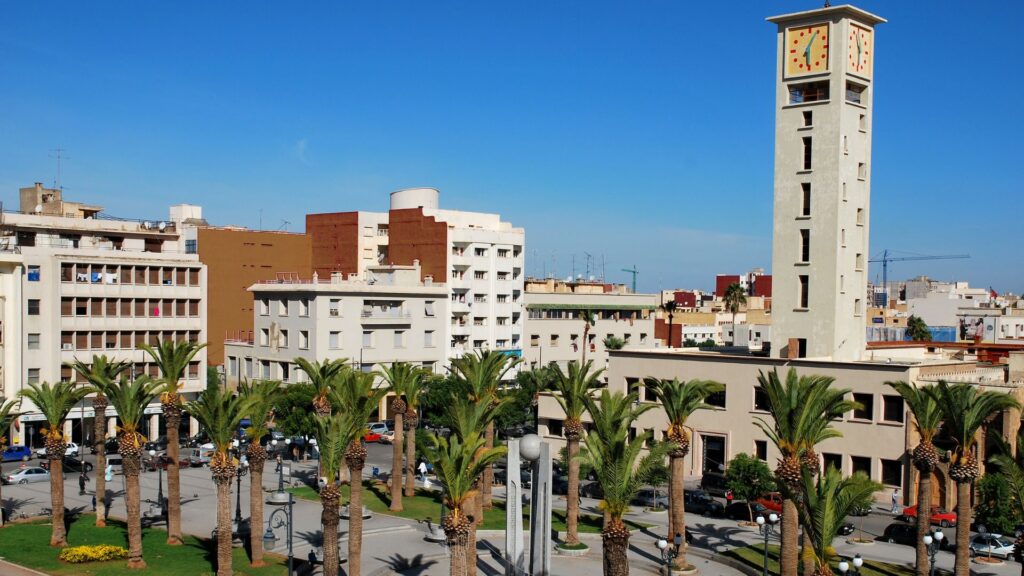
Oujda sits in Morocco’s far northeast corner, closer to Algeria than to any major Moroccan city. This geographic isolation has preserved cultural traditions that evolved differently from the rest of the country. They followed their own trajectory while the western regions developed along separate lines.
The city is particularly known for Gharnati music, a variant of Andalusian classical music named after Granada itself. Local musicians maintain repertoires and performance styles that differ subtly from the Al-Ala tradition dominant in Fez and Tetouan. For travelers interested in Andalusian musical heritage, Oujda offers something genuinely distinct. It is a variant tradition that survived precisely because of the city’s remoteness from the main cultural centers.
Getting to Oujda requires commitment. The city lies off the main tourist routes and lacks the photogenic medina architecture of northern cities. There are no blue walls here, no Instagram-ready streetscapes. But that remoteness has protected its authenticity in ways that more accessible destinations have struggled to maintain.
10. Safi: craft traditions that crossed the Mediterranean
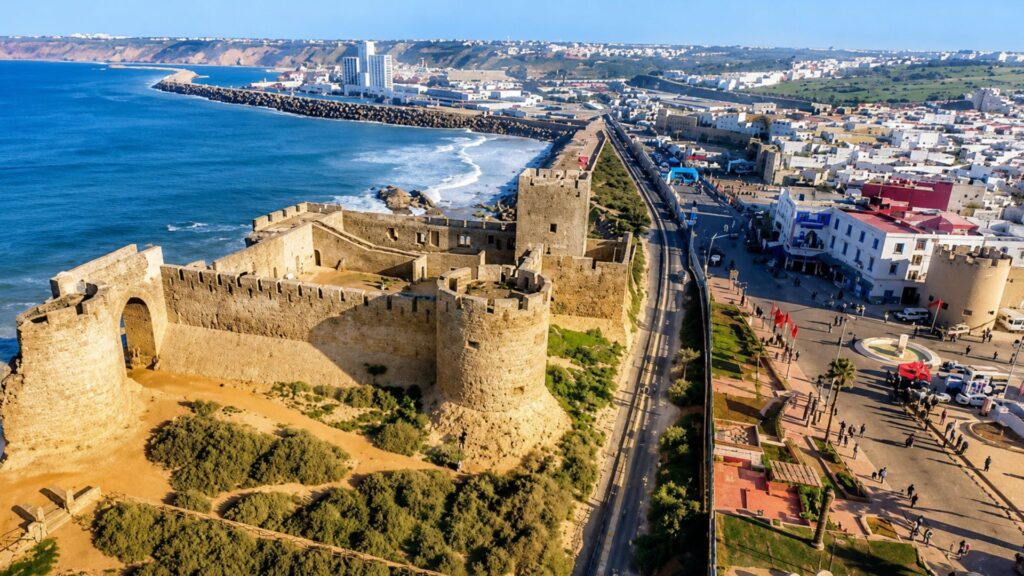
Safi probably belongs at the bottom of any Andalusian heritage list in terms of atmospheric impact. The city doesn’t offer the visual drama of Tetouan or Chefchaouen. But it deserves mention for travelers interested in how Andalusian craft traditions survived and adapted in Morocco.
Safi has been a center of ceramic production for centuries. The techniques used by local potters show clear Andalusian influence in their forms, glazes, and decorative patterns. The blue and white pottery that fills tourist shops throughout Morocco often originates in Safi workshops. Artisans still use methods passed down across generations, preserving knowledge that traveled from medieval Spain.
Watching potters work and visiting the cooperative showrooms offers insight into how Andalusian craft traditions didn’t simply survive the crossing to Morocco. They evolved, adapted to local materials and tastes, and ultimately became something new while retaining their essential character.
To understand the artistic traditions that tie all these places together, take a look at our guide to Islamic art and geometric patterns from Al-Andalus to Morocco. Once you learn to recognize the design vocabulary, you’ll start seeing connections everywhere you look.
Planning your Andalusian heritage route
These ten cities span Morocco from the Mediterranean coast to the Atlantic shore to the Algerian border. Visiting all of them would require several weeks and considerable tolerance for long bus rides through varied terrain.
For a focused Andalusian heritage trip, I recommend concentrating on the northern cluster: Tangier, Tetouan, Chefchaouen, and potentially Larache or Asilah. This route keeps distances manageable while delivering the most concentrated dose of Andalusian atmosphere. The cities connect easily by grand taxi or bus. The Rif Mountains rise behind the coastal plains, echoing the geography that Andalusian refugees found familiar when they arrived five centuries ago.
Adding Fez extends the journey inland and provides access to the finest examples of architectural preservation and living musical tradition. From Fez, continuing south to Meknes and eventually Rabat creates a logical loop back toward Casablanca and its international airport.
| Route Option | Duration | Key Highlights |
|---|---|---|
| Northern Focus | 7-10 days | Tangier, Tetouan, Chefchaouen, Asilah |
| Extended Heritage | 14-18 days | Above plus Fez, Meknes, Rabat |
| Complete Circuit | 3+ weeks | All ten cities with coastal detours |
Beyond what the eye can see
The Andalusian heritage of these cities goes beyond what photographs can capture. The music drifting from upper windows carries melodies composed in medieval Cordoba. Mint tea rituals preserve hospitality traditions that developed in Granada’s gardens. The particular rhythm of daily life, the timing of meals, the patterns of social interaction, all carry traces of that centuries-old migration.
What strikes me most after three weeks immersed in this heritage is how alive it remains. This isn’t archaeology. It isn’t museum preservation. Andalusian culture in Morocco continues to evolve, adapting to contemporary life while maintaining its distinctive character. The refugees who crossed the Strait of Gibraltar five hundred years ago couldn’t have imagined this. Their traditions survived into an age of smartphones and Instagram. But survive they did, carried forward by generations who understood the value of what they inherited.
Perhaps nowhere is this living legacy more visible than in the geometric patterns adorning every surface, from zellige tilework to carved stucco to painted wooden ceilings. These mathematical designs traveled with the Andalusian refugees. They took root in Moroccan workshops where artisans continue perfecting techniques first developed in the Alhambra and the Great Mosque of Cordoba.
For travelers willing to look beyond surface impressions, Morocco offers something rare: a window into what might have been. Andalusian culture here developed along a path that history closed in Spain but left open across the water in North Africa.
Which of these cities would you prioritize on a trip focused on experiencing Morocco’s Andalusian heritage firsthand?