Arabic, Berber, and Andalusia: understanding the language connections in Moroccan speech
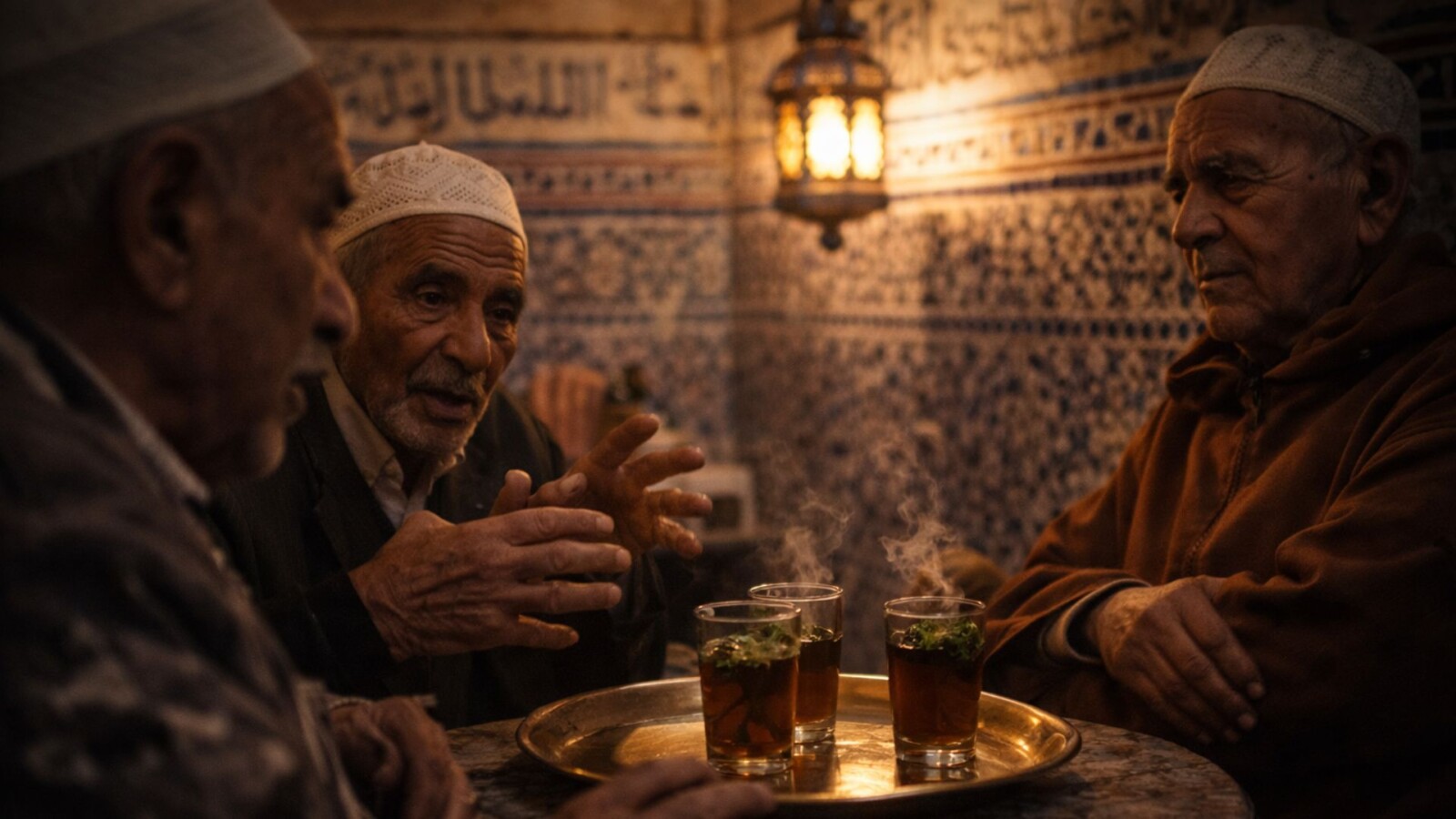
The first time you hear Moroccan Arabic, you might wonder if you’ve somehow landed in the wrong country.
Standard Arabic speakers from the Gulf often describe Darija, Morocco’s vernacular, as nearly incomprehensible. French visitors catch unexpected echoes of their own language. Spanish tourists notice words that sound suspiciously familiar. And linguists recognize traces of a medieval civilization that disappeared from Europe over five centuries ago but left its fingerprints all over Moroccan speech.
Morocco’s linguistic landscape tells the story of its history more honestly than any museum exhibit. Every borrowed word, every regional accent, every shift in vocabulary between northern and southern cities maps onto migrations, conquests, and cultural exchanges that shaped the kingdom across millennia. For travelers interested in Morocco’s Andalusian heritage, understanding this linguistic dimension adds depth to experiences that visual appreciation alone cannot provide.
Morocco’s multilingual reality
Before exploring Andalusian influences specifically, the broader linguistic context matters. Morocco operates as a genuinely multilingual society where most people navigate between multiple languages daily depending on context, audience, and purpose.
Darija functions as the mother tongue for the majority of Moroccans. This Arabic dialect evolved locally over centuries, absorbing influences from every culture that touched Moroccan soil. It differs substantially from Modern Standard Arabic, the formal language of education, media, and religion, to the point where some linguists debate whether to classify them as separate languages rather than dialect variants.
Tamazight, the indigenous Berber language family, predates Arabic arrival entirely. Various Tamazight dialects remain first languages for millions of Moroccans, particularly in mountain and rural regions. Constitutional recognition in 2011 elevated Tamazight’s official status, though practical implementation continues evolving.
French arrived with colonial administration in the early twentieth century and never left. Higher education, business, and government functions often operate in French. Educated Moroccans typically speak it fluently, and French vocabulary permeates Darija conversation even among those who never formally studied the language.
Spanish holds particular relevance in northern Morocco, where Spanish colonial presence lasted until 1956 in some areas and continues influencing regional speech patterns. The northern cities most associated with Andalusian heritage, including Tetouan, Chefchaouen, and Tangier, maintain stronger Spanish linguistic connections than the rest of the country.
| Language | Primary Context | Geographic Concentration |
| Darija | Daily conversation, informal settings | Nationwide |
| Modern Standard Arabic | Education, media, religion | Formal contexts nationwide |
| Tamazight | Family, community, regional identity | Atlas Mountains, Rif, Souss |
| French | Business, higher education, government | Urban centers |
| Spanish | Commerce, media, daily life | Northern Morocco |
Andalusian Arabic’s living legacy
The Arabic that Moorish refugees brought to Morocco when they fled Spain differed notably from varieties spoken elsewhere in North Africa. Andalusian Arabic had developed in relative isolation for nearly eight centuries, absorbing Romance language influences and evolving distinct pronunciation patterns, vocabulary choices, and grammatical features.
When refugees settled in Moroccan cities, particularly in the north, they didn’t simply abandon their speech patterns. Communities maintained Andalusian Arabic features for generations, even as they gradually integrated with local populations. Tetouan, rebuilt by Granadan refugees starting in 1485, preserved Andalusian linguistic features so distinctively that researchers can still identify their traces in contemporary speech.
Northern Moroccan Arabic differs audibly from central and southern varieties in ways that linguists attribute partly to Andalusian substrate influence. Pronunciation patterns, particularly certain consonant sounds and vowel qualities, reflect the speech habits of refugees who settled the region five centuries ago. The differences are subtle enough that outsiders might miss them but significant enough that Moroccans immediately identify northern accents as distinct.
Beyond accent, specific vocabulary items entered Moroccan Arabic through Andalusian transmission. Words for household objects, foods, architectural features, and cultural practices sometimes trace directly to medieval Iberian Arabic rather than to Eastern Arabic sources or local Berber languages. These lexical survivals function as linguistic archaeology, preserving evidence of cultural contact that documents alone cannot capture.
Spanish words in Moroccan vocabulary
The linguistic exchange between Iberia and Morocco moved in multiple directions. While Andalusian Arabic influenced Moroccan speech, Reconquista-era Spanish also left its mark, entering Moroccan vocabulary through various channels.
Some Spanish words arrived with Andalusian refugees themselves. Eight centuries of coexistence on the Iberian Peninsula meant that Andalusian Arabic had already absorbed substantial Romance vocabulary before the expulsion. When speakers crossed to Morocco, they brought these hybrid linguistic patterns with them.
Other Spanish influences came through later colonial contact, particularly in northern Morocco where Spanish administration operated until the mid-twentieth century. This created layered borrowing: medieval Spanish terms preserved through Andalusian Arabic mixing with modern Spanish vocabulary acquired through colonial-era contact.
Common Spanish-derived words in Moroccan Arabic include terms for:
Household items and furniture that entered domestic vocabulary through trade and colonial influence. Kitchen terminology particularly shows Spanish influence, reflecting the practical domains where languages commonly exchange vocabulary.
Clothing and fashion terms that often retain recognizable Spanish forms while adapting to Moroccan pronunciation patterns. The names for certain traditional garments trace to Iberian sources rather than Arabic or Berber origins.
Food vocabulary that sometimes surprises Spanish visitors who recognize familiar words in unexpected contexts. Certain cooking techniques and ingredients maintain Spanish-derived names that predate modern culinary globalization.
Administrative and legal terminology from the colonial period that persists despite official Arabization efforts. Some bureaucratic vocabulary remains more easily expressed in Spanish-derived terms than in Arabic alternatives.
Ladino: the Judeo-Spanish heritage
The Andalusian diaspora included both Muslims and Jews, and the linguistic legacy reflects this shared experience. Ladino, the Judeo-Spanish language that Sephardic Jews carried with them when expelled from Spain in 1492, survived in Moroccan communities for centuries.
Northern Moroccan cities, particularly Tangier and Tetouan, maintained substantial Sephardic populations who preserved Ladino as a community language well into the twentieth century. The language combined medieval Spanish with Hebrew vocabulary and Moroccan Arabic influences, creating a distinctive variety that functioned as both ethnic marker and practical communication tool.
Though the mass emigration of Moroccan Jews to Israel and elsewhere after 1948 dramatically reduced Ladino speakers in Morocco, traces remain. Older residents in northern cities sometimes remember Ladino phrases. Cultural institutions preserve recordings and documents. And some vocabulary items that entered broader Moroccan Arabic circulation originated in Ladino-speaking communities.
For travelers interested in the full scope of Andalusian heritage, recognizing the Jewish component of that heritage expands understanding beyond the Muslim experience typically emphasized in tourism contexts. The languages that crossed the Strait of Gibraltar included Ladino alongside Andalusian Arabic, and both left marks on Moroccan linguistic landscape.
Musical language: poetry in Andalusia classical music
The intersection of language and music creates another dimension of Andalusian linguistic heritage. Al-Ala, the Andalusian classical music tradition preserved in Morocco, transmits medieval Arabic poetry through performance in ways that keep archaic linguistic forms alive.
The lyrics sung in nuba suites often date back centuries, preserving classical Arabic poetry and vernacular verse forms that developed in medieval Iberia. The muwashshah and zajal poetic structures that flourished in Al-Andalus continue structuring vocal performances, their intricate rhyme schemes and metric patterns intact despite the passage of time.
These lyrics preserve vocabulary and grammatical constructions no longer used in everyday speech. Musicians and audiences who engage with Al-Ala music encounter linguistic fossils embedded in performance tradition. The texts require explanation even for native Arabic speakers unfamiliar with classical or Andalusian literary conventions.
For language-interested travelers, attending Andalusian music performances offers an auditory encounter with linguistic heritage that conversation cannot provide. The sung texts connect directly to medieval Iberian culture in ways that demonstrate how music functions as language preservation mechanism.
Regional variations: northern accents and beyond
Traveling through Morocco, attentive listeners notice regional speech variations that map onto historical settlement patterns. Northern Moroccan Arabic, influenced by both Andalusian substrate and Spanish colonial overlay, sounds distinctly different from speech in Marrakech, Fez, or southern cities.
Tetouan residents speak a variety particularly noted for Andalusian features. The city’s founding population came overwhelmingly from Granada, and subsequent generations maintained certain speech characteristics that linguists associate with Andalusian Arabic. Modern Tetouanis may not consciously recognize these features, but comparative analysis reveals consistent patterns.
Chefchaouen’s isolation in the Rif Mountains helped preserve archaic features that urban contact might have eroded. The blue city’s relative remoteness until recent decades protected linguistic conservatism alongside the architectural and cultural distinctiveness that now attracts visitors.
Tangier’s cosmopolitan history created different linguistic dynamics. The international zone period (1923-1956) brought intense multilingual contact, with Spanish, French, English, and Arabic all circulating freely. This produced speech patterns more influenced by modern European contact than medieval Andalusian inheritance.
Fez presents an interesting case. Though the city served as a major destination for Andalusian refugees and maintains strong cultural connections to that heritage, its linguistic profile is less distinctively Andalusian than northern cities. The larger population base and continuous Arabic-speaking majority absorbed refugee influences rather than being dominated by them.
Practical language for travelers
Understanding Morocco’s linguistic complexity helps travelers navigate practical communication while appreciating cultural depth. A few considerations assist those exploring Andalusian heritage cities:
French remains the most useful second language for travelers without Arabic. English proficiency varies significantly, but French consistently provides backup communication across the country. In northern cities with Spanish colonial history, Spanish often works equally well or better.
Basic Darija phrases earn goodwill regardless of how imperfectly pronounced. Standard Arabic greetings transfer adequately, though locals appreciate attempts at distinctly Moroccan expressions. The difference between textbook Arabic and street Darija confuses many visitors, but locals accommodate enthusiastically.
Northern Moroccan speech may include Spanish words and phrases more freely than other regions. Travelers with Spanish knowledge sometimes find northern cities linguistically more accessible than Arabic-only preparation suggested.
Musical and literary contexts use classical Arabic forms unfamiliar even to Darija speakers. Translations and explanations typically accompany performances aimed at general audiences, but some cultural contexts assume familiarity with classical traditions.
Language learning and cultural immersion
For travelers seeking deeper engagement, Morocco offers various language learning opportunities that connect to Andalusian heritage themes:
Arabic language schools in Fez and other cities offer courses ranging from tourist basics to serious study. Programs specifically focused on Darija rather than Modern Standard Arabic better prepare visitors for actual conversation, though formal Arabic provides foundation for understanding written materials and classical texts.
Tamazight study opportunities have expanded with official language recognition. Programs in Berber-speaking regions offer immersion experiences that complement rather than replace Arabic study.
Cultural centers sometimes offer short courses or workshops focused on Andalusian musical or literary traditions, including linguistic components. The Fez conservatory and similar institutions occasionally open educational programming to international participants.
Private tutoring arrangements can be organized through hotels, language schools, or cultural organizations. Intensive short-term study combining language instruction with guided cultural experiences provides perhaps the most efficient immersion for travelers with limited time.
The linguistic dimension of Moroccan culture rewards attention in ways that visual tourism alone cannot match. Every conversation, every overheard exchange, every sung lyric carries traces of the migrations and exchanges that shaped the kingdom. The Andalusian refugees who crossed the Strait of Gibraltar five centuries ago didn’t just bring architecture and music. They brought ways of speaking that persist, transformed but recognizable, in Moroccan voices today.
What aspects of Morocco’s linguistic diversity have you noticed during your travels, and how has language shaped your understanding of the country’s cultural layers?