Granada to Fez: how Moorish refugees shaped North African culture and architecture

The story of how Morocco became a living museum of Andalusian culture starts with one of history’s most dramatic exoduses. When I first walked through the narrow streets of Tetouan’s medina, I had no idea I was literally tracing the footsteps of refugees who fled Spain over five centuries ago. The white walls, the familiar arched doorways, the haunting melodies drifting from a nearby café, all of it suddenly made sense once I understood the human story behind it.
This isn’t just ancient history collecting dust in textbooks. The cultural DNA of medieval Spain is still alive and breathing in Moroccan cities today, and understanding that connection transforms the way you experience these places as a traveler.
The fall of Granada and the end of an era
January 2, 1492 is a date that changed the Mediterranean world forever. On that cold winter morning, Muhammad XII – known to the Spanish as Boabdil – handed over the keys of Granada to Ferdinand and Isabella, the Catholic monarchs who had spent a decade laying siege to the last Muslim kingdom in Spain.
Legend has it that as Boabdil rode away from his beloved Alhambra palace, he paused at a mountain pass to take one final look at the city. His mother supposedly told him to weep like a woman for what he could not defend like a man. That spot is still called the Moor’s Last Sigh.
But the fall of Granada was just the beginning of a much longer tragedy.
From tolerance to expulsion
The surrender terms initially seemed reasonable. Muslims who stayed could keep their property, practice their religion, and maintain their customs. For a few years, this promise held.
Then everything changed.
Forced conversions began. Mosques were converted into churches. Arabic books were burned in public bonfires. The Moriscos, as converted Muslims were called, found themselves trapped in an impossible situation. Even those who genuinely converted to Christianity faced constant suspicion and discrimination. Their food preferences, their bathing habits, their style of dress, everything marked them as different.
The pressure built for over a century until Philip III signed the final expulsion decree in 1609. Roughly 300,000 Moriscos were forced onto ships and deposited on North African shores, often with nothing more than what they could carry. Some estimates suggest nearly two million Muslims and Jews left Spain between 1492 and 1614.
Crossing the strait
The journey across the Strait of Gibraltar takes less than an hour on a modern ferry. I made the crossing myself on a sunny afternoon, watching the Spanish coast fade behind me while the Moroccan mountains grew larger ahead. It felt almost too easy compared to what those refugees must have experienced.
Many arrived with skills but no money. Others brought hidden gold coins sewn into their clothing. Some families had managed to preserve precious manuscripts and musical instruments. All of them carried memories of the lives they were leaving behind forever.
The reception in Morocco was mixed. Some local populations welcomed the newcomers for the skills and sophistication they brought. Others resented the competition and cultural differences. The refugees often clustered together in specific neighborhoods, maintaining their distinct identity even as they adapted to their new home.
Building a new Andalusia
What strikes me most about the Andalusian refugees is that they didn’t simply disappear into Moroccan society. Instead, they deliberately recreated what they had lost.
Chefchaouen offers the clearest example. The city was founded in 1471 as a fortress against Portuguese invaders, but it truly blossomed after waves of Andalusian refugees arrived following Granada’s fall. They looked at the Rif Mountains surrounding their new home and saw echoes of the Sierra Nevada they had left behind. The blue-washed buildings that now make Chefchaouen Instagram famous may have originated as a Jewish tradition or as a way to keep mosquitoes away, but the overall aesthetic owes everything to Andalusian sensibilities.
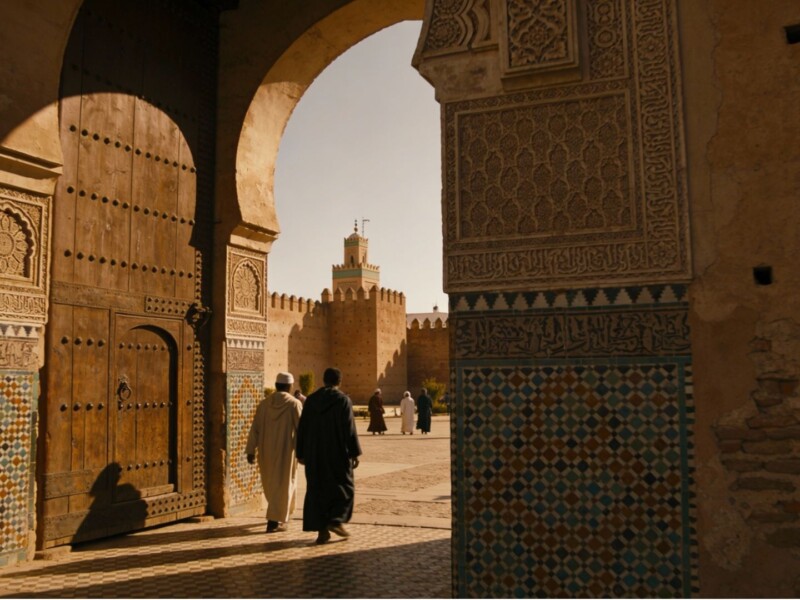
Tetouan tells a similar story. General Ali al-Mandri, himself an Andalusian exile, essentially rebuilt the city from ruins starting in 1485. The white walls and winding streets were designed to mirror Granada’s famous Albaicin neighborhood. Today, UNESCO recognizes Tetouan’s medina as the most complete and authentic Andalusian-influenced urban fabric in Morocco. Walking through it feels less like visiting Africa and more like stepping into a time capsule of medieval Spain.
The women who shaped history
One figure deserves special attention in this story. Sayyida al-Hurra was born in Granada around 1485 and fled to Morocco with her family as a child. She grew up to become one of the most powerful women in Mediterranean history, ruling Tetouan as an independent queen and commanding a fleet of pirates that terrorized Spanish and Portuguese shipping.
Her story captures something essential about the Andalusian refugees. They didn’t arrive as passive victims waiting to be absorbed. Many came with education, wealth, military experience, and burning resentment toward the kingdoms that had expelled them. Sayyida turned that resentment into a decades-long campaign of revenge against Iberian shipping lanes.
Cultural preservation against the odds
The refugees brought more than architecture and attitude. They carried an entire civilization in their collective memory.
Musical traditions survived through oral transmission across generations. The nuba suites that Andalusian orchestras still perform in Fez and Tetouan preserve melodies and poetry that date back to the courts of Cordoba. When I attended a performance at a small cultural center in Tetouan, the musicians explained that some of the songs they were playing had been passed down for five hundred years, always by ear, never written down until the twentieth century.
Culinary traditions made the crossing too. Pastilla, the sweet and savory pigeon pie that represents Moroccan fine dining at its best, likely originated in Andalusian kitchens. The combination of meat with cinnamon, sugar, and almonds reflects a sophisticated palate developed over centuries of Iberian-Arab fusion.
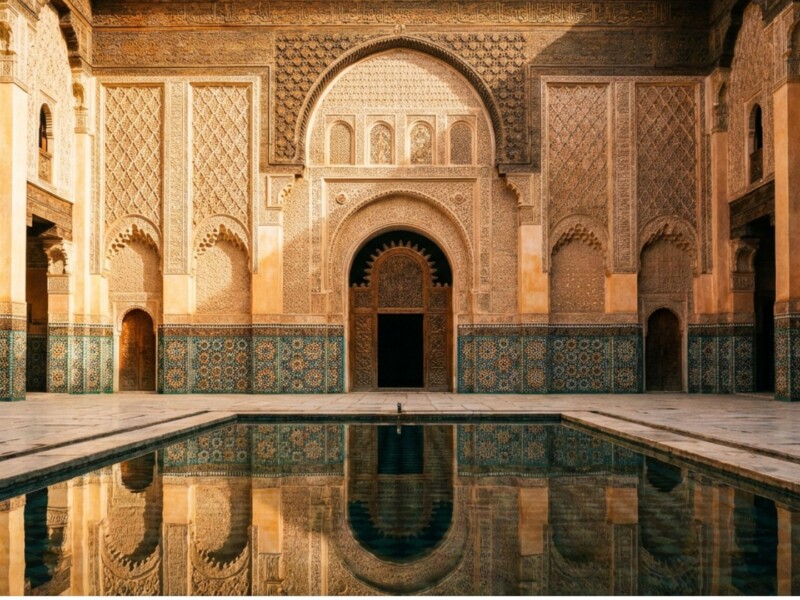
Craft traditions proved equally durable. The geometric patterns that cover seemingly every surface in Moroccan architecture trace directly back to Andalusian prototypes. Master craftsmen in Fez still use techniques developed in medieval Cordoba and Granada, cutting thousands of tiny zellige tiles by hand and assembling them into intricate mosaics.
The Jewish dimension
Any honest account of the Andalusian exodus must include the Sephardic Jews who shared the refugees’ fate. Spanish Jews faced expulsion in 1492, the same year Granada fell, and many followed the same routes to Morocco.
Jewish and Muslim refugees often maintained close relationships in their new homes, bound by shared language, shared trauma, and shared cultural references. The Ladino language survived in Moroccan Jewish communities for centuries, and Sephardic musical traditions intertwined with Andalusian classical music in fascinating ways.
Northern Moroccan cities like Tetouan and Tangier once had thriving Jewish quarters where Spanish was spoken as commonly as Arabic. Most Moroccan Jews eventually emigrated to Israel or Europe during the twentieth century, but their architectural and cultural legacy remains visible throughout the region.
Why this matters for travelers
Understanding the Andalusian connection changes how you see Morocco. Those white walls in Tetouan aren’t just pretty backdrops for photographs. They represent a deliberate choice by refugees to recreate their lost homeland. The geometric patterns covering every surface aren’t random decoration. They preserve artistic traditions that might otherwise have vanished when the Alhambra’s craftsmen were expelled.
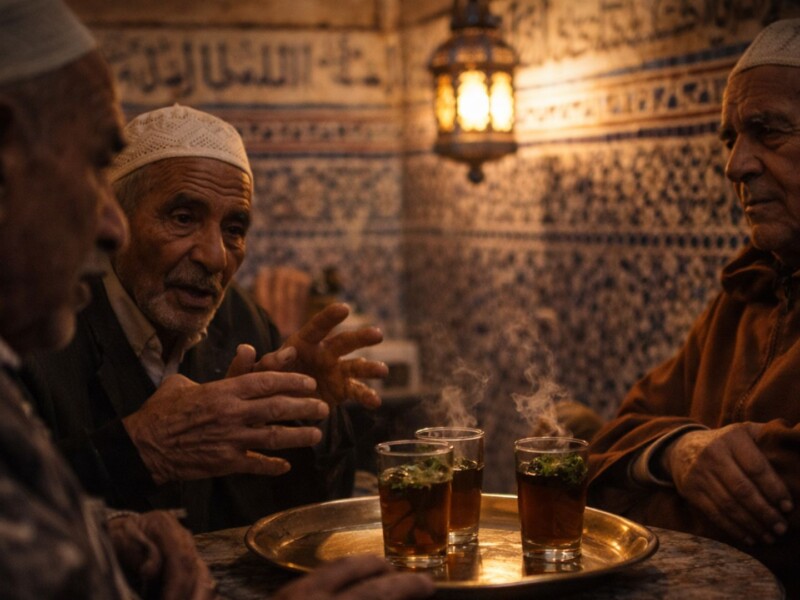
When you hear Andalusian music floating from a window in Fez, you’re hearing something that has survived conquest, exile, and five centuries of change. When you taste pastilla in a Marrakech restaurant, you’re experiencing flavors that once graced royal tables in Granada.
Morocco didn’t just receive Andalusian refugees. It became the place where Andalusian civilization continued to live and breathe after Spain tried to erase it. For travelers willing to look beneath the surface, that story adds layers of meaning to every medina, every monument, and every melody.
Following the thread
The human story of migration and cultural survival that connects Granada to Fez represents just one dimension of Morocco’s Moorish heritage. The physical evidence of this connection is everywhere once you know what to look for.
If you want to see exactly where these architectural traditions survive today, check out our guide to where to see Moorish architecture in Morocco, which covers the specific sites, practical visitor information, and the design elements that link Moroccan monuments to their Andalusian ancestors.