Where to see Moorish architecture in morocco today: cities, monuments, and hidden gems
I have a confession. Before my first trip to Morocco, I thought I knew what Moorish architecture looked like. I had seen the Alhambra in Granada, scrolled through thousands of Instagram posts, and watched enough travel documentaries to feel confident I could recognize the style anywhere.
Then I actually arrived in Fez and realized I had understood almost nothing. The scale of preservation, the density of historic buildings, the way entire neighborhoods function as living museums of medieval design, none of that translated through screens. Morocco doesn’t just contain examples of Moorish architecture. In many ways, Morocco is where this architectural tradition continues to breathe.
This guide covers the specific sites worth visiting, practical information for planning your trip, and the design elements to watch for once you arrive.
Fez: the motherlode
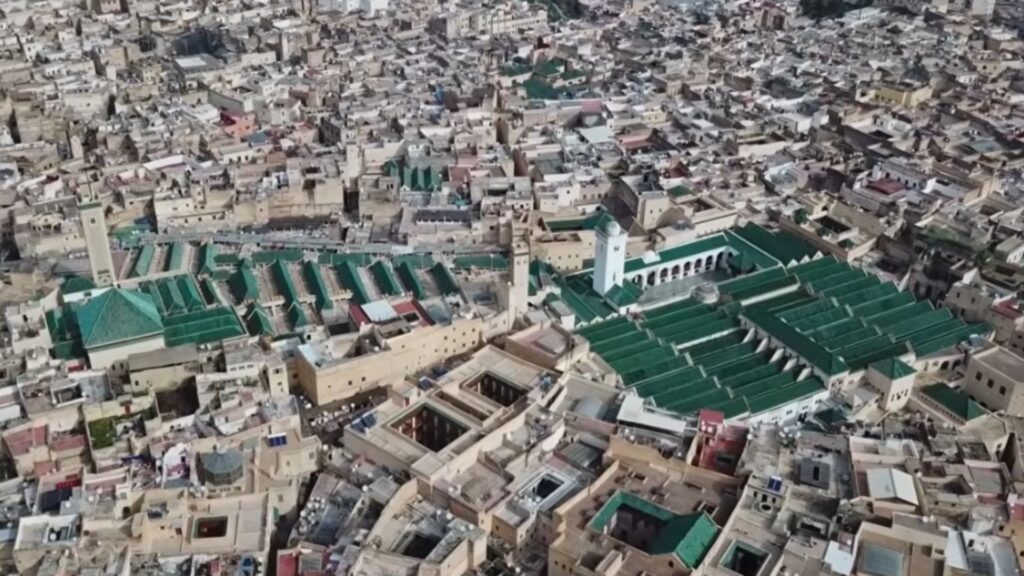
Any serious exploration of Moorish architecture in Morocco has to start in Fez. The medina contains such a concentration of historic buildings that UNESCO designated the entire old city as a World Heritage Site, calling it one of the most extensive and best-preserved medieval urban environments in the Arab world.
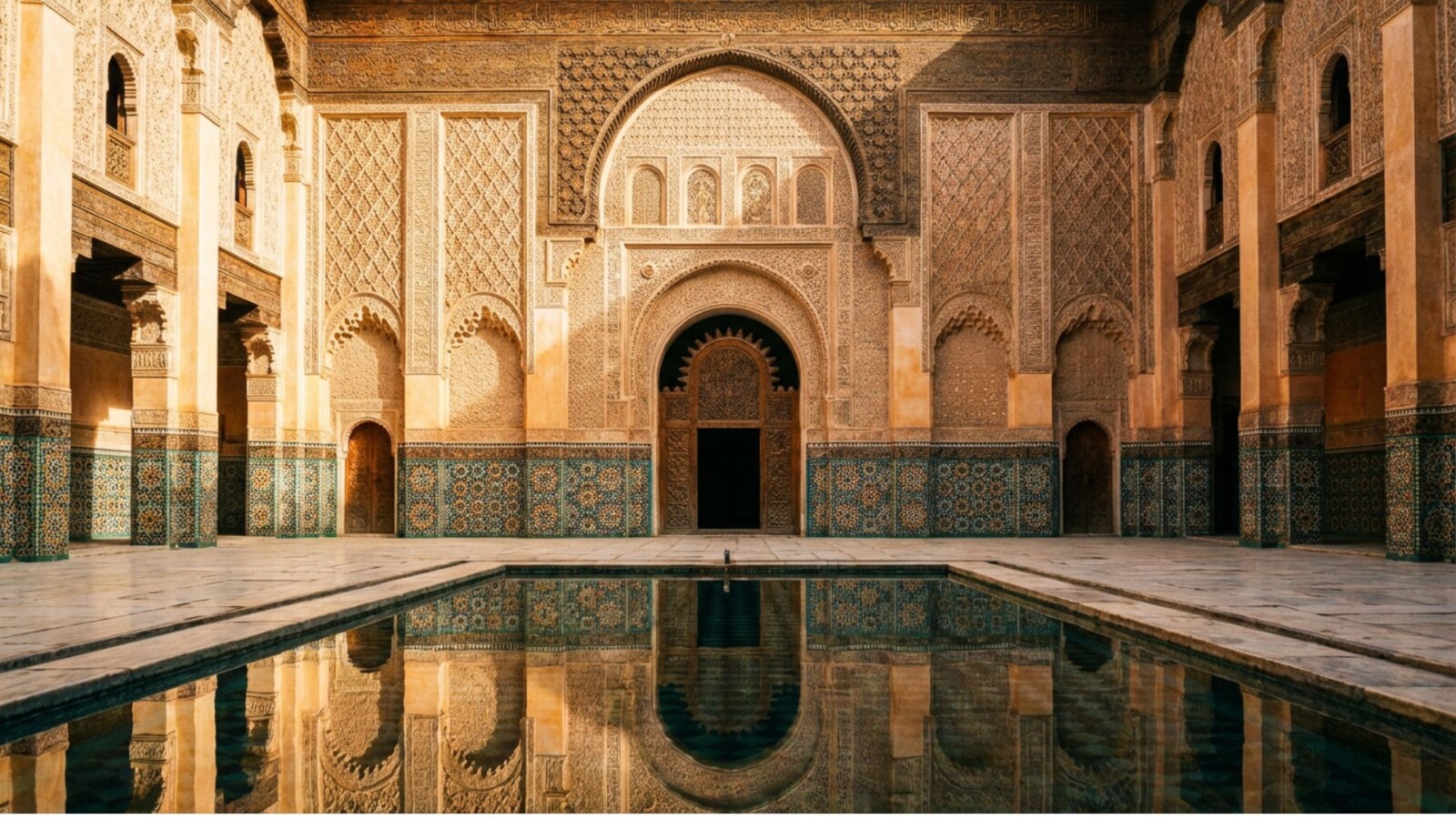
Bou Inania Madrasa stands as the crown jewel. Built between 1351 and 1356 under Marinid Sultan Abu Inan Faris, it represents the peak of Moroccan architectural achievement. The courtyard features a symphony of materials and techniques: zellij tilework on the lower walls, carved stucco above, cedarwood screens and corbels near the roofline, and a floor of marble and onyx. A water channel runs through the center, feeding ablution fountains at either end.
The madrasa is open daily from 9am to 6pm, with a brief closure during midday prayers. Entry costs around 70 dirhams. Go early in the morning for the best light and smallest crowds. The main courtyard faces roughly east, so morning sun illuminates the western wall most dramatically.
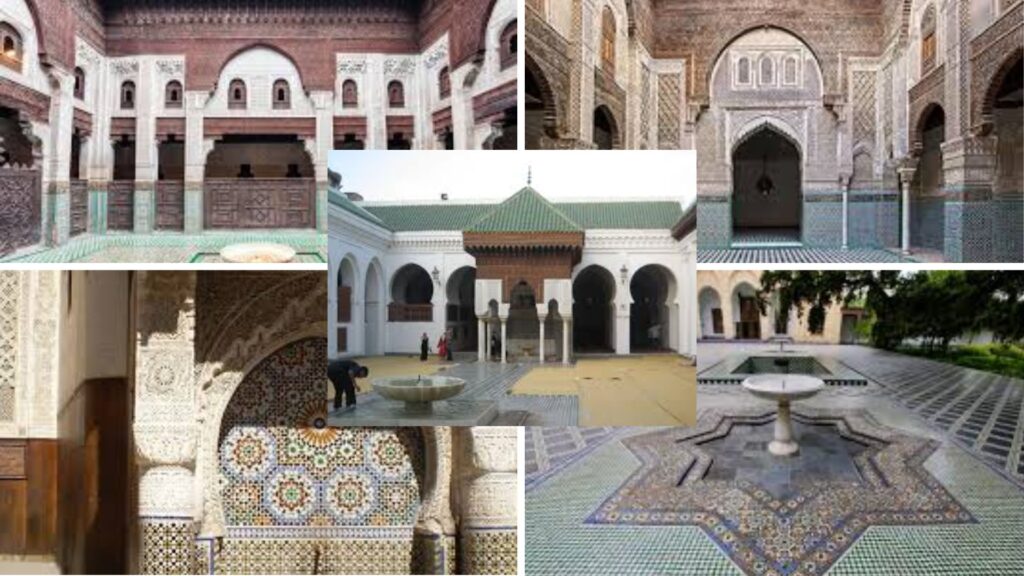
Al-Attarine Madrasa sits just steps from the Qarawiyyin Mosque and dates from 1325. It’s smaller than Bou Inania but equally refined, with particularly fine bronze doors and delicate stucco carving, a craft explored in the secret language of Moroccan doors. The entry fee is similar, and the two madrasas can easily be visited in a single morning.
Al-Qarawiyyin Mosque represents the spiritual heart of Fez and one of the oldest continuously operating universities in the world, founded in 859. Non-Muslims cannot enter, but you can glimpse the interior through several doorways and appreciate the exterior architecture. The current structure dates primarily from Almoravid and Almohad renovations in the twelfth century.
Nejjarine Fountain anchors a small square in the heart of the medina. The fountain itself showcases exquisite zellij and carved wood canopy, while the adjacent funduq has been converted into a museum of wooden arts. The museum building demonstrates traditional caravanserai architecture adapted for residential display purposes.
Dar Batha Museum occupies a nineteenth-century palace and houses an excellent collection of Moroccan decorative arts. The building itself merits attention, particularly the Andalusian garden with its central fountain and citrus trees. The collection includes historic zellij panels, carved plaster, embroidered textiles, and ceramics that help contextualize what you see in the madrasas.
Marrakech: the red city’s treasures
Marrakech developed a distinct regional style that differs subtly from Fez. The palette tends warmer, the spaces feel more expansive, and the decorative programs often seem denser and more exuberant. Whether you prefer the Fez or Marrakech aesthetic is largely a matter of personal taste.
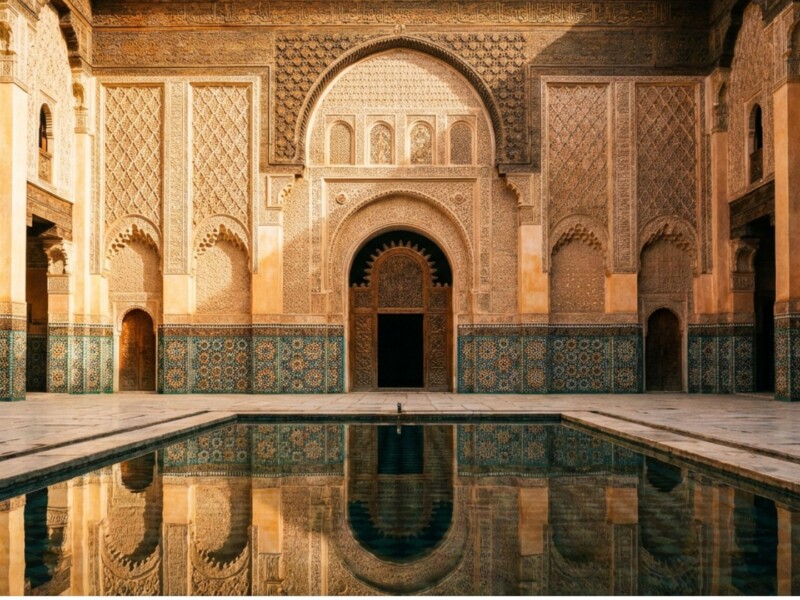
Ben Youssef Madrasa rivals the Fez madrasas in quality and exceeds them in scale. Built in the fourteenth century and substantially rebuilt under the Saadians in the sixteenth, it once housed nearly a thousand students in cells arranged around multiple courtyards. The main courtyard features a large reflecting pool and some of the most elaborate carved stucco in Morocco.
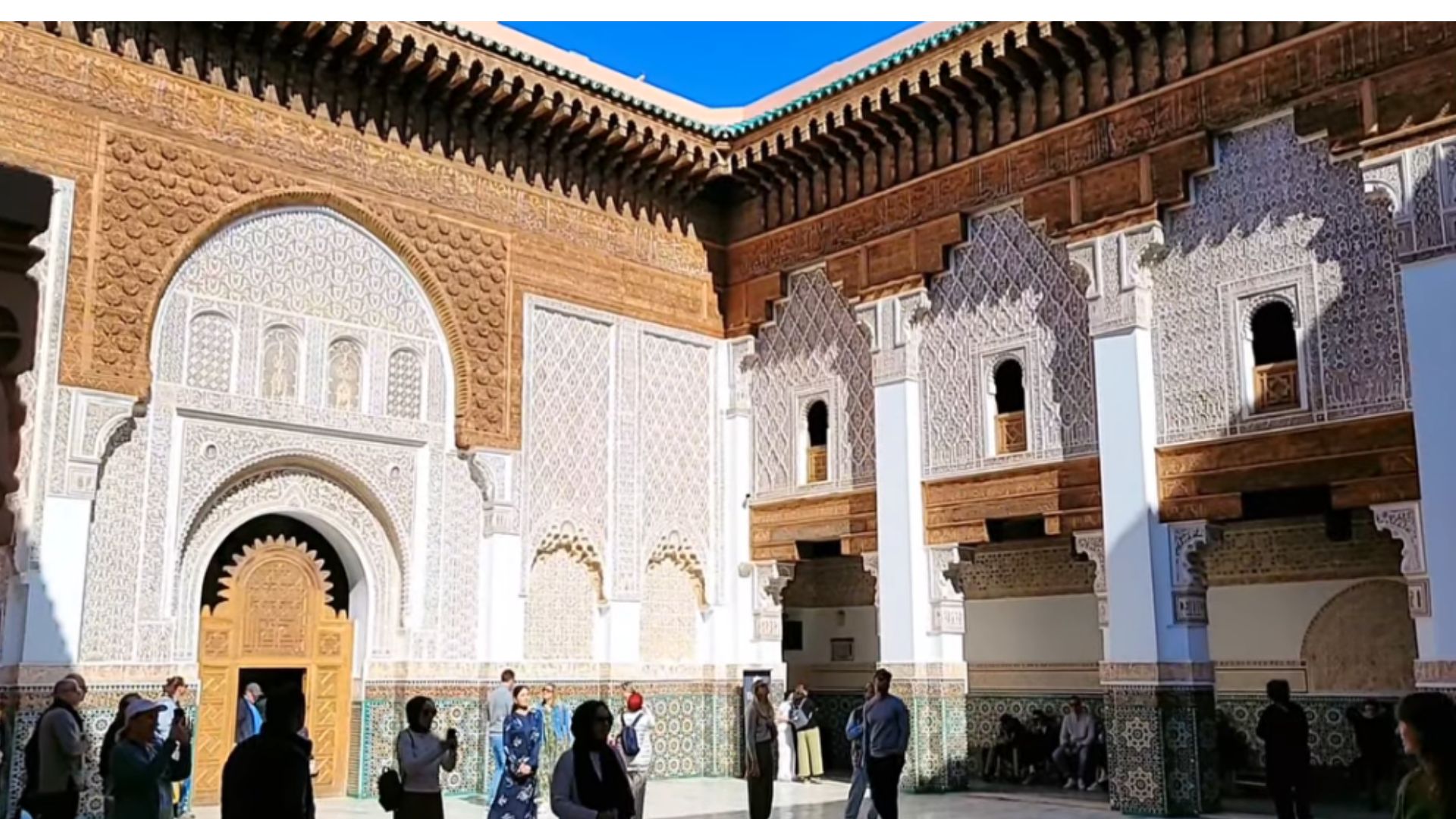
The madrasa reopened in 2022 after extensive restoration. Entry costs 70 dirhams, and the space can accommodate more visitors than the Fez madrasas without feeling crowded. The cells upstairs offer interesting glimpses of student life and unexpected views down into the courtyard.
Bahia Palace dates from the late nineteenth century, making it relatively modern by Moroccan standards. Critics sometimes dismiss it as decadent or excessive compared to earlier work, but I find it fascinating as evidence of how the Moorish tradition evolved over time. The painted wooden ceilings are particularly remarkable, covering vast rooms in intricate geometric and floral patterns.
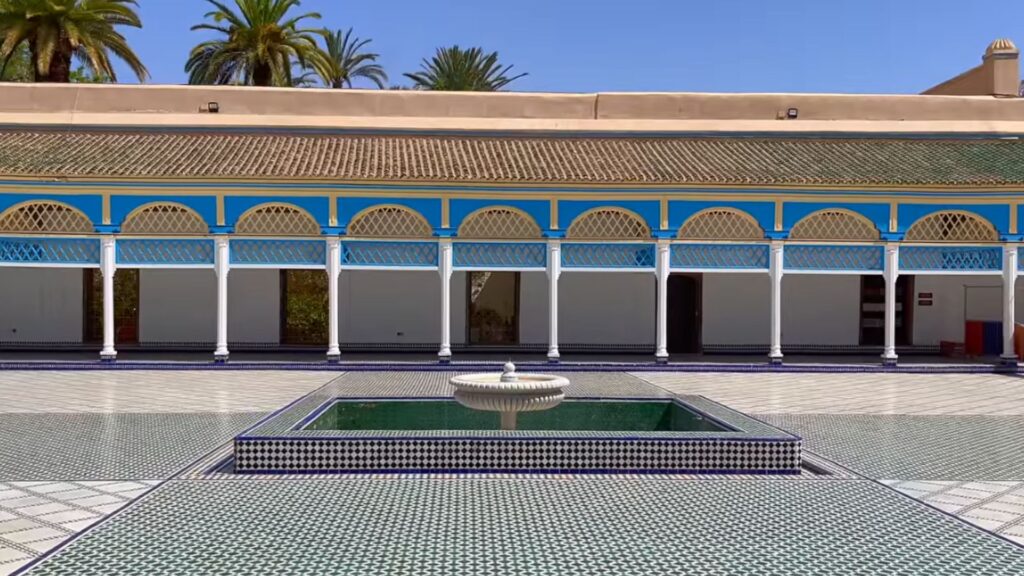
The palace sprawls across eight hectares and requires at least an hour to explore properly. Entry costs 70 dirhams. The gardens provide welcome shade during hot afternoons, and the succession of courtyards demonstrates how Moroccan domestic architecture organized space around light, water, and privacy.
Saadian Tombs lay hidden and forgotten for centuries until their rediscovery in 1917. The burial complex dates from the late sixteenth century and contains some of the finest carved marble in Morocco. The main chamber, housing the tomb of Sultan Ahmad al-Mansur, features twelve columns of Italian Carrara marble supporting a carved cedarwood dome.
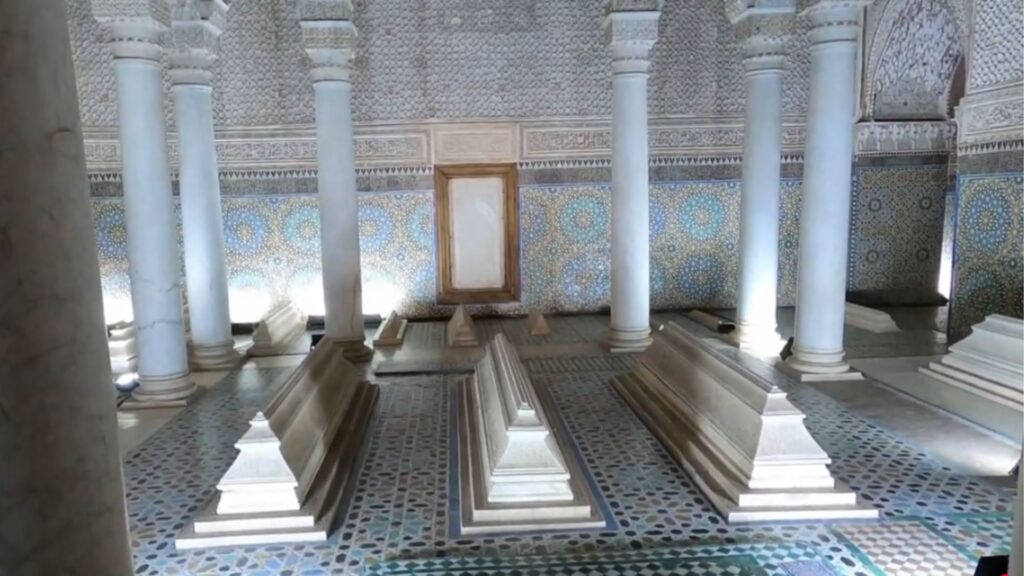
The tombs are small and extremely popular, meaning crowds can be oppressive during peak hours. Go either first thing in the morning or late in the afternoon. Entry costs 70 dirhams.
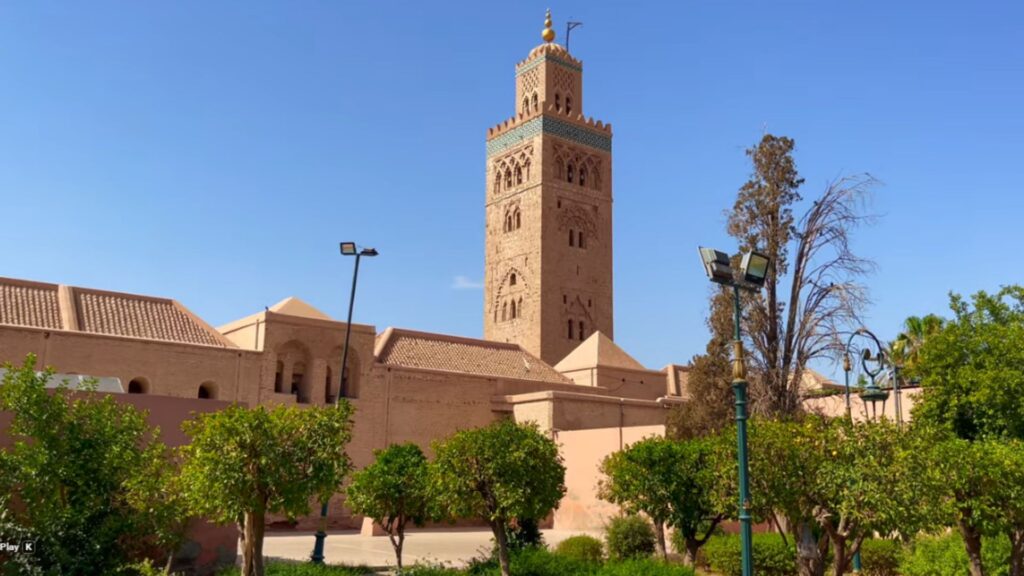
Koutoubia Mosque anchors the Marrakech skyline with its 77-meter minaret, visible from almost anywhere in the city. Non-Muslims cannot enter, but the exterior merits appreciation, particularly the decorative stonework on the minaret’s upper sections. The mosque dates from the twelfth century Almohad period and served as the prototype for the Giralda in Seville and the Hassan Tower in Rabat.
Meknes: imperial grandeur
Sultan Moulay Ismail transformed Meknes into his imperial capital during the late seventeenth century, constructing palaces, gardens, stables, and granaries on a scale that contemporaries compared to Versailles. Much of his work has crumbled, but enough survives to convey the ambition.
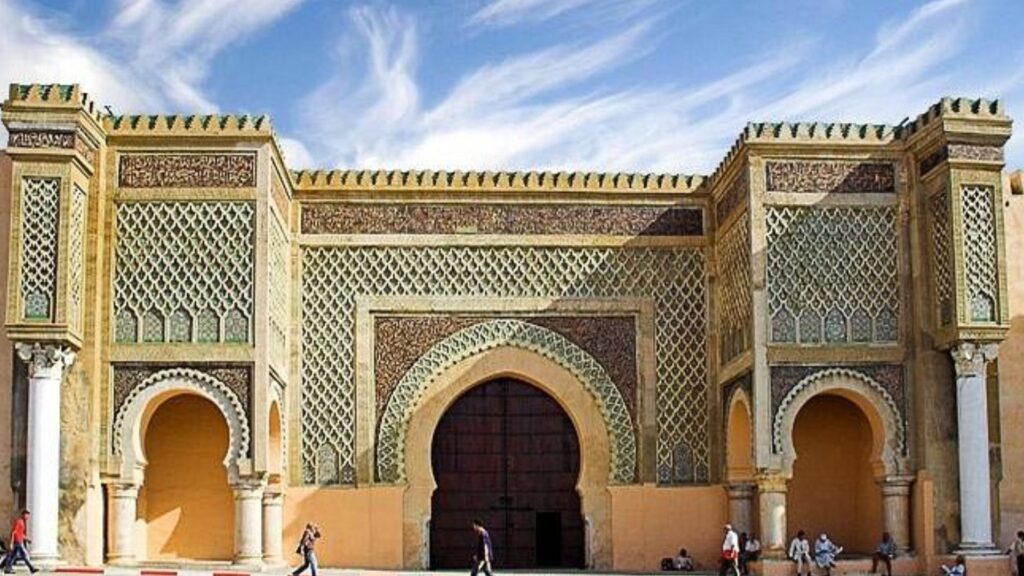
Bab Mansour is frequently called the finest gate in Morocco and possibly in all of North Africa. Completed in 1732, it combines massive scale with surprisingly delicate decorative detail. The green and white tilework, the carved inscriptions, and the proportions of the arch all reward careful study. The gate frames the entrance to the old imperial city and provides an appropriately dramatic introduction.
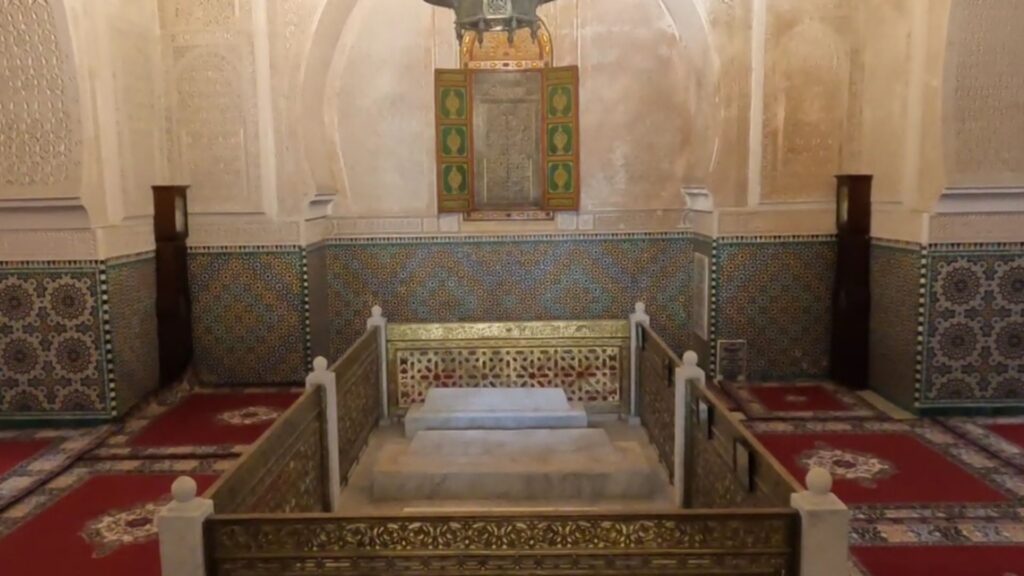
Mausoleum of Moulay Ismail ranks among the few Moroccan religious buildings open to non-Muslims. The interior showcases high-quality zellij, carved stucco, and painted wood in a sequence of courtyards and chambers leading to the tomb itself. The atmosphere is genuinely reverential, so dress conservatively and behave respectfully.
Heri es-Souani preserves the massive granaries and stables that Moulay Ismail built to supply his army. The scale is almost industrial, with enormous vaulted chambers extending in rows. The ruins offer insight into the infrastructure required to maintain an imperial capital and provide an interesting counterpoint to the decorative refinement of the religious buildings.
Rabat: accessible beauty
Morocco’s modern capital contains several significant Moorish sites in a more manageable and less overwhelming context than Fez or Marrakech.
Kasbah of the Udayas occupies a promontory overlooking the Atlantic and the mouth of the Bou Regreg River. The current structures date primarily from the Almohad period in the twelfth century, with substantial additions by Andalusian refugees in the seventeenth. The monumental gate, Bab Oudaia, ranks among the finest Almohad works in Morocco.
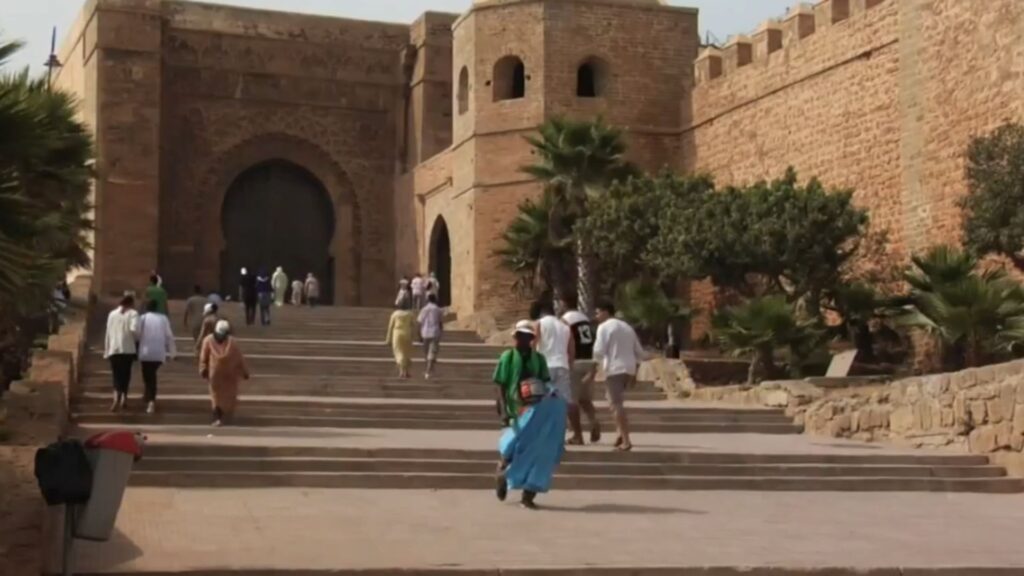
Inside the kasbah, narrow streets of whitewashed and blue-painted houses create an atmosphere reminiscent of Chefchaouen on a smaller scale. The Andalusian Gardens, though largely a twentieth-century creation, faithfully interpret traditional Moorish garden design with symmetrical beds, central fountains, and fragrant plantings.
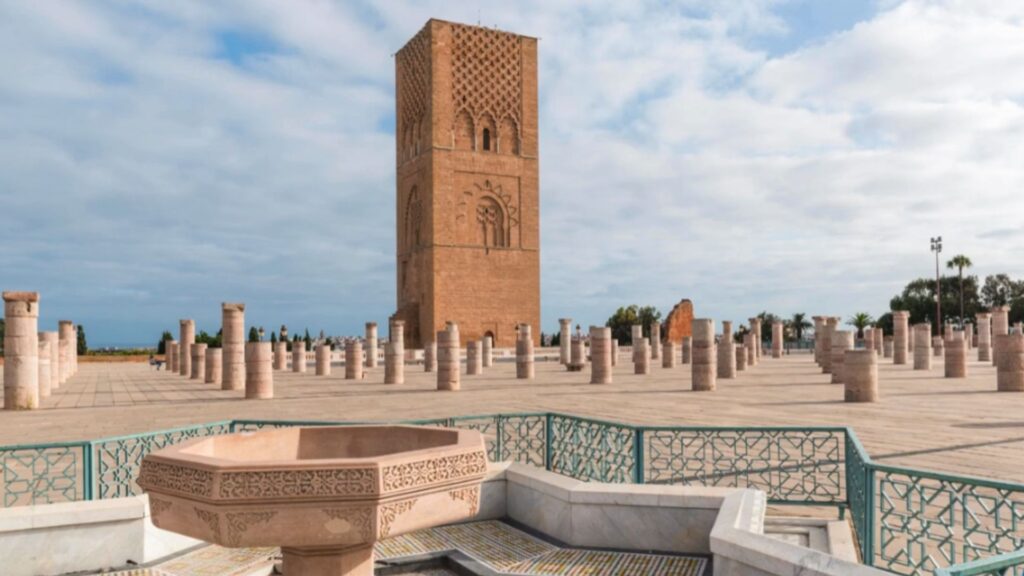
Hassan Tower stands as a monument to ambition thwarted. Sultan Yacoub al-Mansour began construction of an enormous mosque in 1195, intending it to be the largest in the world. His death in 1199 halted the project, leaving only the minaret and a forest of column bases to suggest what might have been. The minaret reached 44 meters before work stopped, and scholars estimate the completed tower would have exceeded 80 meters.
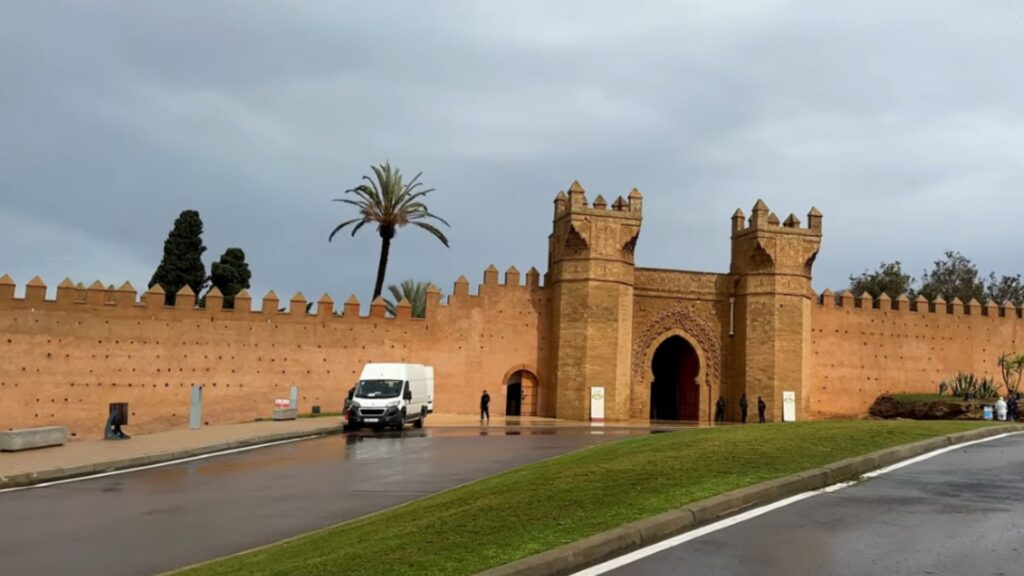
Chellah Necropolis combines Roman ruins with medieval Moroccan tombs in an evocative walled garden. The Marinid sultans built their burial complex atop the abandoned Roman city of Sala Colonia in the fourteenth century. The minaret and other structures show clear Andalusian influence, and the overgrown gardens create a romantic atmosphere unlike anything else in Rabat.
Casablanca: modern magnificence
Casablanca contains little historic architecture, but the Hassan II Mosque demands attention as a contemporary interpretation of Moorish traditions on a colossal scale.
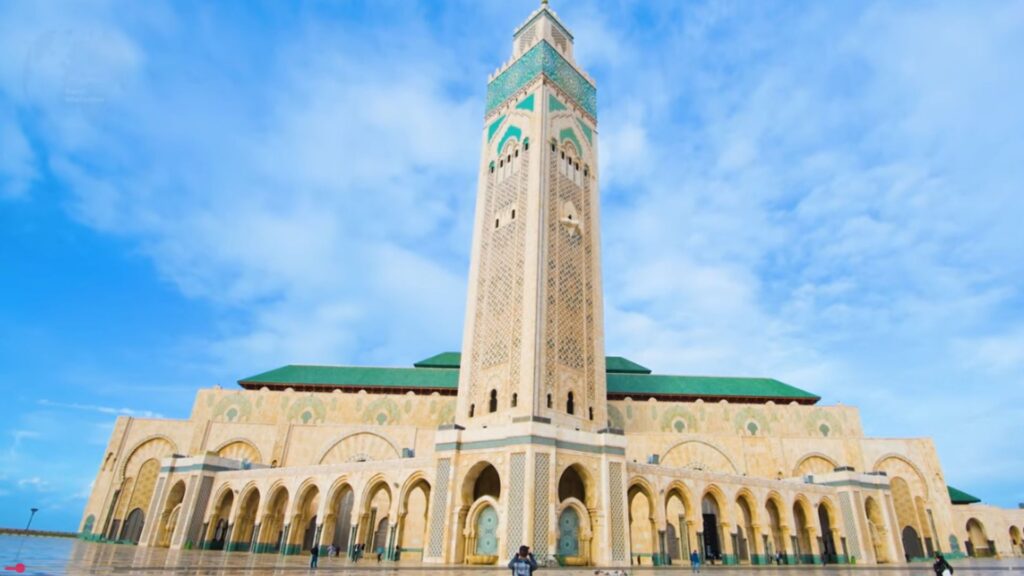
Completed in 1993, the mosque can accommodate 25,000 worshippers inside and another 80,000 in its courtyard. The minaret reaches 210 meters, making it the tallest religious structure in the world. Every surface displays traditional craftsmanship: hand-cut zellij, carved plaster, painted cedarwood, and chiseled stone executed by thousands of artisans over seven years.
The mosque is one of very few in Morocco open to non-Muslim visitors. Guided tours run throughout the day except during prayer times and cost around 130 dirhams. The scale can feel overwhelming, but the quality of the decorative work bears comparison with historic monuments despite the modern construction date.
Practical considerations
Dress code matters at religious sites and conservative neighborhoods. Both men and women should cover shoulders and knees. Women may want a scarf available to cover their hair at particularly sacred sites, though this is rarely required outside active mosques.
Photography is generally permitted in palaces, madrasas, and museums but prohibited inside functioning mosques and mausoleums. Always ask before photographing people, particularly in religious contexts.
Guides can enhance your experience significantly at complex sites like the Fez medina, where navigation alone presents challenges. Official guides carry credentials and can be arranged through hotels or tourist offices. Expect to pay 300 to 500 dirhams for a half-day tour.
Timing affects both crowds and light quality. Morning visits generally work best for interior spaces, when sunlight angles into courtyards most dramatically. Late afternoon offers softer light for exterior photography and thinner crowds at popular sites.
Combined tickets sometimes offer savings when visiting multiple sites in the same city. Ask at the first ticket window whether any combination deals apply to your planned itinerary.
Seeing with informed eyes
The sites listed above represent only the most accessible highlights. Morocco contains thousands of historic buildings that reward attention, from neighborhood mosques to crumbling kasbahs to private homes occasionally opened for tours.
The key to appreciating any of them lies in understanding what you’re looking at. The patterns covering these walls aren’t random decoration. They represent centuries of mathematical and artistic refinement with roots stretching back to medieval Spain.
For a deeper understanding of those patterns and what they mean, explore our guide to Islamic art and geometric patterns from Al-Andalus to Morocco, which explains the design vocabulary you’ll encounter at every site on this list.