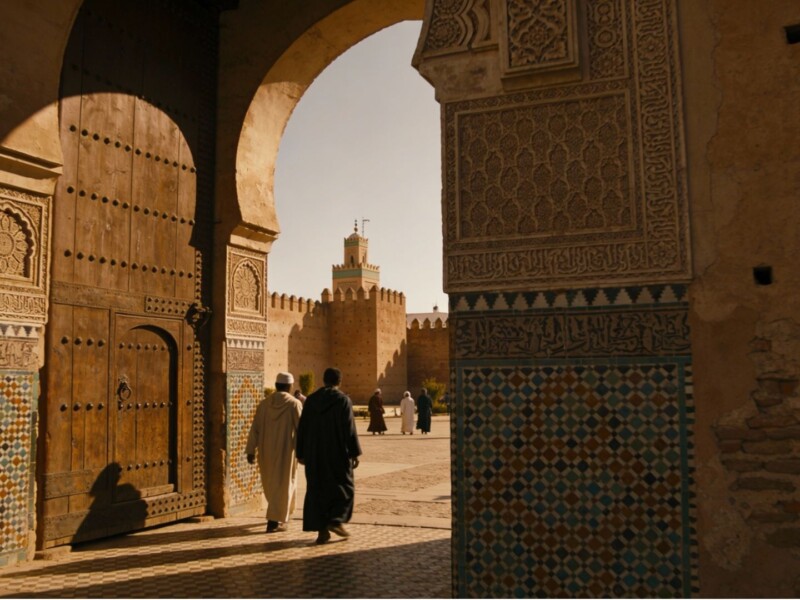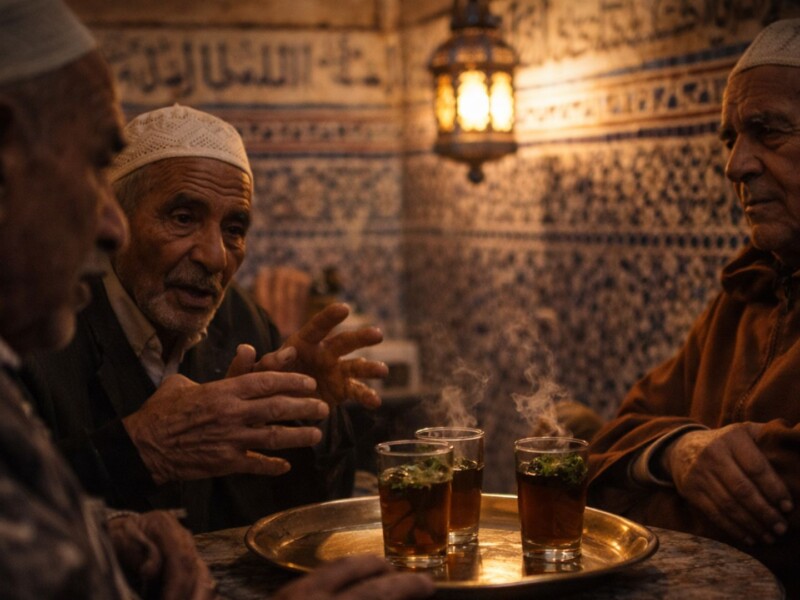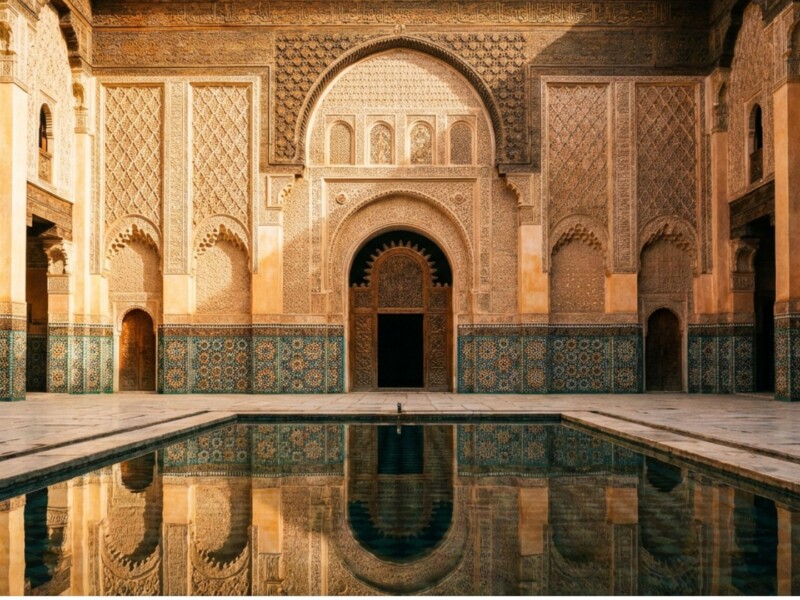
Tbourida: inside Morocco’s ancient equestrian tradition of thundering horses and rifle fire
The sound arrives before comprehension does. This five-century ritual is one of the most vivid chapters in the history of Morocco, rooted in the age of the dynasties that built its imperial cities.
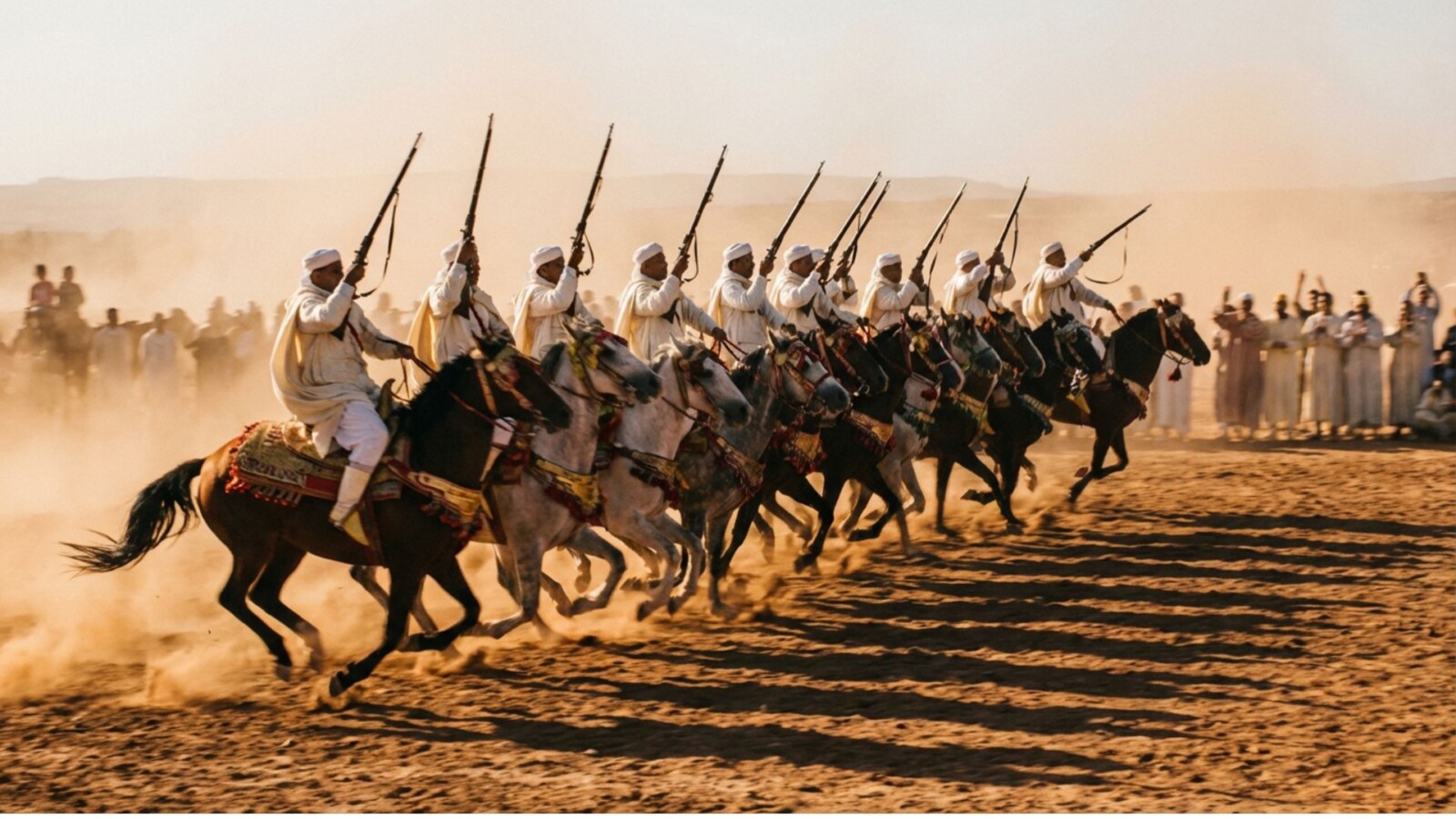
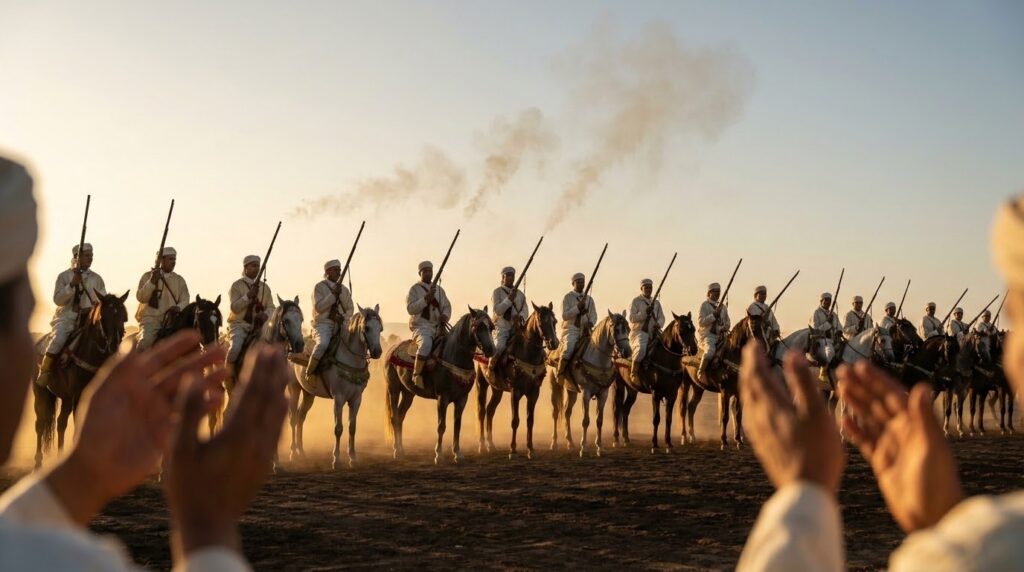
A dozen horses pound toward you in perfect alignment, their riders in flowing white robes, and for a suspended moment the modern world simply ceases to exist. Then comes the crack of antique rifles fired as one, smoke rising against the North African sky, and you understand viscerally why this tradition has survived five centuries. Tbourida doesn’t ask for your attention. It commands it.
Known internationally as Moroccan Fantasia, a term derived from Latin meaning entertainment, Tbourida represents something far more substantial than the word “entertainment” typically conveys. This is Morocco’s living connection to its martial past, a ceremonial performance that transforms historical cavalry tactics into cultural ritual, passing through generations of riders who consider the tradition inseparable from identity itself.
What happens during a Tbourida performance
The mechanics sound simple enough to describe. A group of riders, called a sorba, gallops in formation across an open field and fires their rifles simultaneously at the end of the run. The goal is absolute synchronization: one movement, one sound, one explosion.
Simple to describe. Extraordinarily difficult to execute.
The word Tbourida derives from “baroud,” meaning gunpowder, highlighting the centrality of that final coordinated shot. If the rifles don’t fire as one unified crack, the performance is considered unsuccessful. The audience knows immediately. There’s no hiding a failed synchronization when the sound itself serves as judge.
A sorba typically consists of an odd number of riders, ranging from 15 to 25, lined up with the chief, called the Allem or Mokaddem, positioned in the middle. Every movement follows codified rules: the alignment at the starting point, the collective gallop building speed, the sudden coordinated stop, and the perfectly timed rifle discharge.
The Allem bears responsibility for the entire sequence. He controls the pace, coordinates the run, and signals the final shot. Leadership here isn’t ceremonial. It’s functional. A weak Allem produces a weak performance, and everyone watching knows the difference.
From battlefield to festival ground
The origins of Tbourida trace to the 15th century, when Moroccan cavalry employed horses and firearms in defensive formations against foreign invasions. These weren’t performances. They were survival tactics, the coordinated charge and fire that could break an enemy line or defend a position.
Somewhere in the centuries between then and now, the martial necessity transformed into cultural celebration. The maneuvers that once meant life or death became ceremonies marking festivals, weddings, religious celebrations, and major community events. The techniques survived. The purpose evolved.
This transformation from warfare to ritual isn’t unique to Morocco. Military traditions worldwide have followed similar trajectories, their original violence sublimated into ceremonial form. What distinguishes Tbourida is how completely the technical demands of the original martial art have been preserved. The coordination required to fire rifles simultaneously from galloping horses remains genuinely difficult. The tradition didn’t simplify itself for civilian consumption.
| Element | Historical Purpose | Contemporary Function |
| Coordinated charge | Break enemy formations | Demonstrate collective discipline |
| Synchronized fire | Maximize tactical impact | Create ceremonial climax |
| Sorba formation | Military unit cohesion | Community identity and pride |
| Allem leadership | Battlefield command | Ritual coordination and tradition keeping |
The horse as sacred center
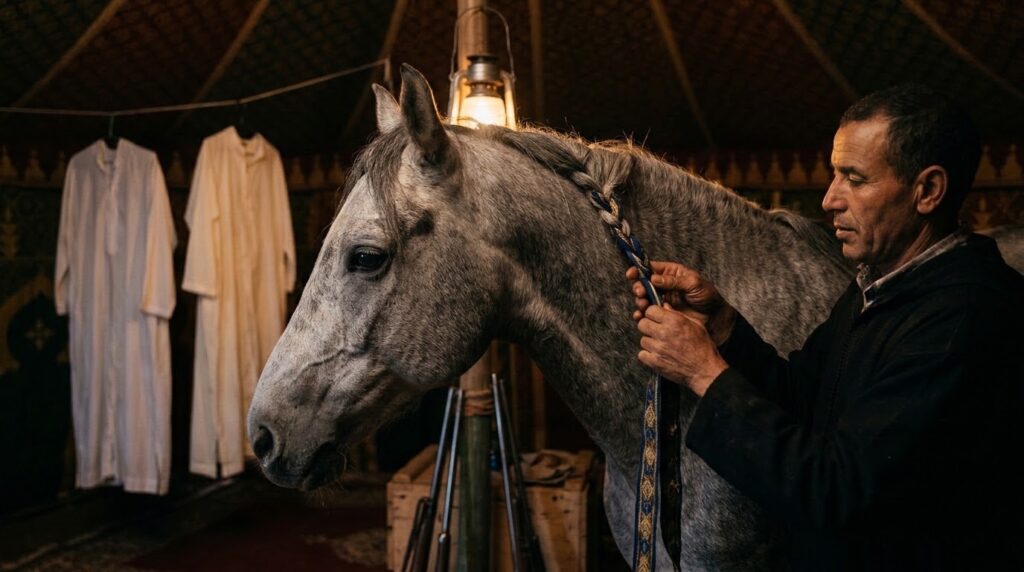
Tbourida cannot exist without horses that meet exacting standards. Moroccan breeds, particularly the Barb and Arab-Barb, are prized for the specific combination of strength, agility, and endurance the performance demands. These aren’t horses selected casually from available stock. They’re bred and trained specifically for this purpose, sometimes for years before they ever participate in a public Tbourida.
The bond between rider and horse develops through repetition, trust, and mutual understanding that casual observers might underestimate. A horse galloping at full speed must stop suddenly on command while its rider fires a rifle. The animal cannot flinch at the gunshot. It must maintain formation with other horses throughout the run. This requires conditioning far beyond basic riding skills.
The spiritual dimension adds another layer. In Islamic tradition, the horse occupies a position of particular honor among animals. Tbourida places this sacred animal at the center of a breathtaking spectacle, connecting religious reverence to cultural performance in ways that participants experience as continuous rather than contradictory.
Horse care represents a significant commitment. Specialized feeding, grooming, and conditioning programs require ongoing investment of time and resources. For many practitioners, who are often farmers in rural regions, this investment comes directly from household budgets without institutional support.
Visual and auditory spectacle
Photography has spread images of Tbourida worldwide, but photographs capture only the visual dimension of a multi-sensory experience. The white traditional garments and turbans against dusty terrain. The decorated saddles and bridles. The smoke from rifle fire rising against clear sky. These elements make Tbourida genuinely photogenic in ways that reward both professional photographers and smartphone-wielding travelers.
But the sound matters equally. Traditional music accompanies performances: drums, flutes, and chants that build anticipation before the charge and celebrate its completion. The thundering hooves on packed earth, the unified rifle crack, the cheers of spectators who recognize successful synchronization. Strip away the audio and you’ve missed half of what makes Tbourida emotionally charged.
The ceremonial atmosphere distinguishes Tbourida from mere spectacle. This isn’t entertainment designed for tourists, though tourists increasingly witness it. These are celebrations rooted in community identity, performed at moussems (religious festivals), agricultural celebrations, and family events including weddings. The performers aren’t hired actors. They’re community members whose participation carries social meaning beyond the performance itself.
Evolution and inclusion
Tradition and change often seem opposed, but Tbourida demonstrates how living heritage adapts while preserving core identity. Once exclusively male, the tradition has evolved in recent decades. Women-led Tbourida troupes have emerged and increasingly appear at national festivals, challenging assumptions about who can participate while maintaining the technical standards that define the practice.
This isn’t performative inclusion. Female riders train with the same rigor, compete for the same synchronization, and face the same judgment from audiences who know what successful Tbourida looks and sounds like. The expansion of participation hasn’t diluted the tradition. It’s ensured the tradition has a larger pool of practitioners to carry it forward.
Dedicated Tbourida festivals have expanded across Morocco, moving beyond seasonal events to create regular opportunities for troupes to demonstrate their skills. This expansion has helped professionalize aspects of the practice while maintaining its amateur, community-based character.
Real challenges facing practitioners
Cultural traditions don’t preserve themselves. Tbourida faces concrete obstacles that threaten its continuation:
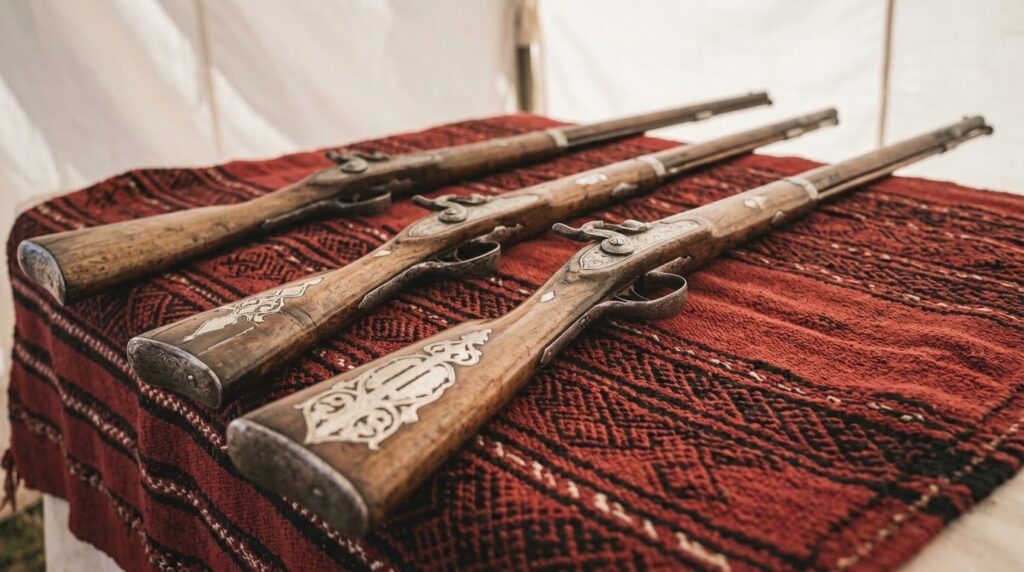
High costs burden practitioners who typically fund their own participation. Horses require year-round care regardless of how many performances occur. Equipment, including traditional costumes and antique-style rifles, demands maintenance and periodic replacement. These expenses fall on riders who are often farmers without significant discretionary income.
Gunpowder access has become increasingly restricted due to security regulations. The same substance that gives Tbourida its name and climactic moment requires permits that rural practitioners find difficult to obtain. Some performances have been compromised by ammunition shortages that no amount of riding skill can overcome.
Drought has affected horse breeding across Morocco, stressing the supply of animals suitable for Tbourida. Climate pressures that impact agriculture generally hit equestrian traditions particularly hard.
Institutional support remains inconsistent. While Tbourida enjoys official recognition as cultural heritage, that recognition doesn’t always translate into practical assistance for the rural associations and passionate communities that actually maintain the practice.
Artistic influence beyond performance
Tbourida has inspired artistic creation for centuries. The painter Eugène Delacroix, whose 1832 visit to Morocco profoundly influenced European Romanticism, depicted Moroccan equestrian culture in works that introduced international audiences to the visual power of mounted warriors. His paintings shaped European imagination about North Africa for generations.
Contemporary Moroccan artists continue drawing inspiration from the imagery of horse and rider, the drama of coordinated movement, and the symbolism embedded in a tradition that connects present communities to ancestral resistance. Tbourida appears in painting, photography, film, and literature as both subject and metaphor.
Why this matters for travelers
In an era when tourism often reduces cultural experiences to quick consumption, Tbourida offers something that resists simplification. You cannot understand it fully from a five-minute video clip, though clips circulate widely. You cannot appreciate its significance without some context about its origins, its requirements, and what successful performance actually looks like.
This doesn’t mean Tbourida is inaccessible to visitors. Major festivals welcome spectators, and the visual spectacle rewards attendance regardless of how much background knowledge you bring. But the experience deepens considerably when you understand what you’re watching: not a show staged for tourists, but a living heritage where history, artistry, and collective identity merge in motion.
The timing of potential visits matters. Tbourida performances concentrate around festivals and celebrations rather than occurring on fixed schedules for tourist convenience. Planning a Morocco trip specifically around Tbourida requires research into regional event calendars and flexibility about when and where you travel.
For travelers who make that effort, the reward is witnessing something genuinely rare: a tradition that has survived five centuries not by freezing itself in historical amber but by remaining vital to the communities that practice it. The riders aren’t preserving a museum piece. They’re maintaining a practice that still carries meaning for their families, their villages, and their sense of who they are.
The thundering hooves, the unified rifle crack, the smoke rising against Moroccan sky. These images will stay with you. But what stays longer is the understanding that some traditions earn their survival not through institutional protection but through the dedication of people who refuse to let them die.
What draws you more when experiencing cultural traditions abroad: the visual spectacle that photographs well, or the deeper understanding of why communities maintain practices that require such significant sacrifice?