Tracing Islamic art: geometric patterns from Al-Andalus to modern Morocco
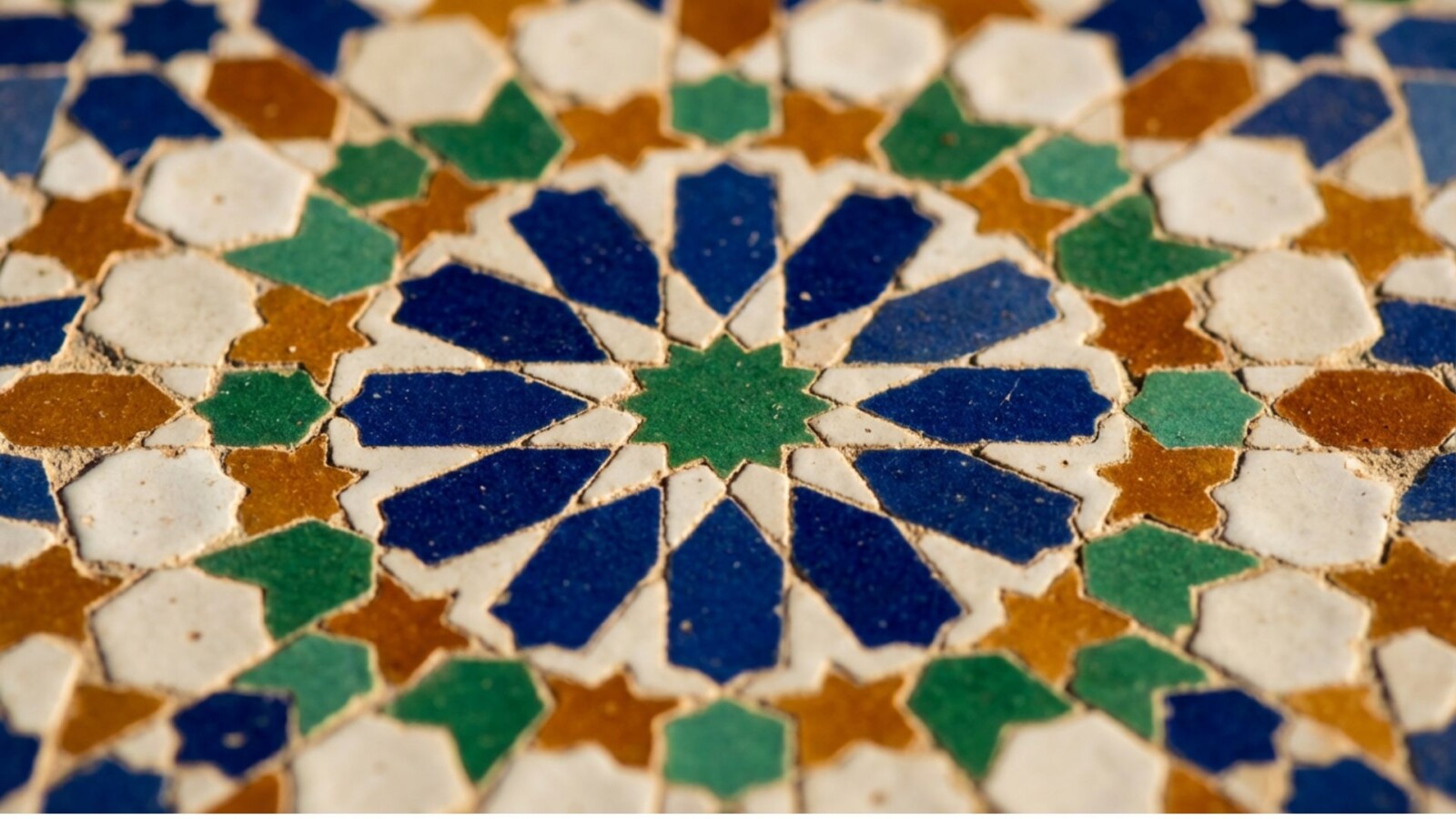
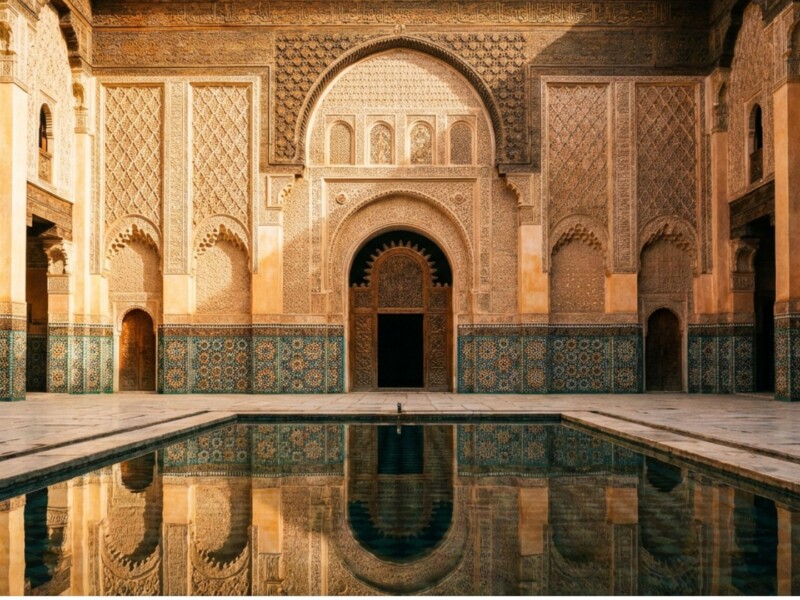
The first time I really looked at Moroccan tilework, I mean actually stopped and studied it instead of just snapping a photo, I was standing in the courtyard of the Bou Inania Madrasa in Fez. A guide had just explained that the pattern covering the lower walls contained over forty thousand individual pieces of hand-cut ceramic, each one shaped with a hammer and chisel by artisans using techniques unchanged since the fourteenth century.
I stood there for probably twenty minutes, tracing the lines with my eyes, trying to understand how anyone could conceive of such complexity let alone execute it by hand. That moment transformed how I experienced the rest of my trip through Morocco. Suddenly the patterns weren’t just pretty backgrounds. They were puzzles, stories, and windows into a mathematical imagination that flourished a thousand years ago in the palaces of Al-Andalus.
That encounter in Fez sent me down a rabbit hole exploring the Andalusian echoes that still resonate across North Africa, a journey that revealed just how deeply the artistic traditions of medieval Spain had shaped Moroccan visual culture. What I discovered changed not only how I see tilework but how I understand the entire history connecting these two shores of the Mediterranean.
Where it all began
Islamic geometric art didn’t spring fully formed from the deserts of Arabia. It evolved over centuries, absorbing influences from Greek mathematics, Roman mosaics, Byzantine decorative traditions, and Persian artistic sensibilities. But the style reached its peak of sophistication in Al-Andalus, the Muslim-ruled portions of the Iberian Peninsula that existed from 711 until 1492.
The city of Cordoba served as the incubator. During the tenth century, when Cordoba functioned as the capital of an independent caliphate, it rivaled Baghdad and Constantinople as one of the great cities of the world. Scholars, artists, and craftsmen gathered there from across the Islamic world, and the cross-pollination produced extraordinary innovations in architecture and decorative arts.
The Great Mosque of Cordoba, begun in 784 and expanded over the following two centuries, showcases the emerging Andalusian aesthetic. Its forest of horseshoe arches, its intricate carved stucco, and its early experiments with geometric tilework established a vocabulary that later generations would elaborate and refine.
The mathematics underneath
What makes Islamic geometric patterns different from other decorative traditions is their foundation in mathematical principles. These aren’t random arrangements of shapes. They follow precise rules derived from the geometry of circles and polygons.
Everything starts with a circle divided into equal parts. Divide it into four and you get the basis for square-based patterns. Divide it into six and you can generate hexagonal designs and six-pointed stars. Divide it into eight, ten, or twelve and the possibilities multiply dramatically.
The craftsmen who created these patterns weren’t academic mathematicians, but they understood geometric relationships at an intuitive level that still impresses modern researchers. Some Moroccan patterns anticipate mathematical concepts that Western scholars didn’t formally describe until the twentieth century. A few designs even exhibit properties similar to Penrose tilings, non-repeating patterns that mathematicians once thought impossible.
None of this was accidental. Islamic theology discouraged representational art, particularly in religious contexts, which pushed artists toward abstraction. The infinite repetition of geometric forms came to symbolize the infinite nature of creation and the underlying order of the universe. Beauty and meaning intertwined in ways that pure decoration never achieves.
From Cordoba to Fez
When the Andalusian refugees began arriving in Morocco after 1492, they brought these artistic traditions with them. Some were craftsmen who had worked on the Alhambra and other monuments in Granada. Others were simply educated people who had grown up surrounded by geometric beauty and wanted to recreate it in their new homes.
The Marinid dynasty that ruled Morocco during the thirteenth and fourteenth centuries had already embraced Andalusian artistic influences before the main refugee waves arrived. The madrasas they built in Fez demonstrate sophisticated geometric programs that rival anything produced in Spain. But the influx of Andalusian craftsmen after 1492 intensified the exchange and pushed Moroccan artisans to new levels of refinement.
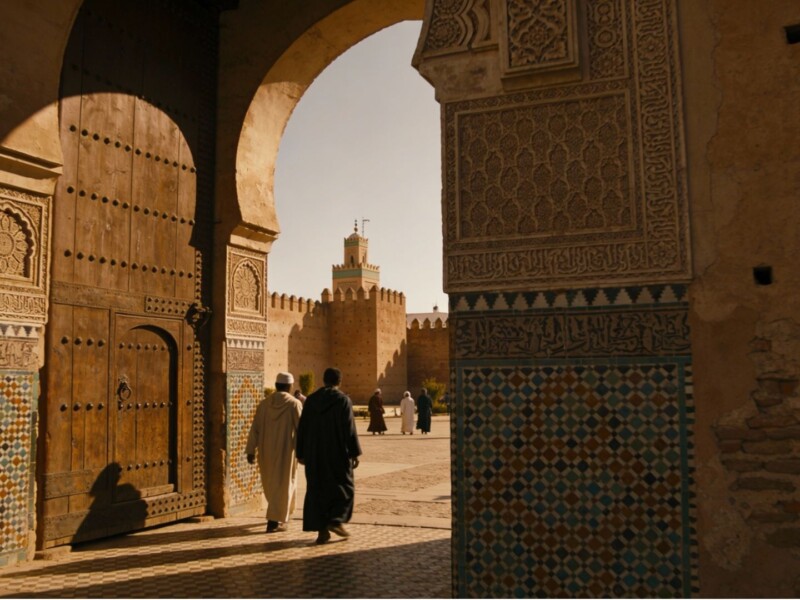
Walk through the medina of Fez today and you can see this heritage everywhere. The fountains, the doorways, the walls of religious schools, the interiors of traditional homes all display geometric patterns that trace back to Andalusian prototypes. The specific vocabulary of shapes and the methods of construction preserve techniques developed in medieval Cordoba and Granada.
Zellij: the signature Moroccan art form
The most distinctive expression of geometric art in Morocco is zellij, the mosaic tilework that covers seemingly every surface in historic buildings. Unlike painted tiles or pressed patterns, zellij consists of individually cut pieces of glazed ceramic assembled by hand into complex designs.
The process is remarkably labor-intensive. Artisans start with square tiles glazed in various colors, traditionally including white, black, blue, green, yellow, and brown. They flip these tiles face-down and use a specialized hammer to chip away at the back, shaping each piece into the precise polygon required by the pattern. A single square meter of zellij can contain hundreds of pieces, each one cut and placed by hand.
The assembly happens in reverse. Craftsmen arrange the pieces face-down on a flat surface, fitting them together like a jigsaw puzzle. Once the pattern is complete, they pour plaster over the back to bind everything together. Then they flip the entire panel and install it on the wall or floor.
This technique allows for incredible precision and durability. Zellij patterns from the fourteenth century still look crisp and vibrant today, their colors unfaded, their edges sharp. Modern restoration projects can match antique work so precisely that the repairs become invisible.
Reading the patterns
Once you understand the basic vocabulary, you can start identifying different pattern types and appreciating the skill required to create them.
Eight-pointed stars are among the most common motifs. They form naturally when you overlay two squares rotated 45 degrees from each other. You’ll see this pattern on floors, fountains, and wall bases throughout Morocco. It’s relatively simple to construct but allows for endless variations in color and proportion.
Ten-pointed stars appear frequently in more elaborate designs. They require dividing a circle into ten equal parts, which is geometrically trickier than divisions based on four, six, or eight. The resulting patterns have a distinctive rhythm that feels different from eight-fold designs, slightly more dynamic and less static.
Twelve-pointed stars represent the next level of complexity. The Bou Inania Madrasa features stunning examples where twelve-fold symmetry creates rosettes surrounded by smaller shapes in intricate arrangements. These patterns reward extended contemplation. The longer you look, the more you see.
The most sophisticated designs combine multiple symmetry systems in ways that seem almost impossible. Some patterns appear to shift and transform as your eye moves across them, an optical effect that medieval craftsmen clearly understood and exploited.
Where to see the finest examples
Fez offers the greatest concentration of high-quality geometric art in Morocco. The madrasas built during the Marinid period represent the peak of the tradition, and several are open to visitors.
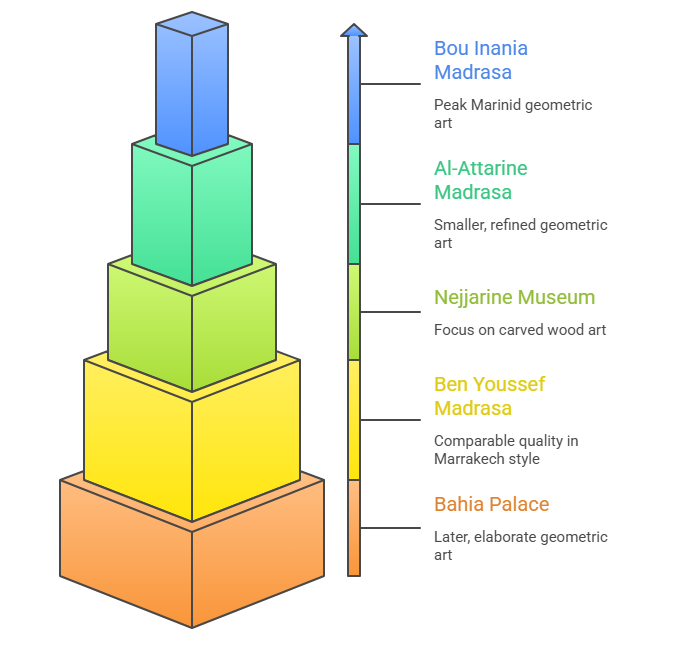
The Bou Inania Madrasa dates from the 1350s and features extraordinary zellij, carved stucco, and cedarwood carvings in perfect harmony. The central courtyard provides excellent light for appreciating the patterns, and the building is large enough that you can spend an hour studying different surfaces without exhausting the possibilities.
The Al-Attarine Madrasa, built slightly earlier, is smaller but equally refined. Its position near the spice market means you’ll approach through narrow streets fragrant with cumin and saffron, an atmospheric introduction to the visual feast inside.
The Nejjarine Museum of Wooden Arts occupies a restored caravanserai and focuses on carved wood rather than tilework, but the building itself showcases excellent zellij and the collection demonstrates how geometric principles translated across different media.
In Marrakech, the Ben Youssef Madrasa offers comparable quality in a different regional style. Marrakech patterns tend toward warmer colors and slightly different proportional systems than Fez work. Comparing the two cities reveals how much variation existed within the broader tradition.
The Bahia Palace in Marrakech provides a later example from the nineteenth century. The quality remains high but the aesthetic has evolved, incorporating more elaborate color schemes and denser pattern coverage. Some purists consider it excessive, but I find it fascinating as evidence of how the tradition continued developing long after the Andalusian refugee era.
Living traditions
Unlike many historic art forms, Moroccan geometric design never died out. Craftsmen in Fez and other cities continue producing zellij using traditional methods, supplying both restoration projects and new construction.
Visiting a working atelier offers insight that no museum can match. Watching a maalem master trace a pattern onto plaster, or seeing an apprentice chip tiles into shape with a hammer, makes the human skill behind these abstract designs viscerally real. Several workshops in the Fez medina welcome visitors, though you should expect to face some sales pressure.
For hands-on experience, some cultural centers offer workshops where you can try your hand at basic geometric construction using compass and straightedge. Even a two-hour introduction changes how you see the finished patterns, because you suddenly understand the logic underlying the complexity.
Photography tips
Geometric patterns present specific challenges for photographers. The complexity that makes them fascinating to study in person can turn into visual chaos in photographs.
Shoot from directly perpendicular to the surface whenever possible. Oblique angles distort the patterns and obscure their underlying structure. This often means crouching low for floor patterns or finding elevated positions for wall work.
Morning light works best in most locations. The shadows are softer and the colors appear more accurate. Midday sun creates harsh contrasts that flatten the dimensional quality of carved surfaces.
Don’t overlook details. A tightly cropped shot of a single star or a transition between pattern zones often conveys the artistry more effectively than wide shots that try to capture everything.
Bring a small notebook and sketch the patterns you find most interesting. Drawing forces you to actually understand the structure rather than just passively recording it. Some of my best photographs came after I spent time sketching a pattern and finally grasped what made it work.
Taking it deeper
The geometric patterns of Morocco represent more than decorative art. They embody a worldview that found meaning in mathematical relationships and expressed spiritual concepts through abstract form. Understanding that context transforms sightseeing into something closer to pilgrimage.
These patterns didn’t develop in isolation. They emerged from specific historical circumstances, particularly the cultural exchange between Al-Andalus and North Africa. To understand how that exchange happened and why it matters, explore our article on Granada to Fez: how Moorish refugees shaped North African culture, which tells the human story behind the artistic traditions.