Morocco’s most iconic dishes: a street food journey from Casablanca to Agadir
The moment a steaming bowl of harira arrives at your table in a 132-year-old Casablanca restaurant, something shifts in your understanding of Moroccan cuisine. This journey through the country’s most iconic dishes is one chapter of the broader Moroccan food story, and it pairs naturally with the guide to Moroccan street food.
This isn’t just soup. It’s a bowl of cultural memory, a dish that has sustained Moroccans through Ramadan evenings and cold winter nights for centuries. And at 80 dirhams, roughly eight dollars, it represents perhaps the best value in North African gastronomy.
Following a Nigerian travel creator’s recent food odyssey across Morocco provides an unusually honest window into the country’s culinary landscape. From harira in Casablanca’s historic medina to the globally celebrated rfissa in Agadir, this journey reveals dishes that deserve far more international attention than they currently receive.
Harira: the soul of Moroccan comfort food
Casablanca’s central market buzzes with the kind of energy that makes GPS navigation pointless. Locals guide visitors through labyrinthine passages where the air shifts from fish to spices to grilled meats every few steps. Somewhere in this sensory maze sits a restaurant that has occupied a traditional Moroccan house for over 132 years.
The building itself tells Morocco’s story. Cedar wood ceilings carved entirely by hand showcase what locals call “zellij,” the intricate mosaic tilework that originated in Fez, Morocco’s first capital, more than 1,200 years ago. Craftsmen worked piece by piece, part by part, creating geometric patterns that still inspire architects worldwide.
But the real magic happens in the kitchen.
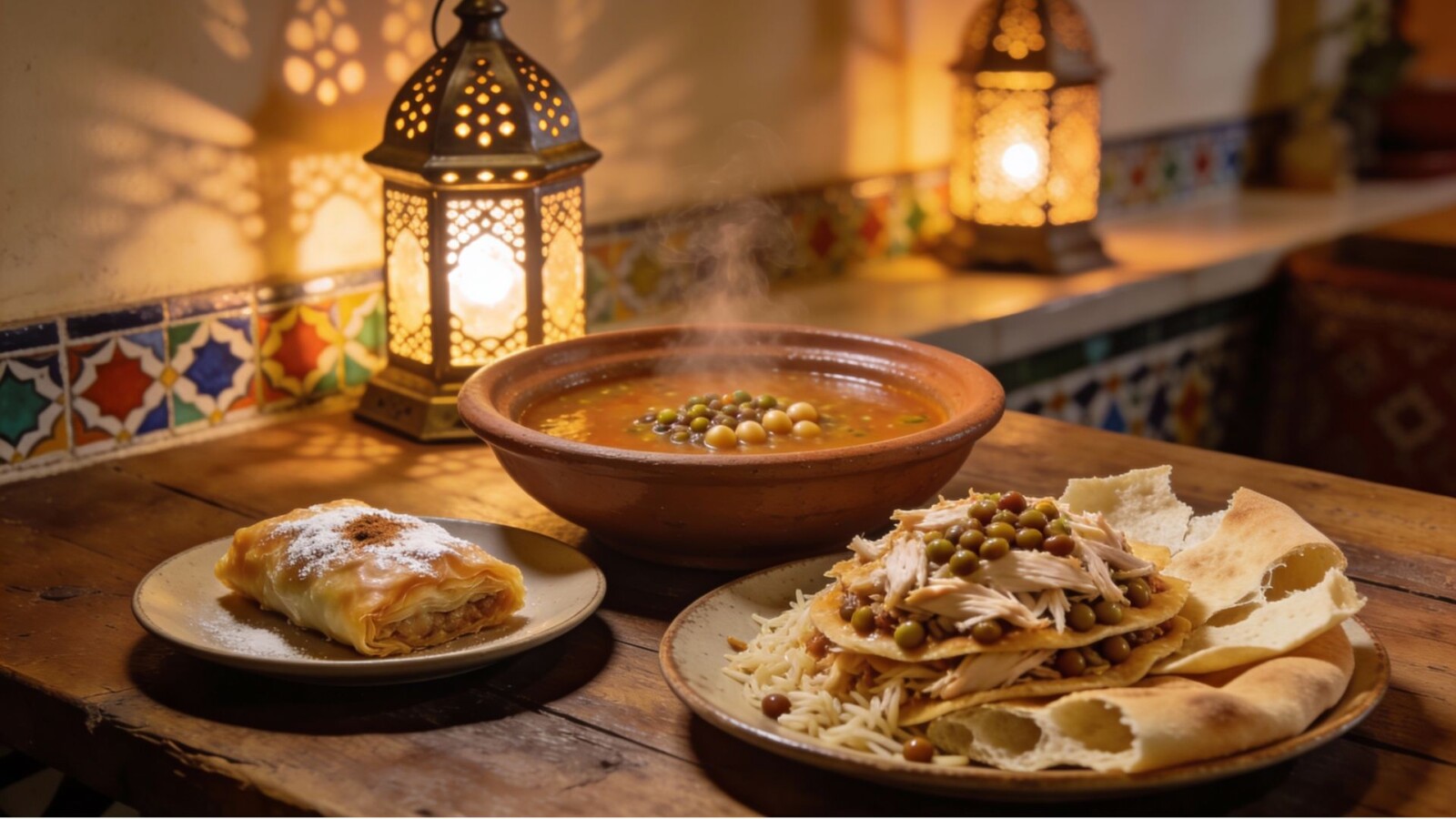
Harira arrives in earthenware bowls, its reddish-brown surface glistening with olive oil. The soup combines tomatoes, lentils, chickpeas, and a complex spice blend that varies slightly from cook to cook, family to family, city to city. During Ramadan, this dish breaks the daily fast for millions of Moroccans. The rest of the year, it functions as comfort food, hangover cure, and affordable nutrition all in one.
“This is the most iconic Moroccan food,” explains Aziz, a local guide who has spent decades introducing visitors to his country’s cuisine. “The mama grab the Moroccan artist.”
He’s referring to the women who have passed harira recipes through generations, each adding subtle variations while maintaining the essential character that makes this dish instantly recognizable from Tangier to the Sahara.
| Dish | Typical Price | Best City | Key Ingredients |
|---|---|---|---|
| Harira | 80 MAD | Casablanca | Tomatoes, lentils, chickpeas, lamb |
| Pastilla | 125 MAD | Rabat | Phyllo, chicken or fish, almonds, cinnamon |
| Rfissa | 75 MAD | Agadir | Msemen bread, chicken, lentils, fenugreek |
| Fish Tajine | 35 MAD | Agadir | Fresh fish, vegetables, chermoula |
| Seffa | 75 MAD | Rabat | Vermicelli, chicken, cinnamon, sugar |
Pastilla: sweet meets savory in perfect harmony
The boat restaurant bobbing gently in Rabat’s harbor seems an unlikely setting for culinary revelation. But when pastilla arrives at the table, preconceptions about Moroccan food dissolve immediately.
“When I ordered pastilla, I didn’t think this was what I’d get,” admits one first-time visitor. “This is like pizza. No, it’s better than pizza.”
Pastilla, also spelled bastilla or bisteeya depending on regional dialect, represents Moroccan cuisine at its most sophisticated. Layers of paper-thin phyllo dough encase a filling that typically combines shredded chicken or pigeon with almonds, eggs, and a distinctive blend of cinnamon and powdered sugar dusted across the top.
The combination sounds improbable to American palates accustomed to strict boundaries between sweet and savory. But one bite reveals why this dish has survived since the Moors brought it from Al-Andalus centuries ago. The textures play against each other: crispy pastry, tender meat, crunchy nuts. The flavors shift from savory to sweet and back again with each mouthful.
Rabat’s version using fresh fish from the Atlantic substitutes seafood for poultry, creating a lighter variation particularly popular along the coast. At 125 dirhams for a generous portion, it qualifies as a splurge by Moroccan standards but remains remarkably affordable by international measures.
“I could have left this country without eating this,” one visitor reflects. “The only issue is that it’s too small.”
That complaint echoes across Morocco’s restaurants, where portion sizes often leave visitors wishing for more, a testament to the quality rather than any stinginess on the part of kitchen staff.
The Souk El Had experience: Africa’s largest market
Agadir’s Souk El Had claims the title of largest market in North Africa, and walking its aisles confirms the designation immediately. The sheer scale overwhelms first-time visitors, with sections dedicated to everything from fresh seafood to traditional clothing to the mysterious herbs and spices that form the backbone of Moroccan cooking.
Street food options appear at every turn. Fish tajine emerges from open-air kitchens for just 35 dirhams, served with unlimited bread and a selection of sauces that range from mild to genuinely challenging. The protocol requires eating with your hands, tearing bread to scoop fish and sauce in combinations that utensils simply cannot replicate.
“If you don’t eat food like this, you’re missing the point,” explains a local vendor, demonstrating the proper technique with practiced efficiency.
Sugar cane juice appears at stalls throughout the market, freshly pressed and often combined with ginger and lemon for a refreshing counterpoint to the region’s heat. At 15 dirhams per cup, it provides both hydration and entertainment as vendors perform the extraction with theatrical flair.
The market’s organization impresses visitors accustomed to chaotic souks elsewhere. Aisles are clean. Sections are clearly delineated. The Moroccan flag appears everywhere, a reflection of national pride that extends from government buildings to fish stalls.
“This is the cleanest market I’ve been to,” observes one visitor. “For it to be the biggest market in Northern Africa and still this clean is crazy.”
Local market association leaders actively decorate during events like the Africa Cup of Nations, creating an atmosphere that feels both commercial and celebratory. The hospitality extends beyond transactions. Vendors offer samples freely. Conversations last longer than strictly necessary for commerce. The cactus fruit seller insists visitors try his product even when they initially decline.
Rfissa: The World’s Best Food Lives in Morocco
When international culinary competitions crowned Morocco’s rfissa as one of the world’s best dishes, many outside the country had never heard of it. The disconnect between global recognition and international awareness speaks to Moroccan cuisine’s underexplored status among food travelers.
Finding rfissa requires some searching even within Morocco. Not every restaurant serves it, and those that do often prepare it only on specific days. The dish demands time and technique that fast-casual operations cannot accommodate.
The foundation is msemen, a flaky flatbread that locals sometimes describe as Morocco’s answer to the croissant. Layers of this bread form a base, then shredded chicken cooked with lentils and a distinctive fenugreek-based sauce called “ras el hanout” is arranged on top. The combination steams together, with the bread absorbing flavors while maintaining enough structure to serve as an edible utensil.
“This is beyond what I expected,” exclaims one visitor after the first bite. “No wonder this won the best food in the world. Oh my god.”
The reaction is not performance. Rfissa genuinely surprises those encountering it for the first time. The earthiness of fenugreek, an ingredient rare in Western cooking, creates a flavor profile unlike anything in typical American or European experience. The texture of bread softened by sauce yet still distinct adds complexity that simple descriptions cannot capture.
At 75 dirhams in Agadir, rfissa costs roughly the same as a large coffee at an American chain café. The value proposition borders on absurd.
“If I want to rate rfissa from 1 to 10, I’ll give it 11 over 10,” one satisfied diner concludes. “Whenever you come to Morocco, do all you can to eat the world best food here in Morocco, Africa. That will be your best decision in your life.”
Seffa and Tajine: The Supporting Cast
Rabat’s Dar Naji restaurant occupies a building whose aesthetic alone justifies a visit. The interior design draws from centuries of Moroccan architectural tradition, with detailed tilework, carved plaster, and lighting that creates intimate atmosphere even in larger dining rooms.
The menu features dishes that have sustained Moroccan families through generations. Seffa, a sweet vermicelli preparation topped with chicken, cinnamon, and powdered sugar, represents the celebratory end of the Moroccan culinary spectrum. Traditionally served at weddings and special occasions, it delivers the same sweet-savory interplay that makes pastilla so distinctive.
“This is the best,” declares a local server when asked for recommendations. “You can even ask any Moroccan. This is my first choice.”
Tajine, the conical clay cooking vessel that has become synonymous with Moroccan cuisine, produces dishes ranging from simple to elaborate. The vessel’s design allows slow cooking that tenderizes tough cuts of meat while concentrating flavors into sauces that demand bread for proper consumption.
“In Morocco, you must add bread,” explains one local. The statement functions less as suggestion than as cultural imperative.
Chicken tajine with olives and preserved lemons represents perhaps the most famous variation, but regional differences abound. Coastal versions emphasize seafood. Mountain preparations feature game. Desert communities incorporate dates and almonds. The tajine itself remains constant, but its contents shift with geography and season.
Practical Considerations for Food Travelers
Morocco’s culinary landscape rewards adventurous eating but requires some cultural navigation. The expectation of eating with hands, particularly for bread-based dishes, may feel unfamiliar but quickly becomes natural. Restaurant staff will demonstrate proper technique when asked.
Bread arrives free and unlimited at virtually every establishment. Its presence is not merely accompaniment but essential tool for consuming dishes designed with bread in mind.
Haggling is expected at markets but generally not at restaurants. Prices posted are prices paid, and tipping follows local custom rather than American percentages.
The best meals often require seeking local recommendations rather than following tourist-oriented guides. Asking Moroccans directly, “Where can I find the best rfissa?” or “Which restaurant serves authentic harira?” typically yields better results than online research.
Timing matters. Some dishes appear only on specific days. Rfissa is often a Friday special. Couscous traditionally comes out on Fridays after midday prayers. Planning around these patterns ensures access to the full range of Moroccan cuisine.
For visual reference and the full experience of these culinary discoveries, the original video series provides excellent documentation:
Beyond the Plate
Moroccan food functions as more than sustenance. It operates as social glue, cultural expression, and regional identity all at once. The same dish prepared in Casablanca tastes subtly different from its Fez counterpart, which differs again from Marrakech interpretations.
This variation reflects Morocco’s geographic diversity, from Atlantic coast to Mediterranean shore to Atlas Mountains to Saharan edge. Ingredients available locally shape what cooks create. Traditions specific to regions determine how those ingredients combine.
For travelers, this means that even after weeks of eating across multiple cities, new dishes continue appearing. The cuisine’s depth exceeds what any single trip can explore. Return visitors consistently report discovering preparations they missed on previous journeys.
The affordability makes experimentation easy. When a single meal costs less than ten dollars, ordering unfamiliar dishes carries minimal risk. The worst outcome is discovering something you won’t order again. The best outcome, which occurs with surprising frequency, is finding a new favorite that redefines your understanding of what food can be.
What dish would you seek out first on a Moroccan food journey, and how does your home cuisine compare to the sweet-savory combinations that define so much of Moroccan cooking?