
Agadir Morocco travel guide: beaches, day trips & everything you need to know
The earthquake lasted fifteen seconds. On February 29, 1960, the ground beneath Agadir shook with a violence that leveled the city and killed roughly fifteen thousand people. King Mohammed V surveyed the devastation and made a decision that would define the next six decades: Agadir would rise again, rebuilt from scratch as something entirely new.
That history explains why Agadir looks nothing like Marrakech or Fes. There is no medieval medina because the medieval medina no longer exists. The narrow alleyways, ancient mosques, and centuries-old architecture that define other Moroccan cities simply are not here. What emerged instead was a modern city built on wide boulevards, earthquake-resistant construction, and a deliberate focus on tourism that would drive economic recovery.
This makes Agadir Morocco travel a fundamentally different experience than visiting the imperial cities. Travelers expecting souks and snake charmers find instead a six-kilometer beach, a promenade lined with cafes, and an atmosphere of relaxation that the more intense Moroccan destinations cannot match. The trade-off is real. But so is the appeal.
The city attracts roughly 600,000 international visitors annually, most seeking exactly what Agadir delivers: reliable sunshine, accessible beaches, and a gateway to southern Morocco’s most striking landscapes. Paradise Valley’s natural pools hide an hour northeast. Taroudant’s intact ramparts enclose a medina free from tourist crowds. The Anti-Atlas mountains reveal Berber villages and dramatic geology that reward exploration.
Understanding Agadir requires releasing expectations formed by other Moroccan experiences. The city operates on different logic, serving different purposes, attracting different travelers. Whether that serves your interests depends on what you seek from Morocco. This guide covers everything needed to make that determination and plan accordingly.
Why choose Agadir: sun, sea, and a different side of Morocco
Agadir confuses expectations, and this confusion leads many travelers to dismiss the city before understanding what it actually offers. The criticism that Agadir lacks authentic Moroccan character contains truth. The rebuilt city feels more Mediterranean than North African. The tourist infrastructure caters to European package holidaymakers. You can eat pizza, drink beer, and speak English without ever engaging deeply with Moroccan culture.
But authenticity is a complicated concept. The Souss region surrounding Agadir has its own Berber heritage distinct from Arab Morocco. The argan trees dotting the landscape produce oil found nowhere else on earth. The fishing port where boats unload their daily catch operates exactly as it has for generations. The weekly market at Souk El Had ranks among the largest in the country, serving local shoppers rather than tourists.
The climate advantage that draws visitors borders on unfair. Agadir sits in a microclimate created by the Anti-Atlas mountains blocking cold northern winds and the Atlantic Ocean moderating temperatures year-round. The result is roughly 300 days of sunshine annually with temperatures rarely dropping below 60°F even in January or climbing above 85°F in summer. Compare this to Marrakech, where summer temperatures regularly exceed 100°F and winter nights can approach freezing.
The beach atmosphere differs dramatically from Morocco’s cultural capitals. Nobody follows you down the promenade aggressively selling goods. Touts exist but operate with restraint uncommon elsewhere in the country. You can walk, read, swim, and simply exist without constant negotiation.
“I had spent two weeks in Marrakech and Fes feeling like I needed to be on guard constantly,” recalled Jennifer, a teacher from Wisconsin who visited Morocco for the first time last spring. “Agadir felt like exhaling. I could just sit on the beach and not be approached every five minutes.”
Certain traveler profiles find exactly what they need. Families with young children appreciate the safe beaches, kid-friendly hotels, and activities that do not require navigating confusing souks. Couples seeking relaxation over adventure enjoy the beach clubs and stress-free environment. First-time Morocco visitors intimidated by cultural differences find Agadir an accessible introduction.
Understanding why Agadir appeals to different travelers helps determine whether the city deserves a place in your itinerary or whether other Moroccan destinations better serve your interests.
Agadir beaches: your guide to the best stretches of sand
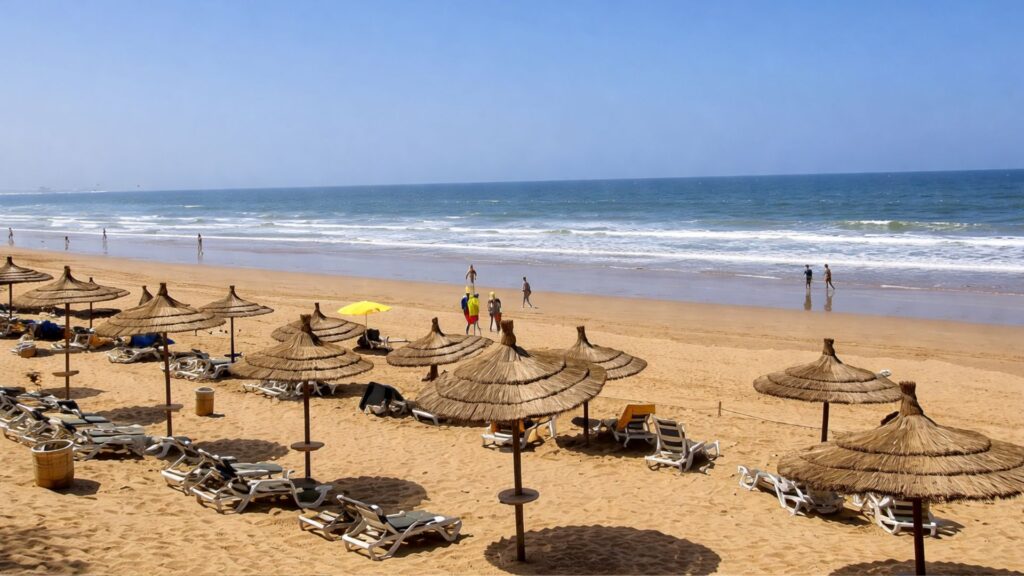
The Atlantic coastline around Agadir delivers some of Morocco’s finest beach experiences, though variety extends far beyond the main tourist strand. The city’s primary beach curves along the bay in a sweeping arc of golden sand that seems to go on forever. At six kilometers long and impressively wide, the beach never feels crowded even during peak European holiday periods.
The promenade backing the beach defines the daily experience for most visitors. Cafes serve fresh orange juice and mint tea. Restaurants offer everything from grilled fish to international cuisine. Beach clubs rent loungers and umbrellas for around 50 to 100 dirhams per day, providing comfortable bases for full-day sessions.
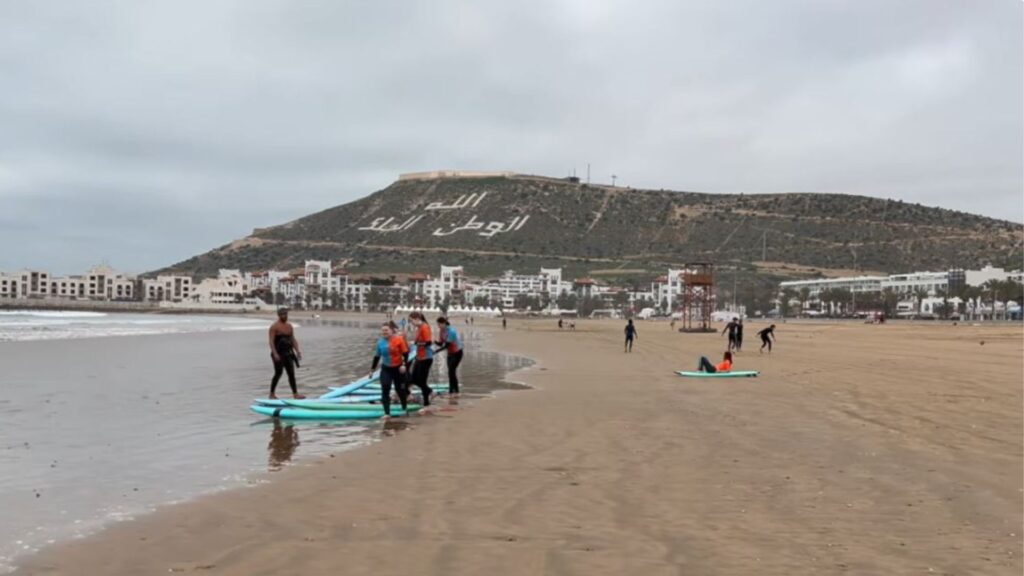
Lifeguards patrol the main swimming areas during daylight hours from approximately May through October. Flags indicate conditions, with green meaning safe swimming and red warning of dangerous currents. The bay’s protected shape generally keeps waves manageable, though the Atlantic can surprise even experienced swimmers.
The water temperature deserves honest acknowledgment. The Canary Current brings cold water up from the south, keeping temperatures between 60°F and 70°F depending on season and exact location. Many swimmers find the initial entry bracing but adjust quickly. Others stick to sunbathing and leave swimming for warmer destinations.
Beyond the main beach, the coastline reveals treasures worth seeking. Twenty kilometers north, the fishing village of Taghazout has transformed into Morocco’s most famous surf destination. Consistent waves, affordable living, and relaxed atmosphere attract wave riders from across Europe. Anchor Point challenges experienced surfers with long rides that can exceed 300 meters on good days. Panoramas offers gentler waves suitable for intermediates.
| Beach | Distance from Agadir | Best for | Character |
| Main Agadir beach | City center | Swimming, families | Developed, convenient |
| Taghazout | 20 km north | Surfing, beach culture | Village atmosphere |
| Tamraght | 15 km north | Learning to surf | Budget-friendly |
| Aglou | 85 km south | Solitude, local atmosphere | Undeveloped |
| Legzira | 120 km south | Photography, dramatic scenery | Remote, stunning |
Legzira beach, two hours south, offers the most photographed coastal scenery in southern Morocco. Massive red stone arches carved by Atlantic erosion frame the beach, creating landscapes that feel more southwestern Utah than North Africa. Swimming requires caution due to strong currents, but the visual experience compensates for limited water activities.
Aglou remains largely unknown to international visitors despite being a favorite among Moroccan families. The beach sits in a wide bay surrounded by low cliffs, creating enclosure and privacy absent from more developed stretches. Getting there requires a car, but the reward is space and solitude increasingly rare along Morocco’s developed coastline.
The comprehensive guide to Agadir beaches covers each option in detail, helping match beach preferences to specific stretches of sand.
Things to do in Agadir: attractions, activities, and experiences
The beach resort reputation obscures how much Agadir actually offers beyond sun loungers and promenade strolls. The city and its surroundings pack enough variety to fill weeks of exploration for travelers willing to venture beyond the tourist zone.
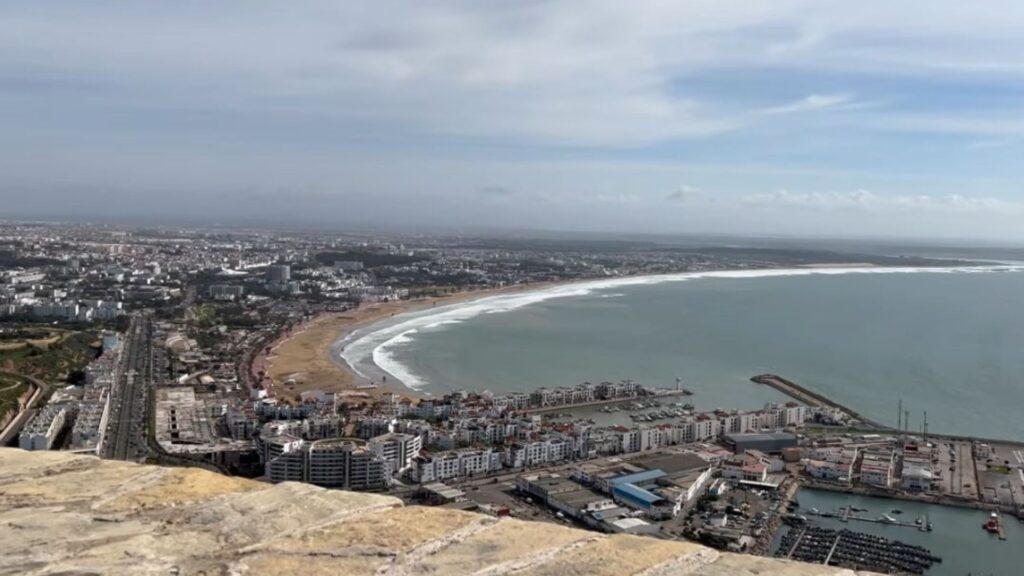
The old Kasbah sits on a hill 236 meters above the city, the only significant structure to survive the 1960 earthquake. The fortress itself lies in ruins, but the views from this vantage point justify the trip regardless of historical interest. The entire bay spreads below in a sweeping panorama. The modern city grid extends inland. The port with its fishing boats anchors the southern end. On clear days, the Anti-Atlas mountains rise in the distance, their peaks sometimes dusted with winter snow.
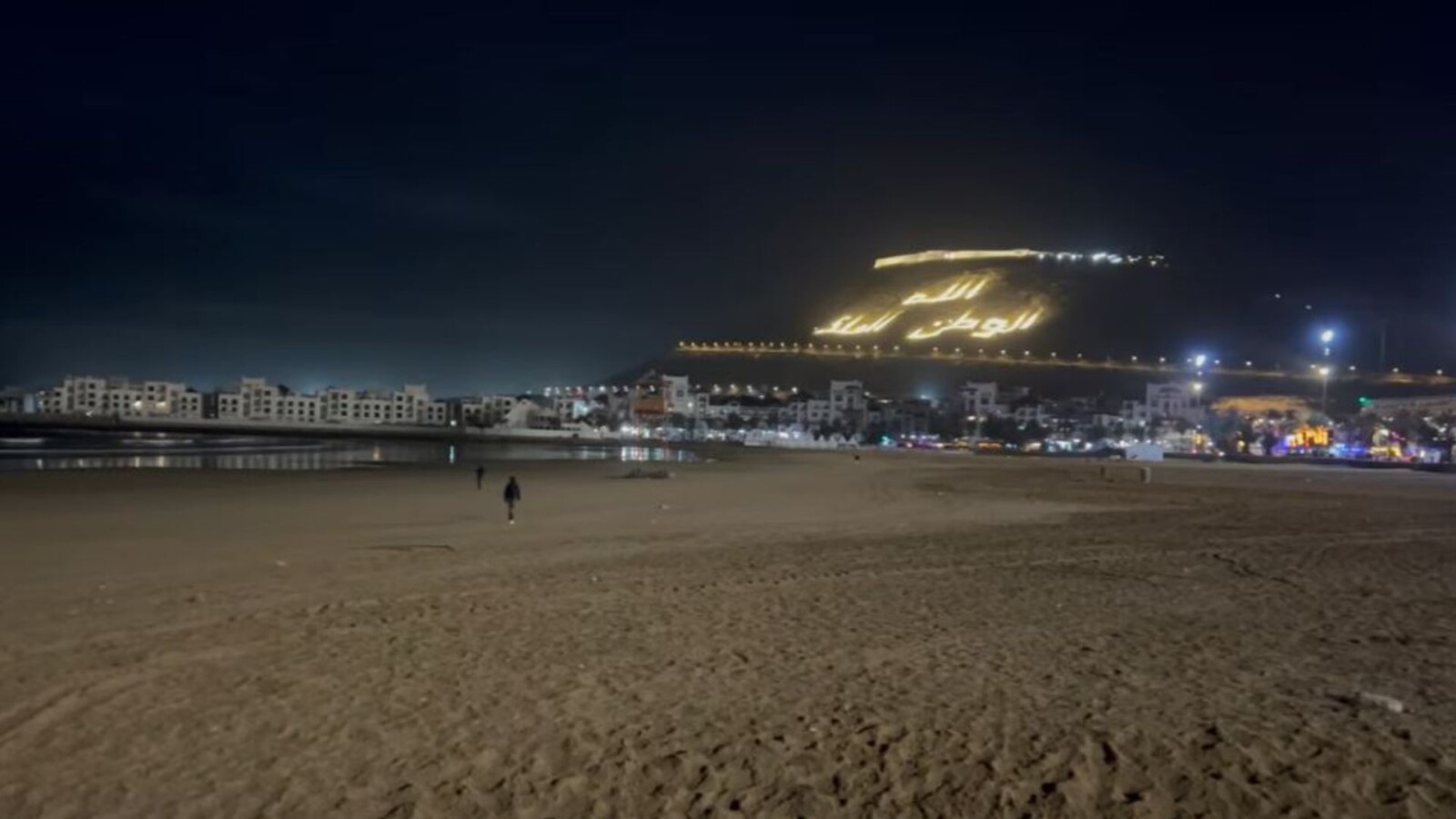
The inscription on the Kasbah walls reads “God, Country, King” in Arabic, visible even from the beach below when lit at night. This phrase has marked the site since the 18th century, surviving the earthquake that destroyed everything else. Getting there requires a taxi, with sunset timing creating the most dramatic lighting.
Souk El Had ranks among the largest traditional markets in Morocco, sprawling across an area containing roughly 6,000 shops and stalls. Unlike the tourist-oriented souks of Marrakech, this market serves primarily local shoppers, creating an atmosphere of genuine commerce rather than staged authenticity. The souk operates daily except Monday, with weekends drawing the largest crowds.
The argan oil section deserves particular attention. The Souss region produces most of Morocco’s argan oil, and Souk El Had offers competitive prices on both culinary and cosmetic grades. Quality varies significantly, so purchasing from established shops with proper labeling beats buying from ambulant vendors. Bargaining is expected for most non-food purchases, with starting prices often double or triple the eventual sale price.
The marina at the northern end of the beach area provides manicured contrast to the working fishing port at the southern end. Boat excursions depart throughout the day, offering various durations and purposes. Standard sightseeing trips run two to three hours, cruising along the coastline with views back toward the city. Dolphin sightings occur frequently, particularly during morning hours when boats head toward deeper waters.
Golf has developed as a significant draw, with multiple courses taking advantage of the reliable climate. Two 18-hole courses at Golf du Soleil wind through olive trees and flowering plants, while Golf de l’Ocean takes a completely different approach with a links-style layout that incorporates natural dunes and coastal vegetation. The combination of year-round playable weather and significantly lower costs than European alternatives attracts golfers from across the continent.
Families find Crocoparc provides engaging breaks from beach activities. The facility houses over 300 Nile crocodiles in naturalistic enclosures, along with gardens featuring cacti and other arid-climate plants. The park sits about 15 kilometers from central Agadir, requiring taxi or rental car access.
Cooking classes offer structured cultural engagement beyond passive sightseeing. Classes typically start at Souk El Had, where instructors guide ingredient selection while explaining Moroccan culinary traditions. Participants then prepare tagines, couscous, or pastries under expert guidance. The meal concludes the experience, usually including tea service and relaxed conversation.
Hammam experiences provide another cultural immersion option. Traditional public hammams operate throughout the city, though tourist-oriented facilities at hotels and spas provide more comfortable introductions. The scrubbing, steaming, and relaxation process leaves skin remarkably smooth and muscles thoroughly relaxed.

The complete guide to things to do in Agadir details each activity with practical information for planning varied itineraries.
Day trips from Agadir: Paradise Valley, Essaouira, and beyond
Perhaps the strongest argument for visiting Agadir has nothing to do with the city itself. The location provides access to landscapes and experiences unavailable from other Moroccan bases, transforming a beach vacation into something considerably richer.
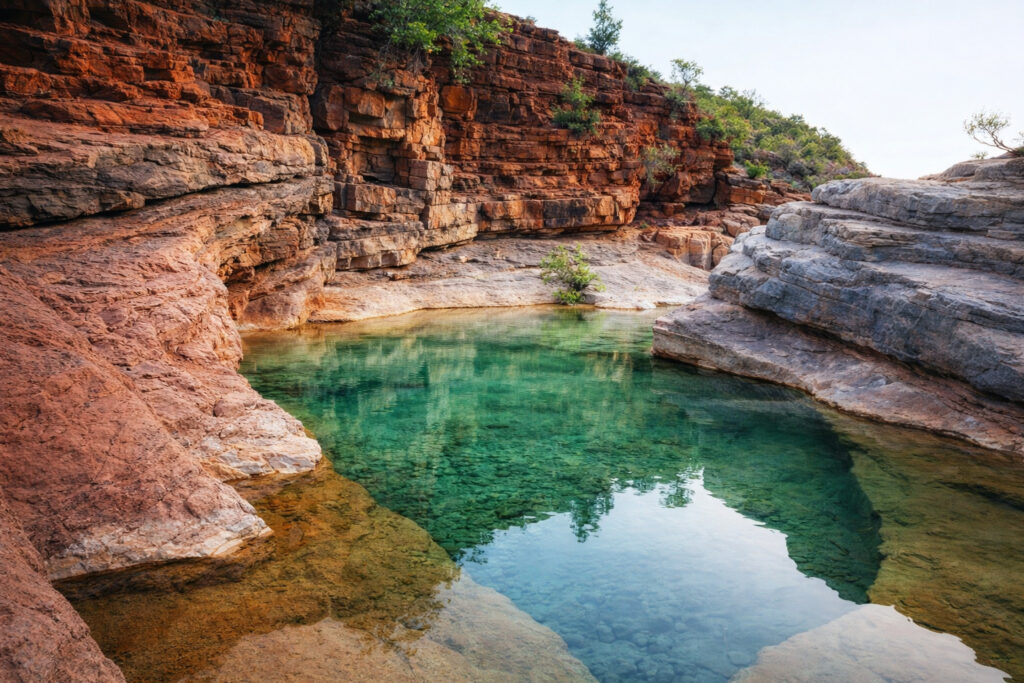
Paradise Valley delivers the most accessible adventure excursion, hiding an hour northeast of the city. A river has carved a gorge through the mountains, creating a series of natural swimming pools surrounded by palm trees, oleander bushes, and dramatic rock formations. The name sounds like tourist marketing but actually understates what awaits.
The drive itself sets the tone. The road climbs from coastal plains into increasingly rugged terrain, passing through small Berber villages where life moves at paces unchanged for generations. Argan trees dot the hillsides, their gnarled forms sheltering the goats famous for climbing into branches to eat the fruit.
The valley floor requires a short hike from the parking area, descending through boulders and vegetation to reach the pools. The water runs cold year-round, fed by mountain springs maintaining temperatures around 60°F regardless of air temperature. Local guides offer services at the parking area, knowing which pools offer the best swimming and how to navigate sometimes-slippery rocks.
Taroudant sits eighty kilometers east, offering what many travelers seek in Marrakech without the overwhelming intensity. The city’s ramparts remain completely intact, encircling a medina where donkeys still outnumber motorcycles and tourist pressure stays minimal. You can wander the souks without constant harassment. Shopkeepers chat without aggressive sales tactics. The pace allows actual appreciation rather than defensive navigation.
Two main souks anchor the medina’s commercial activity. The Arab souk focuses on household goods and daily necessities. The Berber souk specializes in crafts, leather goods, and regional products. Prices run significantly lower than tourist-oriented markets, and bargaining follows relaxed rhythms.
Essaouira lies three hours north, delivering an entirely different coastal atmosphere. Where Agadir feels modern and resort-oriented, Essaouira projects artistic bohemian energy within ancient fortified walls. The medina is a UNESCO World Heritage site, its layout reflecting 18th-century European military planning adapted to Moroccan context. The fishing port remains genuinely active, with blue boats unloading catches that move directly to portside grills.
| Day trip | Distance | Drive time | Character |
| Paradise Valley | 50 km | 1 hour | Natural pools, palm gorges |
| Taroudant | 80 km | 1.5 hours | Walled medina, authentic souks |
| Essaouira | 175 km | 3 hours | Artistic coastal town |
| Tiznit | 100 km | 1.5 hours | Silver souks, local atmosphere |
| Souss-Massa National Park | 65 km | 1 hour | Birdwatching, wildlife |
| Immouzzer Ida Outanane | 60 km | 1.5 hours | Waterfalls, honey, mountains |
Tiznit offers glimpses of Moroccan town life largely untouched by international tourism. Silver jewelry defines the commercial identity, with workshops crafting Berber ornaments using traditional techniques. The walled medina rewards exploration without specific destinations, showing daily life continuing as it has for decades.
Souss-Massa National Park protects coastal dunes, river wetlands, and arid scrubland sheltering remarkable biodiversity including the critically endangered northern bald ibis. Birdwatchers constitute the primary visitors, drawn by species lists including flamingos, spoonbills, and numerous shorebirds alongside the signature ibis.
The comprehensive guide to day trips from Agadir covers logistics, timing, and detailed descriptions helping travelers choose which excursions best match their interests.
Where to eat in Agadir: restaurants, seafood, and local flavors
The fishing port tells you everything about eating in Agadir. Boats unload their catch each morning, and by afternoon that same fish arrives grilled, fried, or tagine-simmered at restaurants throughout the city. The freshness available here rivals any Mediterranean destination at a fraction of comparable costs.
The working port at the southern end of the beach delivers the city’s most authentic and memorable seafood experience. This is not a sanitized tourist attraction but an active commercial facility where fishing boats unload, buyers negotiate, and restaurants cook whatever arrived that morning.
The system intimidates first-time visitors but rewards those who engage. A row of simple restaurants lines the area adjacent to the fish market. You examine the day’s catch displayed on ice, select what appeals, negotiate the price by weight, and wait while it cooks over charcoal grills. Fish options typically include sea bream, sole, sardines, sea bass, and whatever else the boats brought in. Prices run significantly lower than tourist restaurants for comparable or superior quality.
“The port restaurants changed how I thought about fish,” said Elena, a food writer from New York who spent a week researching Moroccan cuisine. “There was no menu, no pretense, just incredibly fresh seafood cooked simply over fire. Everything I ate for the next week felt like a step down.”
The promenade backing the main beach concentrates tourist-oriented dining with menus in multiple languages, familiar presentations, and prices reflecting prime location. Quality varies more than settings suggest. Some restaurants serve excellent food justifying premium pricing. Others coast on location while delivering mediocre meals at inflated rates.
The marina at the northern end offers more upscale dining, with restaurants targeting visitors seeking ambiance alongside their meals. Seafood dominates menus, though preparations lean toward European styles rather than traditional Moroccan approaches. Wine lists feature Moroccan and imported bottles, unusual for restaurants outside tourist zones.
Beyond seafood, the Souss region contributes distinctive flavors differentiating local cuisine from other Moroccan regions. Argan oil defines the most notable difference, adding nutty richness to dishes throughout the area. Amlou represents the signature preparation, a paste combining argan oil, almonds, and honey into something resembling almond butter with deeper complexity.
| Restaurant type | Location | Price range | Best for |
| Port grills | Fishing port | Budget | Fresh seafood, authenticity |
| Promenade restaurants | Beach road | Mid to high | Convenience, views |
| Marina restaurants | Northern marina | Mid to high | Upscale atmosphere |
| Traditional Moroccan | Talborjt area | Budget to mid | Authentic tagines |
| Hotel restaurants | Resort zone | High | Consistent quality |
Traditional Moroccan restaurants serving local populations operate in neighborhoods like Talborjt, away from tourist zones. The food emphasizes tagines, grilled meats, and hearty dishes that fuel Moroccan daily life. Presentation focuses on flavor and portion size rather than visual elegance. Menus may require translation assistance or pointing at neighboring tables.
Souk El Had contains numerous food stalls serving quick meals to shoppers and workers. Fresh orange juice vendors operate throughout the city, their pyramids of fruit advertising freshness. A glass costs around 5 to 10 dirhams, with quality typically exceeding what more expensive restaurants provide.
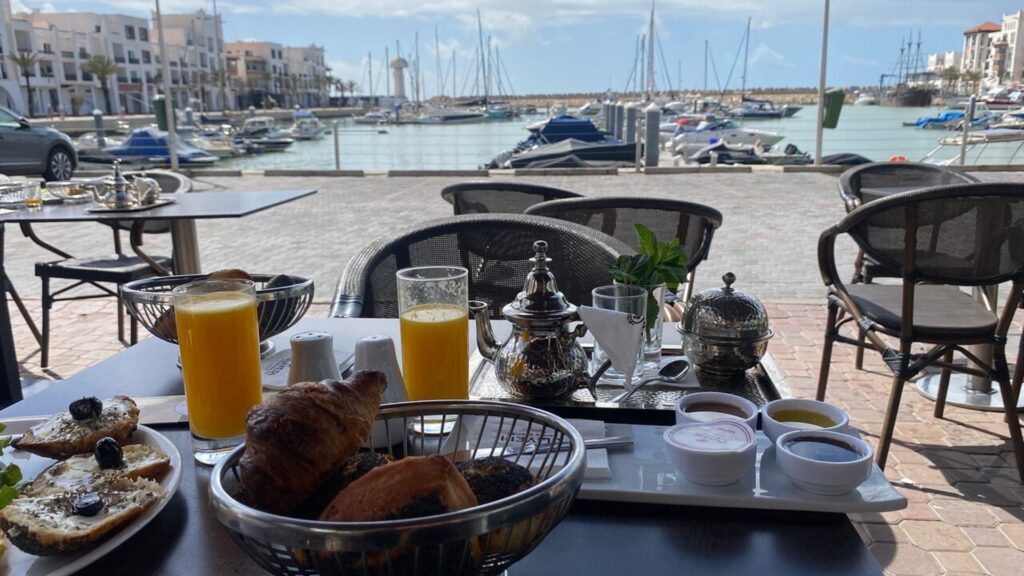
The complete guide to Agadir restaurants and dining covers specific recommendations, price expectations, and strategies for eating well across different budgets and preferences.
Agadir travel tips: getting there, getting around, and staying safe
The practical details of Agadir Morocco travel shape experiences as much as destination choices. Getting logistics right ensures the beaches, day trips, and dining options unfold smoothly rather than frustrating visitors with avoidable complications.
Agadir Al Massira Airport sits approximately 25 kilometers southeast of the city center, handling primarily European charter flights alongside scheduled services from major Moroccan cities. Direct flights connect Agadir with numerous European cities including London, Paris, Amsterdam, Brussels, and multiple German airports. Flight times from Western Europe run approximately three to four hours. Travelers from North America typically connect through European hubs or Casablanca.
Airport transfers to the city center cost approximately 200 to 300 dirhams by official taxi, though prices require negotiation or pre-arrangement. Hotels often provide shuttle services, either complimentary or at set rates. Immigration processing for most Western passport holders involves straightforward entry stamps without visa requirements for stays under 90 days.
The city divides into distinct zones shaping visitor experience depending on accommodation location. The beach road and tourist zone concentrate most accommodations along the six-kilometer stretch backing the main beach. Hotels range from budget properties to international luxury brands. The location provides direct beach access and proximity to tourist services. The trade-off involves distance from authentic Moroccan life and prices reflecting prime positioning.
The marina area attracts visitors prioritizing upscale atmosphere over traditional character. Talborjt and the city center offer accommodations away from the tourist zone, providing lower prices and more local atmosphere but requiring transportation for beach access.
Petit taxis, the small orange vehicles seating up to three passengers, handle most in-city transportation. Meters exist but drivers often prefer negotiating fixed fares. Typical trips within the tourist zone cost 15 to 30 dirhams. Trips to the port, Souk El Had, or the Kasbah run 40 to 70 dirhams.
Rental cars make sense for travelers planning multiple day trips or preferring self-directed exploration. Driving in Agadir presents fewer challenges than in Marrakech or Fes, with straightforward road layouts and less chaotic traffic. International agencies operate at the airport and in the tourist zone.
Peak season runs from October through April, when European visitors flee gray winters for guaranteed sunshine. Summer months see temperatures climbing into the 80s, moderated by consistent ocean breeze. Shoulder seasons in May and September offer compelling combinations of good weather, reduced crowds, and moderate pricing.
Morocco uses the dirham, with exchange rates typically running approximately 10 dirhams per US dollar or euro. ATMs operate throughout Agadir, accepting international cards. Credit cards work at hotels, upscale restaurants, and established shops but should not be assumed universally accepted. Carrying cash remains advisable for smaller establishments and taxis.
Agadir ranks among Morocco’s safest tourist destinations, with low crime rates and welcoming atmosphere throughout tourist areas. Standard precautions apply nonetheless. Beach safety requires awareness of Atlantic conditions, as currents can strengthen unexpectedly. Traffic presents the most significant daily hazard, with Moroccan driving customs differing considerably from European or American norms.
The reliable sunshine demands sun protection preparation. High SPF sunscreen, quality sunglasses, and broad-brimmed hats prevent burns that ruin beach vacations. The UV index regularly reaches extreme levels, making protection essential rather than optional.
The complete guide to Agadir travel tips covers additional logistics including packing recommendations, money-saving strategies, and detailed neighborhood comparisons for accommodation decisions.
Your Agadir adventure starts now
Agadir will never compete with Marrakech for Instagram appeal or with Fes for historical depth. The city rebuilt from earthquake rubble offers something different: ease, sunshine, and access to a Morocco that exists beyond the famous imperial cities. Whether that appeals depends entirely on what you seek from your journey.
The travelers who dismiss Agadir without visiting miss genuine opportunities. The beach delivers six kilometers of golden sand backed by a promenade free from the aggressive commerce that exhausts visitors elsewhere in Morocco. The fishing port serves seafood fresh enough to change how you think about fish. The Kasbah ruins provide sunset views across a bay that earned its tourism reputation honestly.
But the real value lies in what surrounds the city. Paradise Valley’s natural pools hide an hour northeast, offering adventure that beach resorts rarely provide. Taroudant’s intact ramparts enclose a medina where authentic Moroccan life continues without tourist performance. Essaouira’s artistic atmosphere and UNESCO-protected architecture wait three hours north. The Anti-Atlas mountains reveal landscapes and villages that most Morocco itineraries never reach.
The practical advantages compound these attractions. Direct flights from across Europe make Agadir one of Morocco’s most accessible destinations. The year-round climate eliminates the seasonal restrictions limiting other beach destinations. Costs run lower than comparable European alternatives while delivering experiences unavailable on the Mediterranean.
The question is not whether Agadir deserves a place in Moroccan travel. The question is whether it deserves a place in your particular trip. Families seeking safe beaches and manageable cultural introduction find exactly what they need. Couples wanting relaxation over intensity discover an atmosphere conducive to unwinding. Repeat visitors who have already explored the imperial cities come for the coastline and excursions they missed before.
Travelers combining Agadir with other destinations often structure itineraries strategically. Some start here to recover from jet lag before heading to more intense cities. Others end here, using beach days to decompress before flying home. Either approach leverages the city’s particular strengths while acknowledging that Morocco offers far more than any single destination can provide.
The earthquake that leveled Agadir in 1960 could have ended the city’s story. Instead, it created something new: a modern beach destination serving purposes that ancient medinas cannot. Understanding what emerged from that destruction, and what it offers travelers today, allows informed decisions about whether Agadir belongs in your Morocco plans.
For those ready to begin planning, the guide to day trips from Agadir provides the clearest window into the region’s possibilities. Paradise Valley, Taroudant, Essaouira, and the surrounding landscapes transform beach vacations into adventures worth remembering long after tans fade.
The rebuilt city waits on its crescent bay, offering exactly what it promises: sunshine, seafood, and a different side of Morocco. The rest depends on what you choose to make of it.
What draws you more when planning a Morocco trip: the cultural intensity of the imperial cities or the relaxed accessibility of a destination like Agadir?


