Things to do in Agadir: best attractions, activities & experiences
Agadir rewards travelers who venture beyond their sun loungers. The hilltop Kasbah offers panoramic views across the bay and into the Anti-Atlas mountains. Souk El Had spreads across thousands of stalls selling everything from argan oil to handwoven carpets. Boat trips follow the coast past dolphins and seabirds. Golf courses rank among Africa’s finest. The city packs more variety into its offerings than its beach resort reputation suggests. These activities complement the broader planning advice in our Agadir Morocco travel guide.
The Kasbah ruins and hilltop views
The old Kasbah sits on a hill 236 meters above Agadir, the only significant structure to survive the 1960 earthquake. The fortress itself lies in ruins, but the views from this vantage point justify the trip regardless of historical interest.
From the hilltop, the entire bay spreads below in a sweeping panorama. The six-kilometer beach curves along the coastline. The modern city grid extends inland. The port with its fishing boats and commercial vessels anchors the southern end. On clear days, the Anti-Atlas mountains rise in the distance, their peaks sometimes dusted with winter snow.
The inscription on the Kasbah walls reads “God, Country, King” in Arabic, visible even from the beach below when lit at night. This phrase has marked the site since the 18th century, surviving the earthquake that destroyed everything else.
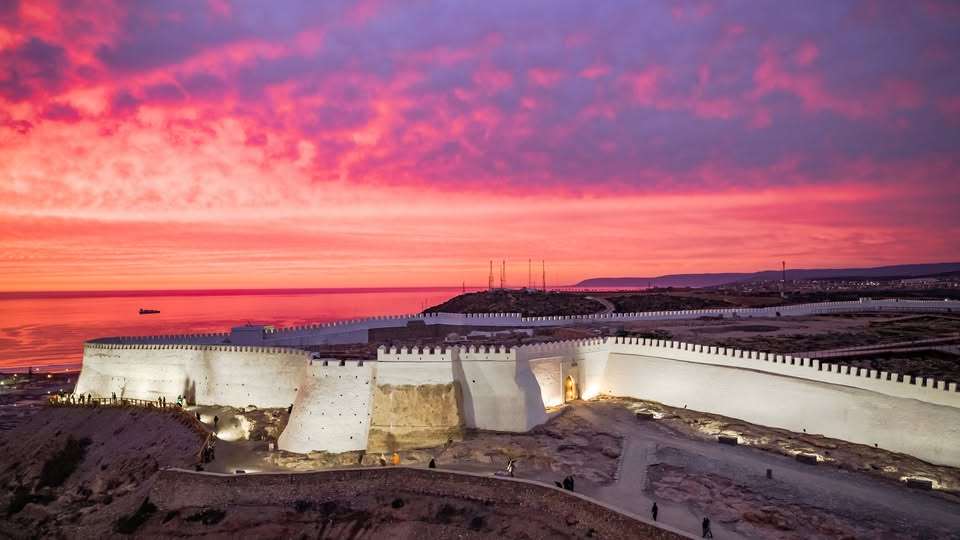
Getting to the Kasbah requires a taxi or rental car, as no practical walking route exists from the beach area. The drive takes fifteen minutes and costs around 50 to 70 dirhams each way by petit taxi. Sunset timing creates the most dramatic lighting, though the view impresses at any hour.
A small cafe operates near the parking area, offering mint tea and simple refreshments with views. Hawkers sell souvenirs with varying degrees of persistence. The site itself requires no entrance fee and remains accessible throughout the day.
Souk El Had: the real Moroccan market
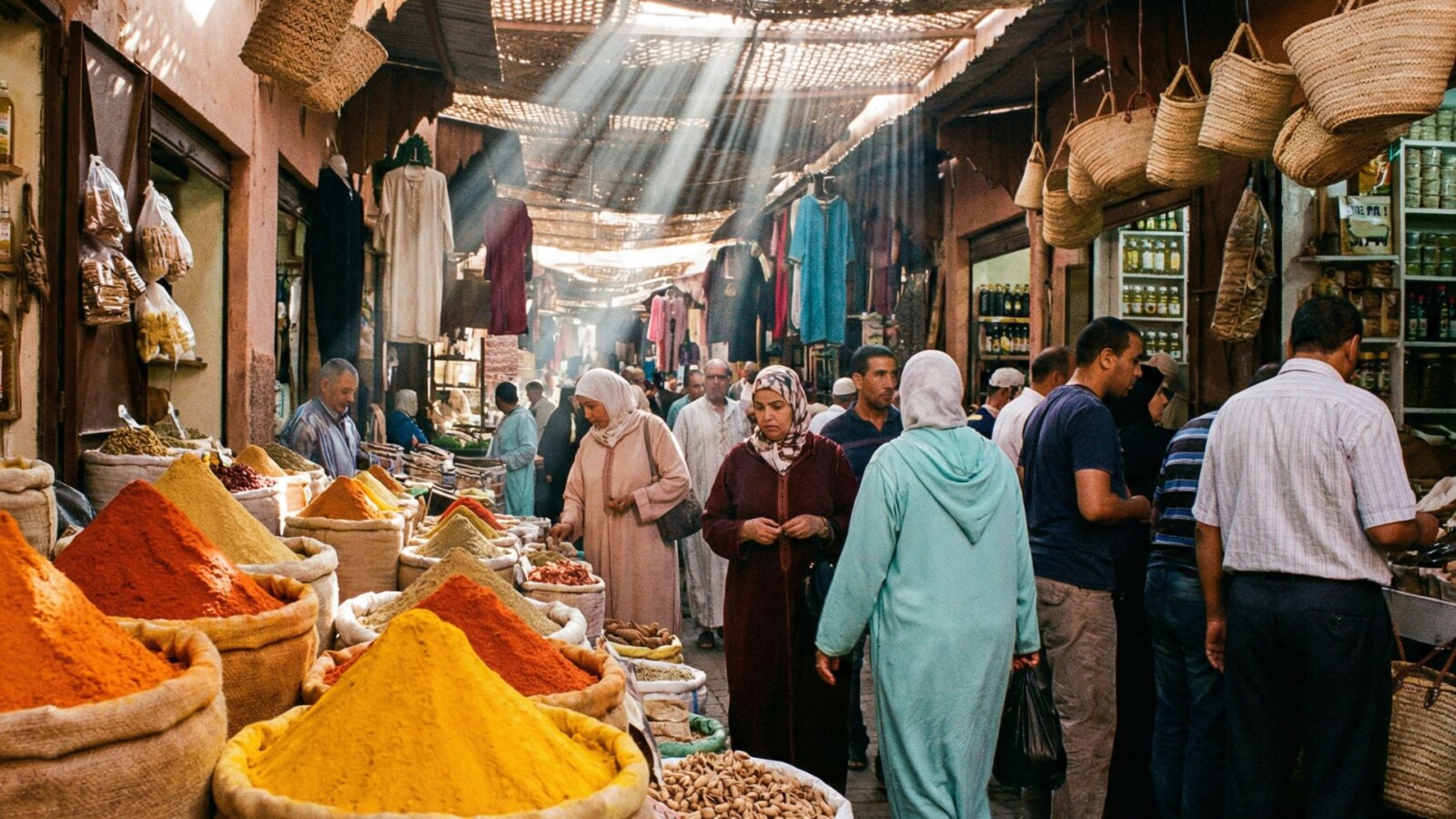
Souk El Had ranks among the largest traditional markets in Morocco, sprawling across an area that contains roughly 6,000 shops and stalls. Unlike the tourist-oriented souks of Marrakech, this market serves primarily local shoppers, creating an atmosphere of genuine commerce rather than staged authenticity.
The souk operates daily except Monday, with weekends drawing the largest crowds. The layout follows a rough organization by product type, though the sheer scale makes getting lost almost inevitable. Produce sections overflow with seasonal fruits and vegetables. Spice vendors display pyramids of cumin, paprika, and ras el hanout. Clothing areas stock everything from traditional djellabas to counterfeit European brands.
The argan oil section deserves particular attention. The Souss region produces most of Morocco’s argan oil, and Souk El Had offers competitive prices on both culinary and cosmetic grades. Quality varies significantly, so purchasing from established shops with proper labeling beats buying from ambulant vendors.
Bargaining is expected for most purchases, with starting prices often double or triple the eventual sale price. Produce and basic goods carry fixed prices. Souvenirs, clothing, and household items require negotiation. The process feels less aggressive than in tourist souks, though knowing approximate fair prices helps avoid significant overpayment.
“I spent three hours in Souk El Had and barely covered a quarter of it,” recalled Maria, a food blogger from California who visited specifically to source Moroccan ingredients. “The spice quality was incredible, and the prices were nothing like what I’d seen in Marrakech. It felt like actually shopping rather than performing shopping.”
| Souk El Had sections | What to find | Bargaining expected |
| Produce area | Fresh fruits, vegetables, olives | Fixed prices |
| Spice section | Cumin, saffron, ras el hanout | Light bargaining |
| Argan oil vendors | Culinary and cosmetic oils | Moderate bargaining |
| Clothing stalls | Djellabas, scarves, leather goods | Heavy bargaining |
| Household goods | Ceramics, metalwork, baskets | Moderate bargaining |
| Electronics | Phones, accessories, repairs | Light bargaining |
Marina and boat excursions
The Agadir marina anchors the northern end of the beach area, providing a manicured contrast to the working fishing port at the southern end. Restaurants, cafes, and shops line the waterfront, creating a pleasant area for evening strolls even without booking a boat trip.
Boat excursions depart from the marina throughout the day, offering various durations and purposes. Standard sightseeing trips run two to three hours, cruising along the coastline with views back toward the city and the Kasbah. Fishing trips target sea bream, bass, and other Atlantic species. Sunset cruises provide drinks and romantic atmosphere.

Dolphin sightings occur frequently, particularly during morning hours when boats head toward deeper waters. While not guaranteed, the Atlantic population of common and bottlenose dolphins regularly appears alongside vessels. Whale sightings are rarer but possible during migration seasons.
Prices for boat trips range from around 200 dirhams for basic group excursions to 1,500 dirhams or more for private charters. Booking through marina offices typically beats prices offered by hotel tour desks. Competition among operators keeps quality reasonably consistent.
The fishing port experience
The working port at Agadir’s southern end offers atmosphere that the polished marina cannot match. Fishing boats unload their catches each morning, creating scenes of organized chaos as buyers assess the day’s haul. The smell of salt and fish hangs in the air. Gulls circle overhead. Men in rubber boots shout prices and negotiate sales.
Adjacent to the unloading area, a row of simple restaurants grill the day’s catch for customers who point at whatever looks fresh. The experience involves choosing your fish, negotiating the price by weight, and waiting while it cooks over charcoal. Side dishes typically include salad, bread, and fries. The informality can intimidate first-time visitors, but the results justify navigating the unfamiliar system.
Hygiene standards vary across the port restaurants. Choosing busy stalls where turnover keeps fish fresh beats selecting empty spots with questionable inventory. Lunchtime offers the best selection, as morning catches move quickly and afternoon visitors find reduced options.
Golf courses
Agadir has developed into Morocco’s premier golf destination, with multiple courses taking advantage of the reliable climate and dramatic landscapes. The combination of year-round playable weather and significantly lower costs than European alternatives attracts golfers from across the continent.
Golf du Soleil features two 18-hole courses, the Championship and the 27-hole complex, designed around olive trees and flowering plants. Ocean views appear from several holes. Green fees run roughly 500 to 700 dirhams depending on season and tee time.
Golf de l’Ocean sits closer to the beach, with some holes offering Atlantic views. The links-style layout incorporates natural dunes and coastal vegetation. The clubhouse provides solid dining options after rounds.
Tikida Golf Palace connects to the luxury resort of the same name, offering the most manicured conditions and highest prices in the region. The course hosts professional events and maintains standards matching top European facilities.
Most hotels can arrange tee times and transportation, though direct booking often yields better rates. Club rentals are available at all courses for travelers unwilling to transport their own equipment.
Crocoparc and family attractions
Families with children find Crocoparc provides an engaging break from beach activities. The facility houses over 300 Nile crocodiles in naturalistic enclosures, along with gardens featuring cacti and other arid-climate plants. Educational presentations explain crocodile biology and conservation efforts.
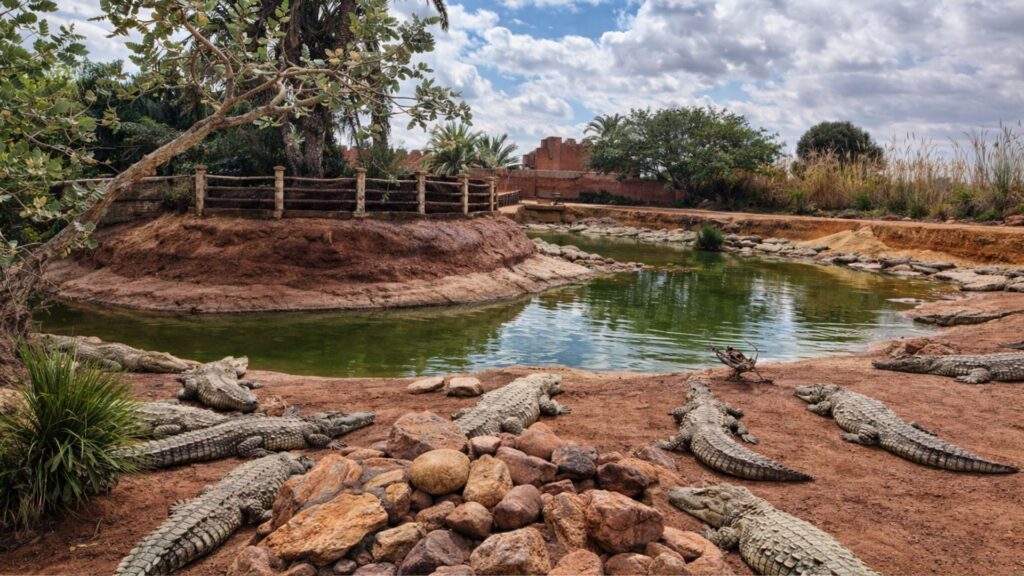
The park sits about 15 kilometers from central Agadir, requiring taxi or rental car access. Admission runs approximately 70 dirhams for adults and 40 dirhams for children. Plan for two to three hours to see everything without rushing.
Other family-friendly options include the small zoo in Vallee des Oiseaux, a free park near the beach featuring birds and small animals in a garden setting. The park provides shaded walking paths and playground equipment alongside the animal exhibits.
Quad biking and camel rides operate from various points around the city, offering adventure activities suitable for families with older children. Beach-based camel rides provide gentle introductions, while inland quad excursions cover more challenging terrain.
Cooking classes and cultural experiences
Several operators offer Moroccan cooking classes that begin with market shopping and end with eating what you have prepared. The format provides structured cultural engagement beyond passive sightseeing.
Classes typically start at Souk El Had, where instructors guide ingredient selection while explaining Moroccan culinary traditions. Participants then return to kitchen facilities to prepare tagines, couscous, or pastries under expert guidance. The meal concludes the experience, usually including tea service and relaxed conversation.
Prices range from 300 to 600 dirhams depending on menu complexity and class size. Half-day formats work well for travelers with limited time. Full-day options add more elaborate preparations and deeper cultural context.
Hammam experiences offer another cultural immersion option. Traditional public hammams operate throughout the city, though tourist-oriented facilities at hotels and spas provide more comfortable introductions to the practice. The scrubbing, steaming, and relaxation process leaves skin remarkably smooth and muscles thoroughly relaxed.
Evening entertainment
Agadir’s nightlife concentrates in the tourist zone near the beach, with options ranging from hotel bars to dedicated nightclubs. The scene caters primarily to European package tourists, which shapes the music, drink selection, and general atmosphere.
The promenade comes alive after sunset, with families, couples, and groups strolling past illuminated cafes and restaurants. Street performers occasionally appear. The atmosphere feels safe and relaxed compared to more chaotic Moroccan cities.
For those seeking something beyond tourist nightlife, the marina area offers upscale lounges with cocktails and ocean views. Some restaurants feature live music on weekends. The overall scene stays calmer than Marrakech’s famous nightlife but provides sufficient options for evening entertainment.
Understanding where to eat in Agadir helps plan evenings that combine dining with entertainment, as many restaurants offer atmosphere that extends beyond simply serving food.
The activities available in Agadir extend well beyond beach lounging, though the beach remains central to the city’s appeal. The question is how you balance relaxation with exploration, easy days with active ones, tourist comforts with authentic encounters.
What type of activity matters most when you are choosing how to spend time in a beach destination: cultural experiences, adventure activities, or simply finding the best spots to relax?