
Agadir beaches: guide to the best sand and surf spots on Morocco’s Atlantic coast
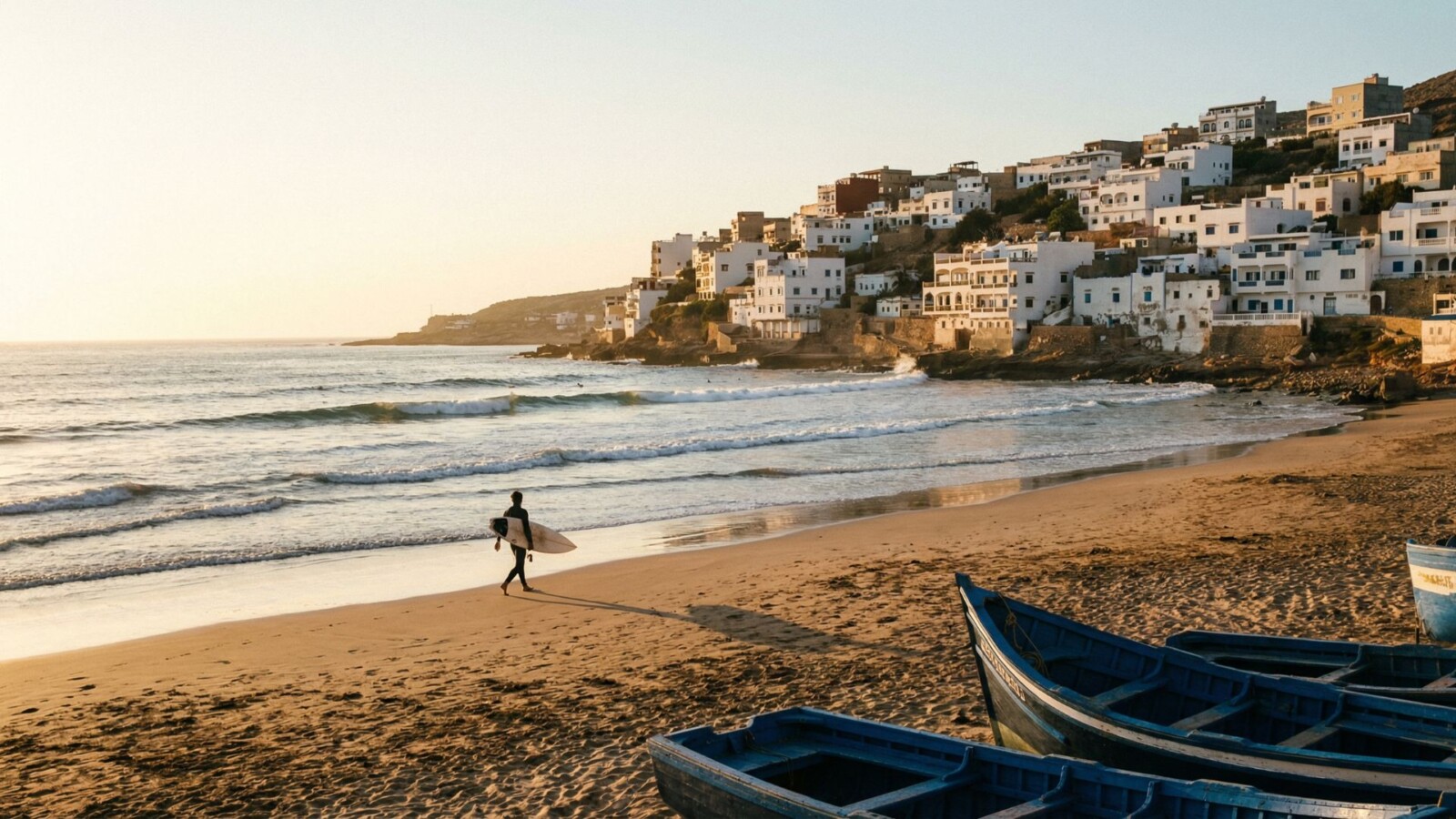
The Atlantic coastline around Agadir delivers some of Morocco’s finest beach experiences. The main beach stretches six kilometers along a crescent bay, backed by a promenade lined with cafes and hotels. But the real treasures lie beyond the city limits. Surf breaks draw wave riders to Taghazout. Dramatic cliffs frame the sands at Legzira. Quiet coves offer escape from the crowds. Choosing the right beach shapes your entire Agadir experience, a key consideration for anyone using our Agadir Morocco travel guide to plan their trip.
The main Agadir beach
The city’s primary beach curves along the bay in a sweeping arc of golden sand that seems to go on forever. At six kilometers long and impressively wide, the beach never feels crowded even during peak European holiday periods. The sand is soft and clean, maintained by daily grooming in the tourist zones. The water temperature hovers around 64°F to 70°F (≈ 17 °C to 21 °C) depending on season, cool enough to refresh but warm enough for extended swimming.
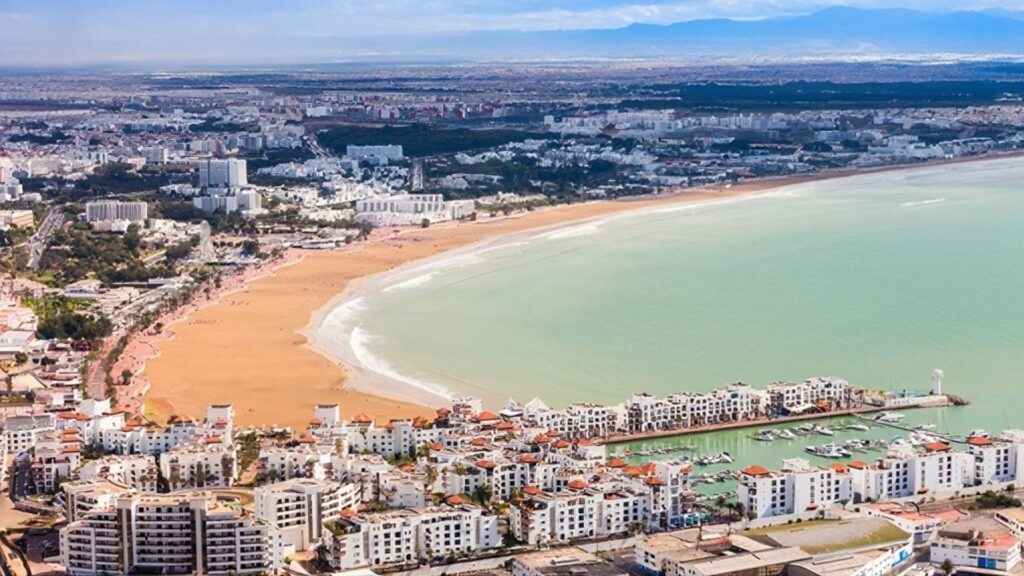
The promenade backing the beach defines the experience. Cafes serve fresh orange juice and mint tea. Restaurants offer everything from grilled fish to international cuisine. Beach clubs rent loungers and umbrellas for around 50 to 100 dirhams per day, providing a comfortable base for full-day beach sessions.
Lifeguards patrol the main swimming areas during daylight hours from approximately May through October. Flags indicate conditions, with green meaning safe swimming and red warning of dangerous currents. The bay’s protected shape generally keeps waves manageable, though the Atlantic can surprise even experienced swimmers.
The northern end of the beach near the marina tends toward quieter, more upscale atmosphere. The central section opposite the main hotel strip sees the most activity. The southern stretch toward the port feels more local, with Moroccan families claiming space on weekends and holidays.
“I expected the beach to feel generic and touristy,” admitted Carlos, a photographer from Arizona who spent two weeks exploring Morocco’s coastline. “Instead I found myself returning every afternoon just to watch the sunset over the water. The scale of it never got old.”
Taghazout: Morocco’s surf capital
Twenty kilometers north of Agadir, the fishing village of Taghazout has transformed into Morocco’s most famous surf destination. The transformation happened gradually as word spread about consistent waves, affordable living, and a relaxed atmosphere that attracts wave riders from across Europe and beyond.
The surf breaks around Taghazout suit various skill levels. Anchor Point, considered one of Morocco’s best right-hand point breaks, challenges experienced surfers with long rides that can exceed 300 meters on good days. Panoramas offers gentler waves suitable for intermediate surfers. Hash Point and Killer Point round out options depending on swell direction and size.
Surf schools and camps cluster throughout the village, offering lessons for beginners and guiding services for experienced surfers unfamiliar with local breaks. Week-long surf packages including accommodation, meals, and daily instruction run from roughly $400 to $800 depending on season and amenities.
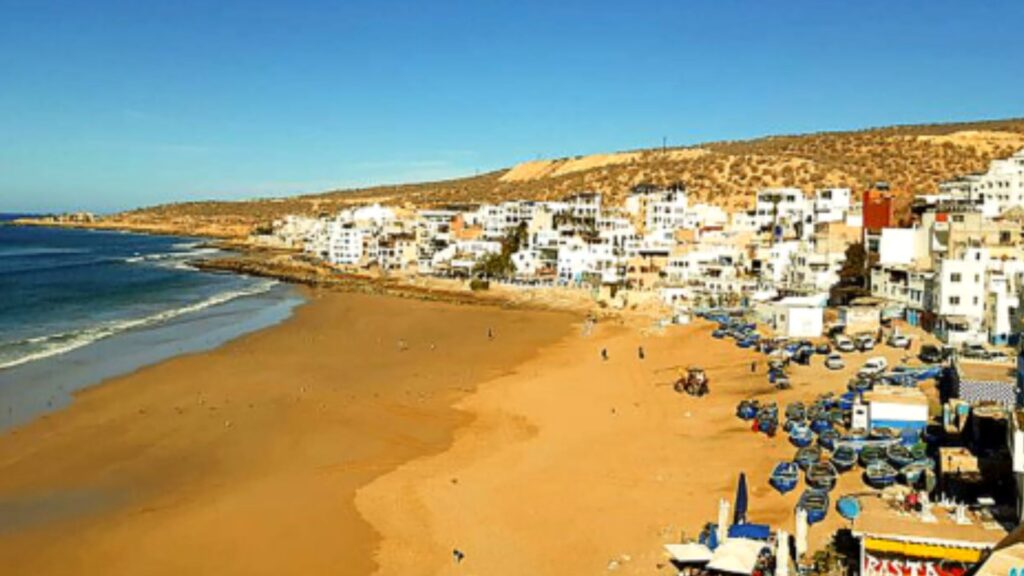
Beyond surfing, Taghazout maintains the charm of a fishing village despite its international reputation. Fishermen still launch boats from the beach each morning. Cafes serve fresh catch prepared simply with lemon and salt. The narrow streets climbing the hillside reveal ocean views from unexpected angles.
| Beach/Break | Distance from Agadir | Best for | Wave type |
| Agadir main beach | City center | Swimming, families | Gentle, protected |
| Taghazout | 20 km north | Intermediate surfing | Various point breaks |
| Anchor Point | 22 km north | Expert surfing | Long right-hand point |
| Tamraght | 15 km north | Learning to surf | Beach breaks |
| Aglou | 85 km south | Solitude, natural beauty | Moderate |
| Legzira | 120 km south | Photography, dramatic scenery | Strong currents |
Tamraght: the mellower alternative
Sitting between Agadir and Taghazout, Tamraght offers surf culture without the intensity of its more famous neighbor. The village spreads along a hillside overlooking beach breaks that work well for beginners and intermediates. Surf camps here tend toward budget-friendly options, attracting younger travelers and those prioritizing value.
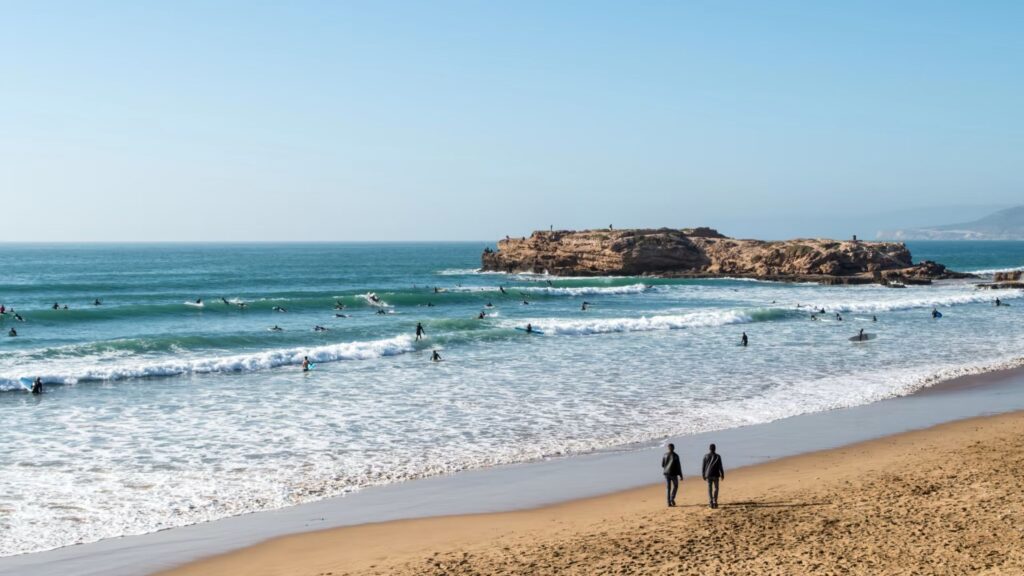
The beach at Tamraght consists of darker sand than Agadir’s golden stretch, with rock formations creating interesting tide pools at low water. Swimming requires more caution than at the protected main beach, but the waves that make swimming tricky also make surfing accessible for learners.
The village atmosphere feels authentically Moroccan despite the international surf crowd. Local shops sell produce and household goods alongside wax and board repairs. Restaurants serve both Moroccan tagines and the banana pancakes that international backpackers seem to require everywhere.
For travelers staying in Agadir but wanting a surf day trip, Tamraght provides an easier introduction than Taghazout’s more demanding breaks. Grand taxis from Agadir cost around 100 dirhams per person, or you can negotiate a private taxi for the day.
Aglou: the local secret
Eighty-five kilometers south of Agadir, Aglou remains largely unknown to international visitors despite being a favorite among Moroccan families. The beach sits in a wide bay surrounded by low cliffs, creating a sense of enclosure and privacy absent from more developed stretches.
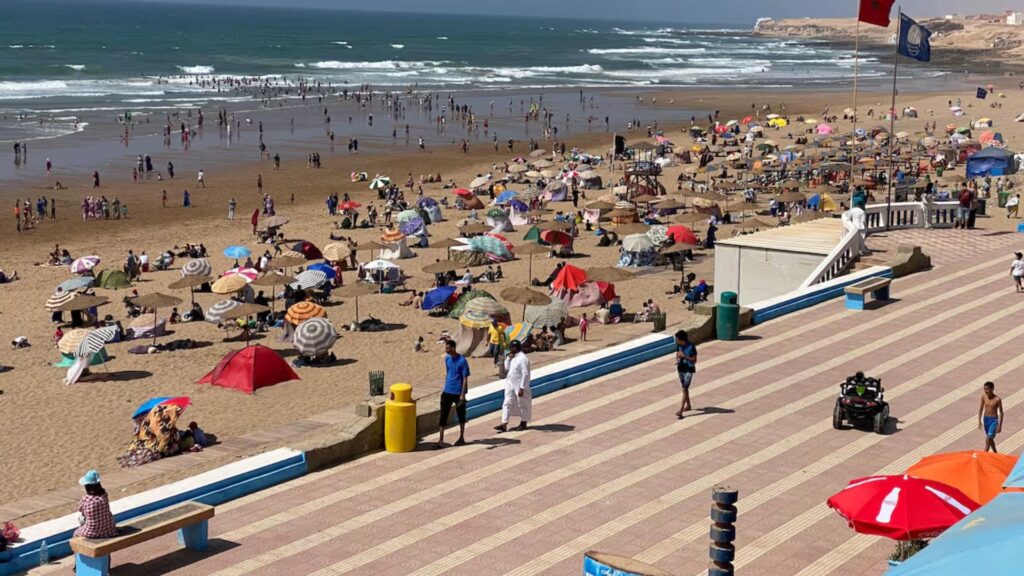
The sand here tends darker than Agadir’s beach, with interesting geological formations visible at low tide. A small fishing village provides basic amenities including simple restaurants serving the day’s catch. Development remains minimal, preserving an atmosphere that feels decades removed from the resort infrastructure up the coast.
Getting to Aglou requires a car or negotiated taxi, as no regular public transport serves the beach. The drive passes through arid landscapes dotted with argan trees, offering glimpses of rural Souss region life. The journey itself becomes part of the experience.
Facilities at Aglou are basic. Bring your own umbrella and supplies if you plan extended beach time. The reward is space and solitude increasingly rare along Morocco’s developed coastline.
Legzira: the dramatic option
Two hours south of Agadir, Legzira beach offers the most photographed coastal scenery in southern Morocco. Massive red stone arches carved by Atlantic erosion frame the beach, creating a landscape that feels more southwestern Utah than North Africa. One of the original arches collapsed in 2016, but remaining formations continue drawing visitors seeking dramatic backdrops.
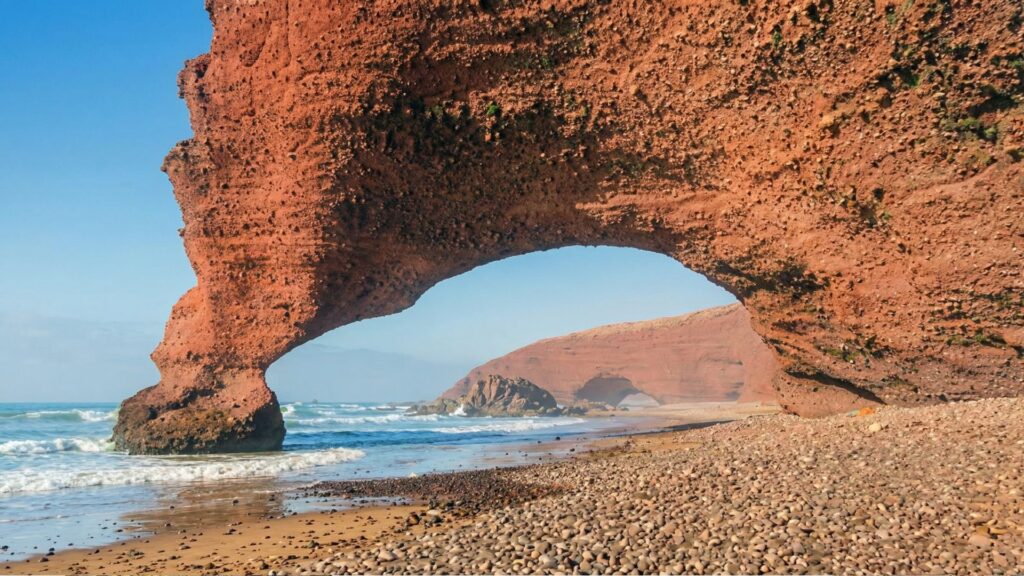
The beach itself stretches for several kilometers, backed by imposing cliffs that glow orange and red in afternoon light. Swimming here requires caution due to strong currents and rocky areas, but the visual experience compensates for limited water activities.
A handful of guesthouses and restaurants operate along the beach, offering the possibility of overnight stays rather than day trips. Watching sunset paint the arches in changing colors justifies the extended visit for photographers and those seeking contemplative solitude.
The distance from Agadir makes Legzira a full-day commitment or overnight excursion rather than casual afternoon trip. Most visitors combine the beach with stops in Tiznit or Mirleft, creating a southern coastal circuit that reveals Morocco’s Atlantic personality beyond the resort zone.
Practical beach considerations
Water temperature along this coastline stays cooler than Mediterranean beaches or tropical destinations. The Canary Current brings cold water up from the south, keeping temperatures between 60°F and 70°F depending on season and exact location. Many swimmers find the initial entry bracing but adjust quickly. Others stick to sunbathing and leave swimming for warmer destinations.
Sun intensity at this latitude surprises visitors accustomed to more northerly beaches. The UV index regularly reaches extreme levels during summer months. Sunscreen, hats, and shade become essential rather than optional. The dry climate and coastal breeze mask how intensely the sun burns.
Beach vendors operate along the main Agadir beach selling drinks, snacks, and services ranging from massages to temporary tattoos. Pressure varies but generally remains lower than at beaches in other Moroccan tourist areas. A polite “no thank you” typically ends the interaction without drama.
Topless sunbathing, common at European beaches, remains culturally inappropriate throughout Morocco including at Agadir’s tourist beaches. While enforcement is inconsistent, respecting local norms maintains the welcoming atmosphere that makes these beaches pleasant for everyone.
Choosing your beach
The right beach depends entirely on what you seek from your coastal time. Families with children gravitate toward the protected main beach with its lifeguards, facilities, and gentle waves. Surfers head to Taghazout or Tamraght for consistent breaks and established surf culture. Those seeking solitude find it at Aglou or on the longer journey to Legzira.
Day trips to beaches beyond Agadir combine well with other regional attractions. Taghazout pairs naturally with the scenic drive north. Aglou and Legzira connect logically with exploration of Tiznit and the far south. Understanding the full range of day trips from Agadir helps structure itineraries that balance beach time with broader exploration.
The coastline around Agadir delivers variety that single-beach destinations cannot match. Whether you want gentle swimming, serious surfing, dramatic photography, or simple solitude, somewhere within reasonable driving distance delivers exactly what you need.
Which type of beach experience matters most to you when choosing a coastal destination: easy swimming access, surf conditions, dramatic scenery, or escape from crowds?


