
Agadir restaurants: where to eat seafood and local food like a local
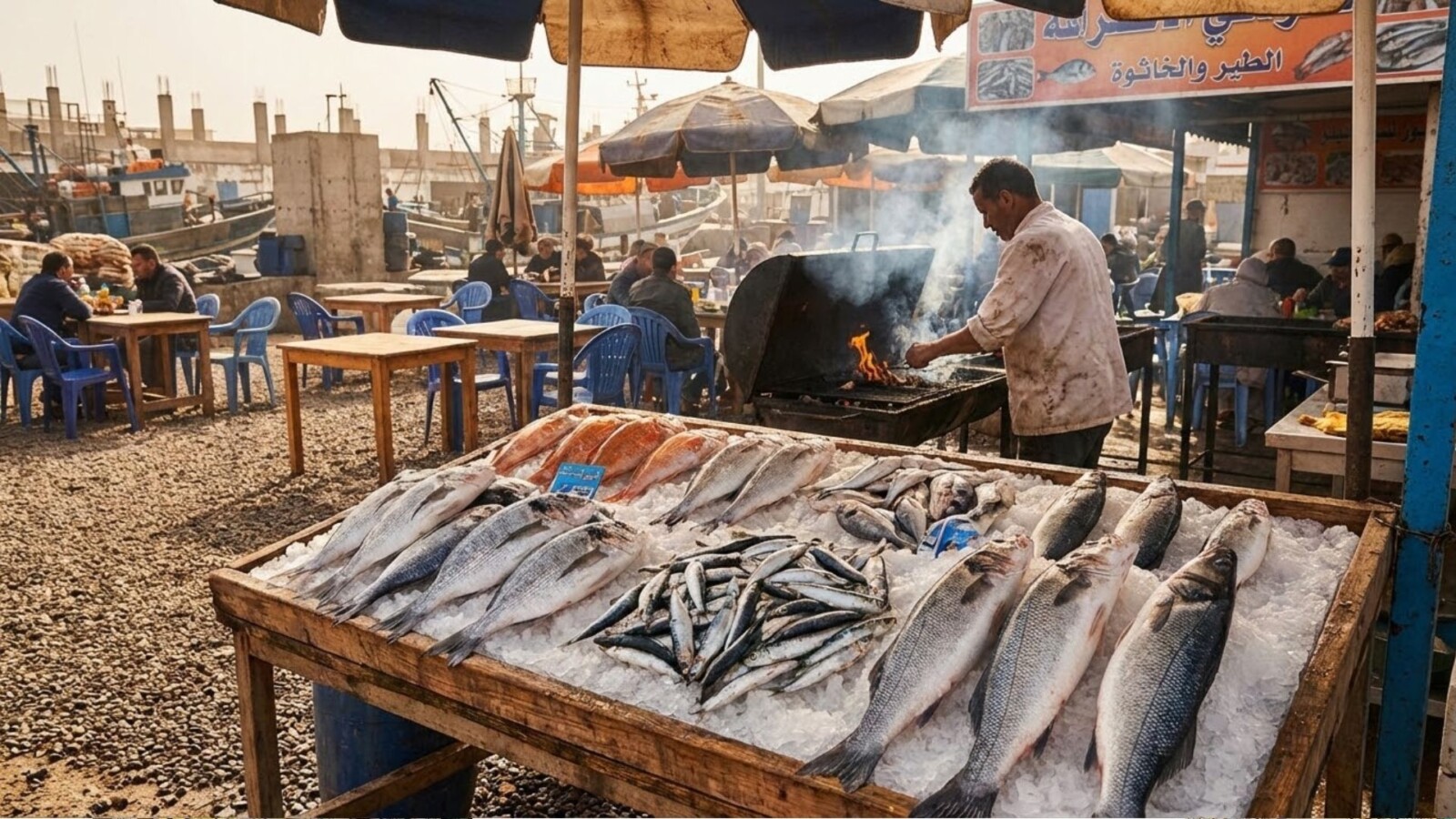
The fishing port tells you everything about eating in Agadir. Boats unload their catch each morning, and by afternoon that same fish arrives grilled, fried, or tagine-simmered at restaurants throughout the city. Seafood dominates local menus, but the Souss region contributes its own specialties including argan oil preparations and distinctive spice combinations. From casual port-side stalls to upscale hotel dining rooms, Agadir feeds visitors well. These culinary options form an essential part of planning any trip using our Agadir Morocco travel guide.
The fishing port experience
The working port at the southern end of Agadir’s beach delivers the city’s most authentic and memorable seafood experience. This is not a sanitized tourist attraction but an active commercial facility where fishing boats unload, buyers negotiate, and restaurants cook whatever arrived that morning, a coastal chapter of the wider regional Moroccan food story.
The system intimidates first-time visitors but rewards those who engage. A row of simple restaurants lines the area adjacent to the fish market. Each operates essentially the same way. You examine the day’s catch displayed on ice, select what appeals, negotiate the price by weight, and wait while it cooks over charcoal grills. The meal arrives with standard accompaniments: bread, simple salad, fries, and various sauces.
Fish options typically include sea bream, sole, sardines, sea bass, and whatever else the boats brought in. Shrimp, calamari, and mixed seafood platters provide alternatives for those wanting variety. Prices run significantly lower than tourist restaurants for comparable or superior quality.
The atmosphere is chaotic, loud, and thoroughly genuine. Plastic chairs crowd around simple tables. Cats prowl for scraps. Vendors hawk drinks and desserts between the restaurants. Hygiene standards vary, so choosing busy stalls with rapid turnover beats selecting empty spots with questionable freshness.
“The port restaurants changed how I thought about fish,” said Elena, a food writer from New York who spent a week researching Moroccan cuisine. “There was no menu, no pretense, just incredibly fresh seafood cooked simply over fire. Everything I ate for the next week felt like a step down.”
Beachfront and promenade dining
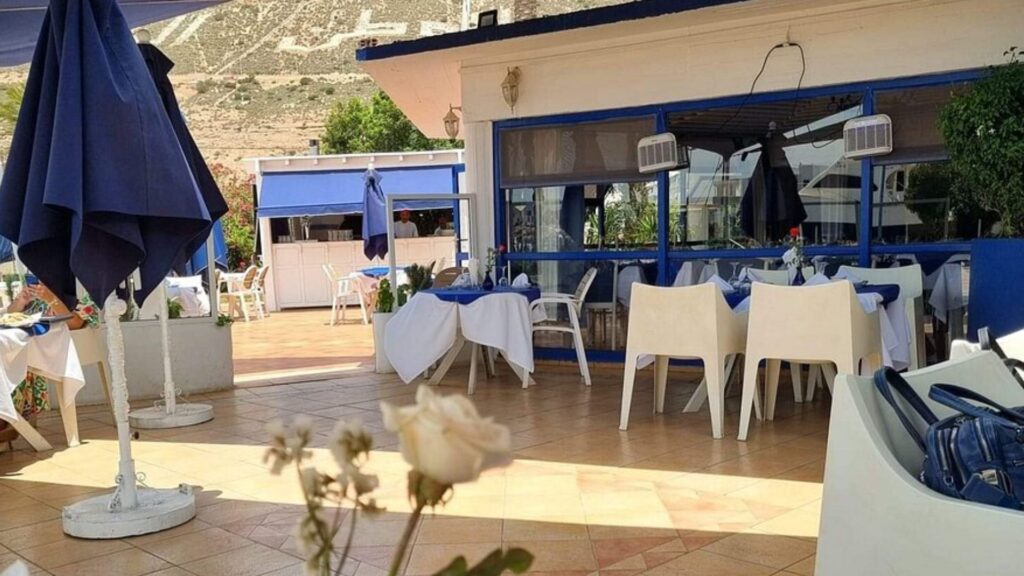
The promenade backing Agadir’s main beach concentrates the city’s tourist-oriented dining scene. Restaurants here cater to international visitors with menus in multiple languages, familiar presentations, and prices reflecting the prime location.
Quality along the promenade varies more than settings suggest. Some restaurants serve excellent food that justifies premium pricing. Others coast on location while delivering mediocre meals at inflated rates. Checking recent reviews helps distinguish worthy options from tourist traps.
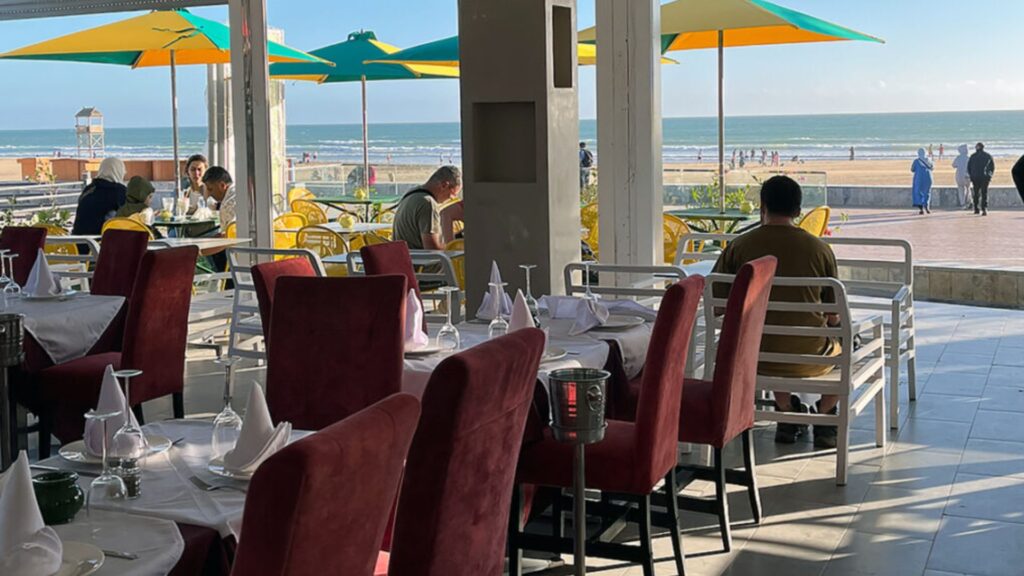
The beachfront setting provides undeniable appeal regardless of food quality. Sunset dinners overlooking the Atlantic create romantic atmosphere. Watching beach activity while lingering over lunch offers pleasant distraction. The convenience of eating steps from your hotel matters when fatigue or weather limits ambition.
Several promenade restaurants specialize in Moroccan cuisine prepared for international palates. Tagines, couscous, and grilled meats appear alongside seafood options. The preparations tend milder than what you might find in traditional establishments, which suits some visitors while disappointing others seeking authentic intensity.
| Restaurant type | Location | Price range | Best for |
| Port grills | Fishing port | Under 100 MAD | Fresh seafood, authentic atmosphere |
| Promenade restaurants | Beach road | 100-300 MAD | Convenience, views, varied menus |
| Marina restaurants | Northern marina | 300-600 MAD | Upscale seafood, evening ambiance |
| Traditional Moroccan | Medina/Talborjt | 100-300 MAD | Authentic tagines, local atmosphere |
| Hotel restaurants | Resort zone | 600+ MAD | Consistent quality, international options |
| Souk El Had eateries | Market area | Under 100 MAD | Cheap eats, local experience |
Marina dining
The marina at Agadir’s northern end offers more upscale dining than the fishing port, with restaurants targeting visitors seeking ambiance alongside their meals. The waterfront setting, moored yachts, and evening lighting create atmosphere appropriate for special occasions or romantic dinners.
Seafood dominates marina menus, though preparations lean more toward European styles than traditional Moroccan approaches. Grilled fish with sophisticated sauces, seafood pastas, and international fusion dishes appear alongside simpler options. Wine lists feature Moroccan and imported bottles, unusual for restaurants outside tourist zones.
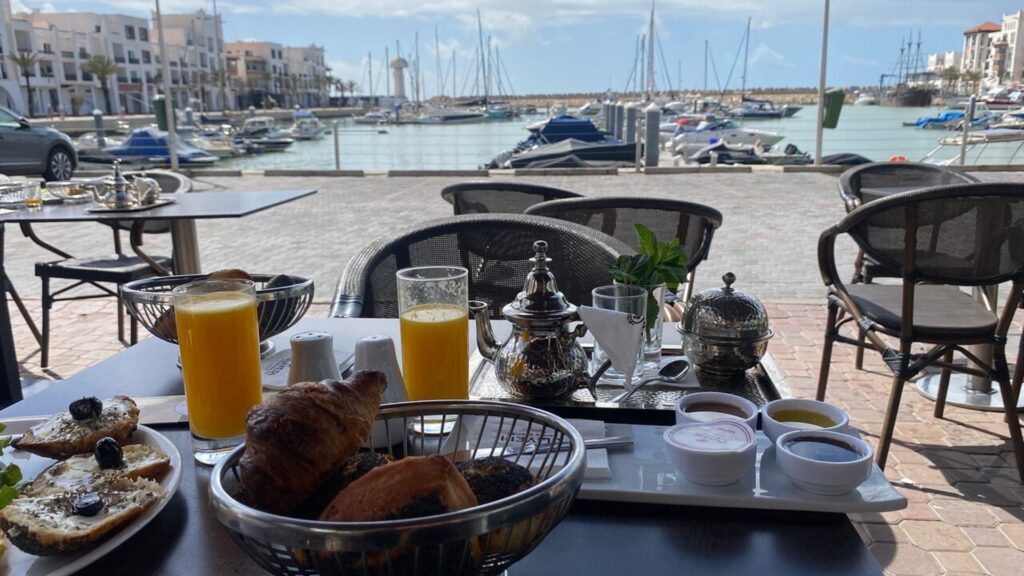
Prices at marina restaurants run two to three times higher than port stalls for comparable raw ingredients. The premium covers setting, service, and preparation complexity. Whether this premium represents value depends on how much atmosphere matters relative to pure food quality.
Evening dining at the marina extends naturally into after-dinner drinks and promenade strolling. The area remains active late into the evening, particularly during summer months and weekends. The combination of dining and nightlife makes the marina a natural destination for full evenings out.
Traditional Moroccan restaurants
Beyond the tourist zones, traditional Moroccan restaurants serve the local population at prices reflecting actual costs rather than tourist markups. Finding these spots requires venturing into neighborhoods like Talborjt or areas surrounding Souk El Had.
The food at local restaurants emphasizes tagines, grilled meats, and the hearty dishes that fuel Moroccan daily life. Presentation focuses on flavor and portion size rather than visual elegance. Service tends informal but friendly. Menus may require translation assistance or pointing at what neighboring tables are eating.
Harira soup appears at most traditional restaurants, particularly during evening hours. The tomato and lentil base varies by cook, with some versions thick and substantial while others run thinner and more brothy. Fresh bread accompanies every meal, often arriving warm from neighborhood ovens.
Tangia, the slow-cooked meat preparation associated with Marrakech, appears occasionally at Agadir’s traditional restaurants. The lamb or beef cooks for hours in sealed clay pots, emerging impossibly tender and richly flavored. Availability varies, so asking what the kitchen has prepared that day beats ordering from potentially outdated menus.

Souss regional specialties
The Souss region surrounding Agadir contributes distinctive flavors that differentiate local cuisine from other Moroccan regions. Argan oil defines the most notable difference, adding nutty richness to dishes throughout the area.
Amlou represents the signature Souss preparation, a paste combining argan oil, almonds, and honey into something resembling almond butter with deeper complexity. Traditional breakfast service includes amlou alongside bread, butter, and jam. The intensity divides opinions, with some visitors finding it irresistible while others find it overwhelming.
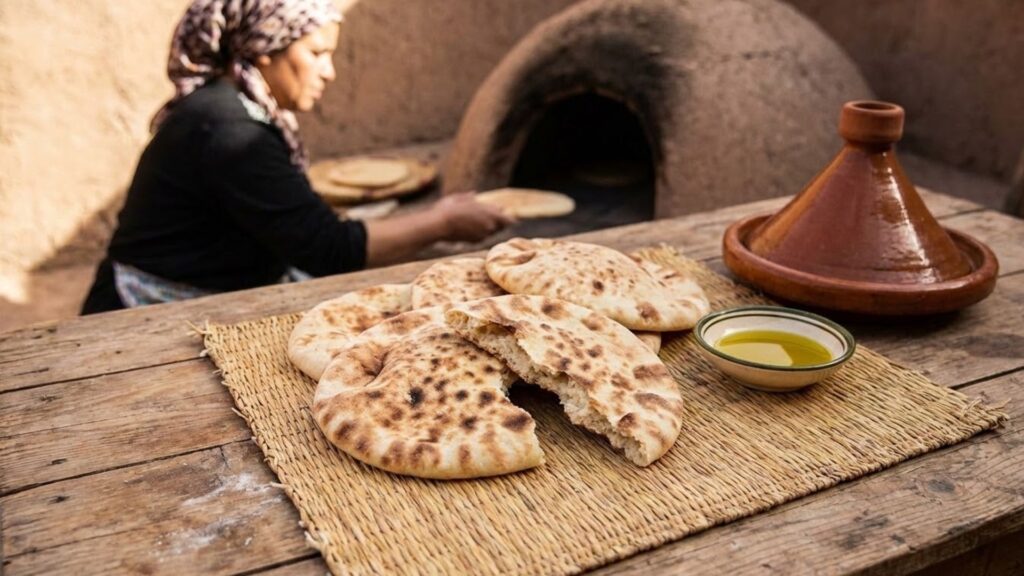
Tafarnout is traditional Berber bread baked in clay ovens or over open fires. The dense, slightly gritty texture differs significantly from the lighter khobz common in northern Morocco. Finding authentic tafarnout requires seeking out traditional bakeries or restaurants emphasizing regional cuisine.
Fish tagines distinguish coastal Souss cooking from the lamb and chicken preparations dominant elsewhere in Morocco. The combination of fresh seafood with preserved lemons, olives, and chermoula marinade creates flavor profiles unique to the Atlantic coast.
Mint tea in the Souss region sometimes includes additional herbs like chiba, a form of wormwood that adds slight bitterness. The variation surprises visitors expecting standard mint sweetness. Asking about tea preparation before ordering allows choice between regional and standard styles.
International options
Agadir’s tourism orientation ensures international dining options for visitors wanting breaks from Moroccan cuisine. European restaurants, particularly French and Italian, operate throughout the tourist zones. Asian options have expanded in recent years. American-style fast food appears in shopping areas.
Pizza and pasta provide reliable alternatives when tagine fatigue sets in. Quality ranges from authentic to approximated, with Italian-run establishments generally outperforming local interpretations. The marina and beach road concentrate the better international options.
Hotel restaurants often deliver the most consistent international cuisine, though at corresponding prices. The major resort hotels employ trained chefs capable of executing European dishes properly. Buffet breakfasts at these properties typically include international options alongside Moroccan standards.
Vegetarian and vegan visitors find Agadir more accommodating than many Moroccan destinations. Tourist-oriented restaurants understand dietary restrictions and can modify dishes accordingly. Traditional restaurants present more challenges, though vegetable tagines and salads provide options when meat is not wanted.
Market eating and street food
Souk El Had contains numerous food stalls serving quick meals to shoppers and workers. The offerings tend simple: grilled meats, sandwiches, fresh juices, and pastries. Prices barely register, making market eating a budget option as well as a cultural experience.
Fresh orange juice vendors operate throughout the city, their pyramids of fruit advertising freshness. A glass costs around 5 to 10 dirhams depending on location. The quality typically exceeds what more expensive restaurants provide, as vendors squeeze to order rather than from pre-prepared batches.
Pastry shops offer Moroccan sweets for those wanting dessert without full restaurant service. Chebakia, the honey-soaked cookies associated with Ramadan, appear year-round in Agadir. Almond-based pastries reflect the region’s nut production. French-influenced bakeries add croissants and pain au chocolat to the options.
Street food carts selling grilled corn, roasted nuts, and simple snacks appear along the beach promenade and in market areas. The offerings provide quick sustenance between meals rather than dining experiences in themselves.
Practical dining considerations
Restaurant hours in Agadir follow patterns that can confuse visitors from different cultures. Lunch service typically runs from noon to 3pm, with many restaurants closing or slowing significantly between lunch and dinner. Evening service begins around 7pm and extends late, with many restaurants accepting orders until 10pm or later.
Reservations matter primarily at upscale restaurants during peak tourist season. Casual restaurants and port grills operate first-come seating without advance booking. Hotel concierges can arrange reservations at popular spots when needed.
Tipping follows Moroccan norms rather than American expectations. Rounding up bills or leaving 10 percent satisfies convention without requiring the larger percentages common in US restaurants. Service charges sometimes appear automatically on tourist restaurant bills.
Understanding practical travel tips for Agadir helps with currency, payment methods, and other logistics that affect dining experiences.
The seafood quality available in Agadir rivals any Mediterranean destination at a fraction of comparable costs. The question is simply how you balance adventurous eating at the port with convenient options along the tourist zones.
Do you prefer seeking out authentic local restaurants when traveling, or does the convenience and predictability of tourist-oriented dining better suit your approach?


