Why visit Chefchaouen: is Morocco’s “Blue City” worth the hype?
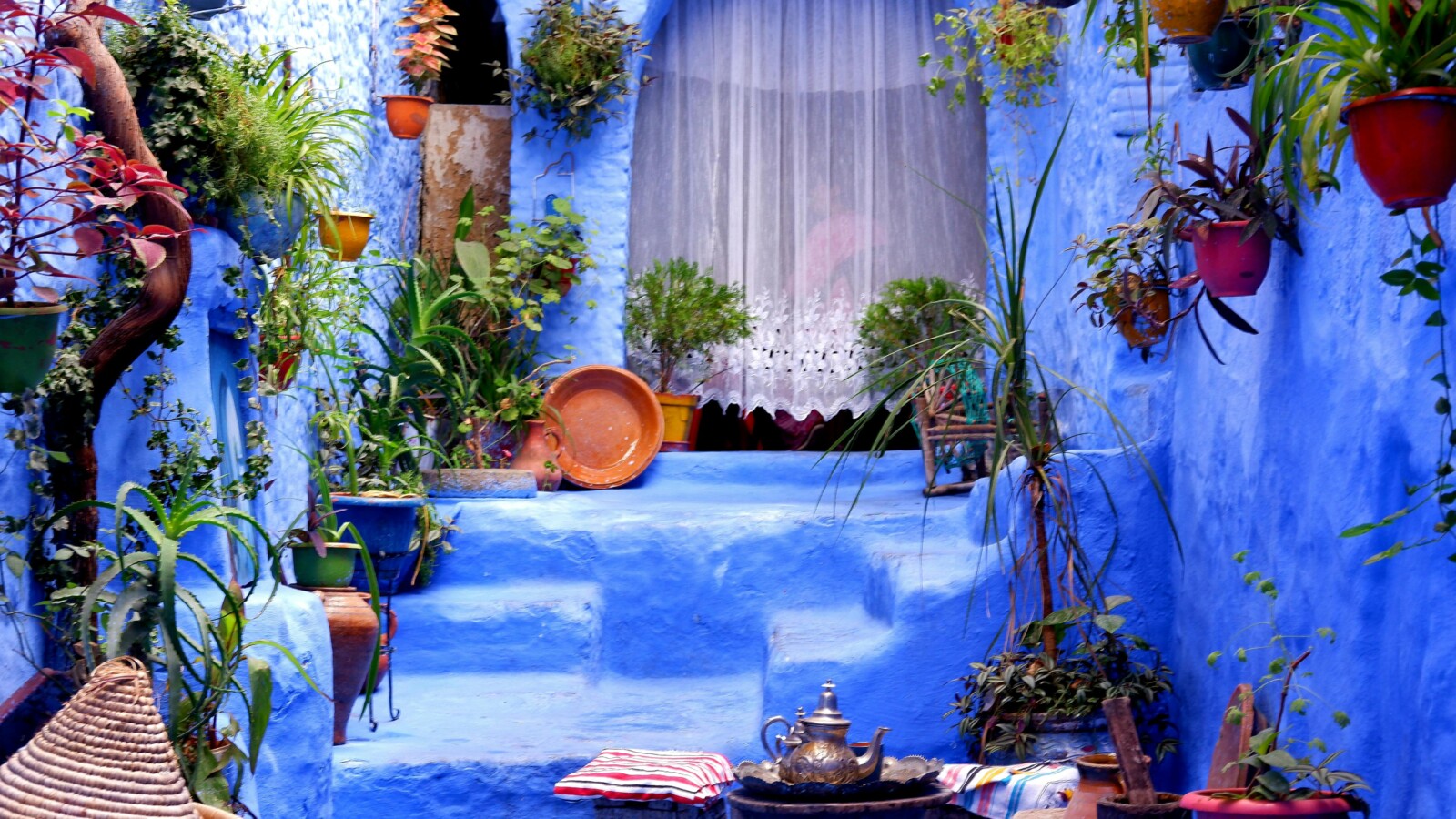
The first thing that hits you is not the color. It is the quiet.
Most travelers arrive in Chefchaouen expecting a photo set and leave having experienced something they struggle to describe to people back home. The blue is real, yes, and it is extraordinary. But what actually separates this small mountain city from every other “must-see” destination in Morocco is something harder to photograph: a particular quality of stillness that you simply do not find in Marrakech or Fes.
Whether Chefchaouen deserves a place on your Morocco itinerary is a fair question. It takes effort to reach, it gets crowded in peak season, and the travel internet has arguably oversold it to the point where some visitors show up half-expecting disappointment. The complete guide to visiting Chefchaouen will give you the full picture, but this page focuses on the one question that matters most before you even buy a bus ticket..
A city with a history as layered as its paint
Chefchaouen was founded in 1471 by Moulay Ali Ben Moussa Ben Rached El Alami, a Moroccan commander who built it as a base to resist Portuguese expansion along the northern coast. The city’s early character was shaped by waves of Muslim and Jewish refugees fleeing the Reconquista in Spain, who brought with them Andalusian architecture, skilled craftsmanship, and a distinct cultural identity that still echoes in the tiled fountains, carved plaster, and narrow, shaded alleyways of the medina.
The blue paint came later and its origins are genuinely contested. The most commonly cited explanation links it to the Jewish community that settled here in the 1930s, for whom blue carried spiritual significance connected to heaven and divine protection. Others point to practical reasons: blue reportedly repels mosquitoes, and it keeps the walls cool in summer. Local historians note that the blue was not universal until the 1970s, when tourism began to develop and residents embraced the aesthetic more deliberately.
None of this makes the city less beautiful. It actually makes it more interesting. What looks like a single unified visual statement is, in reality, the accumulated expression of multiple cultures, centuries of migration, and a community that has found a way to own its story.
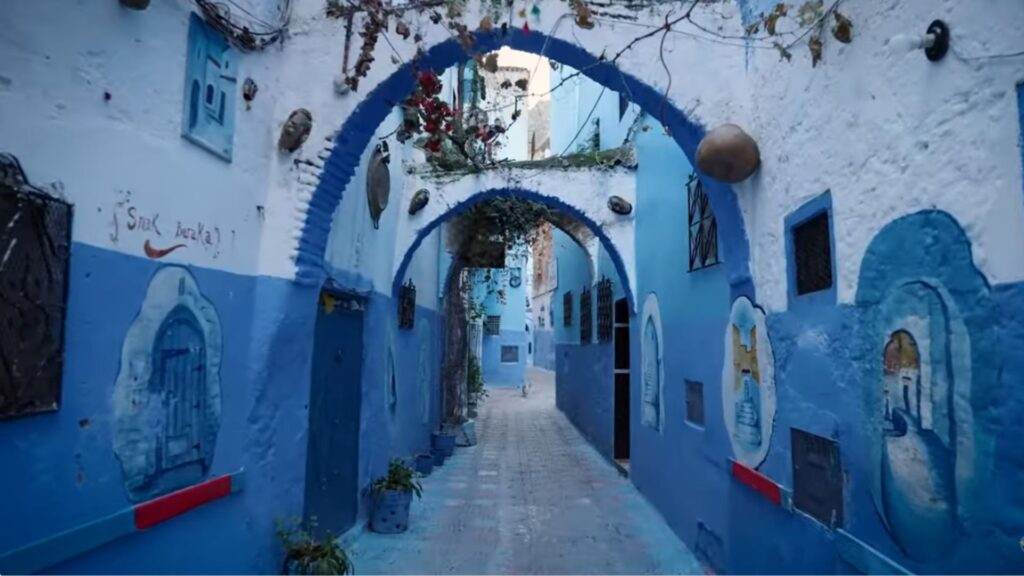
Instagram vs. reality: the honest version
It would be dishonest to pretend that Chefchaouen’s fame has not changed it. The most photographed alleyways, particularly around the staircase near Rue Targhi, can feel genuinely crowded between 10 a.m. and 4 p.m. from March through October. Tour groups arrive from Tangier and Fes on day excursions, and certain corners of the medina have the energy of a theme park at noon on a Saturday.
But here is what those day-trippers miss. Arrive before eight in the morning and the medina belongs almost entirely to locals: women carrying bread from communal ovens, shop owners lifting wooden shutters, cats moving through light and shadow with total indifference to the tourism economy. Stay at least two nights and you start to feel the city’s actual rhythm rather than just witnessing its surface. Walk twenty minutes uphill past the well-worn tourist paths and you will find neighborhoods where you are the only foreigner on the street.
The photographer and solo traveler Maria Esteban, who spent a week in Chefchaouen in 2023, put it this way: “I almost skipped it because of the hype. The first afternoon I thought everyone was right to be skeptical. By my third morning I was looking for longer-stay rentals.”
That experience is not unusual.
How it compares to other Moroccan cities
Morocco’s imperial cities each have a distinct personality. Marrakech is sensory overload in the best and most exhausting sense. Fes is the closest thing to a living medieval city you will encounter anywhere on earth. Rabat is calm, coastal, and often underestimated.
Chefchaouen occupies a different category entirely. It is a small city, home to roughly 45,000 people, built at an altitude of about 600 meters in the Rif Mountains. The pace is slower. The salesmanship in the souks is noticeably less aggressive. The air smells of cedar and herbs rather than tanneries and exhaust. You can walk from one end of the medina to the other in twenty minutes.
For travelers who find the larger Moroccan cities overwhelming, Chefchaouen often becomes the unexpected favorite of the trip. For those who thrive on the controlled chaos of Marrakech, it might feel too quiet after a day or two. Knowing which type of traveler you are helps manage expectations in either direction.
| City | Medina size | Crowd level | Pace | Best for |
| Marrakech | Very large | Very high | Intense | First-time visitors, nightlife |
| Fes | Large | High | Historic immersion | Culture, architecture |
| Chefchaouen | Small | Moderate (peak season) | Relaxed | Photography, slow travel |
| Tetouan | Medium | Low | Authentic | Off-the-beaten-path |
The practical case for going
Beyond the aesthetics, Chefchaouen offers a genuinely comfortable base for exploring northern Morocco. The food leans on Rif Mountain ingredients, particularly fresh goat cheese and mountain herbs, that you will not find prepared the same way anywhere else in the country. The hiking above the city, including the trail to the Spanish Mosque and longer routes into the surrounding forest, is accessible without a guide and rewards the effort with views that contextualize the entire medina below.
The city is also one of the safest places in Morocco for solo travelers of any gender. The street-level hassle that can characterize some larger medinas is largely absent here, and most interactions with locals feel genuinely curious rather than transactional.
It takes roughly two and a half hours by bus from Tangier and four to five hours from Fes. Neither journey is particularly demanding, and both routes pass through scenery that makes the trip worthwhile in its own right.
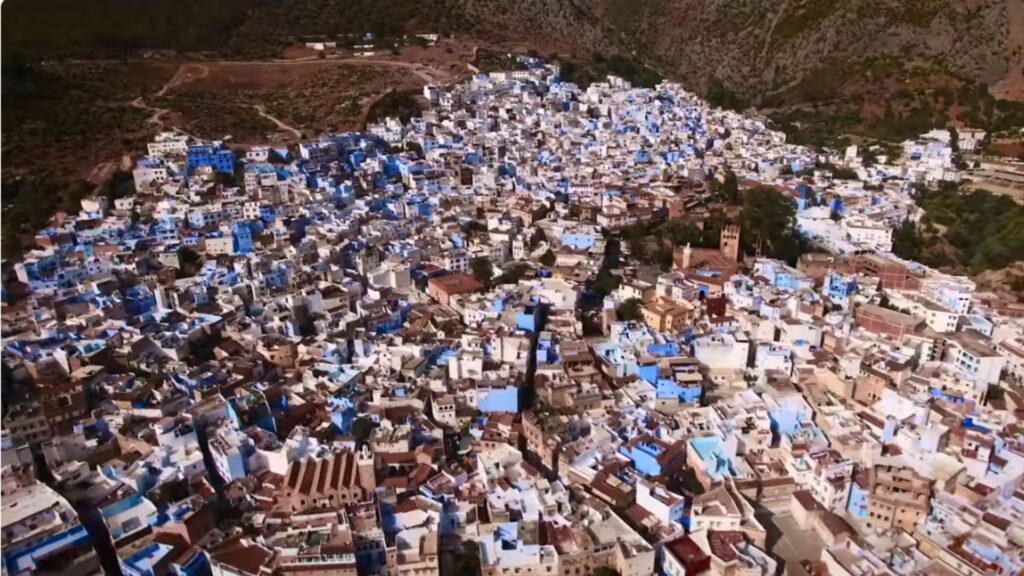
The one thing that makes it irreplaceable
There is a specific moment that many Chefchaouen visitors describe almost identically, regardless of when they went or where they stayed. It happens in the evening, after the day-trippers have cleared out, when you are sitting somewhere above the medina with a glass of mint tea and the light turns that particular shade of amber that only happens at altitude near the Mediterranean.
The blue walls shift color entirely in that light. The minarets catch the last of the sun. Somewhere below, a muezzin starts, and the call echoes off stone that has absorbed five hundred years of the same sound.
You could see that in a photograph. But you cannot feel it in one.
That is the honest answer to whether Chefchaouen is worth it. The city earns its reputation not because it looks exactly like the pictures, but because it delivers something the pictures cannot carry across.
Once you have worked out the timing question, the practical details covered in our guide to the best time to visit Chefchaouen will help you lock in dates that match both your travel style and the experience you are actually after.
Once you have decided the city belongs on your itinerary, the next question is when to go. The crowd question and the weather question pull in different directions depending on your priorities, and the best time to visit Chefchaouen breaks down every month honestly so you can make a decision that fits your actual travel style.
So what is it that draws you to Morocco in the first place: the history, the landscapes, or something you have not quite been able to name yet?