
A Day in Chefchaouen: the Blue City Beyond the Photos
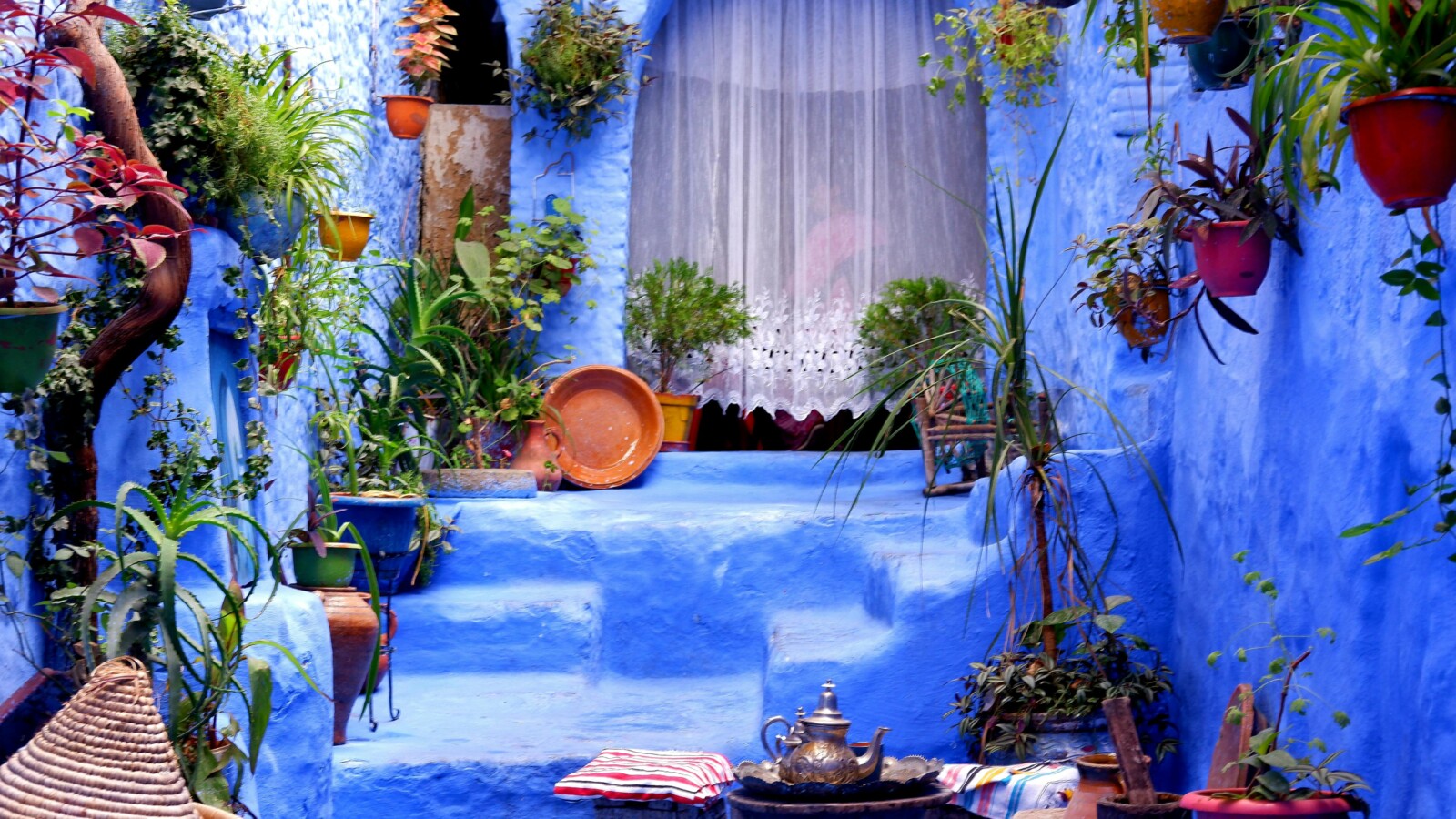
Some destinations promise a mood and deliver a postcard. Chefchaouen delivers the mood, the postcard, and something quieter underneath that you didn’t know you were looking for. Most guides tell you what to see and how to get there. This one is about something harder to photograph: what a single day inside the blue city actually feels like, from the first grey light to the last lantern.
Because the truth about Chefchaouen is that the color is only the invitation. What keeps people standing still in the middle of an alley, phone lowered, is the way the city breathes through the hours. If you are turning this feeling into a real trip, the practical side lives in the complete Chefchaouen travel guide. What follows is the part no itinerary captures.
Before dawn, the city is only blue and quiet
Nobody warns you that the silence comes first. Step out before six and the medina belongs to almost no one. The blue is there, but muted, closer to slate than cobalt, waiting for a sun that has not cleared the ridgeline yet. A fountain runs somewhere you cannot see. The first call to prayer drifts down from the Grand Mosque and settles over the rooftops. A baker moves through the lanes with a tray balanced on one shoulder, and for a while the loudest sound in the whole city is your own footsteps on damp stone.
This is the hour the photographs never show, because there is nothing dramatic to shoot. There is only the feeling of a place that is genuinely asleep, painted in a color that has not started performing yet. Stand at the top of a stairway and watch the light arrive. It does not flood in. It seeps, wall by wall, until the whole hillside begins to glow from the bottom up.
Morning, when the color wakes up
By eight the limewash has caught the sun, and now you understand the fuss. No filter prepares you for the range. Powder blue, indigo, periwinkle, cobalt, the occasional turquoise door that looks freshly painted because it probably was. Shutters open. A woman kneels to repaint a single step, working the brush into the corner the way you would touch up a favorite thing you refuse to let fade. Cats patrol the lanes with the quiet authority of animals who have never once doubted their place in the world.
What strikes you is how ordinary the extraordinary is here. School bags bounce down the same alleys that fill every travel feed on earth. Grocery runs, deliveries, an old man arranging bread on a cloth. Chefchaouen is not a film set, and that is exactly what saves it. The blue is not decoration applied for visitors. It is a living choice, repainted by hand, generation after generation, and you feel the difference immediately.
Midday belongs to the day-trippers, and the city shrugs it off
Around noon the buses arrive from Tetouan and Tangier, and the famous corners of the medina fill with people doing exactly what you did an hour ago. This is when first-timers panic about crowds. They are missing the trick. The day-trippers cluster in maybe five or six spots, the ones the algorithm already sold them. Turn up any unmarked stairway and the city empties out again within thirty seconds.
Midday is the moment to sit rather than walk. Take a rooftop terrace above Place Outa el Hammam, order a mint tea and a plate of something simple, and let the square do the work. From up here the crowd looks small against the mountains, and the blue keeps going in every direction, broken only by the octagonal minaret and the low walls of the Kasbah. If you would rather trade the heat of the day for pine and water, this is also the hour many travelers slip out to the surrounding hills, and the best day trips from Chefchaouen turn the blue city into a green one for an afternoon.
The golden hour that everyone underestimates
Late afternoon is when Chefchaouen quietly outdoes its own reputation. The buses leave. The light softens and warms, and the blue walls do something no midday photo can catch: they begin to shift toward violet. Climb the path to the Spanish Mosque on the opposite hillside, give yourself twenty minutes and a bottle of water, and take the terrace out front. The whole medina spreads below, nested against the Rif ridgelines, and as the sun drops the houses turn lavender while the mountains fall into silhouette.
It is the kind of view that feels earned rather than handed to you, which is rare in a place this photographed. The season shapes it more than people expect, and if you are choosing when to come, the difference is real enough that it is worth reading the guide on the best time to visit Chefchaouen before you book.
After dark, the city exhales
Evening is the chapter almost no visitor stays for, and it is the best one. With the day crowds gone, the medina turns lantern-lit and slow. Families take the cool air on doorsteps. Shopkeepers lean in conversations that have clearly been running for years. The blue goes deep and moody under warm light, and the whole city feels like it finally let its shoulders down.
This is when Chefchaouen stops being a photograph and becomes a place you are simply in. Walk without a destination. Follow the sound of water back toward Ras el-Maa, where the river tumbles out of the rock and the temperature drops a few degrees. Beyond the wandering, there is more here than most people give the city credit for, and the roundup of things to do in Chefchaouen is built for travelers who decide, correctly, to stay longer than a day.
The people who keep the blue alive
Spend a full day here and you stop seeing the color as the subject. The subject is the people maintaining it. The families who settled these slopes carried traditions across the water from Andalusia centuries ago, and that inheritance still runs through the food, the music, and the deep-rooted habit of painting and repainting the walls. This is where the blue connects to a much larger story, one traced in the piece on Andalusian echoes in North Africa.
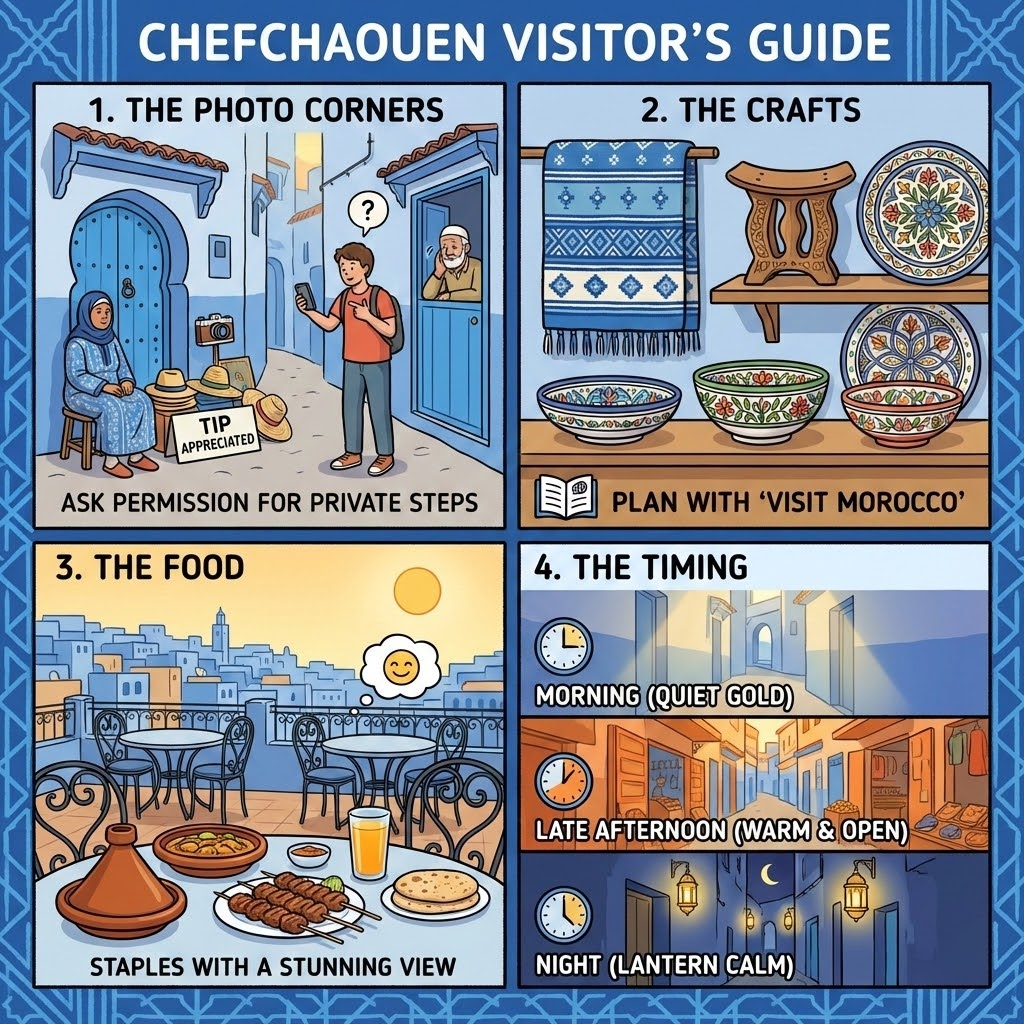
You feel that continuity in small ways. The weaver working a loom that predates every phone photographing it. The potter glazing bowls in the same cobalt that coats the streets. Chefchaouen absorbs an enormous amount of attention and holds its own thread anyway, and the residents navigate the daily audience with more grace than most communities could manage. A little respect goes a long way: covered shoulders and knees, a step aside on the narrow stairs, and always asking before you photograph someone’s face or front door.
What you carry home
Arrive expecting a few blue-door shots and a viewpoint selfie. That is fine. That is what most people come for. But what Chefchaouen tends to leave you with is quieter and harder to caption: the sound of water somewhere nearby, the particular quality of early light on painted stone, the way a city can keep repainting itself and stay genuinely itself in the process.
Once you arrive, try putting the phone down between frames. The blue will still be there. The train to Tangier is fast, the bus is easy, and the Rif Mountains will be waiting behind you in the rearview mirror, blue and green and already slightly unreal. What stays is not the picture. It is the hour you spent not taking one.
So here is the honest question worth sitting with before you go: what is it about a city defined by a single color that makes the lived experience feel so much richer than every photograph of it ever manages to suggest?


