Best time to visit Chefchaouen: a month-by-month guide for smart travelers
The worst advice you can get about Chefchaouen is to go whenever the flights are cheapest.
Timing matters more in this city than in almost any other destination in Morocco. At the wrong moment, the medina feels like a theme park. At the right moment, it feels like a place where real life is happening around you and you just happen to be lucky enough to be there. The difference between those two experiences is sometimes a matter of weeks.
If you are still building your understanding of the city itself, our complete Chefchaouen travel guide covers everything from logistics to neighborhoods to what to do once you arrive. This guide focuses on a single question: when to go.
It breaks down every season honestly, including the months most travel blogs quietly skip over, so you can make a decision that fits your actual priorities rather than a generic recommendation.
Why timing is more complicated here than in other Moroccan cities
Chefchaouen sits at roughly 600 meters above sea level in the Rif Mountains. That altitude means the city does not follow the same weather patterns as Marrakech or Casablanca. Summers are cooler than Morocco’s southern destinations but still warm during the day. Winters bring genuine cold, occasional frost, and sometimes snow on the peaks above the medina. Evenings at altitude cool down fast, even in July.
On top of the climate question, there is a crowd variable that has intensified significantly since the mid-2010s. Chefchaouen went from a beloved backpacker discovery to a social media landmark practically overnight, and visitor numbers have climbed accordingly. Understanding when those crowds peak and when they thin out is arguably more important than the weather for most travelers.

Spring: the obvious choice for good reason
March through May is consistently the most recommended window, and the recommendation is justified. Daytime temperatures hover between 18 and 24 degrees Celsius, the surrounding hillsides are intensely green, and the light in the medina during the late afternoon has a softness that photographers specifically schedule their trips around.
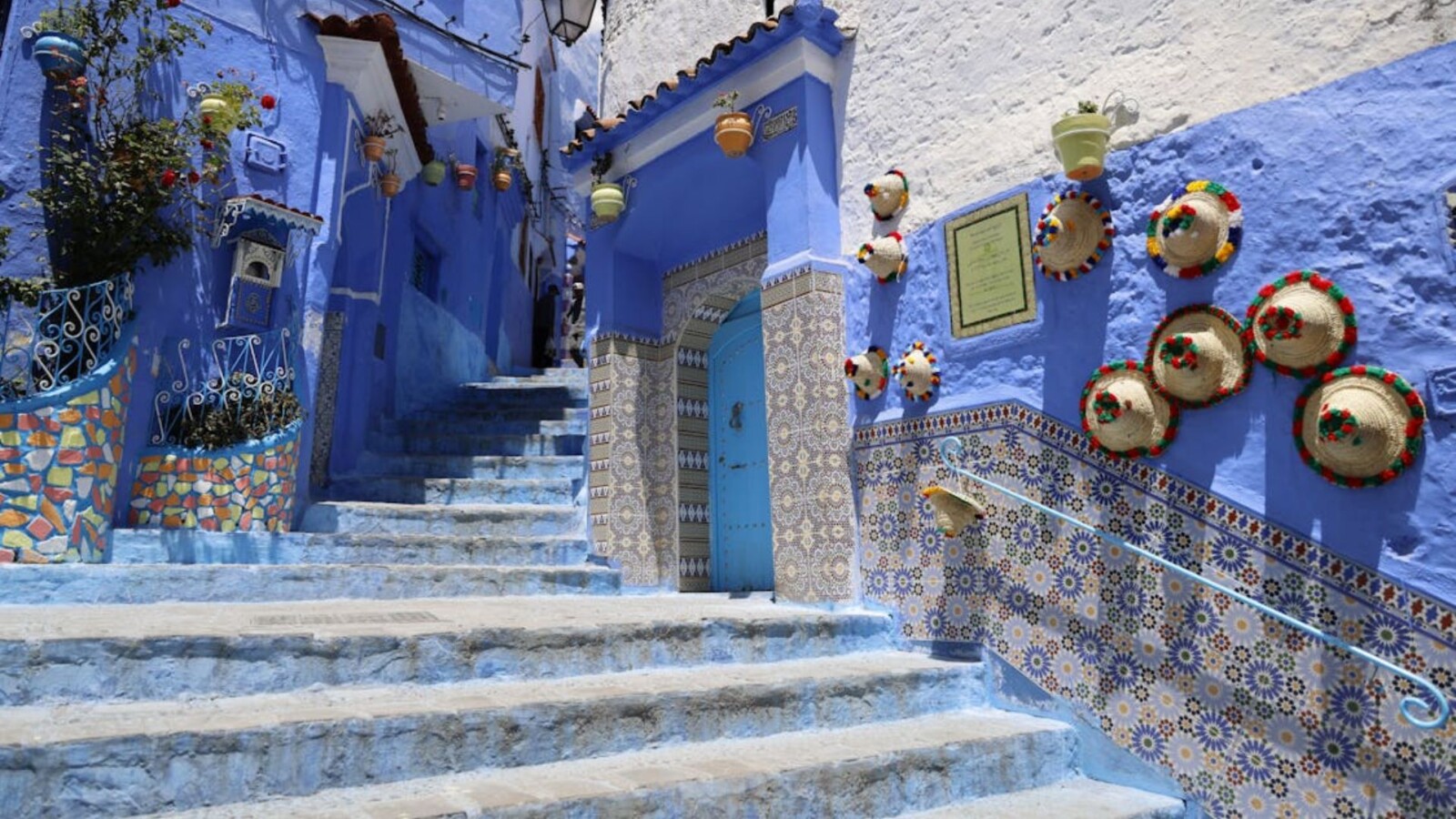
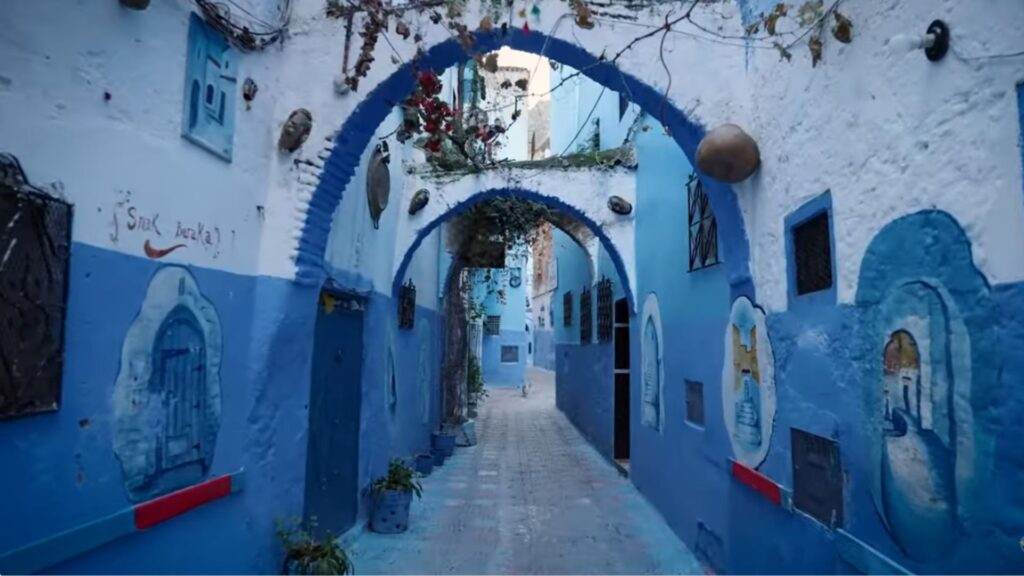
The almond trees flower in late February and carry into early March. By April, the vegetation above the city is at its most vivid, which makes the hike to the Spanish Mosque particularly rewarding. The Ras el-Maa waterfall runs strong from winter rain, and the combination of blue walls against that green mountain backdrop is, genuinely, the postcard version of Chefchaouen at its most accurate.
The trade-off is crowds. April and especially early May bring organized tour groups from Tangier, Fes, and Casablanca, and the most photographed corners of the medina can feel genuinely congested between mid-morning and late afternoon. The solution is simple: be out before 8 a.m. and back out after 5 p.m. The middle of the day belongs to the day-trippers. The edges of the day belong to you.
Verdict: Best overall window. Book accommodation six to eight weeks ahead for April.
Summer: beautiful light, real crowds, and a warning about august
June is underrated. The crowds from May have tapered slightly, the days are long, and temperatures are pleasant enough that evenings on a riad rooftop are genuinely comfortable rather than just bearable. Many experienced Morocco travelers quietly consider early June their preferred month across the country.
July changes the equation. Moroccan domestic tourism peaks in July, and Chefchaouen absorbs a significant portion of it. Families from Casablanca and Rabat arrive for the mountain air, which is cooler than the coast but still warm enough for summer holidays. The medina is busy throughout the day, accommodation fills up weeks in advance, and the most scenic spots require patience.
August is the month to avoid if crowds are a factor in your enjoyment. It combines peak Moroccan domestic tourism with peak European vacation travel, and the result is a medina that can feel genuinely overwhelming between 9 a.m. and 6 p.m. The city is still beautiful. It is just working very hard to let you notice that.
Daytime temperatures in July and August reach the low-to-mid 30s Celsius, which is manageable compared to southern Morocco but warmer than many visitors expect given the mountain setting. Nights cool to the low 20s, making sleep comfortable but requiring a layer.
Verdict: Early June is a hidden gem. July is manageable with early mornings. Avoid August if possible.
Fall: the season that experienced travelers know about
September through November is the window that tends to appear on “secret best time” lists written by people who have actually been to Chefchaouen more than once.
The logic is straightforward. European summer tourism has ended. Moroccan domestic visitors have returned home and to school. The temperatures settle into a range that is arguably more comfortable than spring: 20 to 26 degrees in September, cooling gradually through October into the low teens by November. The light in fall has a warmth and directness that spring light, which can be slightly flat, does not always deliver.
October in particular offers something rare: a small city that moves at its own pace. Shopkeepers have time to talk. Café owners remember your order on the second morning. The alleyways that feel like a rush-hour corridor in April feel like what they actually are, a residential neighborhood in a mountain town, in October.
The one note of caution for November is rain. The Rif Mountains receive significant autumn rainfall, and November can bring overcast days and wet cobblestones that make the medina’s stepped paths genuinely slippery. Pack waterproof footwear if you are going in the second half of November.
Verdict: October is the single best month in the city for travelers who prioritize atmosphere over photogenic conditions. September is nearly as good. November works for the right traveler.
Winter: cold, quiet, and surprisingly compelling
December through February is the season that travel content almost universally skips, which is itself a reason to pay attention to it.
Temperatures drop significantly at altitude. Daytime highs in January sit around 12 to 14 degrees Celsius, with nights frequently dropping to 4 or 5 degrees. Snow on the peaks above the medina is not uncommon in January and February, and in heavy winters, snow falls inside the city itself, which produces a visual effect, blue walls under white snow, that is extraordinary and almost never photographed because so few travelers are there to see it.
The medina in winter is authentic in a way that no other season matches. The tourist economy shrinks. Locals reclaim their city. The cafes around Plaza Uta el-Hammam fill with men playing cards rather than travelers consulting phone maps. The hammams, which are pleasant in any season, become practically essential, and the experience of emerging warm into cold mountain air after an hour of steam and kessa scrub is one of those travel memories that holds up for years.
The practical limitations are real: some guesthouses reduce their operating hours, a handful of restaurants close for low season, and the hiking trails above the city require appropriate gear. But for travelers who genuinely enjoy slow travel and want a destination that is not performing for them, winter Chefchaouen is worth serious consideration.
Verdict: Not for everyone, but genuinely rewarding for the right traveler. January and February offer the most dramatic mountain atmosphere.
Ramadan: a different kind of travel experience
Ramadan shifts by roughly eleven days each year on the Gregorian calendar, so its overlap with any given travel season changes annually. It is worth checking the dates before you book.
Traveling during Ramadan in Chefchaouen is a genuinely interesting cultural experience that requires some practical adjustment. Many restaurants operate on reduced hours or are closed during daylight, which means lunch options narrow considerably. Street food and café culture, normally a significant part of the Chefchaouen experience, largely pause until iftar, the sunset meal that breaks the fast.
What you gain in return is access to one of the most atmospheric evenings in Moroccan travel. The hour before and after iftar transforms the medina. Families gather. Food vendors set up outside. The plaza fills with a communal energy that is unlike anything you will experience at any other time of year. If you are willing to adapt your eating schedule and approach the experience with genuine curiosity rather than inconvenience, Ramadan travel in Chefchaouen can be the most memorable visit of all.
Verdict: Go in with realistic expectations, stay curious, and eat a substantial breakfast. The evenings alone are worth it.
Quick reference: Chefchaouen by month
| Month | Temp (day) | Crowds | Rain | Best for |
| January | 12°C | Very low | Moderate | Slow travel, authenticity |
| February | 13°C | Very low | Moderate | Snow on peaks possible |
| March | 16°C | Low-moderate | Some | Early spring light |
| April | 20°C | High | Low | Photography, hiking |
| May | 23°C | Moderate-high | Low | Balance of all factors |
| June | 28°C | Moderate | Very low | Underrated sweet spot |
| July | 31°C | High | None | Early mornings only |
| August | 33°C | Very high | None | Avoid if possible |
| September | 28°C | Low-moderate | Low | Excellent overall |
| October | 22°C | Low | Some | Best atmosphere |
| November | 17°C | Low | Moderate | Quiet, pack rain gear |
| December | 13°C | Very low | Moderate | Winter charm |
Photography timing within any season
Regardless of when you visit, the light in Chefchaouen follows a predictable pattern that is worth building your days around. The hour after sunrise, roughly 6:30 to 8 a.m. depending on the month, delivers the softest, most even light and an empty medina. The hour before sunset, particularly in the upper quarters of the medina where the walls face west, produces the most dramatic color contrast between blue plaster and amber light.
Midday is flat and harsh for photography and is precisely when crowd density peaks. It is the natural window for lunch, a riad rest, or a visit to the kasbah museum, where the light conditions are irrelevant.
The actual best time to visit
If you are asking for a single honest recommendation: late September to mid-October, or the first two weeks of June. Both windows avoid peak crowds, offer comfortable temperatures, and deliver a version of Chefchaouen that feels lived-in rather than performed.
If your schedule does not allow flexibility, spring is genuinely beautiful and worth it despite the crowds. If you are traveling in winter, lean into it rather than fighting it, and pack accordingly.
The one consistent piece of advice that holds regardless of season: stay at least two nights. Chefchaouen is a city that reveals itself slowly, and the travelers who leave feeling underwhelmed are almost always the ones who gave it eight hours and a bus back to Fes before sunset.
When you are ready to start mapping out where to base yourself, our guide to the best places to stay in Chefchaouen breaks down every neighborhood and budget tier so you can book with confidence.
What season speaks to you most, and is the crowd question or the weather question the one that matters more when you are choosing travel dates?