How to get to Chefchaouen: buses, taxis, and the roads less traveled
Nobody arrives in Chefchaouen by accident.
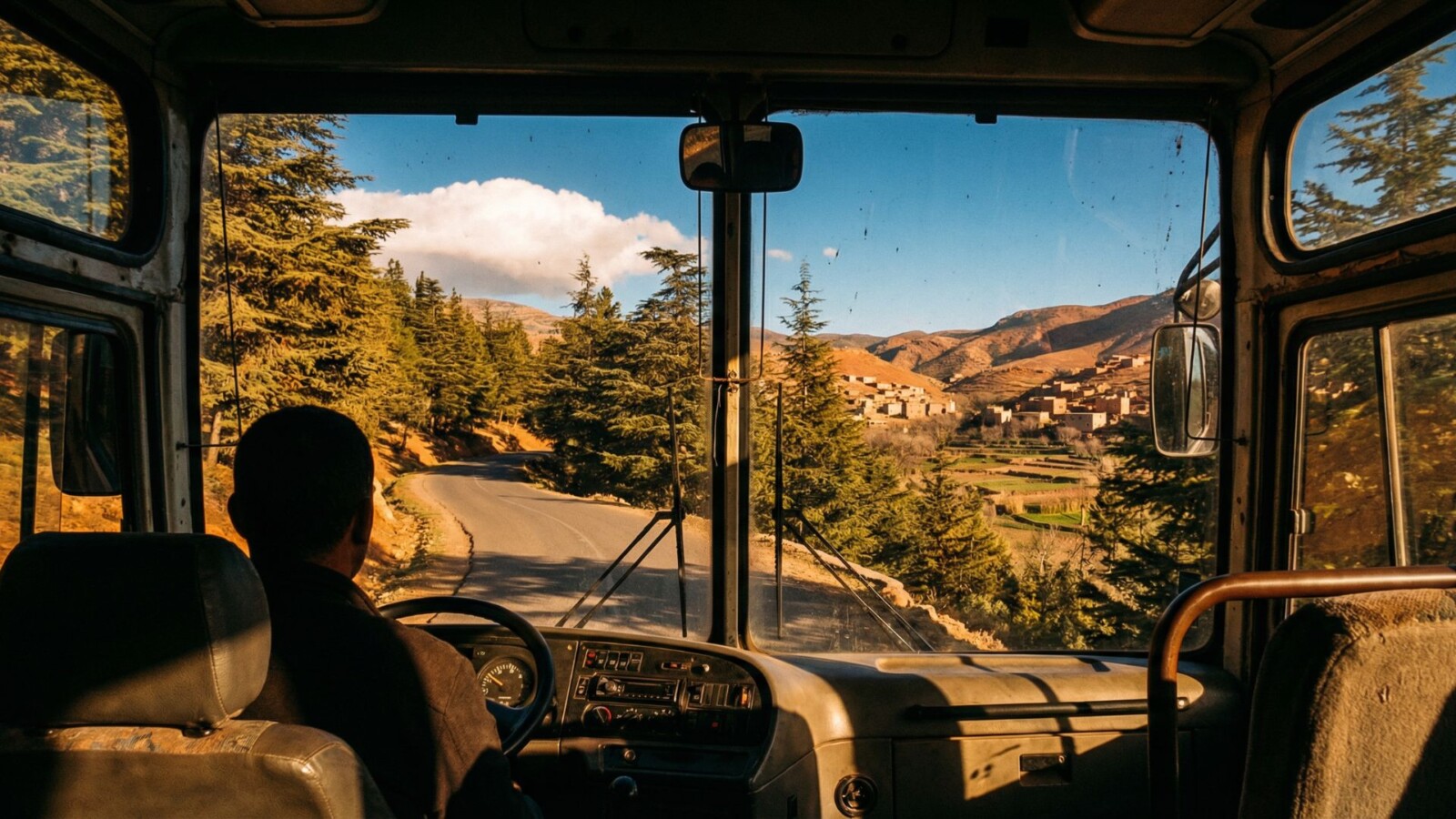
That is part of what makes it special. The city sits in the Rif Mountains with no train station, no airport, and roads that climb through cedar forest on switchbacks that remind you, pleasantly, that you are going somewhere that did not make itself easy to reach. Getting there requires a decision, and that decision filters out a certain kind of traveler before anyone even arrives.
The logistics are not complicated once you understand the options. If you are still in the early stages of planning, our complete Chefchaouen travel guide covers what to do, where to stay, and what to expect when you get there. But the number of travelers who show up in Tangier or Fes without a plan and spend two hours figuring out where the bus leaves from is higher than it should be. This guide exists to make sure that is not you.
The basic geography you need to understand first
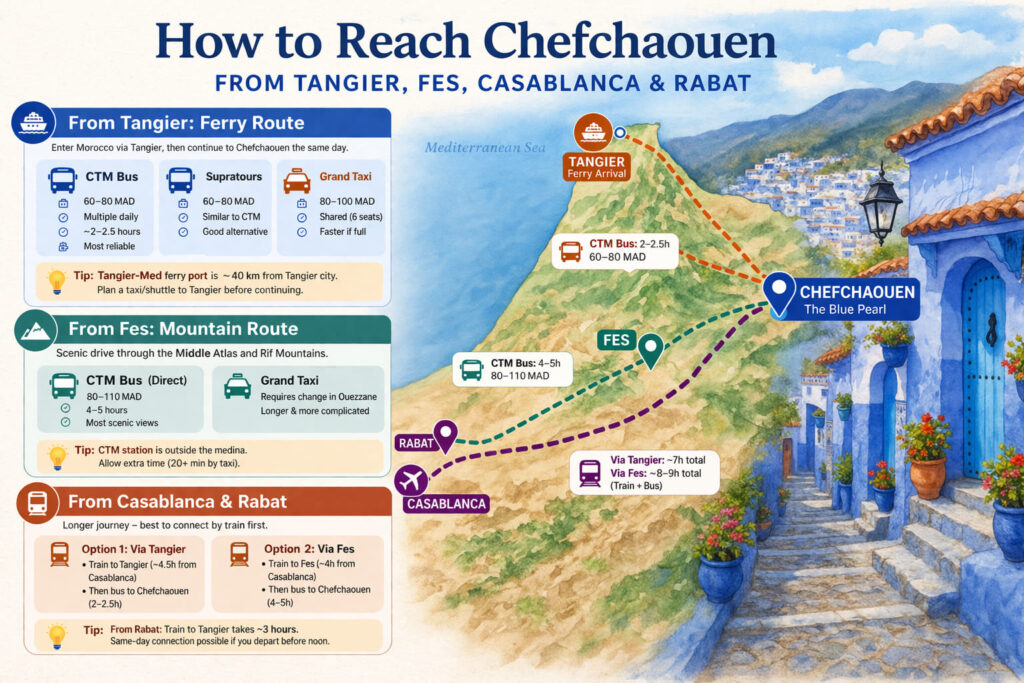
Chefchaouen has no train service. The nearest train stations are in Tangier and in Fes, which are also the two most common entry points for travelers heading to the Blue City. From either city, your options are a long-distance bus, a shared grand taxi, or a private transfer.
The distances are manageable. Tangier to Chefchaouen is roughly 120 kilometers, which translates to two and a half to three hours depending on the route and traffic. Fes to Chefchaouen covers about 200 kilometers and takes four to five hours. Both journeys pass through mountain terrain that is genuinely beautiful, particularly the final hour of approach from either direction.
Coming from Casablanca or Rabat, the realistic option is to connect through either Tangier or Fes rather than attempting a direct route, which adds time but keeps the logistics clean.
From Tangier: the ferry route into Chefchaouen
For travelers arriving in Morocco by ferry from Spain, Tangier is almost always the entry point, and Chefchaouen is one of the most logical first stops on a northern Morocco circuit. The two cities connect naturally, and the route has enough bus frequency that you can often move the same day you arrive by ferry without much stress.
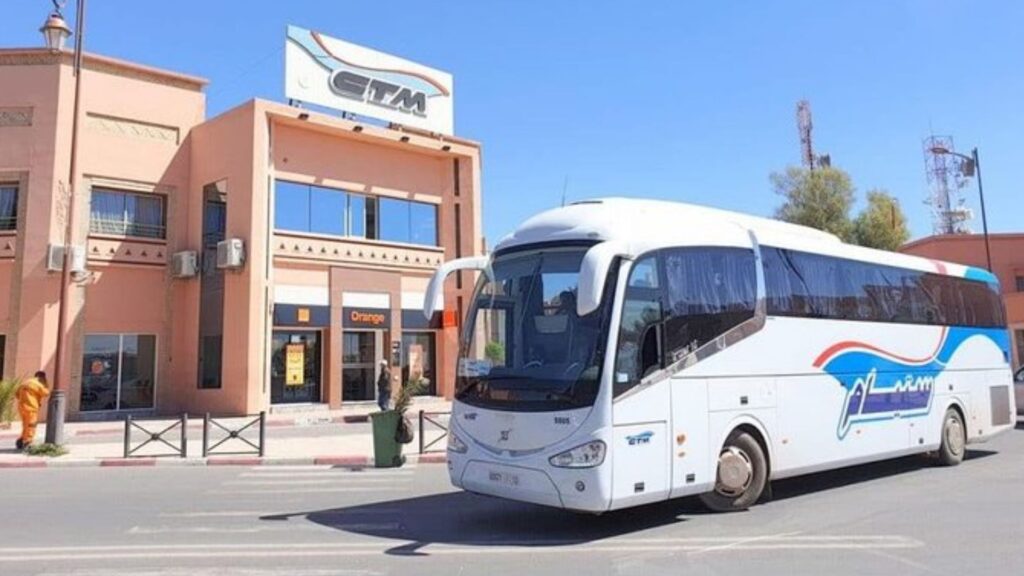
CTM bus is the most reliable option. CTM is Morocco’s national long-distance coach company, and its Tangier-to-Chefchaouen route runs multiple times daily. Tickets cost between 60 and 80 Moroccan dirhams depending on the departure time and are bookable online through the CTM website, which is worth doing in advance during peak season. The buses are air-conditioned, punctual by regional standards, and deposit you at the Chefchaouen bus station, which sits about a fifteen-minute walk from the medina entrance.
Supratours operates a similar service and is a reasonable alternative, particularly if CTM departures do not align with your schedule. The comfort level and price are comparable.
Grand taxis from Tangier to Chefchaouen are a shared taxi option that some travelers prefer for the flexibility. A grand taxi holds six passengers and departs when full rather than on a fixed schedule. The cost per seat is slightly higher than the bus, typically around 80 to 100 dirhams, but the journey can be faster if the driver moves efficiently and you depart during a window without heavy mountain traffic. The pickup point in Tangier is near the main bus station; ask locally for the Chefchaouen taxi rank, as it is not always obvious.
One practical note for ferry arrivals: the Tangier-Med ferry port is not in Tangier city. It sits about 40 kilometers east of the city. Budget for a taxi or shuttle into Tangier proper before connecting onward to Chefchaouen, and factor that leg into your timing.
From Fes: the mountain road south to north
The Fes approach is the route that circuit travelers most commonly take, typically as part of a loop that includes Fes, Chefchaouen, and then Tangier before flying out. It is a longer journey than the Tangier route but passes through some of the most dramatic landscape in northern Morocco.
CTM runs a direct Fes-to-Chefchaouen service that takes approximately four to five hours and costs between 80 and 110 dirhams. The road climbs steadily through the Middle Atlas foothills before entering the Rif, and there is a section in the final hour where the views from the bus window make passengers reach for their cameras despite the moving vehicle.
Grand taxis from Fes to Chefchaouen require at least one change, typically in the town of Ouezzane, which adds time and organizational effort. For most travelers, the direct CTM bus is the cleaner solution from Fes.
If you are departing from the Fes medina area, budget extra time to reach the CTM station, which sits outside the old city. Taxis from the medina to the bus station take around twenty minutes but can run longer during the morning rush.
From Casablanca and Rabat: the longer haul
Direct bus service from Casablanca to Chefchaouen exists via CTM but takes seven to eight hours, which is a long single stretch. Travelers coming from Casablanca Mohammed V Airport have two practical approaches: connect by train to Tangier (the train is comfortable and takes around four and a half hours) and then continue by bus, or connect to Fes by train and depart from there.
The Tangier connection is generally faster end-to-end if you time the train and bus departures reasonably. The Fes connection adds a night in Fes, which most travelers consider a feature rather than an inconvenience given that Fes is one of Morocco’s most extraordinary cities and warrants its own time.
From Rabat, the calculus is similar. The train to Tangier takes just under three hours and connects smoothly with onward buses. A same-day connection from Rabat to Chefchaouen is realistic if you depart Rabat before noon.
Renting a car: freedom with a few caveats
Driving to Chefchaouen is an option that rewards travelers who are comfortable with mountain roads and want maximum flexibility for day trips once they arrive. The roads themselves are well-maintained by Moroccan standards, and the scenery on both the Tangier and Fes approaches is worth experiencing at your own pace with the ability to stop.
The caveats are worth knowing upfront.
Parking inside the medina does not exist. The old city is pedestrian-only, and vehicles must be left at one of the lots near the medina entrance. If your accommodation is inside the medina walls, which most of the appealing options are, you will be carrying your bags on foot from the parking area. Some riads will send someone to help carry luggage if you call ahead, but the stairs and narrow passages are not avoidable regardless.
Mountain driving in the Rif requires genuine attention. The roads are in reasonable condition but wind significantly, overtaking opportunities are limited, and local driving habits do not always align with what visitors expect from their home countries. Driving after dark on these roads is something to avoid if at all possible.
Fuel stations are present in Chefchaouen but limited in number. Fill up before you climb into the mountains.
Private transfers: worth considering in specific situations
Organized private transfers from Tangier or Fes to Chefchaouen cost significantly more than the bus, typically between 50 and 120 US dollars depending on the operator and group size, but they offer door-to-accommodation service and can be worth the cost for families with children, travelers with significant luggage, or anyone arriving after dark when navigating bus stations in an unfamiliar city feels less appealing.
Several reputable operators offer this service and can be booked through accommodation recommendations or established Morocco travel platforms. Your riad or guesthouse will almost always be able to connect you with a trusted local driver, which is often the most reliable approach.
Where buses and taxis drop off (and what happens next)
This is the detail that catches first-time visitors off guard. The CTM bus station in Chefchaouen sits at the foot of the hill below the medina, roughly a fifteen-minute walk from the medina gate. Grand taxis drop off in roughly the same area.
From the station, the medina is uphill. The walk is not difficult but it is sustained, and with a full backpack in July heat it earns its reputation for being more tiring than travelers expect. Small local taxis can cover part of the distance, but they cannot enter the medina itself.
Once you reach the medina entrance, the main gate opens onto a rising network of lanes. If your accommodation has sent directions in advance, follow them carefully. The medina is small enough that you will not be lost for long, but the blue walls create a visual uniformity that makes orientation slower than usual on a first visit. Most guesthouses are findable within ten minutes once you are through the gate; the challenge is reaching them with luggage before you have developed a feel for the layout.
A practical comparison at a glance
| Route | Mode | Duration | Approx. cost | Notes |
| Tangier to Chefchaouen | CTM bus | 2.5-3 hrs | 60-80 MAD | Book online, most reliable |
| Tangier to Chefchaouen | Grand taxi | 2-2.5 hrs | 80-100 MAD | Departs when full |
| Fes to Chefchaouen | CTM bus | 4-5 hrs | 80-110 MAD | Direct, scenic route |
| Fes to Chefchaouen | Grand taxi | 5+ hrs | 100-130 MAD | Requires transfer in Ouezzane |
| Casablanca to Chefchaouen | CTM direct | 7-8 hrs | 130-160 MAD | Long; consider overnight |
| Any city | Private transfer | Varies | $50-120 USD | Best for families, late arrivals |
| Tangier or Fes | Rental car | Varies | Variable | Freedom; no medina parking |
One last thought on the journey itself
The road into Chefchaouen from either direction is not just a logistical passage. It is a transition. The landscape changes noticeably as you climb: the flat agricultural plains give way to forested ridgelines, the air cools, the light shifts. By the time the city appears on the hillside below the Spanish Mosque, most travelers have already understood something that photographs never quite convey: this place exists in a different register from the rest of Morocco.
That shift begins on the road, and it is worth paying attention to it rather than spending the journey staring at your phone.
Once you have the transport question sorted, the next decision is where to sleep, and that one matters more than most people expect. Our guide to the best places to stay in Chefchaouen walks through every neighborhood and budget level so your accommodation choice works with your itinerary rather than against it.
Have you found that the journey to a destination shapes how you experience it once you arrive, or is getting there just logistics to get through?