Iftar in Morocco: how tourists can join the feast and Experience Ramadan Evenings?
The moment the sun touches the horizon and the call to prayer echoes across Moroccan cities, something magical happens. Streets that fell quiet during the afternoon suddenly burst with life as millions break their fast together. Iftar represents far more than a meal. It embodies community, gratitude, and celebration repeated nightly throughout the holy month. For visitors exploring Morocco during Ramadan, participating in iftar offers one of the most authentic and memorable cultural experiences available anywhere in the country.
What iftar actually means
The word iftar comes from the Arabic root meaning to break, specifically breaking the daily fast that Muslims observe from dawn until sunset during Ramadan. But reducing iftar to its literal definition misses everything that makes it special.
Iftar is the exhale after a day of restraint. It is the moment when physical sacrifice transforms into spiritual reward. It is families gathering around tables laden with dishes prepared with extra care. It is neighbors sharing food across doorways. It is strangers becoming temporary family through the simple act of eating together.
For Moroccans, iftar carries emotional weight that outsiders can sense even without fully understanding. The anticipation builds throughout the late afternoon. Kitchens fill with activity as cooks time dishes to be ready precisely at sunset. Television channels broadcast countdowns. Everyone watches the sky.
Then the adhan sounds from mosque minarets across the city, and everything changes. The first bite of food after a day without eating produces satisfaction that ordinary meals cannot match. That collective release, experienced simultaneously by millions, creates an energy that visitors consistently describe as unforgettable.
The traditional iftar sequence
Moroccan iftar follows a progression that varies slightly by family and region but maintains certain constants nationwide. Understanding this sequence helps visitors appreciate what they are experiencing and participate appropriately.
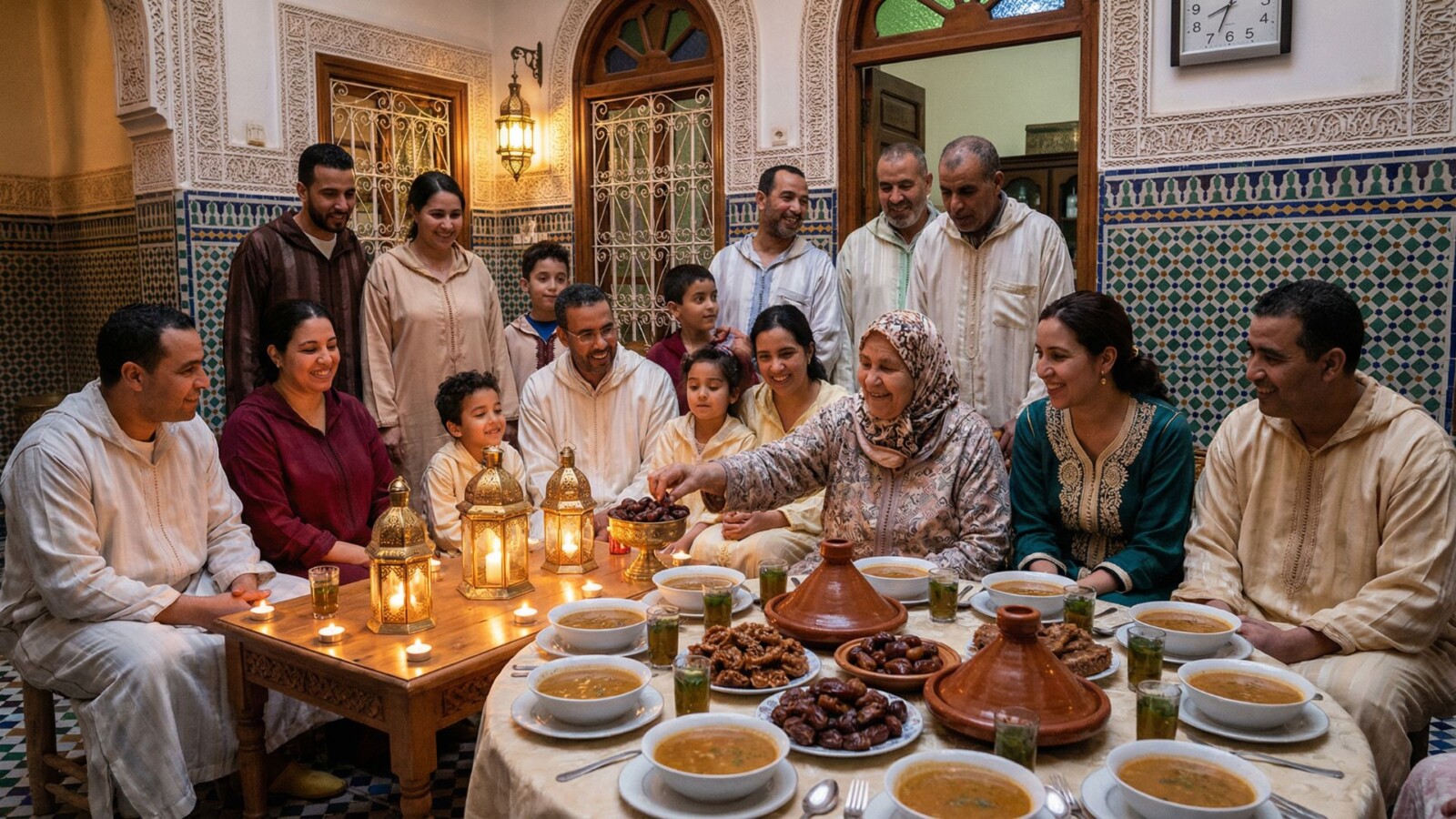
The fast breaks with dates and milk, following the tradition of the Prophet Muhammad. Three dates typically start the meal, their natural sugars providing quick energy to bodies that have gone without fuel all day. A glass of milk or a yogurt drink accompanies them. This simple beginning honors religious tradition while gently waking the digestive system.
Harira comes next. This tomato and lentil soup appears on virtually every Moroccan table during Ramadan. Families guard their harira recipes across generations, each claiming theirs surpasses all others. The soup warms the stomach and provides protein, fiber, and hydration in a single bowl. Eating harira without bread would be unthinkable, and fresh khobz appears alongside every serving.
Chebakia follows or accompanies the harira. These flower-shaped pastries, deep fried and soaked in honey with sesame seeds, provide sweetness that contrasts the savory soup. Other sweets appear depending on the family, including sellou, briwat, and various cookies and pastries prepared specifically for Ramadan.
The main course arrives after the initial dishes settle. Tagines, couscous, grilled meats, and other substantial dishes fill the table. This is when the real eating begins, often lasting an hour or more as diners work through multiple offerings. The abundance reflects the importance of the occasion and the hospitality culture that defines Morocco.
| Course | Traditional items | Purpose |
| Fast breaking | Dates, milk, water | Religious tradition, quick energy |
| Soup course | Harira with bread | Hydration, gentle reawakening of digestion |
| Sweets | Chebakia, sellou, pastries | Celebratory indulgence, sugar boost |
| Main dishes | Tagines, couscous, grilled meats | Substantial nourishment, family favorites |
| Tea and dessert | Mint tea, fruit, additional sweets | Relaxation, continued socializing |
Public iftar gatherings
Beyond family homes, iftar happens in public spaces throughout Morocco. Mosques organize community meals for those who cannot afford their own. Charitable organizations set up tents in squares and parks. These public iftars welcome anyone, including tourists willing to participate respectfully.
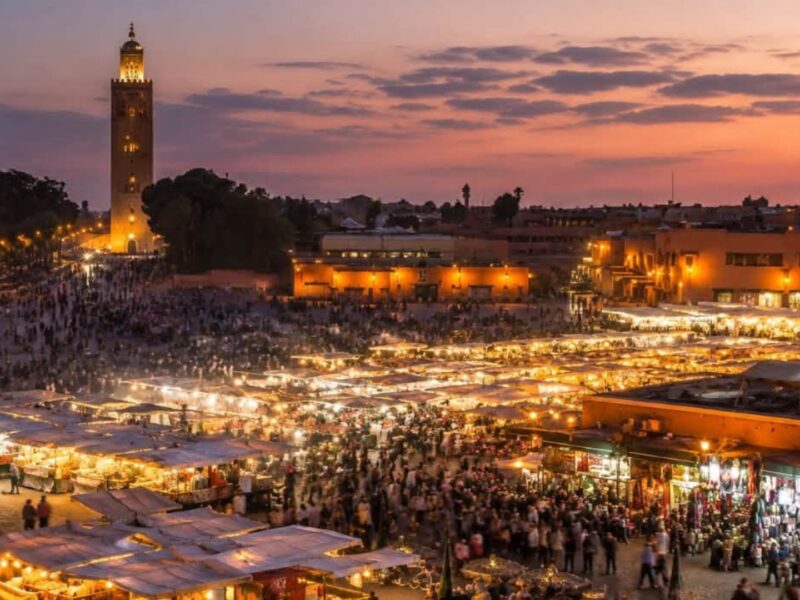
Jemaa el-Fna in Marrakech transforms at sunset during Ramadan. The famous square fills with food stalls offering iftar specials alongside its usual offerings. Families spread blankets and share meals in the open air. The atmosphere combines the plaza’s carnival energy with the sacred significance of the fast’s end.
Fes sees similar gatherings in public squares and near major mosques. The spiritual heart of Morocco takes Ramadan particularly seriously, and public iftars there carry a weight that feels distinctly reverent. Participating requires minimal effort beyond showing up with an open heart and empty stomach.
“I wandered into a mosque courtyard in Meknes just before sunset,” recalled David, a photographer from Portland who spent Ramadan documenting Moroccan traditions. “Someone gestured for me to sit. Before I knew it, I had a bowl of harira in my hands and people were insisting I take more bread. Nobody asked if I was Muslim. They just included me.”
Restaurant iftar options
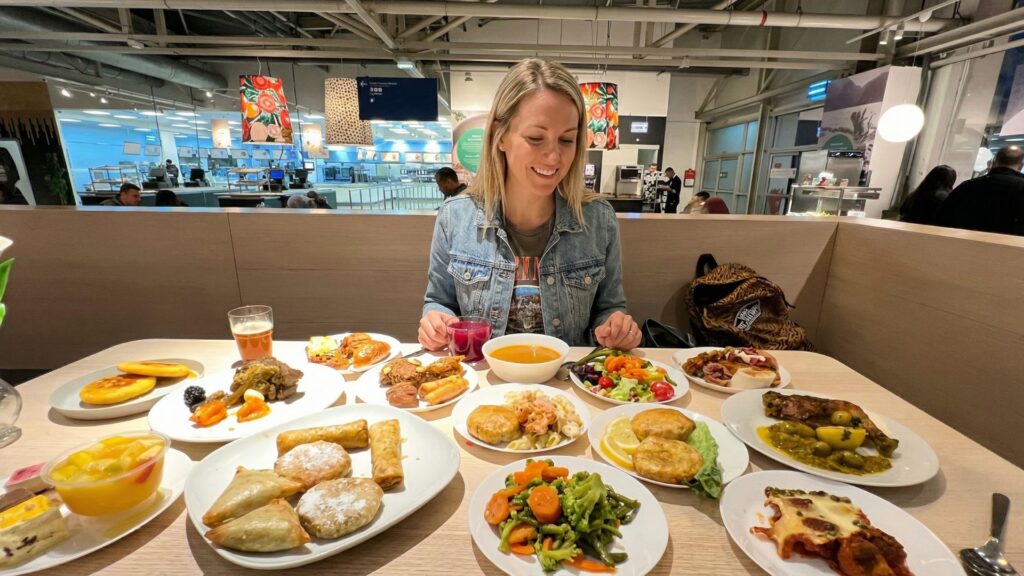
For travelers preferring a more structured experience, restaurants throughout Morocco offer special iftar menus during Ramadan. These set meals guide diners through the traditional sequence without requiring navigation of unfamiliar customs.
Hotel restaurants particularly cater to tourists wanting the iftar experience. Many properties in Marrakech, Fes, and Casablanca create elaborate Ramadan packages featuring multiple courses, traditional entertainment, and explanations of the dishes’ significance. Prices range from moderate to premium depending on the venue’s positioning.
Local restaurants frequented by Moroccan families offer more authentic and affordable options. These spots fill quickly after sunset, so arriving early or making reservations ensures a table. The atmosphere in family restaurants feels different from hotel dining rooms, with multiple generations gathered and children running between tables.
Rooftop restaurants provide particularly memorable settings for iftar. Watching the sunset over the medina while waiting for the call to prayer creates anticipation that enhances the eventual meal. Several Marrakech riads and restaurants have built their Ramadan reputations around this precise experience.
Receiving a home invitation
The most meaningful iftar experience happens when a Moroccan family invites you into their home. These invitations occur more frequently than travelers expect, particularly for those who spend time in conversation with shopkeepers, guides, or other local contacts.
Accepting a home iftar invitation requires understanding what you are entering. This is not a casual dinner party. It carries religious and cultural significance that guests should approach with appropriate seriousness. The family has likely spent considerable effort preparing, and your presence honors their hospitality.
Arriving on time means arriving before sunset. The family will want to break fast together at the precise moment the adhan sounds, and showing up late disrupts this timing. Bringing a gift shows appreciation without being expected. Pastries, fruit, or flowers all work well. Avoid alcohol entirely.
During the meal, follow the host’s lead. They will indicate when to begin eating and will likely serve you directly, placing the best portions on your plate. Complimenting the food enthusiastically shows respect for the cook’s effort. Eating generously demonstrates appreciation even if the quantity exceeds your usual consumption.
“My riad owner invited me to her sister’s house for iftar on my third night in Fes,” said Maria, a travel blogger from San Diego who writes about cultural immersion. “I was nervous about doing something wrong, but they made me feel like family immediately. Her grandmother kept piling food on my plate and laughing when I tried to refuse. I still exchange messages with them years later.”
Etiquette for tourist participation
Joining iftar as a non-Muslim tourist requires sensitivity without requiring perfection. Moroccans generally appreciate visitors who show interest in their traditions, and minor cultural missteps get forgiven when intentions are clearly respectful.
Dress modestly for any iftar situation. This means covering shoulders and knees at minimum, with more conservative coverage appropriate for home visits or mosque-adjacent gatherings. Women may want a scarf available to cover their hair in more traditional settings.
Avoid eating or drinking until the call to prayer signals the fast’s end. Even if you have not fasted all day, participating in the moment of breaking fast means waiting for that signal alongside everyone else. Watching for cues from those around you prevents awkward mistakes.
Express gratitude genuinely and often. Thank hosts for their hospitality. Compliment the food specifically rather than generically. Acknowledge the significance of sharing their holy tradition with an outsider. These gestures matter more than knowing every custom perfectly.
Photography requires particular care. Ask permission before photographing people or their food. Some families welcome documentation while others prefer privacy during religious observance. When in doubt, put the camera away and simply experience the moment.
Why iftar matters for travelers
Participating in iftar offers something that ordinary tourist experiences cannot provide. It places you inside a cultural practice rather than outside looking in. It creates connections with people through shared experience rather than commercial transaction. It reveals values and priorities that explain much about Moroccan identity.
The communal nature of iftar reflects deeper aspects of Moroccan society. The emphasis on family, the obligation to share with those who have less, the rhythm of sacrifice and celebration, all become visible through this nightly ritual. Understanding iftar helps visitors understand Morocco.
Travelers interested in the practical aspects of finding food during daylight hours will find useful information in the guide to what stays open in Morocco during Ramadan. But those who approach the holy month as an opportunity to experience iftar rather than merely survive until restaurants reopen discover something far more valuable than a meal.
What draws you to experiencing religious or cultural traditions as a traveler, and how do you balance curiosity with respect when participating in practices outside your own background?