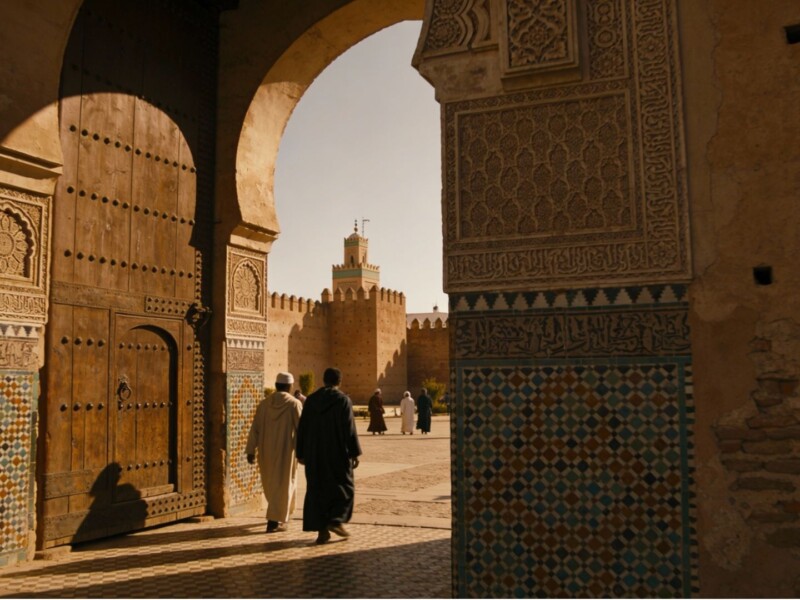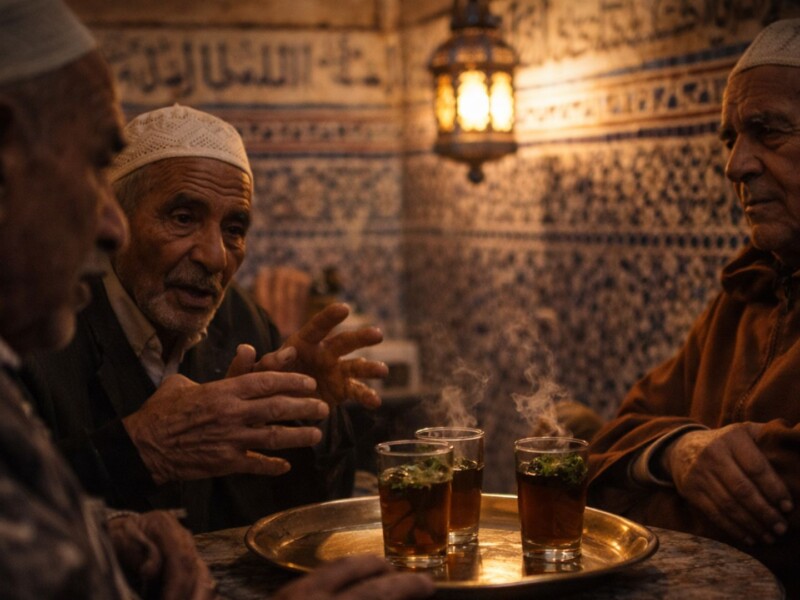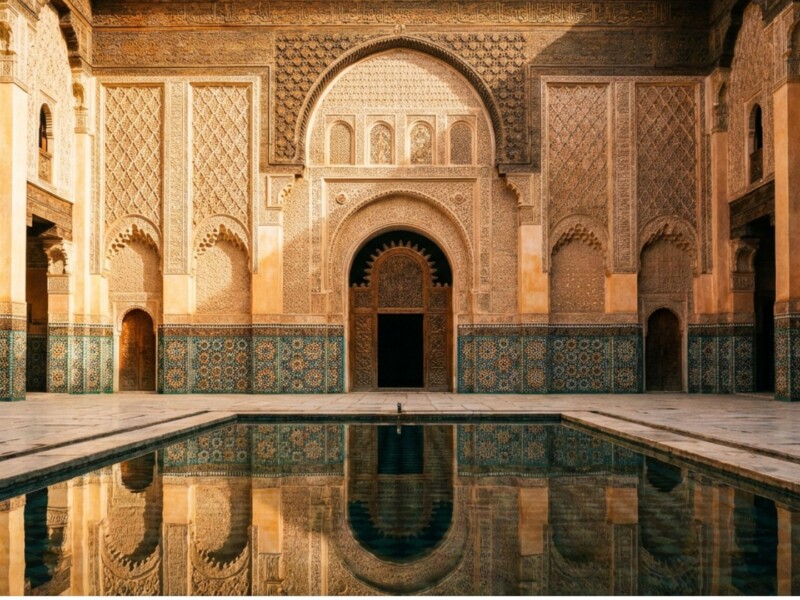
Andalusian echoes in North Africa: Morocco’s living Moorish heritage
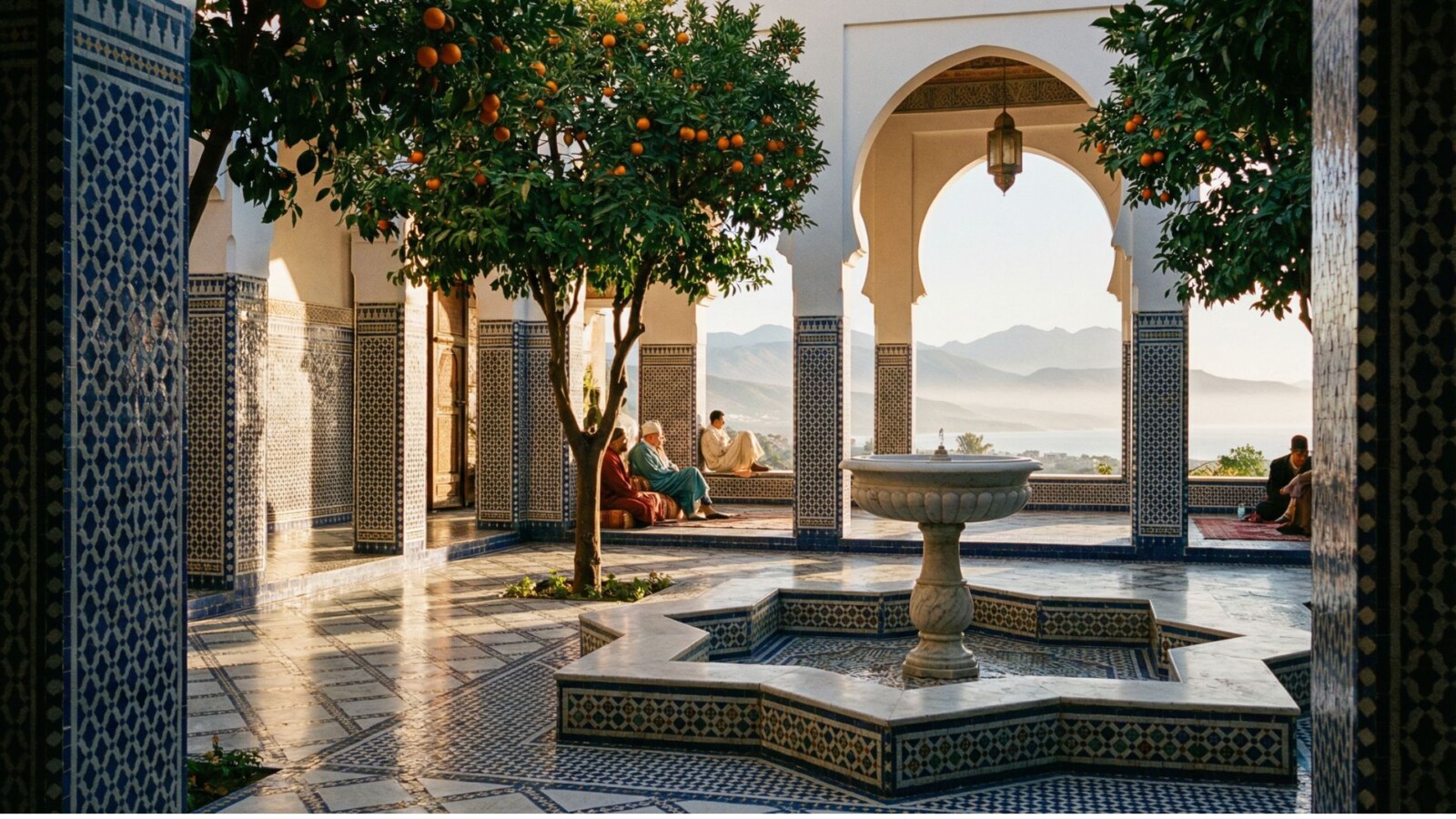
The first time I walked through the medina of Tetouan, something felt unexpectedly familiar. The white walls, the winding streets, the particular rhythm of light and shadow created by buildings leaning toward each other across narrow passages. I had experienced this atmosphere before, but not in Africa. The sensation transported me back to the Albaicin neighborhood of Granada, where I had wandered years earlier through similarly labyrinthine streets beneath similarly whitewashed facades.
That sense of recognition wasn’t coincidental. Tetouan was deliberately built to resemble Granada by refugees who had lost their Spanish homeland and were determined to recreate it on Moroccan soil. The connection between these two places separated by the Strait of Gibraltar runs deeper than architectural similarity. It represents one of history’s great cultural transplantations, a civilization that refused to disappear even after exile.
Morocco’s Moorish heritage encompasses far more than pretty tilework and photogenic doorways, though the secret language of Moroccan doors is a story in itself. It includes musical traditions preserved for five centuries through oral transmission. Geometric patterns encode mathematical knowledge developed in medieval Cordoba. Culinary techniques crossed the Mediterranean with displaced families. Entire cities were designed as monuments to a lost golden age. Understanding this heritage transforms Morocco from a destination of surface-level exoticism into something more profound. It is a living repository of Andalusian civilization that Spain itself no longer possesses.
For travelers willing to look beneath the tourist veneer, Morocco offers something rare: an encounter with history that remains active rather than merely preserved. The craftsmen cutting zellij tiles in Fez workshops use techniques unchanged since the fourteenth century. The musicians performing Andalusian classical music in Tetouan concert halls sing melodies their ancestors brought from Granada. The families living in blue-washed houses in Chefchaouen maintain customs established by their refugee forebears half a millennium ago.
This guide explores the full scope of Morocco’s Moorish heritage. It covers historical origins in the Andalusian exodus and contemporary expressions in architecture, art, music, and daily life. Whether you spend a week or a month exploring these connections, you’ll leave with a richer understanding of how civilizations travel, adapt, and endure.
The Al-Andalus exodus: how Moorish refugees transformed Morocco
The story of Morocco’s Moorish heritage begins with an ending. On January 2, 1492, Muhammad XII surrendered the keys of Granada to Ferdinand and Isabella, concluding nearly eight centuries of Muslim presence in the Iberian Peninsula. Legend holds that as the last Nasrid sultan rode away from his beloved Alhambra palace, he paused at a mountain pass to weep over the city he had lost. His mother allegedly told him to cry like a woman for what he could not defend like a man. That spot is still called the Moor’s Last Sigh.
But the fall of Granada marked the beginning rather than the end of a longer tragedy. The surrender terms initially promised tolerance. Muslims who remained could keep their property, practice their religion, and maintain their traditions. Within a decade those promises had evaporated. Forced conversions began. Mosques became churches. Arabic books burned in public bonfires. The Moriscos, as converted Muslims were called, faced constant suspicion regardless of the sincerity of their conversion. Their food preferences, bathing habits, and clothing styles marked them as permanent outsiders.
Expulsion and forced exile
The pressure built for over a century until Philip III signed the final expulsion decree in 1609. Roughly three hundred thousand Moriscos were forced onto ships and deposited on North African shores. Most could carry little more than what fit in their hands. Historians estimate that between 1492 and 1614, nearly two million Muslims and Jews left Spain for destinations across the Mediterranean.
Morocco absorbed the largest share of these refugees. The geographic proximity made sense. On a clear day you can see the Moroccan coast from the hills above Gibraltar. The crossing takes less than an hour on a modern ferry. But proximity alone doesn’t explain the depth of their impact. These refugees transformed their new home rather than simply assimilating into existing Moroccan society.
The answer lies in who these refugees were. They weren’t peasants fleeing poverty. Many came from educated, prosperous families with skills and resources that made them valuable additions to Moroccan society. They included architects, craftsmen, musicians, scholars, and merchants who had enjoyed high status in Andalusian cities. They brought capital, both financial and cultural, that they invested in recreating the civilization they had lost.
The figures who shaped the transplantation
Key figures shaped this transplantation. Ali al-Mandri, himself an Andalusian exile, essentially rebuilt Tetouan from ruins starting in 1485. His daughter Sayyida al-Hurra grew up to rule the city as an independent queen and commanded a pirate fleet that terrorized Spanish shipping for decades. The great historian Ibn Khaldun, though he predated the main exodus, embodied the intellectual traditions that Andalusian refugees carried with them.
The refugees didn’t scatter randomly across Morocco. They clustered in specific cities, often choosing locations that reminded them of places they had left behind. Chefchaouen attracted settlers who saw echoes of Granada in the surrounding Rif Mountains. Tetouan drew families who wanted to recreate the urban sophistication of Andalusian cities. Fez, already a major cultural center, absorbed wave after wave of Andalusian arrivals who enriched its existing traditions.
For travelers seeking to understand how Moorish refugees shaped North African culture, these settlement patterns are key. They explain why certain Moroccan cities feel so distinctly Andalusian while others retain a more purely indigenous character. The heritage didn’t spread uniformly. It concentrated in specific places where it remains visible and accessible today.
Morocco’s most Andalusian-influenced cities: Fez, Tetouan, and Chefchaouen
Not every Moroccan city bears the Andalusian imprint equally. The refugees who crossed the Strait of Gibraltar after 1492 settled strategically, choosing locations based on geography, economic opportunity, and emotional resonance with the homeland they had lost. The result is a network of cities where Moorish heritage runs deep alongside others where it barely registers.
Tetouan claims the strongest connection. UNESCO designated its medina as a World Heritage Site specifically because it represents the most complete and best-preserved example of Andalusian urban design in North Africa. The designation wasn’t arbitrary. When General Ali al-Mandri rebuilt the city starting in 1485, he populated it with refugees from Granada who deliberately recreated the neighborhoods they had left behind. Walking through Tetouan’s white-walled medina feels less like visiting Morocco and more like stepping into a parallel universe where medieval Spain never disappeared.
The city earned the nickname “daughter of Andalusia” and the label fits. Spanish remains widely spoken among older residents. The architecture mirrors Granada’s Albaicin district so closely that visitors sometimes feel disoriented. The local conservatory maintains Andalusian musical traditions in their purest form, training new generations in repertoires passed down since the fifteenth century.
Chefchaouen offers a different but equally powerful Andalusian atmosphere. The blue city was founded in 1471 as a fortress against Portuguese invaders, but it only became a true settlement after waves of refugees arrived following Granada’s fall. They looked at the Rif Mountains surrounding their new home and saw familiar silhouettes. The Sierra Nevada had shaped their visual world for generations, and these new peaks offered acceptable substitutes.
The famous blue-washed walls that now make Chefchaouen an Instagram phenomenon may have originated with Jewish refugees who considered the color sacred. Or they may have served practical purposes as insect repellent. Either way, the overall aesthetic owes everything to Andalusian sensibilities about light, space, and the relationship between buildings and landscape. The city remained closed to non-Muslim foreigners until 1920, which helped preserve its distinct character against outside influences.
Fez and the secondary cities
Fez predates the Andalusian migrations by several centuries, which might seem to disqualify it from any list of refugee-influenced cities. But Fez absorbed so many waves of Andalusian settlers over such a long period that their influence became fundamental to its identity. The Andalusiyyin Mosque dates to 859, built by refugees from Cordoba who arrived centuries before the main exodus. The name itself commemorates their origin.
Later migrations reinforced the connection. The madrasas that make Fez famous showcase techniques and aesthetic principles developed in Al-Andalus. These were refined through generations of cultural exchange. The city became the primary center for Andalusian classical music, preserving repertoires and performance traditions that might otherwise have vanished entirely.
Beyond these three primary centers, Andalusian influence extends to numerous secondary cities. Rabat’s Kasbah of the Udayas shelters a neighborhood of white and blue houses established by seventeenth-century refugees. Tangier’s medina retains Andalusian architectural details despite heavy tourist development. Larache and Asilah along the Atlantic coast preserve Spanish linguistic and cultural influences from centuries of settlement and colonial overlap.
Travelers with limited time face difficult choices. A focused Andalusian heritage itinerary might concentrate on the northern cluster of Tangier, Tetouan, and Chefchaouen, keeping distances manageable while delivering the most concentrated Moorish atmosphere. Adding Fez extends the journey inland and provides access to the finest examples of architectural preservation. The detailed breakdown of the ten most Andalusian-influenced cities in Morocco can help with planning routes that match available time and specific interests.
Why northern Morocco feels different
The geographic distribution of Andalusian settlement also explains something about Moroccan regional identity. Visitors often sense these differences without fully understanding them. Northern Morocco feels different from the south. The architecture differs, the music differs, even the Arabic dialect carries traces of Spanish influence. These variations don’t represent random cultural drift. They reflect deliberate choices made by refugees five centuries ago about where to rebuild their interrupted lives.
Moorish architecture in Morocco: from horseshoe arches to zellij tilework
The visual signature of Morocco’s Moorish heritage appears most dramatically in its architecture. Every traveler who wanders through a Moroccan medina encounters a distinctive vocabulary of forms and decorations. These originated in Al-Andalus and achieved their fullest expression in the palaces, mosques, and madrasas scattered across the country. Learning to recognize these elements transforms casual sightseeing into something more meaningful.
The horseshoe arch serves as the most recognizable feature. Unlike the rounded Roman arch or the pointed Gothic arch, the horseshoe extends beyond a semicircle, curving inward again before meeting its supports. This shape appeared in Visigothic Spain before the Islamic conquest and was adopted and refined by Moorish architects who made it their signature. You’ll find horseshoe arches framing doorways, windows, and interior passages throughout historic Moroccan buildings. The proportions vary, with some barely exceeding the semicircle and others swooping dramatically inward, but the basic form remains consistent across centuries of construction.
Riad gardens represent another defining element of Moorish design. The traditional Moroccan house turns inward, presenting blank walls to the street while organizing living spaces around a central courtyard. That courtyard typically contains a garden with a symmetrical four-part division, a pattern derived from Persian paradise garden traditions filtered through Andalusian sensibilities. A central fountain provides the sound of running water, citrus trees offer shade and fragrance, and the geometry of paths and plantings creates order within enclosure.
Square minarets distinguish Moroccan mosques from those elsewhere in the Islamic world. Minarets in Egypt, Turkey, and Iran typically feature cylindrical or octagonal shafts. The western Islamic tradition instead standardized a square tower form. It probably originated in early Syrian mosques and reached its canonical expression in Al-Andalus. The Koutoubia Mosque in Marrakech, the Giralda in Seville, and the Hassan Tower in Rabat all share this basic shape despite their different scales and decorative treatments.
Zellij, stucco, and cedarwood
Zellij tilework provides the most labor-intensive and visually stunning decorative element. Unlike painted tiles or pressed patterns, zellij consists of individually hand-cut pieces of glazed ceramic assembled into complex geometric designs. Artisans start with square tiles in various colors, traditionally including white, black, blue, green, yellow, and brown. They flip these tiles face-down and use specialized hammers to chip each piece into precise polygonal shapes. A single square meter of zellij can contain hundreds of pieces, each one cut and placed by hand.
The assembly process happens in reverse. Craftsmen arrange pieces face-down on flat surfaces, fitting them together like puzzle pieces. Once complete, plaster binds the back, and the entire panel gets installed on walls or floors. This technique allows incredible precision and durability. Zellij from the fourteenth century still looks crisp today, colors unfaded, edges sharp.
Carved stucco, called gebs in Arabic, typically occupies the wall zone above the zellij and below the wooden elements near the ceiling. Master craftsmen carve intricate patterns into wet plaster using small knives and chisels, creating arabesques, geometric interlaces, and calligraphic inscriptions. The material allows detail impossible in harder stone, though it requires protection from weather, which partly explains the inward-facing orientation of Moroccan architecture.
Cedarwood craftsmanship completes the decorative hierarchy. Ceilings, corbels, screens, and doors throughout historic Moroccan buildings feature carved and painted wood. This often incorporates the same geometric patterns found in zellij and stucco, translated into three-dimensional form. The fragrance of cedar still permeates older buildings, mixing with incense and mint tea to create the characteristic smell of Moroccan interiors.
Water systems and the human detail
Water systems deserve special mention. Andalusian architects excelled at hydraulic engineering, developing sophisticated networks of channels, fountains, and pools that served both practical and aesthetic purposes. The ablution fountains in mosque courtyards, the reflecting pools in palace gardens, and the public fountains at street intersections all demonstrate this mastery. The sound of flowing water provides natural cooling and masks street noise, creating oases of tranquility within dense urban environments.
The relationship between Moroccan monuments and their Andalusian prototypes becomes clear when you compare specific buildings. The carved stucco of the Bou Inania Madrasa in Fez employs techniques nearly identical to those found in Granada’s Alhambra. Scholars believe craftsmen moved freely between the two regions during the Marinid period. The Saadian Tombs in Marrakech, built in the sixteenth century after the main refugee waves, still draw directly on Andalusian models preserved and transmitted across generations.
For travelers wanting to experience these architectural traditions firsthand, the guide to where to see Moorish architecture in Morocco provides specific site recommendations with practical visitor information. The concentration of masterworks in Fez alone could occupy a week of dedicated exploration. Broader itineraries connecting Marrakech, Meknes, and Rabat reveal regional variations within the overall tradition.
Islamic geometric patterns: tracing Al-Andalus to modern Moroccan design
Beneath the surface beauty of Moroccan decoration lies a mathematical sophistication that still impresses researchers today. The geometric patterns covering walls, floors, fountains, and ceilings throughout the country aren’t random arrangements of shapes. They follow precise rules derived from the geometry of circles and polygons. This knowledge was developed in medieval Cordoba and transmitted across centuries through craft traditions that never broke.
Everything starts with a circle divided into equal parts. Divide it into four and you get the basis for square-based patterns. Divide it into six and you generate hexagonal designs and six-pointed stars. Divide it into eight, ten, or twelve and the possibilities multiply dramatically. The craftsmen who created these patterns weren’t academic mathematicians in any formal sense, but they understood geometric relationships at an intuitive level that modern scholars find remarkable. Some Moroccan patterns anticipate mathematical concepts that Western academics didn’t formally describe until the twentieth century.
The spiritual dimension matters as much as the mathematical. Islamic theology discouraged representational art, particularly in religious contexts. This pushed artists toward abstraction. The infinite repetition of geometric forms came to symbolize the infinite nature of creation. It also represented the underlying order of the universe. Beauty and meaning intertwined in ways that pure decoration never achieves. When you stand in the courtyard of a Moroccan madrasa surrounded by thousands of interlocking shapes, you are experiencing a visual argument. It is a statement about the nature of reality.
Reading the patterns
Eight-pointed stars appear among the most common motifs. They form naturally when you overlay two squares rotated forty-five degrees from each other. This relatively simple construction allows endless variations in color, scale, and proportion. You’ll encounter eight-fold patterns on floors and fountains throughout Morocco, serving as a kind of baseline vocabulary that more elaborate designs build upon.
Ten-pointed stars require dividing a circle into ten equal parts, which is geometrically trickier than divisions based on four, six, or eight. The resulting patterns have a distinctive rhythm that feels different from eight-fold designs, slightly more dynamic and less static. Persian craftsmen particularly favored ten-fold symmetry, and its presence in Morocco reflects the broader Islamic exchange of artistic ideas across vast distances.
Twelve-pointed stars represent the next level of complexity. The Bou Inania Madrasa in Fez features stunning examples where twelve-fold symmetry creates rosettes surrounded by smaller shapes in arrangements that reward extended contemplation. The longer you look, the more you see. Layers of pattern reveal themselves gradually, relationships between distant elements snap into focus, and what initially seemed like chaos resolves into rigorous order.
The most sophisticated designs combine multiple symmetry systems in ways that seem almost impossible. Some patterns appear to shift and transform as your eye moves across them, an optical effect that medieval craftsmen clearly understood and deliberately exploited. Modern mathematicians have identified patterns in Moroccan architecture that exhibit properties similar to Penrose tilings, non-repeating arrangements that Western scientists once thought couldn’t exist.
These techniques traveled from Al-Andalus to Morocco through multiple channels. Some knowledge came encoded in the buildings themselves, available to any craftsman who studied existing examples carefully. Some arrived in the minds of refugee artisans who had trained in Granada or Seville and brought their skills across the strait. Some transmission occurred through pattern books, collections of designs that masters compiled for reference and instruction.
Living craft today
Contemporary Morocco maintains these traditions in ways that go beyond mere preservation. Working ateliers in Fez and other cities still produce zellij using entirely traditional methods, supplying both restoration projects and new construction. Watching a maalem master trace a pattern onto plaster, or seeing an apprentice chip tiles into shape, makes the human skill behind abstract designs viscerally real. The knowledge lives in hands as much as minds, passed through apprenticeship rather than textbooks.
For travelers interested in experiencing geometric traditions more deeply, several cultural centers offer workshops where you can try basic pattern construction using compass and straightedge. Even a two-hour introduction changes how you see finished work afterward because you suddenly understand the logic underlying the complexity. The relationship between simple tools and elaborate results becomes tangible rather than theoretical.
The comprehensive guide to Islamic art and geometric patterns from Al-Andalus to Morocco explores these traditions in greater depth. It covers specific sites showcasing different pattern types and practical advice for photographing tilework effectively. Once you learn to read the design vocabulary, connections appear everywhere. A fountain in Meknes echoes a palace in Marrakech echoes a ruin in Granada.
Andalusian music, poetry, and living traditions in Morocco today
Architecture and visual art survive in stone and tile, available for inspection by anyone who visits the right buildings. But Morocco’s Moorish heritage extends into intangible realms that require different kinds of attention. The musical traditions, poetic forms, and daily customs carried across the Strait of Gibraltar by Andalusian refugees persist today in ways that no photograph can capture.
Andalusian classical music, known in Morocco as Al-Ala, represents perhaps the most remarkable cultural survival story in the Mediterranean world. The tradition allegedly originated in ninth-century Cordoba, where a musician named Ziryab established a prestigious music school after fleeing Baghdad. Ziryab introduced new instruments, compositions, and performance techniques that would define Andalusian music for centuries. His innovations included the nuba, a suite form that organizes instrumental and vocal pieces according to specific modes and rhythmic patterns.
When the refugees arrived in Morocco, they brought this sophisticated musical heritage with them. Unlike architecture, which leaves physical traces, music exists only in performance and memory. The nuba suites that Andalusian orchestras still perform in Fez and Tetouan preserve melodies dating back to medieval Spanish courts. These were transmitted across five centuries entirely through oral tradition. Nothing was written down until the twentieth century. The survival depended entirely on chains of teachers and students, each generation learning by ear and passing knowledge to the next.
Morocco originally possessed twenty-four nuba, one for each hour of the day according to tradition. Only eleven complete suites survive today. That loss reflects the fragility of oral transmission, but also highlights the remarkable preservation of what remains. Each nuba unfolds over hours of performance, moving through multiple rhythmic sections with instrumental passages alternating with sung poetry. The complete repertoire would take days to perform in its entirety.
The instruments themselves bridge European and Middle Eastern traditions. The oud provides the foundational lute sound found throughout Arab music. The rebab, a bowed string instrument, adds plaintive melodic lines. The qanun, a plucked zither, contributes shimmering arpeggios. Violins entered the ensemble more recently, adapting European instruments to Andalusian purposes. Percussion comes from the bendir frame drum and the tar tambourine, marking the complex rhythmic cycles that structure each section.
Where to hear Andalusian music
Fez serves as the primary center for Al-Ala performance and preservation. Its conservatory trains young musicians in the traditional repertoire, ensuring continuity into future generations. The annual Festival of World Sacred Music regularly features Andalusian orchestras performing in the courtyards of ancient madrasas, creating experiences where architecture and music reinforce each other. Attending a concert in such a setting ranks among the most transportive experiences available to travelers in Morocco. Geometric patterns surround you while centuries-old melodies fill the air.
Tetouan maintains its own distinct tradition. Musicians there sometimes claim their version of Andalusian music preserves elements lost elsewhere, a reflection of the city’s particularly strong connections to Granada. The local conservatory emphasizes authenticity and historical accuracy, training performers who approach the repertoire with scholarly seriousness as well as artistic passion. Smaller venues in the medina occasionally host intimate performances that feel closer to the domestic contexts where this music originally flourished.
Chefchaouen offers more casual encounters with Andalusian heritage. The blue city lacks the institutional infrastructure of Fez or Tetouan, but musical traditions permeate daily life in less formal ways. You might hear a shopkeeper humming a familiar melody, or stumble upon an impromptu gathering in a neighborhood square where older residents sing songs their grandparents taught them. These moments feel less polished than concert performances but perhaps more genuine as evidence of living tradition.
Food, poetry, and everyday heritage
Beyond music, Andalusian influence shapes Moroccan culture in subtler ways. Culinary traditions crossed the strait alongside musical ones. Pastilla, the sweet and savory pie that represents Moroccan fine dining at its best, almost certainly originated in Andalusian kitchens. The combination of meat with cinnamon, sugar, and almonds reflects a sophisticated palate developed through centuries of Iberian-Arab fusion. Similar dishes appear in medieval Spanish cookbooks, suggesting direct transmission rather than parallel invention.
Poetic traditions intertwined with musical ones. The lyrics sung in Andalusian performances often date back centuries, preserving classical Arabic poetry and vernacular verse that might otherwise have disappeared. The muwashshah and zajal forms that flourished in Al-Andalus continue to structure the vocal portions of nuba suites. Their intricate rhyme schemes and metric patterns remain intact despite the passage of time.
For travelers hoping to experience these traditions firsthand, timing matters. The Fez Festival of World Sacred Music typically takes place in early summer and provides the most concentrated access to high-quality performances. The Mawazine Festival in Rabat sometimes includes Andalusian ensembles alongside contemporary artists. Outside festival season, cultural centers and conservatories in Fez and Tetouan occasionally open rehearsals or host smaller concerts. Hotel concierges and local guides can often arrange private performances for small groups willing to pay appropriate fees.
The deeper exploration of Andalusian music and living traditions in Morocco covers specific venues, festival schedules, and practical advice for travelers wanting to incorporate musical experiences into their itineraries. Sound and architecture together create the fullest picture of what Andalusian refugees carried across the strait and what their descendants have preserved against considerable odds.
Carrying Andalusia forward
Five centuries have passed since the first waves of refugees crossed the Strait of Gibraltar carrying memories of a civilization they would never see again. In that time, empires have risen and fallen, technologies have transformed daily life beyond recognition, and the political map of the Mediterranean has been redrawn countless times. Yet the Moorish heritage those refugees carried with them remains visible, audible, and tangible in Morocco today.
This persistence defies easy explanation. Traditions typically fade within a few generations. Descendants assimilate into surrounding cultures, and original contexts lose relevance. The Andalusian heritage in Morocco has done the opposite, crystallizing into forms that resisted change precisely because they represented connection to a lost homeland. What began as nostalgia hardened into identity. The architecture, the music, the patterns, the customs all became markers of belonging to a community defined by shared origin rather than shared geography.
For contemporary travelers, this heritage offers something increasingly rare in our homogenized world. Morocco provides access to a living civilization that no longer exists in the land where it originated. Spain contains magnificent monuments from the Andalusian period, but they function as museums, frozen in the moment of conquest. Morocco contains monuments that function as part of ongoing traditions. They connect to communities that still use the techniques, still perform the music, still organize domestic space according to principles established in medieval Cordoba.
How to engage with living heritage
The cities where this heritage concentrates reward slow exploration. Rushing through Fez to check off famous madrasas misses the point. The craftsmen still cutting zellij tiles by hand deserve attention alongside the headline attractions. So do the musicians still rehearsing nuba suites in conservatory practice rooms, and the families still living in houses organized around central courtyards. They represent continuity rather than preservation, tradition as lived experience rather than museum display.
Understanding the historical context enriches every encounter. The white walls of Tetouan mean more when you know they were built by refugees deliberately recreating Granada. The geometric patterns covering every surface mean more when you understand the mathematical knowledge they encode and the spiritual concepts they express. The haunting melodies drifting from an upper window mean more when you recognize them as songs that have survived five centuries of transmission from teacher to student.
Morocco’s Moorish heritage also raises questions about cultural survival that resonate beyond this specific case. What determines whether displaced communities maintain distinct identity or dissolve into their surroundings? What role do physical artifacts play in anchoring intangible traditions? How do crafts and arts transmit knowledge that resists textual preservation? The Andalusian experience in Morocco provides one set of answers, applicable perhaps to other diasporas facing similar challenges of continuity across generations and geographies.
The practical question for travelers comes down to how much time and attention to invest. A surface-level encounter with Moorish heritage requires only a few days visiting famous monuments. A deeper engagement might involve attending musical performances, visiting working craft ateliers, or hiring guides who can explain historical connections that casual observation misses. The deepest engagement means extended stays in cities like Fez or Tetouan. It means learning to navigate medieval street patterns and building relationships with local artisans, perhaps even studying Arabic or taking lessons in traditional crafts.
Whatever level of engagement you choose, the starting point remains the same. Morocco’s Moorish heritage exists because hundreds of thousands of people refused to let their civilization disappear when political circumstances turned against them. They rebuilt what they could in a new location and adapted what needed adapting. They transmitted what mattered most to children and grandchildren who had never seen the original. Their success means that travelers today can experience something that history tried to erase.
The most immediate way to begin exploring this heritage is through its physical traces. The guide to where to see Moorish architecture in Morocco provides specific sites, practical visitor information, and the design vocabulary needed to appreciate what you’ll encounter. From there, the music, the patterns, the food, and the customs all become accessible. They form dimensions of a single coherent tradition stretching back across the strait to a golden age that ended but never quite disappeared.
Final thoughts on Morocco’s living heritage
The Strait of Gibraltar measures only fourteen kilometers at its narrowest point. On clear days, you can stand on the Moroccan coast and see the Spanish mountains rising across the water. That short distance has carried civilizations in both directions for millennia. No crossing proved more consequential than the one that brought Andalusian refugees to North African shores after 1492.
What strikes me most about Morocco’s Moorish heritage is how stubbornly alive it remains. This isn’t history preserved under glass or reconstructed for tourist consumption. The zellij craftsmen in Fez use the same techniques their predecessors employed six centuries ago. Not because anyone mandates tradition, but because those techniques still produce the most beautiful results. The musicians performing Al-Ala in Tetouan sing melodies passed down through unbroken chains of teachers and students. Not because grants fund their preservation, but because the music still moves people who hear it. The families living in traditional riads organize their domestic space around interior courtyards. Not because regulations require historic accuracy, but because the design still makes sense for the climate and culture.
Living tradition, not frozen monument
This living quality distinguishes Morocco from destinations where Moorish heritage survives only as monument. Spain contains the Alhambra, arguably the single most spectacular example of Andalusian architecture anywhere. But the Alhambra functions as a museum, separated from the civilization that created it by five centuries of discontinuity. Morocco contains buildings less individually famous. But they are embedded in communities that still practice the crafts, still perform the music, still maintain the customs that give those buildings meaning.
For travelers, this distinction matters enormously. Visiting monuments teaches you what a civilization produced. Visiting living traditions teaches you how a civilization thinks. The patterns covering Moroccan walls encode mathematical relationships and spiritual concepts that remain active in the minds of people who create and maintain them. The music filling Moroccan concert halls expresses emotional and aesthetic values that audiences still share with performers. The architecture shaping Moroccan cities reflects ideas about privacy, community, and the proper relationship between human beings and their environment. These ideas continue to guide how people actually live.
None of this means Morocco has frozen itself in the medieval past. Contemporary Moroccan cities contain shopping malls, highway interchanges, and apartment blocks indistinguishable from those anywhere else in the world. The traditional crafts compete with industrial production for market share. Young musicians learn Western pop alongside classical nuba. Modernity exerts the same pressures here as everywhere, and not everything will survive the transition.
But the depth of the tradition provides resilience. Five centuries of continuous transmission have created reservoirs of knowledge and skill that don’t evaporate quickly. The institutions training new craftsmen, the families maintaining traditional ways of life, and the tourists whose spending rewards preservation all play a role. Together they sustain an ecosystem that perpetuates heritage even as surrounding conditions change. Whether this ecosystem will sustain itself for another five centuries, no one can predict. But its current vitality seems undeniable to anyone who spends time in the cities where Andalusian influence runs deepest.
The journey through Morocco’s Moorish heritage can take many forms depending on your interests and available time. Architecture enthusiasts might focus on the madrasas of Fez and the palaces of Marrakech. Music lovers might time visits to coincide with festivals in Fez or seek out conservatory performances in Tetouan. Design aficionados might spend hours studying geometric patterns and visiting craft workshops. History buffs might trace the refugee routes from Tangier through Tetouan to Chefchaouen, understanding each city as a chapter in the larger story of displacement and recreation.
Whatever your approach, the comprehensive guide to the ten most Andalusian-influenced cities in Morocco provides a foundation for planning itineraries that match your priorities. Some travelers will want to cover maximum ground, sampling each city briefly before moving to the next. Others will prefer depth over breadth, settling into a single location long enough to move beyond surface impressions toward genuine understanding. Both approaches have merit, and Morocco’s Moorish heritage rewards whatever attention you can offer.
The refugees who crossed the Strait of Gibraltar after 1492 couldn’t have imagined this outcome. Their efforts to preserve a dying civilization would create something tourists travel thousands of miles to experience five centuries later. They were simply trying to maintain connection to a world they had lost. They wanted to pass something meaningful to children who would never see Granada or Cordoba or Seville. That their success outlasted the trauma is one of history’s quieter triumphs. Civilizations survive not in stones alone but in the hands, voices, and daily practices of people determined to remember.