Best day trips from Chefchaouen: where to go when the blue city isn’t enough
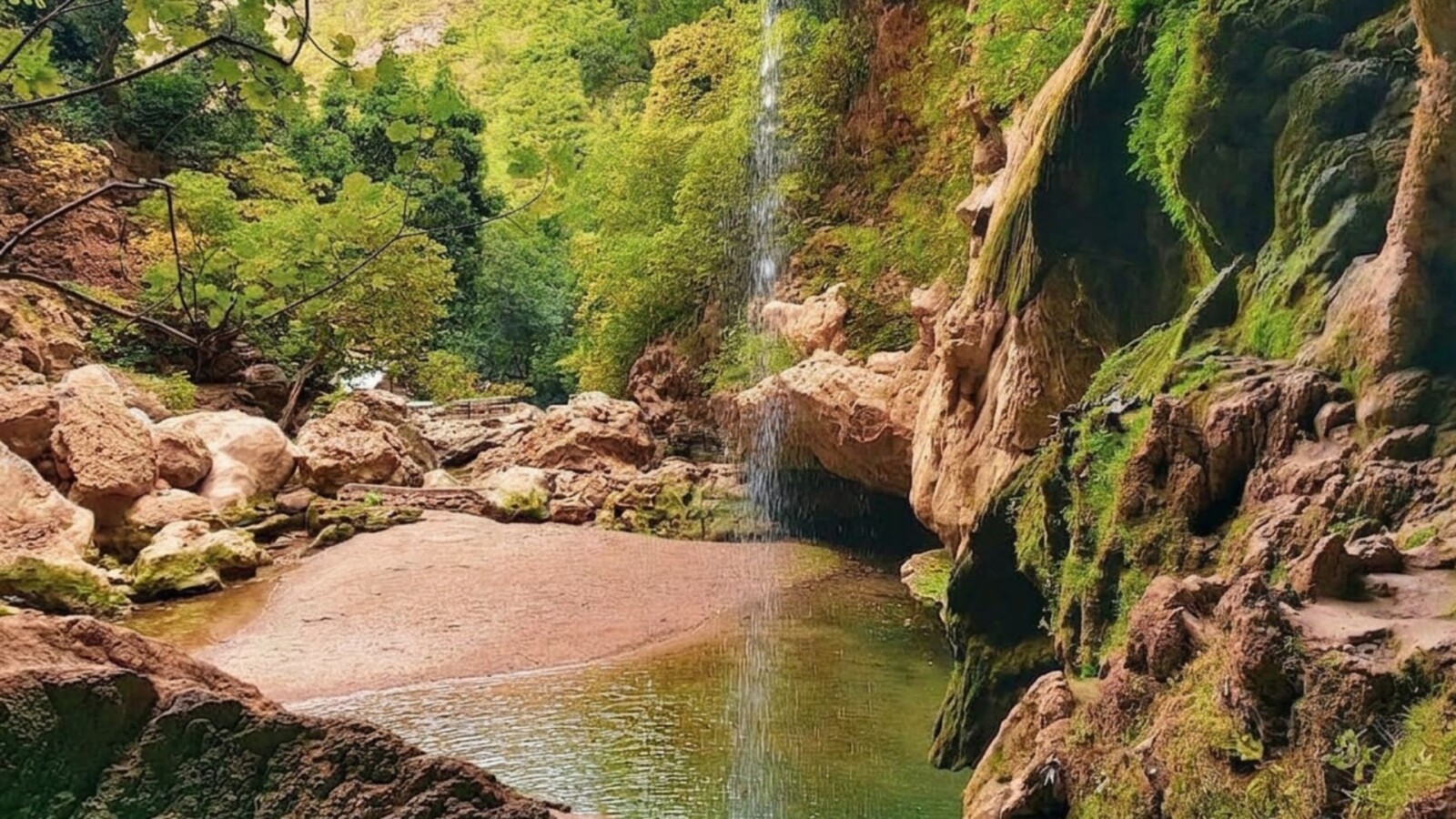
The waterfall does not appear until you have been walking for forty minutes. By the time it does, you have already forgotten you came from a city at all.
That is the particular gift of Chefchaouen’s geography. The city sits at the center of a northern Morocco that most travelers move through too quickly. Mountain roads and cedar-forested trails connect it to places that receive far less attention than they deserve. The Akchour Waterfalls, the UNESCO medina of Tetouan, the port city of Tangier, the sacred town of Moulay Idriss: all within day-trip distance. None require more than a grand taxi and a reasonable departure time.
The travelers who limit their Chefchaouen experience to the blue medina are making a good choice. The ones who use the city as a base for exploring the surrounding region are making a better one. Before you head out, our complete Chefchaouen travel guide covers the city itself in full, so you have everything you need to make the most of both.
Before you plan: the logistics that apply to everything
Day trips from Chefchaouen operate within a specific logistical reality that shapes every option on this list. There is no car rental infrastructure inside the medina, and options in the new town are limited. Public transport is sparse. Most surrounding destinations require a transfer, or a willingness to navigate grand taxi networks that run on their own schedule rather than yours.
Most travelers choose between two approaches. Hiring a private driver costs between 400 and 700 dirhams depending on the destination. Grand taxis are cheaper but require more flexibility and local knowledge to navigate smoothly.
A private driver arranged through your accommodation is almost always the path of least resistance for first-time visitors. Split between two or three travelers, the cost becomes genuinely reasonable. You control the departure time, stop for photographs on mountain roads, and return when ready rather than waiting for a taxi to fill.
For the destinations reachable by a straightforward grand taxi with no transfer, specifically Tetouan and occasionally Tangier, the public option is entirely manageable and saves meaningful money.
Akchour waterfalls and god’s bridge: the day trip that earns its reputation
Akchour is the day trip that experienced Morocco travelers mention first when asked about Chefchaouen’s surroundings, and the reputation is justified in a way that not all celebrated day trips manage to be.
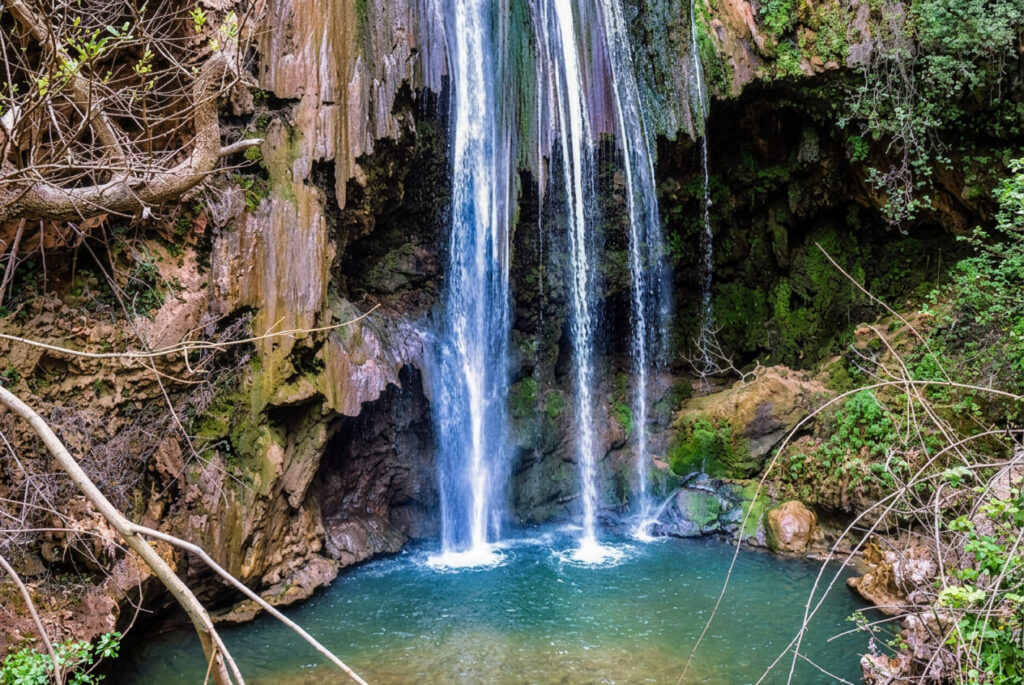
The destination sits roughly 28 kilometers northeast of Chefchaouen in the Talassemtane National Park. This protected area covers cedar and oak forest threaded by the Oued Kelaa river. The drive takes around forty-five minutes on a road that climbs through genuinely spectacular terrain.
From the small village of Akchour where vehicles park, two distinct trails begin. The shorter route follows the river for forty minutes through a narrow gorge with dramatic cliff walls on both sides. You cross the river several times on stepping stones and wooden bridges before reaching the lower Akchour Waterfall. The cascade drops around 25 meters into a pool. In spring it thunders; by late summer and fall, the flow softens but remains beautiful.
The longer trail continues past the lower falls for another two to three hours to reach God’s Bridge. It is a natural rock arch spanning the river gorge with no constructed equivalent in the region. The full round trip takes five to seven hours depending on pace. Plan for a full day, not a casual outing.
Most day-trippers complete the lower waterfall loop and turn back. This takes three to four hours total. No specialized equipment is needed beyond a willingness to scramble over rocks and get your feet wet at river crossings. The trail lacks European-standard signage, but the route is well-worn enough that route-finding errors are rare.
Practical details:
| Detail | Information |
| Distance from Chefchaouen | 28 km / 45 min by road |
| Transport | Grand taxi or private driver |
| Grand taxi cost | 15-20 MAD per seat to Akchour village |
| Private driver | 350-500 MAD for the day |
| Trail time (lower falls) | 3-4 hours round trip |
| Trail time (God’s Bridge) | 5-7 hours round trip |
| Best season | March-May and September-November |
| What to bring | Water, snacks, shoes you can get wet |
The one genuine caution worth stating: the trail surface is uneven and the river crossings require balance and appropriate footwear. Sandals are a significant mistake. Trail runners or light hiking shoes that you do not mind soaking are the correct choice. The rocks at the river edge are slippery regardless of your footwear, and moving carefully is worth the extra seconds.
Guides are available for hire at the Akchour village trailhead. They are worth considering for the longer God’s Bridge route, where the trail becomes less obvious and local knowledge adds real value.
Tetouan: the medina that tourists keep missing
Forty-five minutes from Chefchaouen by grand taxi, Tetouan holds a UNESCO World Heritage medina. It attracts a fraction of the visitors that Chefchaouen, Fes, and Marrakech see. That imbalance works entirely in your favor as a visitor.
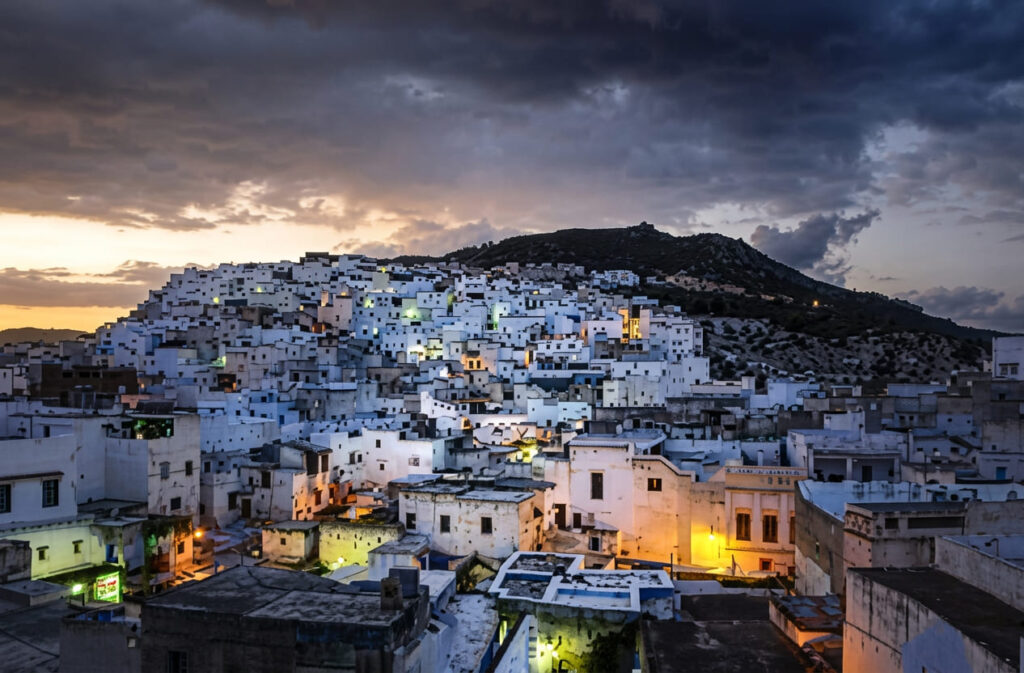
Tetouan’s medina was built primarily in the late 15th and early 16th centuries by Muslim and Jewish refugees from Andalusia. That same wave of displacement shaped Chefchaouen’s early character. The result is a walled city of remarkable coherence. Narrow white streets carry a distinctly Spanish-Moorish aesthetic, with elaborate doorways and carved cedar lintels. Its craft tradition covers leatherwork, embroidery, and traditional musical instruments recognized by UNESCO for their living continuity.
Walking the Tetouan medina on a day trip from Chefchaouen produces a different experience from the Blue City in almost every dimension. Where Chefchaouen’s medina is visually dominated by a single color, Tetouan’s is a study in white and geometric detail. Where Chefchaouen is predominantly oriented toward tourism, Tetouan remains primarily a functioning residential and commercial city whose medina happens to be historically extraordinary. The souks are working marketplaces rather than souvenir galleries. The craftsmen in the leather quarter are producing goods for local consumption rather than tourist export.
What to see beyond the medina walls
The Ethnographic Museum in Tetouan’s kasbah, housed in a former royal palace, offers one of the better collections of northern Moroccan material culture in the country and is worth an hour of any historically curious traveler’s time. The Archaeological Museum nearby contains Roman-era finds from the nearby ruins of Tamuda that provide unexpected context for the region’s deep pre-Islamic history.
How to get to Tetouan from Chefchaouen
Getting to Tetouan from Chefchaouen is straightforward. Grand taxis depart from the taxi rank near the bus station in Chefchaouen and cost around 30 to 40 dirhams per seat. The journey takes forty-five minutes to an hour depending on traffic, and taxis depart frequently throughout the morning. Returning follows the same process from Tetouan’s main taxi rank.
A half-day is sufficient for a focused medina walk and the Ethnographic Museum. A full day allows for a more relaxed exploration including the souks, the artisan quarter, and lunch in a medina restaurant that has clearly never optimized its menu for foreign visitors.
Tangier: the city that rewards a second look
Tangier carries a complicated reputation. Graham Greene found it seedy. The Beat Generation found it liberating. Contemporary travelers arriving by ferry from Spain often find it overwhelming and flee south to Chefchaouen as quickly as possible.
Approached as a deliberate day trip rather than a transit point, Tangier reveals itself as a genuinely fascinating city. Few places on the Mediterranean have been shaped by more competing cultural forces: Phoenician, Roman, Portuguese, British, Spanish, French, and Moroccan. Each left architectural and cultural residue that makes the city’s texture unlike anything else in the country.
The distance from Chefchaouen is approximately 120 kilometers. By grand taxi or private driver, the journey takes two and a half to three hours each way. A day trip to Tangier is manageable, but plan for an early start and realistic expectations about return timing.
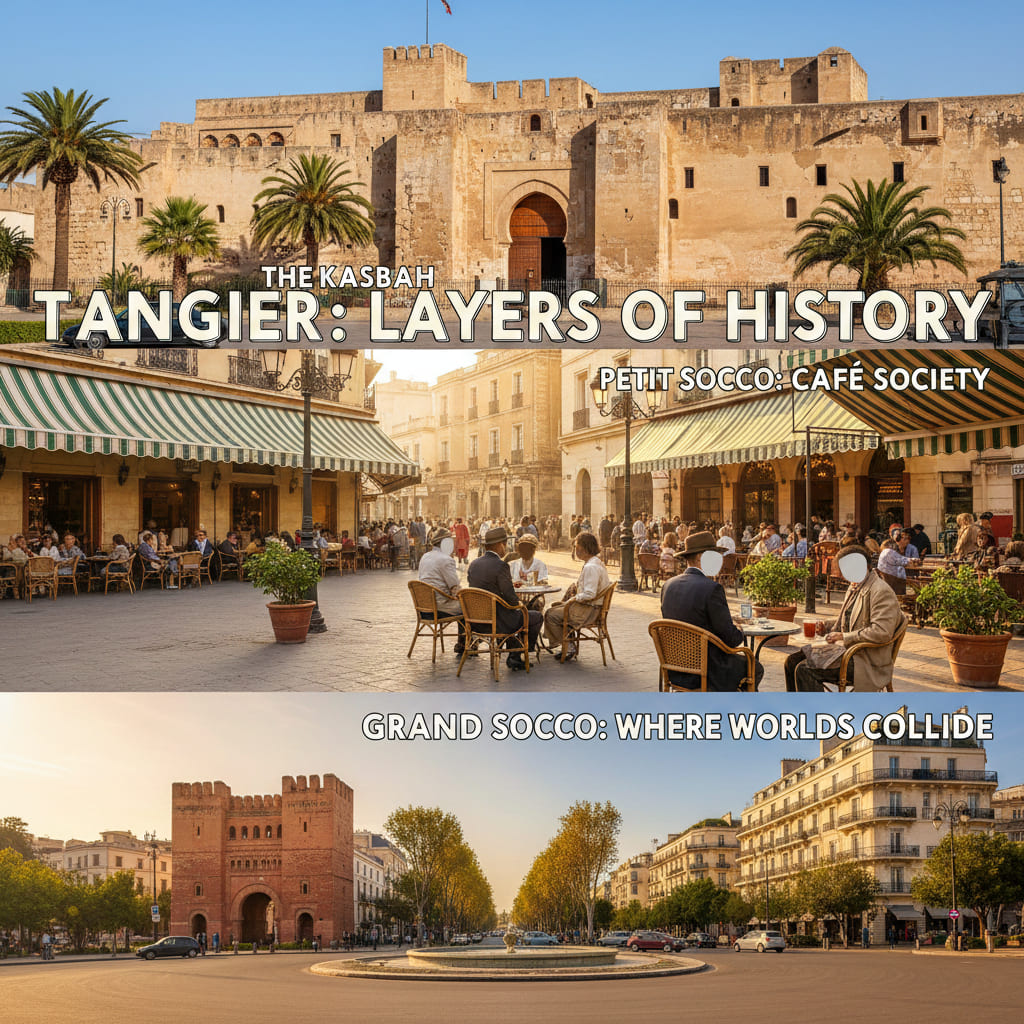
The Kasbah Museum in Tangier’s old medina, housed in the former Sultan’s palace, covers the city’s remarkably layered history and is worth prioritizing. The Petit Socco, the small square at the heart of the old medina, has the remnant atmosphere of Tangier’s legendary mid-20th century café society, when writers and artists and intelligence operatives from a dozen countries shared tables and information in roughly equal measure. The Grand Socco just outside the medina walls is where the old city meets the French-built ville nouvelle in a collision of architectural eras that captures Tangier’s identity in a single glance.
For travelers who are already planning to fly out of Tangier Ibn Battouta Airport at the end of their Morocco trip, combining a Tangier day trip with a one-way journey from Chefchaouen to the airport makes logical sense and eliminates a redundant travel day.
Moulay Idriss Zerhoun: the sacred town worth the distance
Moulay Idriss is further from Chefchaouen than the other options on this list, sitting roughly 180 kilometers to the south near the Roman ruins of Volubilis, and reaches the outer practical limit of what constitutes a realistic day trip rather than an overnight excursion.
The town holds particular significance in Moroccan religious life. It is the burial site of Moulay Idriss I, founder of Morocco’s first Arab dynasty and a great-grandson of the Prophet Muhammad. For centuries it was closed to non-Muslims overnight. It remains one of Morocco’s most sacred sites, and visitors approach it with a reverence that shapes the experience in ways most tourist destinations do not.
For travelers coming from the Fes direction or already planning to visit Volubilis, adding Moulay Idriss on the way back to Chefchaouen is logical. As a standalone day trip, the driving time is approximately three hours each way. That makes it a long day. It works best for travelers with a specific interest in Moroccan religious architecture and history, not for those looking for a casual outing.
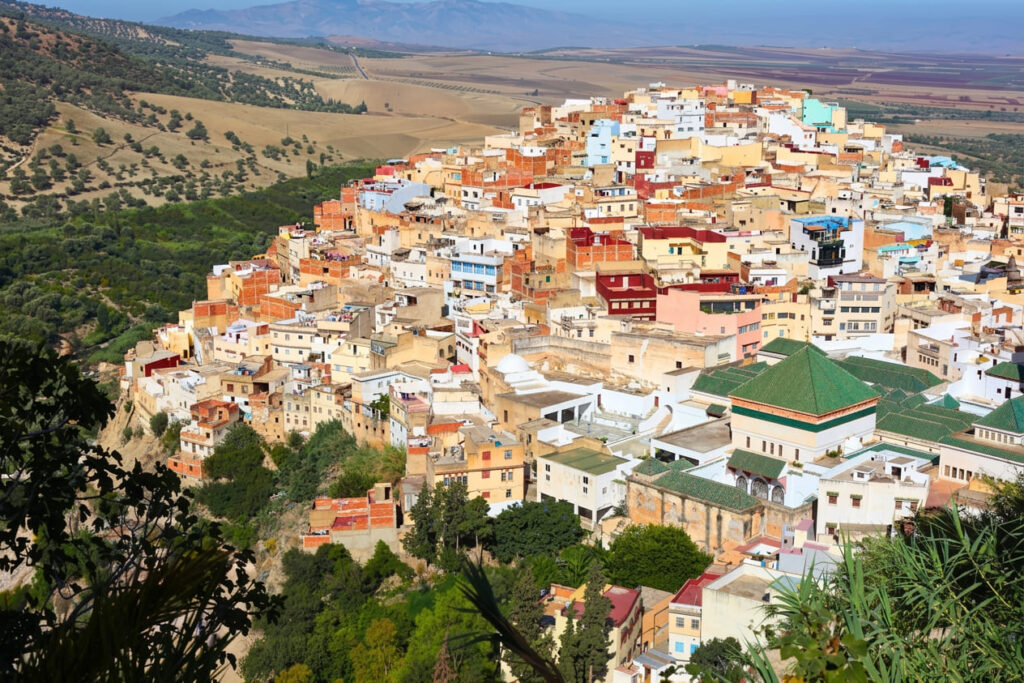
The view of the town from the belvedere above it, white and green in the fold of two hills, is one of the most striking images in northern Morocco and alone justifies the detour for photographers with the time to make it work.
A practical comparison of all options
| Destination | Distance | Travel time | Best transport | Ideal trip length | Best for |
| Akchour Waterfalls | 28 km | 45 min | Grand taxi or driver | Full day | Hikers, nature lovers |
| Tetouan | 45 km | 45-60 min | Grand taxi | Half or full day | History, authentic medina |
| Tangier | 120 km | 2.5-3 hrs | Private driver | Full day | Culture, architecture |
| Moulay Idriss | 180 km | 3 hrs | Private driver | Full day (long) | Religious history, photography |
Choosing based on what you actually want
The temptation with a list like this is to try to fit multiple day trips into a short stay, which almost always produces a schedule that feels more like logistics management than travel.
A more useful framework: identify the one experience that is most different from what the Chefchaouen medina already gives you, and build your day trip around that.
After two days of walking blue alleyways, Akchour is the obvious answer if you want something physically different. Tetouan makes the more instructive destination for anyone curious about what a Moroccan medina looks like when it has not been reshaped by tourism. Those interested in Tangier’s literary and geopolitical history will find the longer travel time justified. And if Moulay Idriss has been on a list in the back of your mind since you read something about Moroccan pilgrimage culture years ago, this might be the trip to finally make it happen.
The mountains around Chefchaouen also offer extended hiking options that do not require leaving the immediate area. Above the Spanish Mosque trail, the Rif landscape continues into terrain that is both accessible and genuinely beautiful, and a self-guided half-day walk above the treeline gives you a perspective on the region that no paved road quite delivers.
The practical details for your time inside the city itself, from the best neighborhoods to the quietest corners of the medina, are covered in full in the guide to things to do in Chefchaouen, which pairs naturally with this day trip planning as the two halves of a well-rounded northern Morocco itinerary.
Have you found that the places surrounding a destination sometimes tell you more about it than the destination itself, or do you prefer to go deep in a single place rather than spreading out?