Moroccan street food: snacks, markets & night eats you cannot miss
The real flavor of Morocco often comes from a plastic stool at a market stall rather than a white-tablecloth restaurant. Street vendors across the country serve everything from spiced snail soup to stuffed sardines to honey-drenched pastries, creating an edible adventure at every turn. For travelers willing to follow their nose and embrace a little chaos, Moroccan street food offers some of the most memorable eating experiences available anywhere. This vibrant scene represents just one layer of the broader Moroccan food landscape that makes the country a culinary destination.
Djemaa el-Fna: the greatest food show on earth
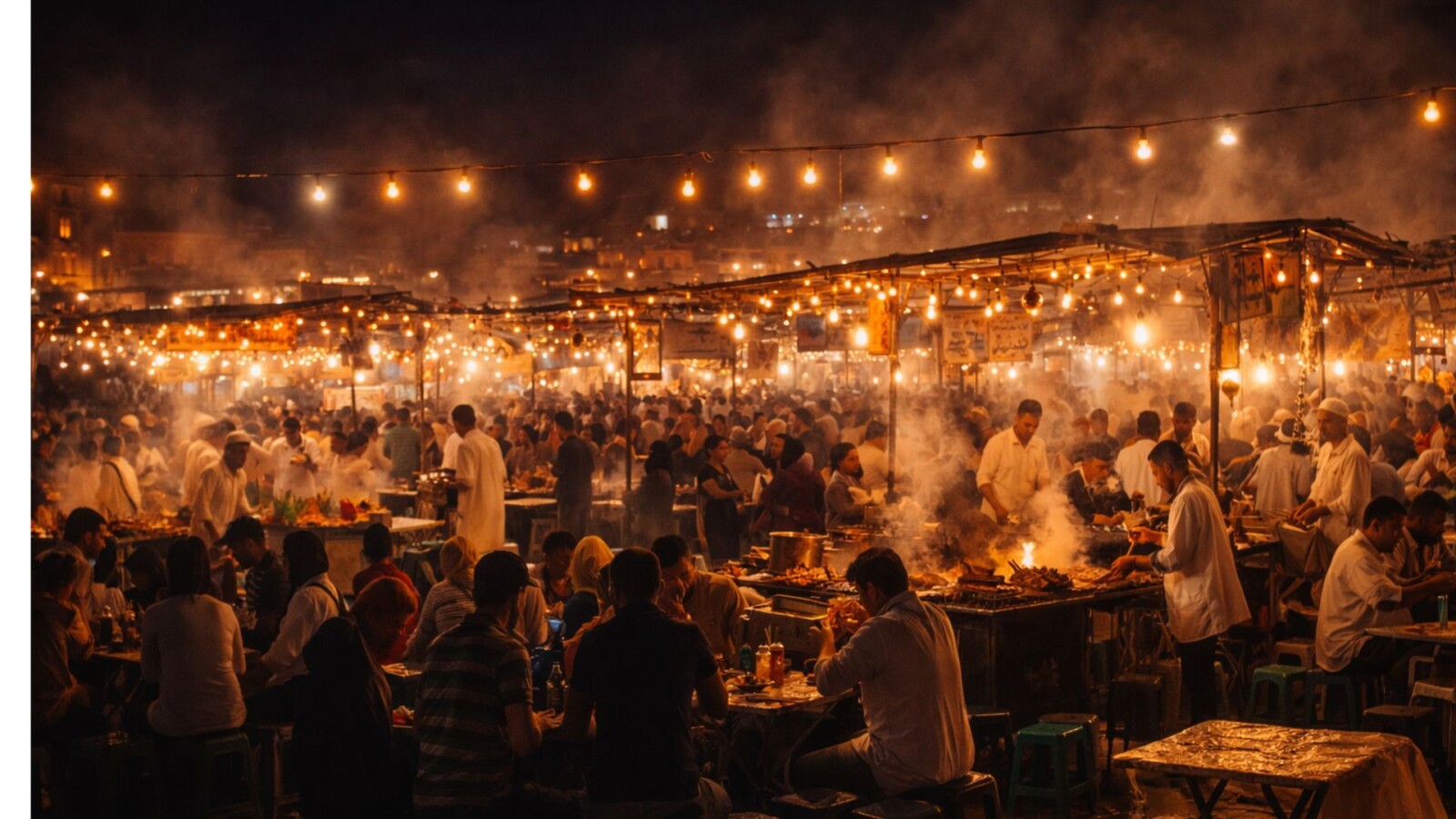
No discussion of Moroccan street food can skip Marrakech’s famous square. As the sun sets, Djemaa el-Fna transforms from a daytime marketplace into one of the world’s most spectacular outdoor food courts. Smoke rises from dozens of grills. Vendors shout to attract customers. Lights flicker against the darkening sky. The energy is intoxicating.
The setup follows an unwritten choreography repeated nightly. Vendors wheel in their carts and assemble their stalls in roughly the same spots. Each specializes in specific items, from grilled meats to fried fish to fresh orange juice. Plastic tables and benches materialize from nowhere, creating impromptu dining rooms in the middle of the chaos.
Navigating the square takes some strategy. The vendors closest to the main entrances tend to be most aggressive with tourists, employing pushy tactics that can sour the experience. Walking deeper into the square often leads to mellower interactions and sometimes better food. Watching where Moroccan families sit provides useful guidance.
The food itself ranges from familiar to adventurous. Grilled lamb chops, merguez sausages, and chicken skewers satisfy conservative eaters. Sheep head, snail soup, and tripe challenge those seeking authenticity points. Most stalls display their offerings openly, so you can point at whatever looks appealing without needing to decipher a menu.
Prices in Djemaa el-Fna run higher than street food elsewhere in Morocco, but still represent excellent value by international standards. A full meal with bread, salads, grilled meat, and a drink rarely exceeds ten dollars. Confirm prices before sitting down to avoid surprises, though outright scams are less common than the square’s reputation suggests.
The essential street food items
Certain foods appear on street corners across Morocco, forming the core vocabulary of the country’s casual eating scene.
Msemen is the flatbread you’ll encounter most frequently. These square, layered pancakes come off the griddle crispy on the outside and chewy within. Vendors fold them around cheese, honey, or kefta for a quick handheld meal. Breakfast in Morocco often means msemen with butter and honey alongside mint tea.
Sfenj are Moroccan doughnuts, rings of fried dough sold by vendors who seem to appear on every corner during morning hours. Unlike American doughnuts, sfenj aren’t heavily sweetened, relying on a light dusting of sugar or a drizzle of honey. They’re best eaten warm, which means buying from a vendor with steady turnover.
Harcha resembles an English muffin made from semolina rather than wheat flour. The slightly gritty texture and golden crust make it perfect for slathering with soft cheese or jam. Street vendors sell harcha throughout the day, though morning remains prime time.
Brochettes are skewered meats grilled over charcoal, Morocco’s answer to kebabs. Lamb, beef, chicken, and kefta all get the brochette treatment, usually seasoned with cumin and salt. The best vendors maintain screaming-hot coals that char the exterior while keeping the interior juicy.
Bocadillos reveal the Spanish influence on northern Morocco. These sandwiches stuff crusty baguettes with various fillings including grilled meat, fried fish, or the beloved combination of fried potato and egg. The sandwich stalls near Tangier’s port serve some of the country’s best.
| Street Food Item | Description | Best Time to Eat | Typical Price |
| Msemen | Layered flatbread, crispy and chewy | Breakfast, snack | 3-5 MAD |
| Sfenj | Fried dough rings, lightly sweet | Morning | 2-3 MAD each |
| Harcha | Semolina griddle bread | Breakfast | 3-5 MAD |
| Brochettes | Grilled meat skewers | Lunch, dinner | 15-30 MAD |
| Bocadillos | Stuffed baguette sandwiches | Lunch | 15-25 MAD |
| Maakouda | Fried potato patties | Anytime | 5-10 MAD |
Snails and other adventurous eats
Morocco’s street food scene includes options that push beyond the comfort zone of many Western travelers. These dishes offer authentic local flavor for those willing to take the plunge.
Babbouche is snail soup, and it’s far more popular than outsiders might expect. Vendors ladle small snails in a cumin-heavy broth into ceramic bowls, providing toothpicks for extracting the meat. The broth itself is the real star, warm and earthy with a depth that comes from hours of simmering. Locals swear by its medicinal properties, claiming it cures everything from colds to digestive troubles.
The snail carts are easy to spot, usually surrounded by steam and a crowd of slurping customers. The etiquette involves drinking the broth first, then fishing out the snails one by one. Your first few attempts at extraction will be clumsy, but technique improves quickly. The taste is surprisingly mild, more about texture and broth than any strong snail flavor.
Sheep head appears in the medinas of Fes and Marrakech, where vendors display the roasted heads proudly. Customers order specific parts including cheeks, tongue, brain, and eyes. The meat is tender from slow roasting, and the experience is less challenging than it sounds once you get past the visual.
Tangia represents Marrakech’s unique contribution to Moroccan street food. This slow-cooked lamb dish cooks for hours in the embers of public hammam ovens. The preparation is simple, just lamb with preserved lemons, cumin, saffron, and olive oil, but the low and slow cooking produces impossibly tender meat. Finding tangia requires asking around, as it’s not as visible as grill stalls.
Regional street food specialties
Different cities put their own spin on street eating, reflecting local ingredients and traditions.
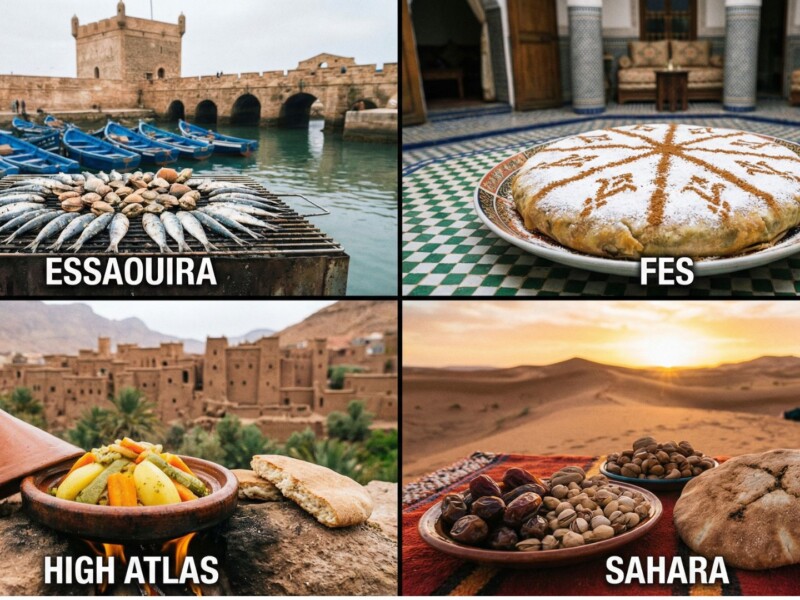
Essaouira centers its street food scene on seafood. The port area features a row of stalls grilling the morning’s catch, from sardines to shrimp to squid. You pick your fish from the display, negotiate a price, and wait while it’s grilled with chermoula, a marinade of cilantro, garlic, cumin, and paprika. Simple and spectacular.
Fes offers the most refined street food, reflecting the city’s status as Morocco’s culinary capital. The medina hides vendors selling briouat, crispy phyllo triangles stuffed with spiced meat or cheese. Pastry shops produce elaborate sweets including chebakia, the sesame cookies essential to Ramadan. The balance between street casual and serious craft sets Fes apart.
Casablanca embraces its cosmopolitan identity with diverse street food options. The central market area buzzes with vendors serving everything from traditional Moroccan fare to French-influenced sandwiches to fried fish straight off the Atlantic boats. The working-class neighborhoods offer the most authentic eating. It is the perfect starting point for a street food journey from Casablanca to Agadir.
Tangier shows its Spanish heritage through bocadillos and tapas-style snacking. The cafes along the Petit Socco serve excellent people-watching alongside small plates. The port area specializes in fried fish sandwiches that rival anything across the strait in Spain.
Chefchaouen in the Rif Mountains has a smaller street food scene but excels at fresh goat cheese sold by women from surrounding villages. The cheese appears in everything from msemen fillings to stand-alone snacks, representing the pastoral traditions of the region.
Night markets beyond Marrakech
Djemaa el-Fna gets all the attention, but other cities offer night market experiences with fewer crowds and lower prices.
Meknes has an underrated food scene centered on Place el-Hedim, which hosts a smaller version of the Marrakech chaos. The grills here serve excellent merguez, and the absence of tourist hordes means more genuine interactions. Locals fill the square on warm evenings, creating an atmosphere that feels less performative than the famous alternative.
Rabat offers night eating along the corniche and near the medina entrance. The capital’s food stands tend toward slightly more polished presentations, reflecting the city’s governmental status. Fish restaurants along the river serve grilled catch at reasonable prices, especially compared to coastal tourist towns.
Agadir rebuilt after a devastating 1960 earthquake and lacks the traditional medina of other cities. The night eating here concentrates in the Souk el-Had area and along the beachfront, with a more modern feel that appeals to travelers preferring order over chaos.
Practical tips for safe street eating
Concerns about food safety keep some travelers from fully embracing Moroccan street food. A few sensible precautions reduce risk without requiring you to miss the experience entirely.
Watch the turnover. Busy stalls with steady customers move food quickly, meaning less time for problems to develop. The popular vendor with a line usually serves safer food than the empty cart nearby.
Observe the cooking. Freshly grilled meats and just-fried breads carry less risk than items that have been sitting. If you can watch your food being cooked, you know it’s reaching safe temperatures.
Start slow. Give your stomach a day or two to adjust before going all-in on adventurous street food. Beginning with safer options like grilled meats and fresh bread helps acclimate your digestive system.
Skip the salads. Raw vegetables washed in local water pose more risk than cooked foods. The delicious-looking chopped salads at grill stalls are the most likely culprits for stomach troubles.
Trust your instincts. If something looks or smells wrong, walk away. Plenty of other vendors are serving the same dishes, so no single stall is worth the gamble.
Carry hand sanitizer. Eating with your hands is part of the experience, and having a way to clean up before diving in provides peace of mind.
Most travelers experience no problems with Moroccan street food, and the horror stories tend to come from ignoring obvious warning signs. Common sense goes a long way.
The street food experience
Moroccan street food offers more than sustenance. It provides access to daily life that restaurants cannot match. The vendor who has been flipping msemen on the same corner for thirty years. The family-run grill passed through generations. The morning routine of sfenj and mint tea that millions of Moroccans share. These moments connect you to the country in ways that formal dining cannot replicate.
The chaos is part of the charm. Accepting that you might not know exactly what you’re ordering, that prices require negotiation, that seating is first-come-first-served on shared benches, this acceptance opens doors. Fighting against the informality only creates frustration.
Budget travelers find street food essential for stretching dirhams further. Mid-range travelers discover flavors they’ll never forget. Even luxury travelers benefit from occasional street meals that ground the experience in reality. The best Moroccan food journey combines all levels of eating.
Beyond the stalls
Understanding street food provides context for appreciating the rest of Moroccan cuisine. The spices that flavor those grilled brochettes are the same ones defining elaborate tagines. The bread you tear to scoop street snacks is the same khobz appearing at family dinners. Street food is not separate from Moroccan culinary tradition but rather its most accessible expression.
Travelers intrigued by the flavors encountered at market stalls often want to understand what makes them distinctive. The answer lies in the Moroccan spices that form the foundation of every dish, from the simplest grilled meat to the most complex celebration meal.