Moroccan mint tea: the art of brewing, serving, and understanding Morocco’s national drink
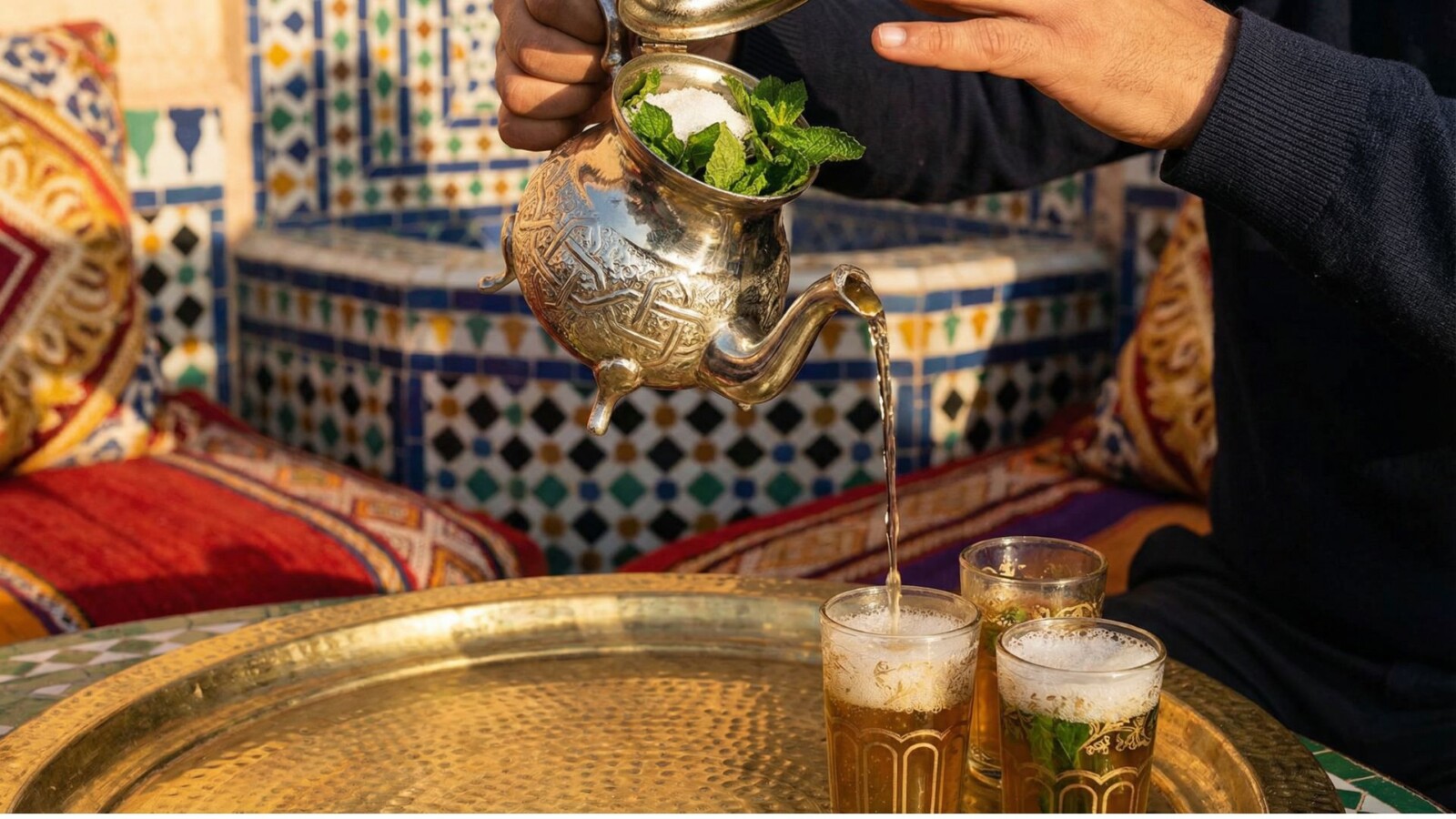
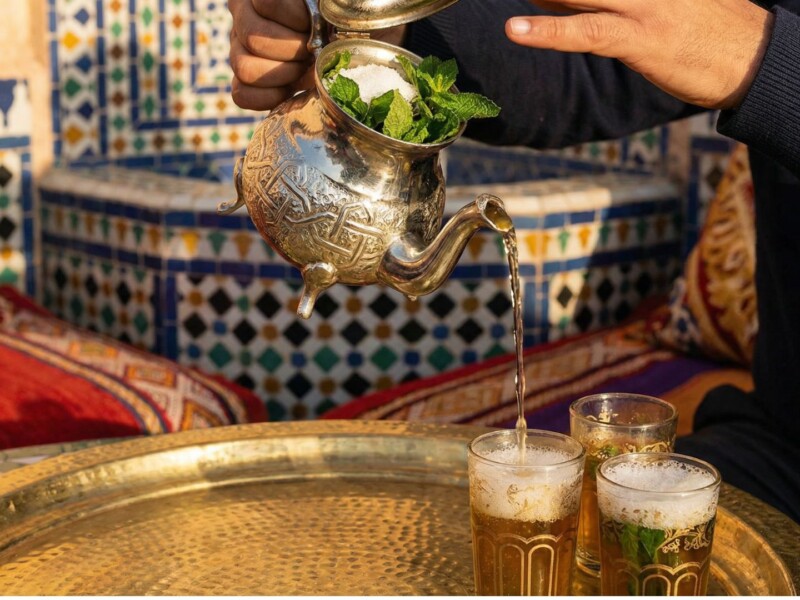
No experience in Morocco is complete without mint tea, served in small glasses from a silver pot raised high above the table. This ritual happens everywhere, from grand riads to roadside cafes to family living rooms, marking hospitality in a way no other gesture quite matches. Moroccan mint tea is simultaneously a drink, a social lubricant, and a cultural institution that visitors encounter daily. Learning its significance adds depth to every pour and connects to the larger traditions of Moroccan food and hospitality.
More than just a drink
Moroccans call their tea “Berber whiskey” with a knowing smile, acknowledging its central role in a culture where alcohol plays little part. The joke captures something true about how tea functions socially. Business deals happen over glasses of tea. Friendships are cemented. Guests are welcomed. Arguments are softened. The drink creates space for connection in ways that transcend its simple ingredients.
The offering of tea carries meaning that visitors should understand. When someone invites you to drink tea, they’re extending hospitality that should not be casually refused. Saying no can cause genuine offense, especially in home settings where the invitation represents generosity and welcome. Even if you’ve had three glasses already and your teeth are floating, accepting another pour shows respect for the host.
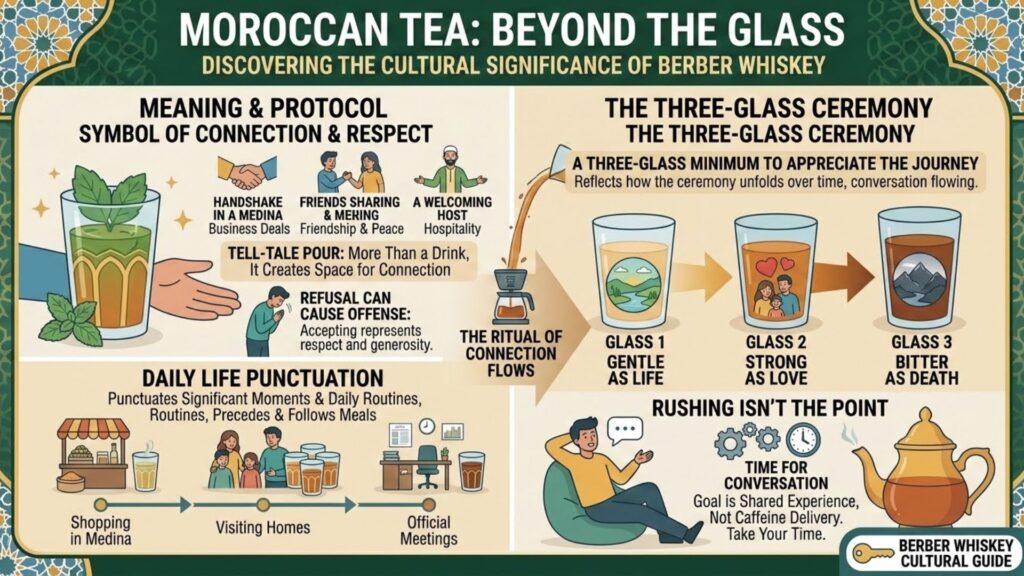
The traditional saying claims you should drink at least three glasses. The first is “gentle as life,” the second “strong as love,” and the third “bitter as death.” In practice, the three-glass minimum reflects how Moroccan tea ceremonies unfold over time, with conversation flowing between refills. Rushing through feels wrong because the point isn’t caffeine delivery but rather the shared experience.
Tea accompanies every significant moment and plenty of insignificant ones too. Shopping in the medina involves tea with merchants who may or may not end up selling you anything. Visiting someone’s home means tea before, during, and after any meal. Meetings with officials begin with tea service regardless of the agenda. The drink punctuates daily life so consistently that its absence would feel stranger than its presence.
The ingredients: simple but specific
Moroccan mint tea requires only three components, but each matters more than casual preparation might suggest.
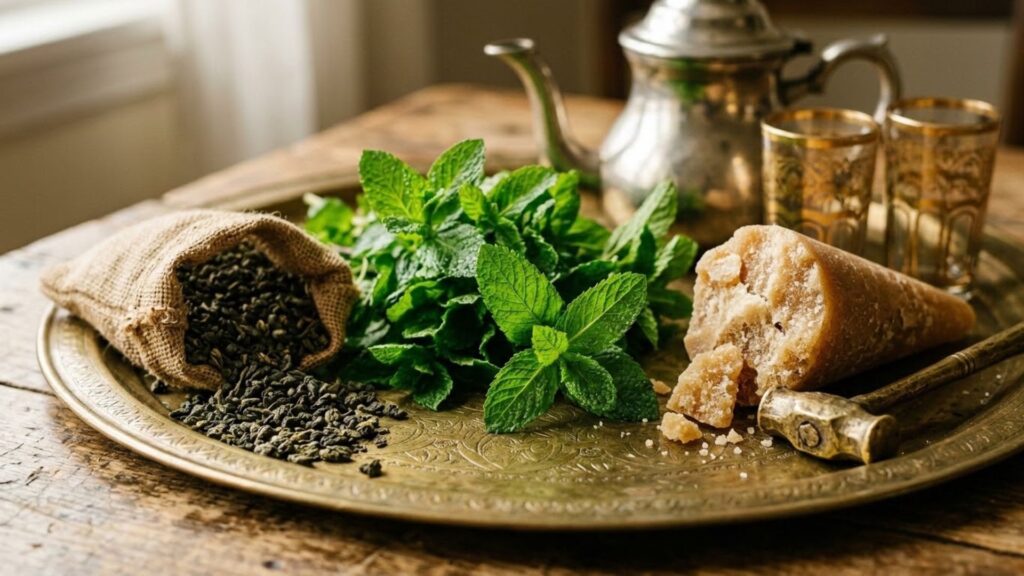
Chinese gunpowder green tea forms the base. The name comes from the tightly rolled pellets that resemble gunpowder grains, which unfurl during steeping. This style of green tea has enough body to stand up to sugar and mint without becoming bitter when brewed strong. Substituting other green teas produces acceptable but noticeably different results.
The gunpowder tea available in Morocco typically arrives from China, continuing a trade relationship dating back centuries. Quality varies considerably, with the best versions sold in tea shops rather than generic market stalls. Serious tea drinkers develop preferences for specific grades and origins, though casual visitors rarely need this level of expertise.
Fresh spearmint provides the signature flavor that makes Moroccan tea instantly recognizable. The variety grown locally, called nana, has a sweeter, less aggressive character than peppermint. The leaves should be bright green and fragrant, added generously enough to pack the pot. Dried mint works in emergencies but misses the vibrancy of fresh.
Mint grows throughout Morocco and appears in markets year-round. During summer months, the bunches are enormous and inexpensive. Winter mint is smaller but still available and still essential. No self-respecting Moroccan kitchen runs out of fresh mint for long.
Sugar completes the trinity, and Moroccans use it liberally. Traditional preparation includes hard sugar cones that must be chipped apart, though granulated sugar has become common. The sweetness level would strike many Westerners as excessive, but the sugar balances the tannins in strong tea and creates the characteristic flavor profile.
Asking for less sugar or none at all is possible but slightly awkward. The tea maker has already prepared the pot according to local taste, and requesting modifications implies criticism. In restaurants and cafes, asking for sugar on the side sometimes works. In homes, gracefully accepting what’s offered shows better manners than making special requests.
| Ingredient | Traditional version | Modern alternatives | Notes |
| Tea | Chinese gunpowder green | Other green teas work | Rolled pellets unfurl when steeped |
| Mint | Fresh nana spearmint | Dried mint in emergencies | Generous amount essential |
| Sugar | Hard cone sugar | Granulated sugar | Traditionally very sweet |
| Water | Boiling | Boiling | Temperature matters |
The brewing process: where ritual meets chemistry
Making Moroccan tea properly involves steps that might seem fussy but each serves a purpose. The technique balances extracting flavor from the tea without releasing excessive bitterness while integrating mint and sugar into a cohesive whole.
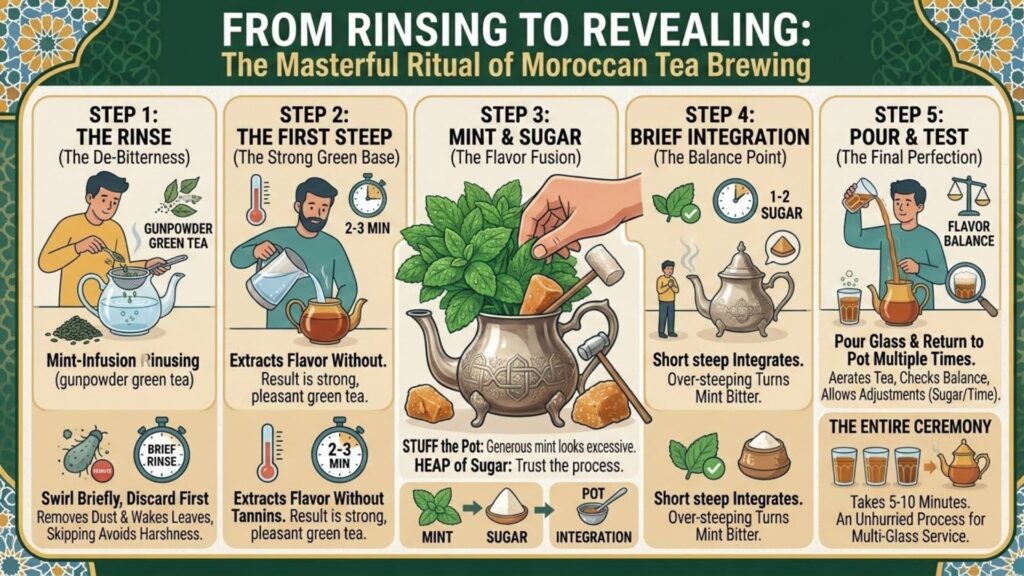
Step one: Rinse the tea. A small amount of boiling water goes into the pot with the dry tea leaves, swirled briefly, then discarded. This first rinse removes dust and begins waking up the leaves without extracting the bitter compounds that come from longer steeping. Skipping this step produces harsher results.
Step two: First steep. Fresh boiling water covers the rinsed tea and steeps for two to three minutes. This extraction pulls flavor without the tannins that longer brewing would release. The liquid at this stage tastes like strong green tea, pleasant but not yet Moroccan.
Step three: Add mint and sugar. Fresh mint gets stuffed into the pot, packed tightly enough that it seems excessive. Sugar joins the party, typically several heaping tablespoons per pot. The amounts look alarming to the uninitiated but trust the process.
Step four: Brief second steep. The mint and sugar need just a minute or two to integrate. Longer brewing turns the mint bitter rather than bright. The sugar dissolves into the hot liquid, sweetening throughout rather than settling at the bottom.
Step five: The pour test. Before serving, the tea maker pours a glass and returns it to the pot, repeating several times. This aerates the tea and checks the flavor balance. Adjustments happen now, with more sugar if needed or additional steeping time if the flavor seems weak.
The entire process takes five to ten minutes and produces a pot serving multiple glasses. The tea maker controls the process from start to finish, and guests simply wait for the ceremony to complete. Attempting to help or hurry things along misses the point.
The theatrical pour
The pour itself is performance art that serves practical purposes while demonstrating skill. The tea maker holds the pot high above the glasses, sometimes a foot or more, while maintaining a steady stream that fills without splashing. The height aerates the tea, creating a slight froth on top while cooling the liquid to drinkable temperature.
Watching an experienced tea pourer work is genuinely impressive. The stream remains controlled despite the distance, starting and stopping precisely as glasses fill. The angle, speed, and height all matter, and mastering the technique takes practice. Beginners splash, experienced hands make it look effortless.
The froth matters more than mere appearance. The bubbles indicate proper aeration and suggest the tea was prepared correctly. A flat pour lacking froth implies something went wrong, either in brewing or in technique. The frothy top also helps cool the tea for drinking, since the small bubbles release heat quickly.
Glasses are typically filled in stages, pouring partially into each before returning to fill completely. This ensures consistent strength across all glasses rather than the first being weaker than the last. The democratic distribution reflects the communal nature of tea drinking, where everyone receives equal treatment.
The small glasses hold only a few ounces, meant to be drunk in several sips rather than gulped. The size encourages savoring and creates natural pause points for conversation. Empty glasses signal readiness for refills, and the pot usually contains enough for several rounds.
Tea service etiquette
Navigating Moroccan tea culture involves understanding unwritten rules that govern the experience. Getting these right shows respect and deepens the connection the ritual is meant to create.
Accept what’s offered. Refusing tea outright causes awkwardness at best and offense at worst. If you genuinely cannot drink another glass due to timing or health reasons, explain graciously rather than simply declining. Most hosts will understand legitimate constraints.
Use your right hand. Both for receiving the glass and for drinking, the right hand is preferred throughout Morocco and the broader Islamic world. The left hand handles less clean tasks, making its use at the table inappropriate in traditional settings.
Hold the glass properly. The small glasses get hot, so holding by the rim between thumb and forefinger keeps your fingers safe while looking correct. Wrapping your palm around the glass marks you as inexperienced and risks burns.
Pace yourself with the group. Tea drinking is communal, so finishing far ahead or behind others disrupts the shared rhythm. Take cues from those around you, especially the host or senior person present.
Compliment the tea. Expressing appreciation for the preparation honors the effort involved. Even simple phrases like “delicious” or “excellent tea” in English will be understood and appreciated. Learning the Arabic “shukran” (thank you) adds a nice touch.
Don’t help yourself. The host controls the teapot and handles all pouring. Reaching across to pour your own glass or refill others oversteps boundaries that feel natural in the West but don’t apply here.
Regional variations and additions
While the basic mint tea formula remains consistent across Morocco, regional variations add interest for travelers exploring different areas.
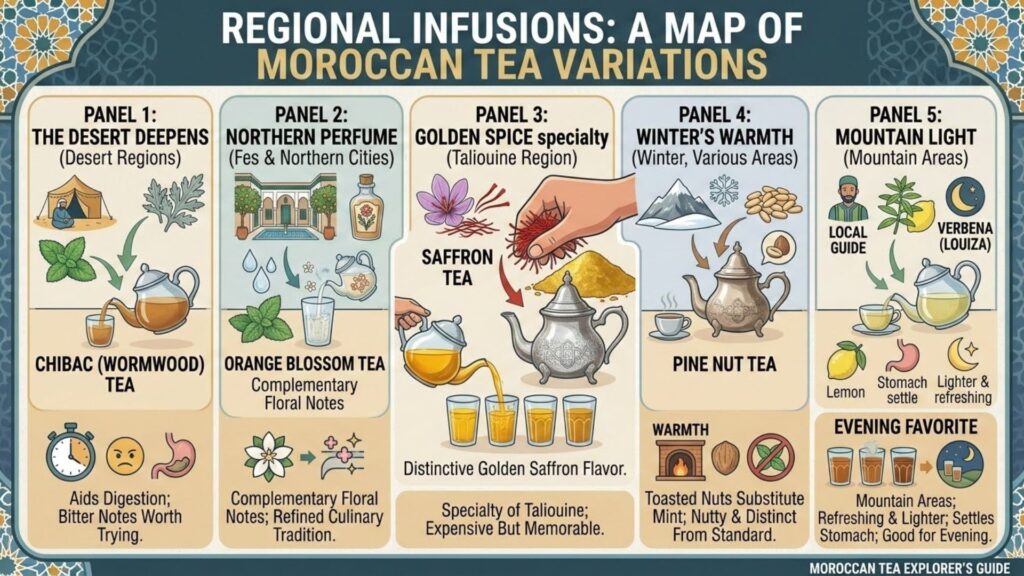
Wormwood tea appears in some desert regions, adding a slightly bitter herb called chiba to the standard mint preparation. The flavor is more complex and allegedly aids digestion after heavy meals. Not everyone enjoys the bitter notes, but it’s worth trying where available.
Orange blossom water sometimes perfumes tea in Fes and other northern cities. A few drops added to the pot create floral notes that complement the mint without overwhelming it. This refinement reflects the sophisticated culinary traditions of the former imperial capitals.
Saffron tea is a specialty of the Taliouine region where Morocco’s saffron grows. The threads steep with or instead of mint, producing golden tea with the distinctive saffron flavor. The expense of saffron makes this version less common but memorable when encountered.
Pine nut tea substitutes toasted pine nuts for mint in certain preparations, especially during winter when fresh mint quality declines. The nutty flavor creates something quite different from standard mint tea but equally enjoyable.
Fresh verbena replaces mint in some mountain areas during warmer months. The lemony herb called louiza makes refreshing tea that locals claim settles the stomach. It’s lighter than mint tea and popular for evening drinking.
Tea beyond the home
The cafe culture of Morocco centers on tea as much as conversation. Men gather in traditional cafes to drink, talk, watch football matches, and simply pass time. The atmosphere varies from bustling medina spots to quiet neighborhood haunts, but tea flows constantly in all of them.
Women historically participated less in public cafe culture, though this is changing in cities. Mixed-gender cafes in modern neighborhoods of Casablanca, Rabat, and Marrakech welcome everyone. Traditional establishments in conservative areas remain male-dominated spaces where women would feel uncomfortable.
Rooftop cafes have become popular with tourists seeking views alongside their tea. Marrakech, Fes, and Chefchaouen all offer panoramic options where the price markup buys atmosphere more than better tea. The experience can be worthwhile for the setting even if the tea itself is unremarkable.
Street vendors pour tea from large thermoses into plastic cups for customers on the move. The quality is basic, but the convenience serves workers and shoppers who need refreshment without sitting down. The price is minimal, usually just a few dirhams.
High-end restaurants and hotels serve mint tea with elaborate presentation, sometimes adding unnecessary flourishes that locals would find amusing. The silver pots become fancier, the glasses more decorative, but the basic preparation remains the same. Expensive surroundings don’t necessarily mean better tea.
Making Moroccan tea at home
The process translates well to home kitchens anywhere, assuming you can source the proper ingredients. The technique matters more than fancy equipment.
Find gunpowder green tea. Asian grocery stores typically carry it, as do specialty tea shops. Online sources work if local options fail. The tightly rolled pellets are distinctive and hard to confuse with other teas.
Source fresh mint. Spearmint works best, though peppermint substitutes in a pinch. Growing your own mint is ridiculously easy and ensures supply throughout summer. Dried mint makes acceptable tea but lacks the brightness of fresh.
Use a lot of sugar. Start with two to three tablespoons per pot and adjust to taste. Western palates often prefer less sweetness, and that’s fine for home preparation where no one’s judging. But try the traditional sweet version at least once to understand what Moroccans actually drink.
Any teapot works. The decorative Moroccan pots look beautiful but aren’t essential. A standard teapot produces identical results without the expense. The important thing is following the technique, not having authentic equipment.
Practice the pour. Start at normal height and gradually increase as confidence builds. The theatrical aspect adds fun but isn’t required for good tea. Function matters more than form in your own kitchen.
A daily ritual worth embracing
Moroccan mint tea offers travelers an entry point into the culture that requires no special preparation, language skills, or cultural knowledge to appreciate. Someone will offer you tea within hours of arrival, and saying yes opens conversations that might not happen otherwise.
The ritual slows things down in a way that modern life often lacks. The preparation takes time. The drinking takes time. The multiple glasses take time. This built-in slowness creates space for the connections that make travel meaningful rather than just a checklist of sights.
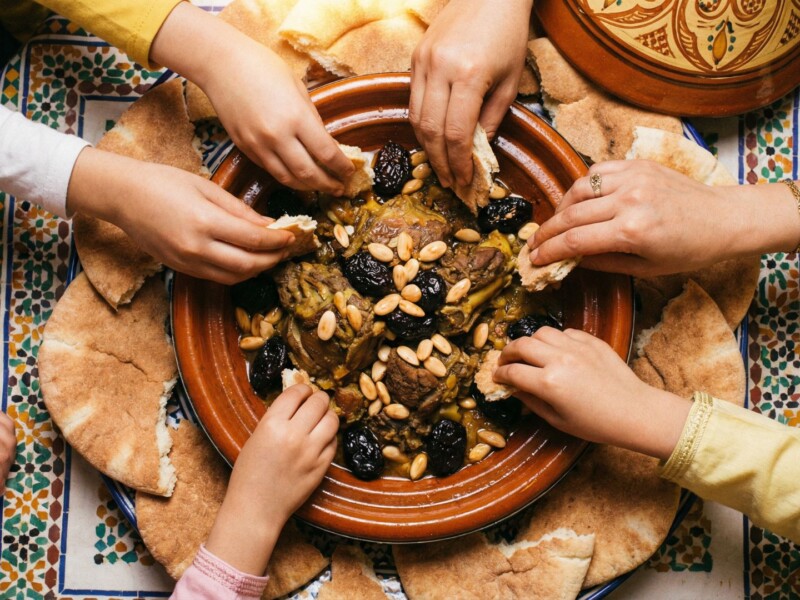
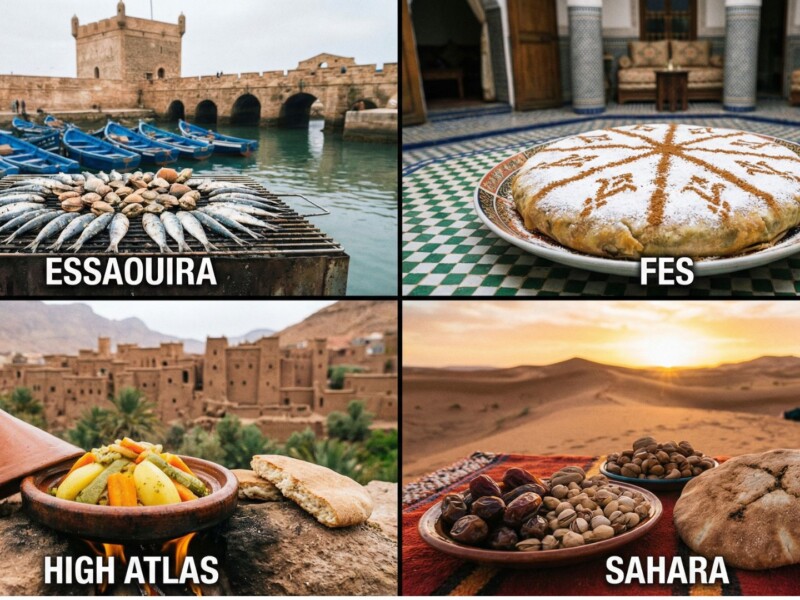
Understanding tea culture prepares visitors for the hospitality they’ll encounter throughout Morocco. The same generosity that produces endless glasses of mint tea also creates elaborate meals and warm welcomes in homes across the country. These traditions vary by region, with different areas expressing hospitality through distinct regional Moroccan food traditions that reflect local ingredients, history, and geography.