
Where to Eat in Marrakech: Best Restaurants & Local Food (2026)
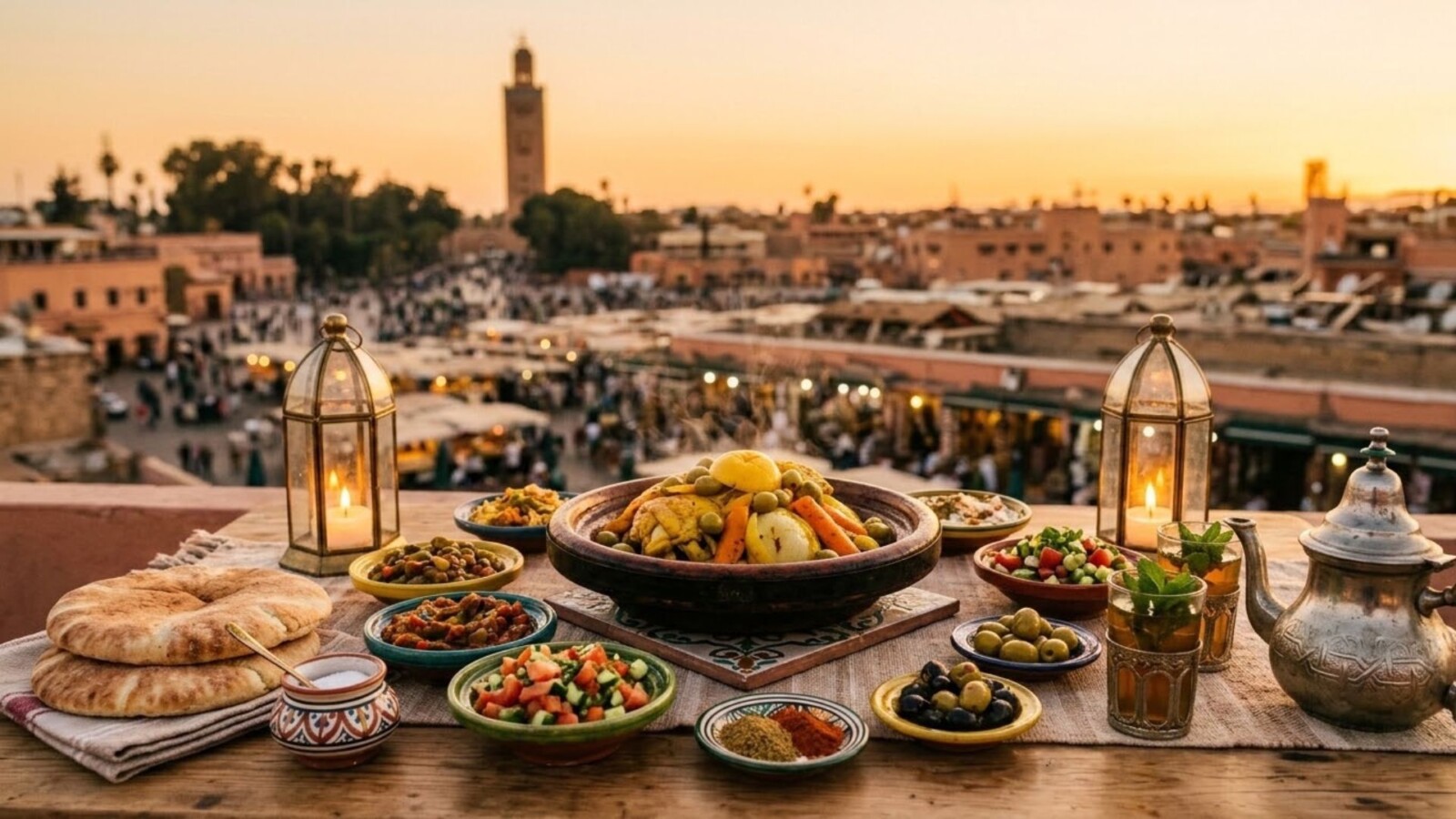
You can eat astonishingly well in Marrakech for four dollars or forty, and the trick is knowing which experience you want before you sit down. A clay bowl of steaming tanjia in a workers’ cafe, a slow rooftop dinner over the square, a fig-and-goat-cheese salad in a Gueliz bistro: they are all Marrakech, and they all belong on your trip. This guide breaks down where to eat by vibe and budget, what to order, and how to avoid the tourist traps. For the wider trip plan, keep my complete guide to traveling to Marrakech nearby, and for the full national picture, see the deep dive on Moroccan food.
Where to eat in Marrakech at a glance
| Setting | Vibe | What to order | Rough price (per person) |
|---|---|---|---|
| Jemaa el-Fnaa food stalls | Loud, lively, communal | Grilled skewers, harira, snail soup | $3 to $7 |
| Medina hole-in-the-wall | Local, no frills | Tanjia, tagine, fresh bread | $4 to $9 |
| Riad rooftop restaurant | Romantic, scenic | Pastilla, slow tagine, mint tea | $15 to $35 |
| Gueliz bistro or cafe | Modern, relaxed | Salads, fusion plates, good coffee | $10 to $25 |
| Fine-dining palace restaurant | Special occasion | Mechoui, tasting menus | $40 and up |
Eating in the medina and around Jemaa el-Fnaa
The medina is where Marrakech feeds itself, and the best meals here rarely have a sign in English. Look for the busy little places packed with locals at lunch, where a single dish arrives fast and cheap. This is the home of tanjia, the city’s signature dish of beef or lamb slow-cooked for hours in an urn-shaped clay pot buried in the embers of a hammam furnace. It falls off the bone and tastes of smoke and preserved lemon.
At dusk, the food stalls of Jemaa el-Fnaa turn the square into open-air theater. Pick a stall crowded with Moroccans rather than one whose staff chase tourists, start with a bowl of harira soup or a plate of grilled skewers, and keep small bills handy. It is chaotic, a little pushy, and genuinely fun. For the etiquette that makes these interactions smoother, see my Marrakech travel tips.
Rooftop restaurants with a view
When you want to slow down, Marrakech rooftops deliver the city’s most memorable dinners. The terraces around Jemaa el-Fnaa look straight over the square as the lanterns come on and the Koutoubia glows, while quieter riad rooftops deeper in the medina trade the spectacle for calm and candlelight. Time it for sunset, order a pastilla to start, and let a slow tagine carry the evening. Rooftop food is rarely the cheapest or the most authentic in town, but the setting is the point, and few things beat mint tea under the stars after a day in the souks.
Gueliz: modern dining and cafe culture
Cross into Gueliz, the new town, and the mood shifts to wide sidewalks, boutique bistros, specialty coffee, and a lively international scene. This is where to head when you crave a crisp salad, a wood-fired pizza, or a proper flat white after days of rich medina cooking. Gueliz also has some of the city’s best modern Moroccan kitchens, where chefs plate classic flavors with a contemporary touch. It is the natural dinner base if you are staying nearby, as covered in my guide to where to stay in Marrakech.
What to order: Marrakech dishes to try
- Tanjia: the Marrakech specialty, meat slow-cooked in a clay urn until meltingly tender. Order it in the medina, not on a rooftop.
- Tagine: chicken with preserved lemon and olives, or lamb with prunes and almonds, simmered slow in the conical pot.
- Pastilla: a flaky pie of pigeon or chicken dusted with sugar and cinnamon, sweet and savory at once.
- Mechoui: whole slow-roasted lamb, pulled tender and eaten with cumin and salt.
- Harira: the tomato, lentil, and chickpea soup that anchors every table, especially at dusk.
Wash it all down with sweet mint tea, the country’s national ritual, explored in my guide to Moroccan mint tea. For the full lineup of classics beyond Marrakech, see traditional Moroccan dishes.
Street food and market eats
Some of the best eating in Marrakech costs less than a coffee back home. Chase the smell of sfenj, the fresh doughnuts fried to order in the morning, or grab a msemen flatbread folded around honey or cheese. Fresh orange juice runs a dollar a glass on the square, the olives and dried fruit in the souks are a feast in themselves, and the brave should try the snail soup simmering in vast pots at dusk. Choose busy stalls with high turnover and clean prep, and you will eat safely and superbly. For the full deep dive, see my guide to Marrakech street food.
Vegetarian and dietary options
Marrakech is easier for vegetarians than many expect. Vegetable tagines, zaalouk (smoky eggplant dip), taktouka (pepper and tomato salad), lentil dishes, and endless fresh bread and olives make meat-free eating a pleasure. Vegans should confirm that tagines are not cooked with a meat base, and gluten-free travelers will find rice and grilled dishes safer than the bread-heavy staples. In Gueliz and the tourist-facing riads, English menus and dietary labeling are common; in local medina spots, a few words of French or Arabic go a long way.
How much does eating in Marrakech cost?
You control the budget almost entirely. Street food and local cafes will feed you well for five to ten dollars a day, mid-range riad and Gueliz restaurants run fifteen to thirty per meal, and fine dining climbs past forty. A smart rhythm is to eat your big meal at lunch, when local menus are cheaper and lighter on crowds, then keep dinners simple or splurge on one memorable rooftop night. Carry small bills, confirm whether service is included, and check the bill for items you did not order.
Dining etiquette worth knowing
Meals in Morocco are social, and a little etiquette earns real warmth. Eat with your right hand, use bread to scoop from shared dishes, and accept mint tea when it is offered, since refusing can feel cold. Tipping a few dirhams is normal and appreciated. For the deeper cultural context around shared plates, hospitality, and table customs, read my guide to Moroccan dining etiquette.
Where to eat in Marrakech FAQ
What food is Marrakech famous for? Tanjia, the slow-cooked clay-urn meat dish unique to the city, plus tagine, pastilla, and the legendary food stalls of Jemaa el-Fnaa at night.
Is the food at Jemaa el-Fnaa safe to eat? Generally yes, if you pick stalls busy with locals and high turnover. Fresh, hot, fast-moving food is your best bet.
Where do locals actually eat in Marrakech? In small medina cafes and tanjia spots away from the main square, and in the working-class neighborhoods of Gueliz and beyond, where a single dish is cheap, fast, and excellent.
Eat with curiosity and a little strategy: a local lunch, a street-food snack, and one unforgettable rooftop dinner, and you will taste the real range of the city. When you are ready to slot these meals into your days, drop them into my Marrakech itinerary, and for the sights between meals, see the best things to do in Marrakech. So which meal are you most excited for: the chaos of the square, or a quiet tagine under the stars?


