
Morocco climate: best time to visit each region for Sun, trekking, and desert
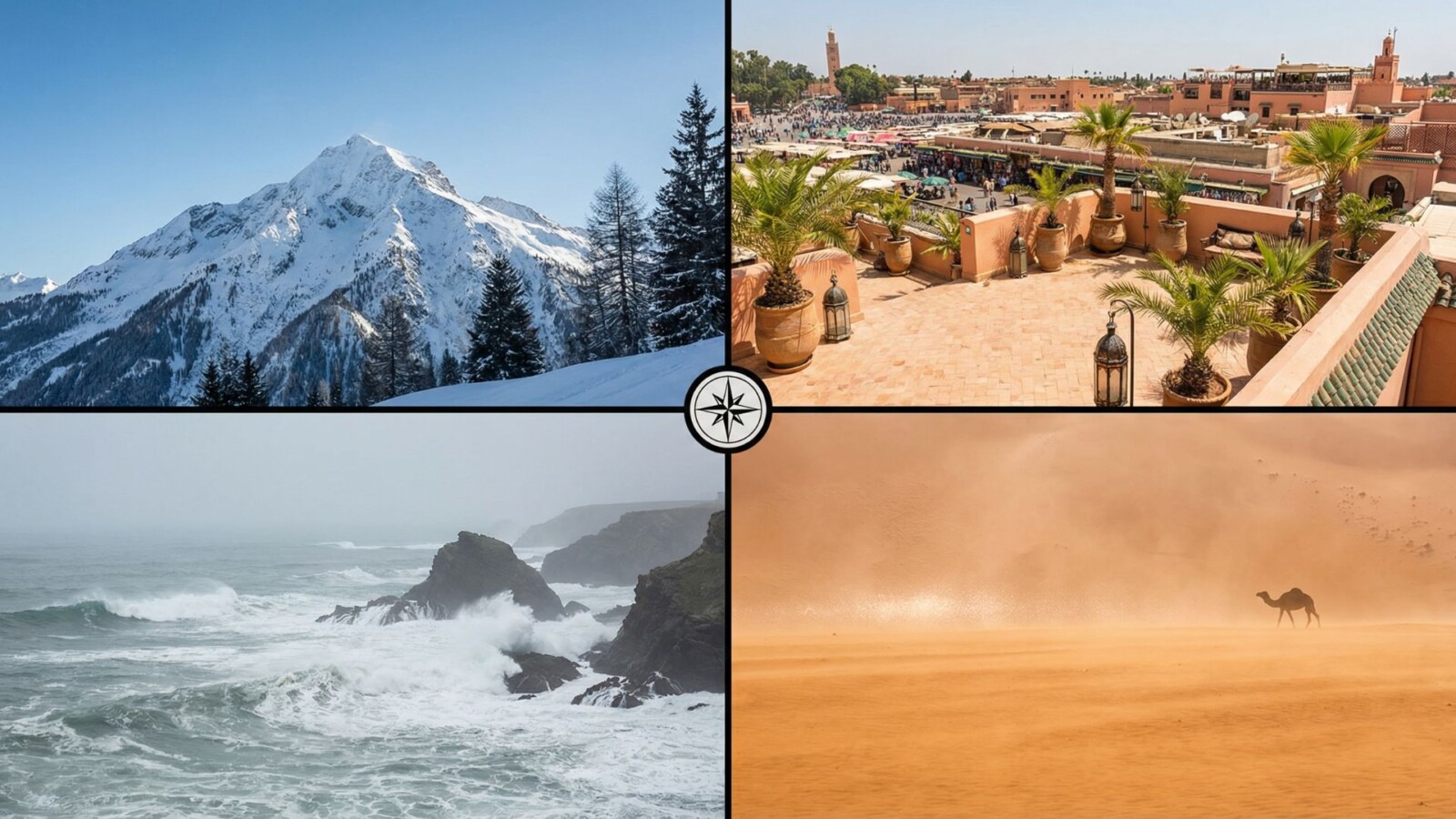
Planning a trip to Morocco without understanding its climate is like packing a suitcase blindfolded, you might get lucky, but you’ll probably regret something. The country’s weather varies dramatically from the snow-capped Atlas peaks to the scorching Sahara floor, with coastal breezes and interior heat creating entirely different travel experiences just hours apart. This guide breaks down what to expect and when, helping you align your itinerary with the natural rhythms shaped by Morocco’s remarkable geography.
A country of climate extremes
Morocco packs an absurd amount of weather diversity into a relatively small area. You can leave the beach in the morning wearing a t-shirt, drive through mountain passes requiring a winter jacket, and arrive in the desert by evening where temperatures swing 40 degrees between day and night. Few countries offer this range, and understanding it transforms trip planning from guesswork into strategy.
The main factors driving this variety are pretty straightforward. The Atlas Mountains act as a massive barrier between the moderate coastal zones and the extreme interior. The Atlantic Ocean pumps moisture and mild temperatures into the western regions. The Sahara pushes hot, dry air northward. Where these influences collide, you get microclimates that change within a few miles.
Most travelers think of Morocco as a hot country, and that reputation isn’t entirely wrong. But it tells only part of the story. Winters bring snow to the mountains and chilly nights even in Marrakech. Spring can be unpredictable anywhere. Summer roasts the interior while the coast stays pleasant. Fall offers arguably the best overall conditions. Knowing these patterns lets you pick the right time for your specific interests.
The Atlantic Coast: mild and breezy year-round
Morocco’s western coastline enjoys a Mediterranean-style climate moderated by the Atlantic Ocean. Temperatures stay remarkably stable compared to the interior, rarely getting too hot in summer or too cold in winter. This makes the coast a safe bet almost any time of year.
Summer months from June through August bring warm but manageable temperatures, typically ranging from the mid-70s to mid-80s Fahrenheit. The ocean keeps things cooler than you’d expect for this latitude, and sea breezes pick up most afternoons. Swimming is pleasant, though the Atlantic water never gets truly warm. Expect it to hover around 65 to 70 degrees even at the height of summer.
Winter from December through February sees daytime temperatures in the 60s and overnight lows in the upper 40s. Rain becomes more common, particularly in the north around Tangier and Asilah. Essaouira stays drier but windier. The famous trade winds that make it a kitesurfing paradise blow strongest during winter and spring, which can be exhilarating or annoying depending on your plans.
Spring and fall represent the sweet spots for coastal visits. March through May brings wildflowers, comfortable temperatures, and fewer tourists than peak summer. September through November offers warm seas from summer’s accumulated heat, clear skies, and a relaxed atmosphere as the crowds thin out. Surfers particularly love fall, when swells pick up and water temperatures remain tolerable.
The further south you go along the coast, the drier and warmer conditions become. Agadir and the surrounding area see over 300 days of sunshine annually. By the time you reach Dakhla in the far south, rainfall becomes almost negligible, and the climate edges toward true desert despite the ocean’s presence.
The Imperial Cities: hot summers, cool winters
Morocco’s famous inland cities – Marrakech, Fes, Meknes, and the capital Rabat – experience more pronounced seasonal swings than the coast. Summer brings serious heat, while winter can surprise travelers expecting constant warmth.
Marrakech is the poster child for Moroccan heat. July and August regularly push temperatures above 100 degrees Fahrenheit, and the city radiates stored heat well into the evening. Visiting during these months means planning around the weather: early morning explorations, long afternoon siestas, and evening activity once things cool down. Air conditioning isn’t universal, so budget accommodations can feel oppressive.
Winter in Marrakech is genuinely pleasant. Daytime highs reach the mid-60s, perfect for wandering the medina and exploring without breaking a sweat. Nights drop into the 40s, cold enough to require layers but nothing extreme. Rain falls occasionally, usually in short bursts rather than all-day affairs. Many seasoned Morocco travelers consider December through February the ideal time for Marrakech.
Fes sits further north and at higher elevation, making its winters noticeably colder. January nights can approach freezing, and the ancient medina’s stone buildings don’t hold heat well. Traditional riads often lack central heating, so pack accordingly. Summers are hot but slightly less brutal than Marrakech, with lower humidity making the heat more bearable.
Meknes and Rabat split the difference geographically and climatically. Rabat benefits from ocean proximity and stays cooler year-round. Meknes mirrors Fes in character, with cold winters and hot summers. Both cities see more rain than Marrakech, particularly from November through March.
The shoulder seasons of April to May and September to October work beautifully for all the imperial cities. Temperatures are warm without being oppressive, crowds are manageable, and the quality of light makes everything more photogenic.
The Atlas Mountains: altitude changes everything
Heading into the mountains introduces an entirely different climate equation. For every 1,000 feet of elevation gain, temperatures drop roughly 3 to 4 degrees Fahrenheit. This means conditions at the base of the Atlas can differ dramatically from what you’ll encounter higher up.
The High Atlas receives significant snowfall from November through April. Passes like Tizi n’Tichka and Tizi n’Test can close temporarily after heavy storms. Ski resorts near Oukaimeden operate during these months, offering an unexpected winter sports option just a couple hours from Marrakech. Trekking at high elevations becomes challenging or impossible depending on conditions.
Summer transforms the mountains into a refuge from lowland heat. While Marrakech bakes, villages in the High Atlas enjoy temperatures in the 70s and 80s. Nights stay cool enough for comfortable sleeping without air conditioning. This makes summer the prime season for trekking, including the popular climb up Mount Toubkal. July and August bring the most stable weather, though afternoon thunderstorms can develop over the peaks.
Spring in the Atlas is gorgeous but unpredictable. Snowmelt swells the rivers, wildflowers carpet the valleys, and the landscape looks its greenest. However, lingering snow at higher elevations can complicate ambitious treks, and weather patterns remain unsettled. Late spring from May onward offers a better bet for reliable conditions.
Fall extends the trekking season through October, with stable weather and fewer crowds than summer. November starts bringing colder temperatures and the possibility of early snow, narrowing the window for comfortable hiking.
The Middle Atlas, further north, receives even more precipitation than the High Atlas. Cedar forests thrive here thanks to winter rain and snow. The town of Ifrane, sometimes called the Switzerland of Morocco, regularly records the coldest temperatures in the country. Azrou and the surrounding area make pleasant summer escapes but require serious cold-weather gear in winter.
The Desert: extremes at their most extreme
Morocco’s Saharan regions experience some of the most dramatic temperature swings you’ll find anywhere. Understanding this helps you pack appropriately and time your visit wisely.
Summer in the desert is simply brutal. Daytime temperatures frequently exceed 115 degrees Fahrenheit, hot enough to make outdoor activity dangerous. Sand becomes too hot to walk on barefoot. Very few travelers visit during June through August, and those who do spend most of their time hiding from the sun. Even desert camps operate on reduced schedules or close entirely.
Winter offers the inverse problem. While days are pleasant, often reaching the 70s and even touching 80 degrees, nights plummet. Temperatures near freezing are common in December and January, and the dry air makes it feel even colder. Desert camps provide thick blankets and sometimes even campfires, but be prepared for genuinely cold sleeping conditions.
The golden windows for desert travel are October to November and March to April. During these months, days are warm without being oppressive, and nights are cool without being freezing. The quality of light is spectacular, with clear skies and minimal dust in the air. These periods see the highest demand for desert camps, so booking ahead is essential.
Spring occasionally brings sandstorms that can ground travel plans for a day or more. These storms are more common in March and April, and predicting them precisely is impossible. They’re part of the desert experience but definitely not pleasant when you’re caught in one.
Rainfall in the desert is minimal any time of year, but when it does rain, the effects are dramatic. Flash floods can appear suddenly in dry riverbeds, and the desert briefly blooms with improbable wildflowers. These events are rare enough that chasing them specifically isn’t practical, but if you happen to catch one, consider yourself lucky.
Putting it all together: seasonal planning
With all these regional variations, when should you actually visit Morocco? The answer depends entirely on what you want to do.
For an all-around trip hitting multiple regions, aim for April to May or September to October. These shoulder seasons offer the best compromise across different climates. You can handle the cities comfortably, trek in the mountains without snow complications, visit the desert without extreme temperatures, and enjoy the coast with pleasant conditions.
For beach and surf focus, target September through November when water is warmest and swells are building. Spring from March to May also works well, with fewer crowds than summer and comfortable temperatures.
For desert adventures specifically, book your trip between October and November or in March. The weather is ideal, and the experience feels magical without extreme cold or heat ruining the mood.
For mountain trekking, June through September provides the most reliable conditions in the High Atlas. Summer crowds can be heavy on popular routes like Toubkal, so consider September when things quiet down but weather remains stable.
For imperial cities without the heat, November through February lets you explore medinas and monuments in comfortable temperatures. Pack a jacket for evenings and don’t expect constant sunshine, but you’ll avoid the summer crush entirely.
Weather won’t ruin your trip
Here’s the honest truth: Morocco is a year-round destination if you plan appropriately. Even suboptimal timing can work fine with the right expectations and packing choices. I’ve had fantastic trips in August by embracing the slow rhythm of hot-weather travel. I’ve enjoyed winter visits by layering up and appreciating emptier attractions.
The climate shapes the experience rather than determining whether the experience is good. Understanding what you’re walking into lets you lean into the conditions rather than fighting them. Bring the right clothes, adjust your daily schedule to the weather, and you’ll find something to love regardless of season.
Once you’ve sorted out when to visit, consider building your itinerary around Morocco’s most distinctive landscapes. The country’s lush valleys and oases offer striking contrasts to both coast and desert, threading ribbons of green through otherwise arid terrain.


