
Morocco geography: mountains, deserts & coastlines every traveler should explore
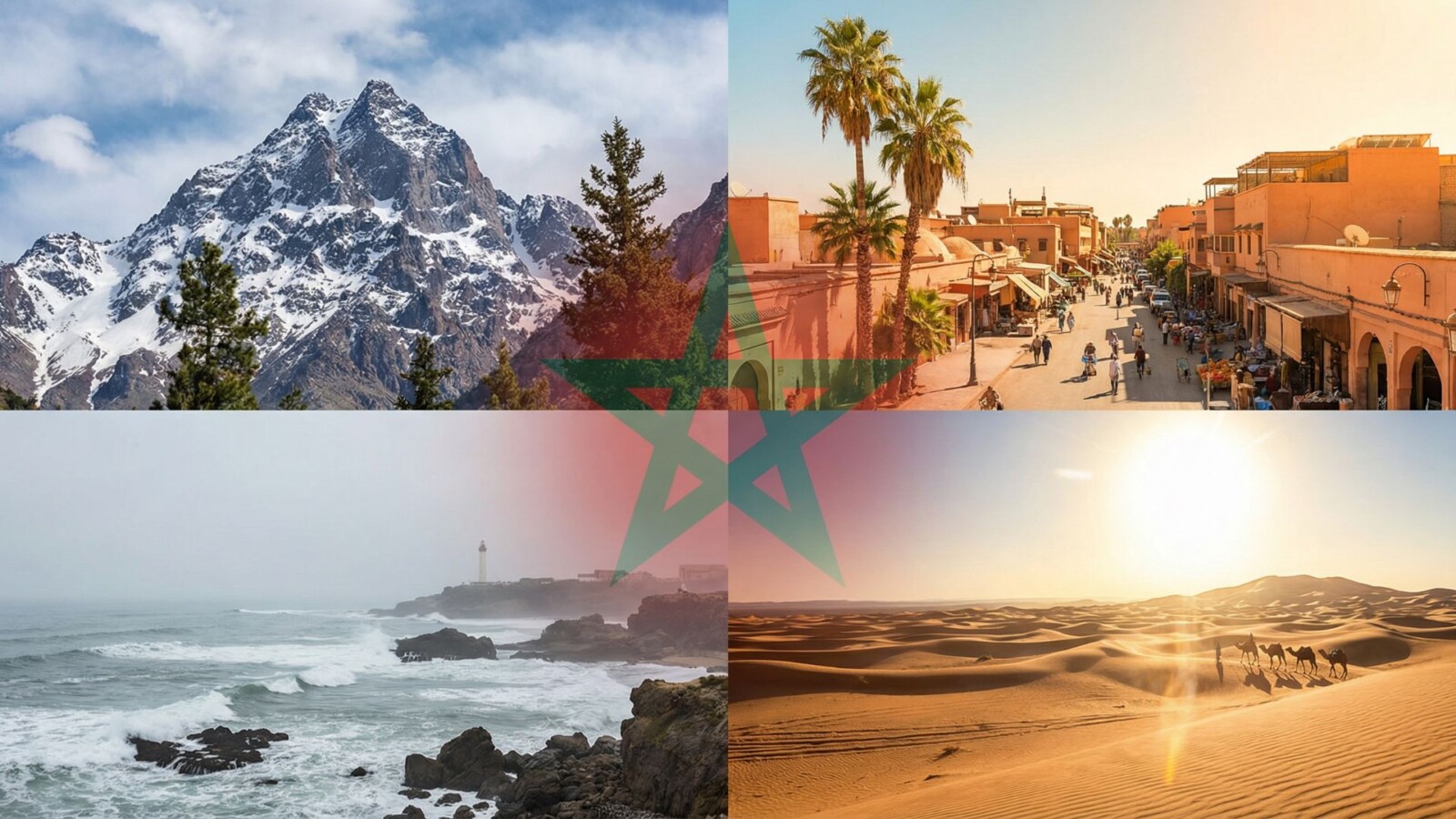
Morocco sits at the crossroads of Europe and Africa, where the Atlantic Ocean meets the Mediterranean Sea and where fertile plains give way to some of the continent’s most dramatic landscapes. For travelers seeking variety, few destinations deliver as much geographic punch in such a compact space. You can wake up beside the ocean, drive through snow-capped mountains by midday, and watch the sunset over Saharan dunes before dinner. Understanding Morocco geography transforms trip planning from guesswork into strategy, revealing why certain routes work better than others and which regions match your travel style.
The country’s landscape reads like a geology textbook brought to life. The Atlas Mountains form a massive spine running southwest to northeast, separating the moderate coastal zones from the extreme interior. These peaks catch moisture from Atlantic weather systems, creating green valleys on their western slopes while the eastern side descends into arid plains and eventually the Sahara. Rivers carve dramatic gorges through ancient rock, feeding palm-filled oases that have sustained trade routes for centuries. The coastline stretches over 1,800 miles along two distinct bodies of water, each with its own character and appeal.
This variety shapes everything about travel in Morocco. Climate, culture, architecture, and even cuisine shift as you move between regions. The whitewashed fishing villages of the Atlantic coast bear little resemblance to the earthen kasbahs of the Draa Valley. Mountain Berber communities maintain traditions distinct from their desert-dwelling cousins. Getting a handle on these geographic zones helps you build an itinerary that flows naturally rather than fighting against the landscape.
What follows breaks Morocco into its major geographic regions, explaining what makes each area special and how they connect to form a coherent whole. Whether you’re planning a focused trip to one region or an ambitious circuit hitting multiple zones, this foundation will serve you well.
The Atlas mountains
No feature defines Morocco geography more dramatically than the Atlas Mountains. This massive range stretches over 1,500 miles from the Atlantic coast near Agadir all the way to Tunisia, but the Moroccan section contains the highest peaks and most spectacular scenery. The mountains create a natural barrier between the moderate north and the harsh Saharan south, influencing weather patterns, settlement patterns, and travel routes throughout the country.
Morocco actually contains three distinct Atlas ranges, each with its own character. The High Atlas dominates the center of the country and includes North Africa’s highest peak, Mount Toubkal, at 13,671 feet. These mountains are young in geological terms, still jagged and imposing rather than worn smooth by erosion. Snow covers the highest peaks from November through May, and several ski resorts operate during winter months. The terrain here draws serious trekkers from around the world, offering multi-day routes through remote valleys and over high passes with views extending to the Sahara.
The Middle Atlas lies further north and feels surprisingly European. Cedar forests cover the slopes, and the town of Ifrane looks more like a Swiss village than anything you would expect in North Africa. Rainfall is higher here, supporting agriculture and forests that seem out of place so close to the desert. The Barbary macaques living in these forests represent the only wild primate population in Africa north of the Sahara.
The Anti-Atlas extends south of the High Atlas toward the desert, featuring some of the oldest exposed rock on Earth. The landscape here is stark and beautiful, with pink granite formations and sparse vegetation. Fewer tourists venture into this range, which means more authentic encounters and genuine solitude for those who make the effort.
The mountains have shaped human settlement for millennia. Berber communities have inhabited these valleys since long before Arab armies arrived in the seventh century. Traditional villages cling to steep hillsides, built from local stone and earth in styles that blend seamlessly with the terrain. The hospitality in these communities is legendary, and spending time in mountain villages offers insights into a way of life that has changed remarkably little over generations.
For travelers, the Atlas provides both destination and obstacle. Crossing the mountains between Marrakech and the desert requires navigating high passes that can close temporarily in winter. The famous Tizi n’Tichka pass reaches over 7,400 feet and offers stunning views but demands careful driving. These crossings are part of the adventure, with roadside stops revealing panoramas that justify every hairpin turn.
The practical details of trekking the Atlas Mountains deserve careful consideration. Altitude affects everyone differently, and even fit hikers can struggle above 10,000 feet. The best seasons for high-altitude trekking run from June through September, when snow has melted from all but the highest peaks. Spring and fall offer excellent conditions at lower elevations. Winter brings skiing and snowshoeing opportunities that surprise travelers expecting constant warmth.
The Sahara desert
The Sahara needs no introduction, but the Moroccan portion offers something specific: accessibility combined with genuine wilderness. Unlike some Saharan countries where security concerns complicate travel, Morocco provides straightforward access to world-class dune landscapes just a day’s drive from major cities. The desert occupies the southeastern portion of the country, beginning where the Anti-Atlas fades into rocky plains and culminating in the famous ergs where sand piles into towering dunes.
Morocco geography includes two major sand seas worth visiting. Erg Chebbi near the town of Merzouga features dunes rising over 500 feet, their color shifting from gold to orange to pink depending on the light. This is the more accessible option, with paved roads running directly to the dune’s edge and dozens of camps ranging from basic bivouacs to luxury glamping resorts. The infrastructure makes Erg Chebbi ideal for first-time desert visitors or travelers with limited time.
Erg Chigaga near M’Hamid requires more commitment but rewards with greater solitude. Reaching these dunes involves several hours of off-road driving or a multi-day camel trek across rocky hammada. The extra effort filters out casual visitors, leaving behind travelers genuinely committed to the experience. The sense of isolation here is profound, with no electric lights visible to the horizon and silence so complete it becomes almost tangible.
Between these sand seas lies a landscape that defies simple description. Rocky plains called hammada stretch for miles, broken occasionally by dry riverbeds and isolated mountains. Oasis towns punctuate the emptiness, their palm groves appearing almost miraculous against the barren surroundings. The Draa Valley threading south from Ouarzazate toward Zagora represents one of Morocco’s most scenic drives, with ancient kasbahs rising above date palms in scenes that seem unchanged from centuries past.
Life in the Moroccan Sahara follows patterns dictated by the harsh environment. Nomadic traditions persist among some communities, though permanent settlement has become more common over recent generations. The hospitality of desert peoples is legendary, born from a culture where welcoming strangers was both moral obligation and survival strategy. Spending a night in a desert camp, sharing tea and stories with Berber guides around a campfire, creates memories that outlast any monument or museum.
The experience of exploring Morocco’s Sahara varies dramatically by season. Summer brings temperatures exceeding 115 degrees Fahrenheit, making outdoor activity dangerous and limiting tourism to a trickle. Winter nights can approach freezing, requiring serious layers and quality sleeping gear. The sweet spots fall in spring and fall, when days are warm without being brutal and nights are cool without being cold. These shoulder seasons see peak demand for camps, so booking ahead is essential.
The coastlines
Morocco’s position between the Atlantic Ocean and Mediterranean Sea creates over 1,800 miles of coastline with remarkably diverse character. The western shore faces the open Atlantic, catching swells that have traveled thousands of miles and winds that power world-class kitesurfing. The northern coast fronts the calmer Mediterranean, with warmer waters and a more relaxed beach culture. Understanding this geographic split helps travelers choose the coastal experience that matches their interests.
The Atlantic coast runs from Tangier in the north all the way to the Western Sahara border, passing through fishing villages, surf towns, and historic ports along the way. The water here stays cool year-round, rarely exceeding 70 degrees even at the height of summer. This might disappoint swimmers expecting tropical warmth, but surfers consider it a fair trade for some of the most consistent waves in the world. The combination of reliable swells, offshore winds, and affordable living has transformed places like Taghazout from sleepy fishing communities into internationally recognized surf destinations.
Essaouira deserves special mention for its unique position on this coast. The historic port city catches powerful trade winds that make surfing challenging but create perfect conditions for kitesurfing and windsurfing. The medina here is a UNESCO World Heritage site, with blue and white buildings, art galleries, and a creative atmosphere that has drawn musicians and artists for decades. The beach stretches for miles south of town, usually dotted with colorful kites and the occasional camel offering tourist rides.
The Mediterranean coast feels distinctly different. The Rif Mountains tumble directly into the sea here, creating dramatic scenery where green slopes meet blue water. Waves are generally smaller and gentler than the Atlantic side, making this coast more suitable for swimming and family beach trips. The town of Al Hoceima anchors the central section and provides access to some genuinely beautiful beaches tucked into rocky coves.
Tangier occupies the unique geographic position where these two bodies of water meet. Standing at Cap Spartel, you can watch Atlantic waves collide with Mediterranean currents at the exact point where Africa reaches toward Europe. The Strait of Gibraltar is visible on clear days, with the Spanish coast appearing close enough to touch. This strategic location has shaped Tangier’s history as a meeting point of cultures, giving the city a cosmopolitan character distinct from anywhere else in Morocco.
The far south of the Atlantic coast holds a surprise for adventurous travelers. Dakhla, nearly 1,000 miles from Casablanca, sits on a narrow peninsula surrounded by a massive lagoon. The steady winds and flat water have made it one of the world’s premier destinations for kitesurfing. Getting there requires commitment, either a very long drive through empty desert or a flight from one of the major cities. The reward is a genuinely frontier atmosphere with world-class conditions.
Practical considerations for exploring Morocco’s beaches vary by region and season. The Atlantic coast requires wetsuits for most of the year, with water temperatures rarely rising above the mid-60s. The Mediterranean warms up considerably during summer, allowing comfortable swimming from June through September. Surf conditions peak during winter on the Atlantic side, when swells generated by North Atlantic storms march toward shore with impressive consistency.
Climate and weather patterns
Morocco geography creates climate diversity that rivals countries many times its size. You can experience Mediterranean mildness, mountain chill, and Saharan extremes all within a single day’s drive. This variety is one of the country’s greatest assets for travelers, but it demands careful planning. Showing up with the wrong wardrobe or visiting the wrong region at the wrong time can turn an adventure into an ordeal.
The coastal zones enjoy the most moderate conditions. Atlantic influences keep temperatures stable year-round, with summers that rarely feel oppressive and winters that stay mild if occasionally rainy. The further south you travel along the coast, the drier and sunnier conditions become. Agadir and the surrounding area see over 300 days of sunshine annually, making it a reliable beach destination even when other regions experience unsettled weather.
The interior cities experience more pronounced seasonal swings. Marrakech is famous for summer heat that regularly exceeds 100 degrees Fahrenheit, sending sensible travelers indoors during afternoon hours. Winter brings relief, with pleasant daytime temperatures in the mid-60s and cool nights that might require a jacket. Fes sits at higher elevation and experiences colder winters, with nights occasionally approaching freezing. Spring and fall offer the most comfortable conditions for exploring these cities on foot.
The mountains introduce altitude as a major factor. Temperatures drop roughly 3 to 4 degrees Fahrenheit for every 1,000 feet of elevation gain, meaning conditions at a trailhead can differ dramatically from what awaits at a mountain pass. Snow covers the High Atlas peaks from November through April or May, closing some passes temporarily and creating winter sports opportunities that surprise travelers expecting constant warmth. Summer in the mountains feels refreshing compared to the lowland heat, making this season ideal for trekking.
The desert experiences the most extreme swings of all. Summer daytime temperatures can exceed 115 degrees, genuinely dangerous for outdoor activity. Winter days are pleasant, often reaching the 70s or 80s, but nights can drop near freezing. The dry air amplifies both sensations, making heat feel more intense and cold more biting. The shoulder seasons of spring and fall offer the best balance, with warm days and cool nights that make camping comfortable.
Understanding Morocco’s climate patterns helps with both timing and packing. A trip hitting multiple regions requires layers that can handle temperature swings of 50 degrees or more within a single day. The general rule is to pack warmer than you think you need, especially for mountain crossings and desert nights. Sunscreen and sun protection matter everywhere, with high altitude and desert reflection intensifying UV exposure beyond what most travelers expect.
Rivers, valleys and oases
The arid statistics about Morocco’s climate tell only part of the story. Rivers fed by Atlas snowmelt carve through seemingly impossible terrain, creating ribbons of green that have sustained human settlement for millennia. These valleys and oases represent some of the country’s most spectacular scenery, offering dramatic contrasts between lush palm groves and barren rock walls that rise on either side.
The Draa River claims the title of Morocco’s longest waterway, stretching roughly 700 miles from its High Atlas source toward the Atlantic. Water rarely reaches the ocean these days, lost to irrigation and evaporation long before the theoretical endpoint. What matters for travelers is the 125-mile stretch between Agdz and Zagora, where the river creates Morocco’s most extensive palm oasis. Ancient kasbahs built from packed earth rise above date groves, their crenellated towers silhouetted against blue skies in scenes that seem lifted from another century.
The gorges carved by smaller rivers provide some of Morocco geography’s most dramatic moments. Todra Gorge squeezes between limestone cliffs rising 1,000 feet on either side, narrowing at points to just 30 feet across while walls tower overhead. The scale defies photography and challenges comprehension even when standing at the canyon floor. Rock climbers from around the world make pilgrimages here, drawn by smooth limestone faces offering routes for all skill levels.
Dades Gorge runs roughly parallel about 25 miles to the west, offering a different character despite surface similarities. The canyon here is wider and longer, with rock formations twisted by erosion into shapes that seem almost sculptural. Strange pillared structures known locally as the Monkey Fingers rise from the valley floor, looking almost deliberate in their arrangement. The road through Dades Gorge features aggressive switchbacks that wind up the canyon wall, providing views that justify every white-knuckle moment behind the wheel.
The Ziz Valley in the east receives fewer visitors but matches its more famous neighbors in beauty. The Ziz River carves a gorge through the High Atlas before spreading into the Tafilalet plain, creating one of Morocco’s largest oasis systems. The drive through Ziz Gorge passes through tunnels punched through solid rock, with overlooks revealing the river winding far below through impossible green. French Legionnaires built much of this road in the 1920s, and their engineering still impresses nearly a century later.
These fertile zones exist because of geographic accidents that channel precious water into concentrated areas. The Atlas Mountains catch moisture from Atlantic weather systems, releasing it gradually through snowmelt that feeds rivers during the dry months. Where these rivers flow, life flourishes. Where they don’t, the desert dominates. The contrast makes the oases feel almost miraculous, explaining why they have anchored trade routes and human settlement since ancient times.
The experience of exploring Morocco’s valleys and oases rewards travelers who take their time. Rushing through on a packed itinerary means missing the subtleties that make each place special. The play of light on canyon walls changes throughout the day. Village life unfolds at a pace tied to seasons and harvests rather than tourist schedules. Staying overnight in traditional guesthouses adds immeasurably to the experience, with morning calls to prayer echoing off rock walls and breakfast shared with families whose ancestors have farmed these valleys for generations.
Regional connections and travel routes
Understanding how Morocco’s geographic zones connect transforms trip planning from a list of destinations into a coherent journey. The major regions don’t exist in isolation. They flow into each other along routes that have served traders and travelers for centuries. Modern roads follow many of these ancient paths, crossing passes and threading through valleys in ways that reveal the logic of the landscape.
Marrakech serves as the hub for most travel into southern Morocco. The city sits at the base of the High Atlas, making it a natural starting point for mountain treks, desert expeditions, and valley explorations. The Tizi n’Tichka pass climbs over 7,400 feet before descending toward Ouarzazate, the gateway to the kasbahs and desert beyond. This single route connects the imperial city atmosphere of Marrakech with the earthen architecture and Saharan landscapes of the south.
Ouarzazate itself occupies a strategic geographic position that explains its historical importance. The town sits where mountain routes from Marrakech meet valley roads heading east toward Tinghir and south toward Zagora. The film industry discovered this crossroads decades ago, building studios that have hosted productions from Lawrence of Arabia to Game of Thrones. The surrounding kasbahs, including the famous Ait Benhaddou, provide ready-made sets that require minimal dressing to transport viewers to other times and places.
The Route of a Thousand Kasbahs connects Ouarzazate to Tinghir through the Dades and Todra valleys, passing fortified structures that once served as homes, granaries, and defensive positions. This drive ranks among Morocco’s most scenic, with constant variety as the road winds between oasis towns and rocky gorges. Travelers heading to the Sahara often follow this route east before turning south toward Merzouga and Erg Chebbi.
The northern circuits offer different geographic experiences. Fes sits in a fertile plain watered by rivers flowing from the Middle Atlas, its famous medina owing its prosperity to this agricultural abundance. The route from Fes to Marrakech can follow the coast through Rabat and Casablanca, or cut inland through Meknes and Beni Mellal across the Middle Atlas foothills. Each option reveals different aspects of Morocco geography, from oceanic influences to mountain transitions.
The Rif Mountains in the far north remain less traveled by international tourists despite dramatic scenery where peaks plunge directly into the Mediterranean. The town of Chefchaouen, painted in distinctive blue, has gained popularity in recent years, but the surrounding mountain roads see relatively little traffic. Travelers seeking authenticity and solitude find both in this region, though infrastructure is less developed than in the more established tourist zones.
Planning a route through Morocco means accepting that distances take longer than maps suggest. Mountain passes require careful driving. Scenic detours demand stops. The temptation to cram too much into limited time fights against the reality of geography that rewards slow travel. The best itineraries build in flexibility, allowing weather and whim to shape the journey as much as predetermined schedules.
Your Morocco geography adventure
The diversity packed into Morocco’s borders creates possibilities that few destinations can match. A single trip can encompass ocean swells, mountain peaks, desert dunes, and river gorges without ever feeling rushed or repetitive. Each geographic zone offers distinct experiences, and understanding how they fit together helps travelers craft journeys that flow naturally across the landscape.
First-time visitors often underestimate the distances and variety involved. The temptation to hit every highlight in a week or two leads to itineraries that spend more time in transit than actually experiencing places. A better approach picks one or two geographic zones and explores them properly before moving on. The mountains deserve several days for trekking and village visits. The desert rewards at least two nights to experience both sunset and sunrise over the dunes. The coast reveals its character only to those who linger beyond a single afternoon.
Returning visitors have the luxury of diving deeper into regions they skipped the first time. Maybe the initial trip focused on the imperial cities and Sahara, leaving the Atlantic coast and Rif Mountains for future exploration. Perhaps a trekking-focused adventure covered the High Atlas thoroughly but missed the Anti-Atlas and its ancient rock formations. Morocco geography offers enough variety to sustain multiple visits without repetition.
The seasonal dimension adds another layer of planning consideration. A trip focused on exploring the Sahara Desert works best in spring or fall when temperatures allow comfortable camping. Summer suits the mountains and coast while the interior bakes. Winter brings skiing to the High Atlas and pleasant temperatures to the southern valleys. Matching your interests to the right season multiplies the enjoyment.
Practical preparation makes the difference between adventure and ordeal. Pack layers for temperature swings that can exceed 50 degrees in a single day. Bring sun protection that accounts for high altitude and desert reflection. Expect mountain roads that demand attention and allow extra time for the inevitable scenic stops. Accept that the best experiences often emerge from flexibility rather than rigid scheduling.
Morocco rewards curiosity and punishes hurry. The shopkeeper who shares tea and stories. The mountain guide who explains traditional farming techniques. The desert camp host who points out constellations invisible in light-polluted skies. These moments happen when travelers slow down enough to receive them. The geography creates the stage, but human connections provide the meaning.
The landscape that greets today’s travelers has shaped settlement and movement patterns for millennia. Trade routes followed river valleys and mountain passes out of necessity, creating the towns and cities that now anchor tourist itineraries. Understanding why places exist where they do adds depth to every visit. That kasbah perched on a rocky outcrop commanded views of approaching caravans. That medina grew where water sources allowed permanent settlement. Geography writes history across the land for those willing to read it.
Whatever draws you to Morocco, the geography delivers. Surfers find world-class waves. Trekkers discover challenging peaks and welcoming villages. Desert seekers encounter landscapes that silence the mind and expand the soul. Culture enthusiasts explore cities where medieval and modern coexist in fascinating tension. The country’s compact size means all of this lies within reach, separated by drives that are themselves part of the adventure.
Start planning with geography as your foundation. Pick the landscapes that call to you most strongly. Match your timing to the seasons that favor those regions. Build in enough time to go deep rather than skimming surfaces. Then prepare to be surprised, because Morocco has a way of exceeding expectations no matter how high you set them.


