
Sahara desert Morocco: dunes, camps & camel treks in Merzouga
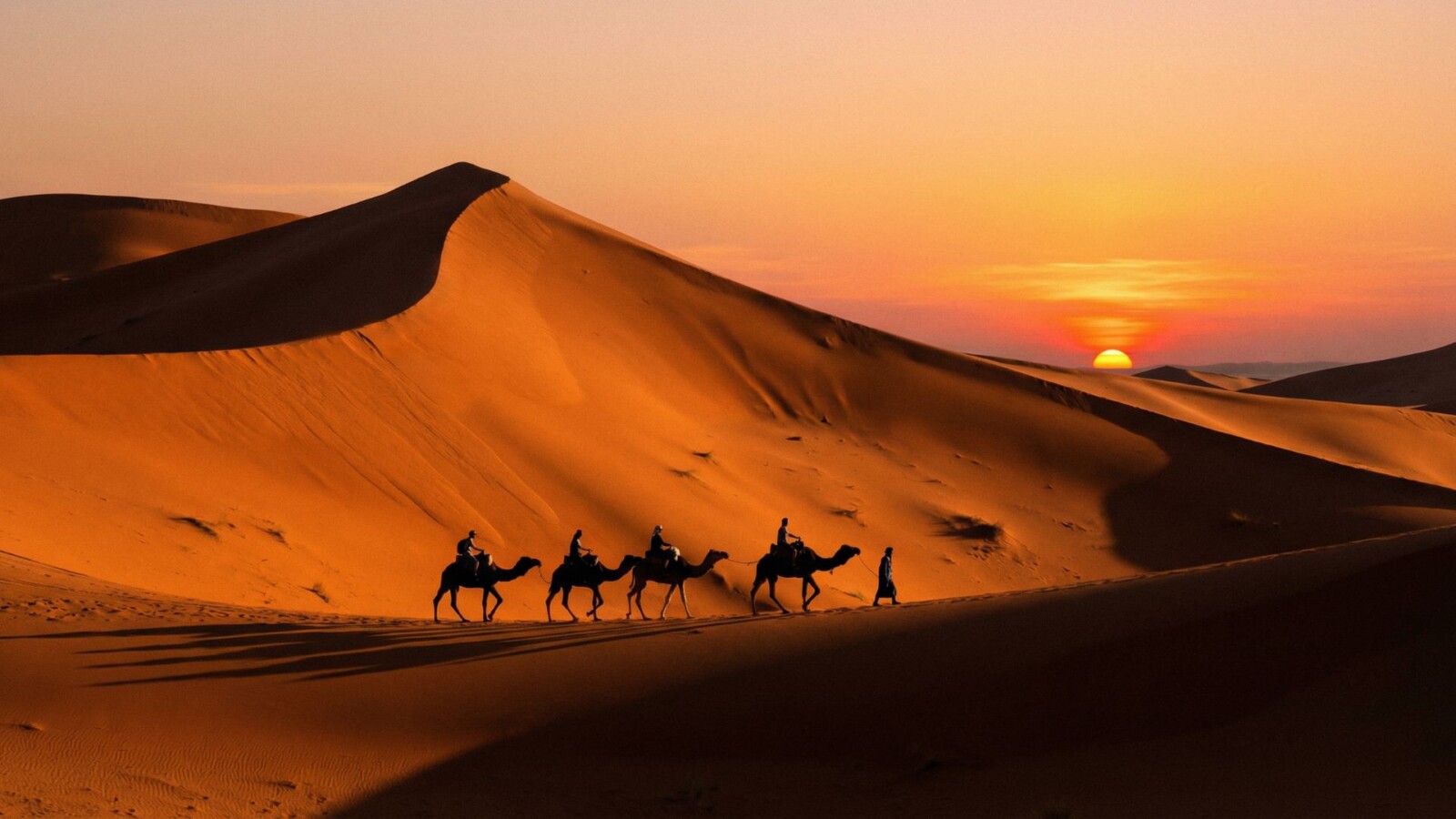
The Moroccan Sahara isn’t just one vast expanse of sand, it’s a collection of distinct ergs, hammadas, and oasis towns that each offer something different. From the towering orange dunes of Erg Chebbi near Merzouga to the remote wilderness of Erg Chigaga, the desert rewards those who venture beyond the typical tourist path. Before booking your camel trek or luxury camp, it helps to understand how the Sahara fits into the broader picture of Morocco geography and the dramatic transitions between mountain, desert, and coast.
Erg Chebbi vs Erg Chigaga: choosing your dunes
Morocco has two major sand seas worth visiting, and picking between them shapes your entire desert experience. Both offer dramatic dunes and starry nights, but the similarities end there.
Erg Chebbi is the popular choice for good reason. Located near the small town of Merzouga in southeastern Morocco, these dunes rise up to 500 feet and glow orange and gold depending on the light. The infrastructure here is well-developed, with dozens of camps ranging from budget to ultra-luxury. Getting there is straightforward, with paved roads running all the way to the dune’s edge. For first-time visitors or travelers with limited time, Erg Chebbi delivers the classic Sahara experience without logistical headaches.
Erg Chigaga is the wilder sibling. Tucked away near the town of M’Hamid, about 60 miles from the nearest pavement, these dunes require more effort to reach. You need a 4×4 vehicle or a camel caravan willing to make the journey across rocky desert plains. The payoff is solitude. Where Erg Chebbi can feel crowded during peak season, Erg Chigaga remains genuinely remote. The dunes stretch for miles with barely another soul in sight. If you crave authentic wilderness and don’t mind roughing it a bit, this is your spot.
The choice comes down to priorities. Want convenience and variety? Head to Erg Chebbi. Want isolation and adventure? Make the trek to Erg Chigaga. Either way, you’re in for something unforgettable.
What to expect on a camel trek
Let’s get real about camels for a minute. Riding one looks romantic in photos, but the reality takes some adjustment. Camels walk with a lurching gait that takes getting used to, and after a few hours in the saddle, your legs and back will have opinions about the experience.
Most travelers opt for short camel rides lasting one to two hours, just long enough to reach their desert camp before sunset. This is plenty of time to enjoy the novelty without the discomfort becoming unbearable. Longer multi-day camel treks are available for the truly adventurous, covering vast stretches of desert and sleeping under the stars each night. These trips are physically demanding and not for everyone, but those who push through describe them as life-changing.
A few practical tips make the experience more enjoyable. Wear loose, comfortable pants and avoid jeans. Bring a scarf or cheche to wrap around your face when sand kicks up. Stay hydrated even if you don’t feel thirsty. The dry desert air sucks moisture from your body faster than you realize.
The camels themselves are surprisingly personable creatures. Your guides will introduce you to your mount and help you understand its quirks. Some camels are docile and easygoing. Others have attitude. Either way, these animals have been crossing deserts for millennia and know exactly what they’re doing. Trust the process.
Desert camps: budget to luxury
The camp you choose defines your desert experience almost as much as the location. Options range from basic bivouacs with mattresses on the sand to full-blown glamping resorts with private bathrooms and gourmet dining.
Budget camps typically cost between $30 and $60 per person and include dinner, breakfast, and a shared tent. Facilities are minimal. Expect communal bathrooms, basic bedding, and simple but filling meals. These camps often sit closer together near the dune’s edge, so you might hear music or laughter from neighboring groups. For backpackers and budget travelers, this tier gets the job done without breaking the bank.
Mid-range camps step things up considerably. Private tents with real beds, better food, and cleaner facilities come standard. Many include traditional entertainment like drumming circles and Berber music around the campfire. Prices run from $80 to $150 per person. This is the sweet spot for most travelers who want comfort without extravagance.
Luxury camps are a whole different ballgame. We’re talking king-sized beds, hot showers, flush toilets, and multi-course dinners served under the stars. Some offer private dune excursions, spa treatments, and dedicated staff attending to your every need. Prices start around $300 per person and climb from there. If you’re celebrating something special or simply enjoy the finer things, these camps deliver an experience that feels almost surreal against the rugged desert backdrop.
No matter your budget, book ahead during peak season from October through April. The best camps fill up weeks in advance.
The gateway towns: Merzouga and M’Hamid
Both major ergs have towns that serve as jumping-off points, and spending a night in these gateways adds context to your desert adventure.
Merzouga sits right at the base of Erg Chebbi, close enough that you can walk to the dunes in minutes. The town itself is small and dusty, essentially one main street lined with hotels, restaurants, and tour agencies. What it lacks in charm it makes up for in convenience. You can arrange everything here, from camel treks to quad bike excursions to sandboarding on the dunes. Many travelers stay one night in town before heading into the desert, giving themselves time to adjust and organize logistics.
M’Hamid has a different vibe entirely. This former caravan stop marks the end of the paved road and the beginning of the real Sahara. The town feels sleepier and more authentic than Merzouga, with fewer tourists and a stronger connection to its nomadic heritage. From here, reaching Erg Chigaga requires a multi-hour 4×4 journey or a camel trek lasting one to three days. The extra effort filters out casual visitors, leaving behind travelers genuinely committed to the experience.
Both towns offer a glimpse into desert life before and after your dune adventure. Wander the markets, chat with locals over mint tea, and appreciate the resilience of communities thriving in such harsh conditions.
Beyond the dunes: other desert experiences
Sand dunes grab all the attention, but Morocco’s desert region offers much more. A well-planned trip incorporates some of these lesser-known highlights.
The Draa Valley stretches southeast from Ouarzazate, following Morocco’s longest river through a ribbon of palm groves and ancient kasbahs. The contrast between lush green palms and barren rocky hillsides is stunning. Driving this route on your way to M’Hamid adds hours to your journey but rewards you with scenery that feels almost biblical.
Todra Gorge and Dades Gorge carve through the mountains north of the desert, offering dramatic canyon landscapes and excellent hiking. Many travelers combine a gorge visit with their desert trip, breaking up the long drive from Marrakech with a night or two in the valley towns.
The town of Rissani, near Merzouga, hosts one of Morocco’s most authentic markets. The souk here draws traders from across the region, and the atmosphere is chaotic and wonderful. Livestock auctions, spice vendors, and craftspeople crowd the narrow lanes. It’s a far cry from the tourist-focused markets of Marrakech and Fes.
For something truly off the beaten path, consider the lesser-known dunes of Erg Lihoudi or Erg Zahar. These smaller ergs see almost no tourists and offer a taste of the Sahara without any of the crowds. You’ll need a good guide and a sense of adventure, but the solitude is worth it.
Best time to visit the Moroccan Sahara
Timing can make or break your desert experience. Get this wrong and you’ll spend your trip either freezing or melting.
October through April is prime season. Daytime temperatures hover in the comfortable range, typically between 65 and 85 degrees Fahrenheit. Nights get cold, sometimes dropping near freezing, so pack layers. The sky during these months is impossibly clear, with stars so bright they feel close enough to touch.
Summer is brutal. From June through August, temperatures regularly exceed 110 degrees, and the sand becomes too hot to walk on barefoot. Very few camps operate during these months, and those that do cater only to the most heat-tolerant travelers. Unless you have a specific reason to visit in summer, avoid it.
Spring brings occasional sandstorms that can ground travel plans for days. These storms are unpredictable and powerful, reducing visibility to near zero and coating everything in fine dust. They’re part of desert life, but not exactly pleasant to experience firsthand.
The shoulder months of May and September offer decent weather with fewer crowds. Temperatures are warm but manageable, especially if you time your activities for early morning and evening. Prices often drop during these periods, making them attractive for budget-conscious travelers.
Practical tips for desert travel
A few pieces of advice will serve you well out there.
Bring more water than you think you need. Dehydration sneaks up on you in the dry desert air, and symptoms like headaches and fatigue often get mistaken for tiredness from travel. Drink constantly, even when you don’t feel thirsty.
Protect yourself from the sun aggressively. Sunscreen, sunglasses, a hat, and loose long-sleeved clothing are essential. The reflection off the sand intensifies UV exposure, and sunburns happen faster than you’d expect.
Cash is king in the desert. ATMs don’t exist once you leave the main towns, and card machines are rare even at upscale camps. Bring enough dirhams to cover your entire trip plus a comfortable buffer for tips and unexpected expenses.
Disconnect and embrace it. Cell service ranges from spotty to nonexistent in the dunes. Rather than fighting this, treat it as a feature. The Sahara offers a rare chance to unplug completely and exist in the moment without digital distractions.
Respect the environment and the culture. Pack out everything you bring in. Ask permission before photographing locals. Tip your guides generously, as tourism provides vital income for desert communities.
When the desert calls you back
The Sahara has a way of getting under your skin. Something about the silence, the scale, and the raw beauty sticks with you long after you’ve returned to normal life. Many travelers describe their desert night as a highlight not just of their Morocco trip but of their entire travel history.
Whether you choose the accessible dunes of Erg Chebbi or the remote wilderness of Erg Chigaga, whether you sleep in a basic bivouac or a luxury tent with all the trimmings, the desert delivers something you can’t find anywhere else.
After your time in the sand, consider balancing the experience with Morocco’s opposite extreme. The country’s extensive Atlantic and Mediterranean coastlines offer surf breaks, fishing villages, and ocean breezes that feel worlds away from the arid interior.


