Eating in Morocco during Ramadan: where to find food and dining tips for travelers
The question every traveler asks first about visiting Morocco in the holy month involves food. Where do you eat when most restaurants close during daylight hours? The answer is more reassuring than many expect. Tourist areas maintain dining options, hotels serve guests normally, and the iftar meals after sunset offer some of the best eating experiences available anywhere. Understanding how dining works during this period is a key part of planning any trip to Morocco during Ramadan, turning potential confusion into culinary opportunity.
The daytime dining reality
Let’s address the elephant in the room immediately. Yes, most Moroccan restaurants close during daylight hours in Ramadan. Yes, eating and drinking openly in public while locals fast is considered disrespectful. But no, you will not go hungry.
The key lies in understanding which establishments cater to tourists and how to find them. Hotel restaurants operate normally for guests throughout the day. Riads serve breakfast and lunch to visitors without interruption. International chain restaurants in major cities often maintain regular hours. The infrastructure exists. It simply requires knowing where to look.
In tourist-heavy areas like the Marrakech medina or the Fes nouvelle ville, certain restaurants remain open specifically for foreign visitors. These spots typically operate discreetly, sometimes with curtains drawn or doors partially closed, but they welcome paying customers regardless of the calendar. Asking your hotel concierge for recommendations usually yields several options within walking distance.
“We never close during Ramadan,” explains Mohammed, manager of a restaurant near Jemaa el-Fna that has served tourists for over twenty years. “Our staff takes shifts for their iftar meals, and we keep the kitchen running. Visitors need to eat. We understand that.”
Hotel and riad dining
For travelers staying in established accommodations, food concerns largely evaporate. Hotels ranging from budget to luxury maintain their restaurants and room service throughout Ramadan. Breakfast buffets appear on schedule. Lunch menus remain available. The dining experience inside your accommodation differs little from any other time of year.
Riads, the traditional courtyard guesthouses that many visitors prefer, similarly continue serving guests. Most riads include breakfast in their rates and offer lunch and dinner upon request. The intimate setting actually enhances the Ramadan experience, as staff often share stories about their own fasting and family traditions over the meals they serve.
The practical strategy for many travelers involves eating a substantial breakfast at their accommodation, carrying snacks for midday energy, and planning their main meal around iftar time when options multiply dramatically. This approach respects local customs while ensuring adequate nutrition.
| Dining option | Availability during Ramadan | Notes |
| Hotel restaurants | Full service all day | Most reliable daytime option |
| Riads | Breakfast and meals on request | Ask about lunch/dinner when booking |
| Tourist restaurants | Varies, many stay open | Often operate discreetly |
| Local Moroccan restaurants | Closed until iftar | Open evenings only |
| Street food stalls | Closed until iftar | Excellent evening options |
| Grocery stores | Open with reduced hours | Stock up on snacks |
| Cafes | Most closed daytime | Some tourist cafes open |
Grocery shopping and self-catering
Travelers with apartments or accommodations featuring kitchens have additional options. Moroccan grocery stores and supermarkets remain open during Ramadan, though often with shortened hours. Stocking up on fruit, bread, cheese, and other basics allows for self-sufficient eating without relying on restaurants.
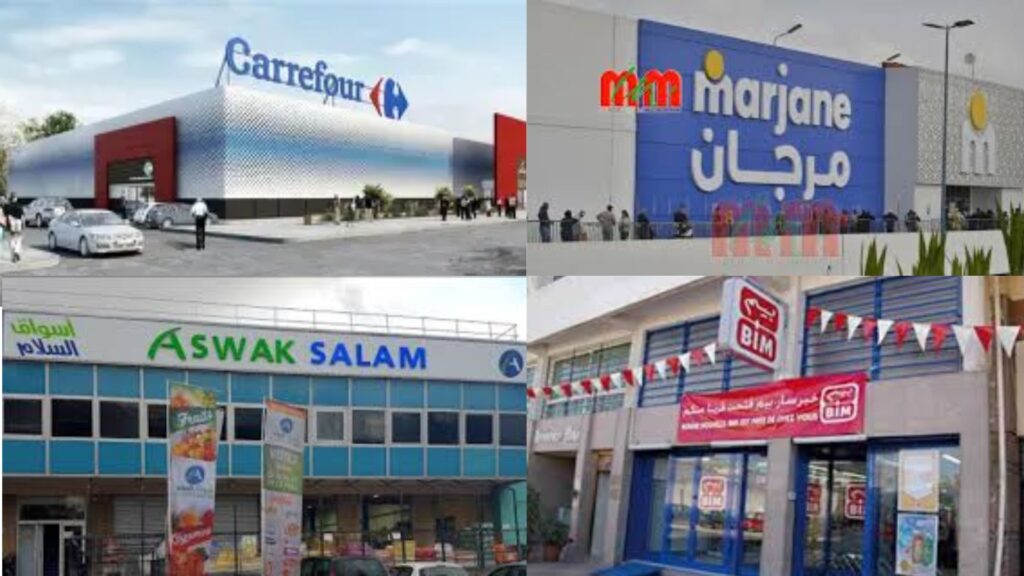
The large Carrefour and Marjane supermarkets in major cities operate throughout the day. Smaller neighborhood shops typically open in the morning, close during the afternoon slowdown, and reopen before iftar when shoppers stock up for evening meals. Planning a shopping trip for late morning maximizes your chances of finding everything open.
Fresh fruit becomes particularly valuable during Ramadan travel. Oranges, bananas, dates, and other portable options provide energy without requiring any preparation. Many travelers keep a small stash in their daypack to maintain energy during afternoon sightseeing when restaurant options narrow.
The iftar transformation
Everything changes at sunset. The moment the call to prayer signals the fast’s end, Morocco’s culinary landscape explodes into activity. This is when eating in Morocco reaches its peak, and travelers who time their main meal to iftar experience something extraordinary.
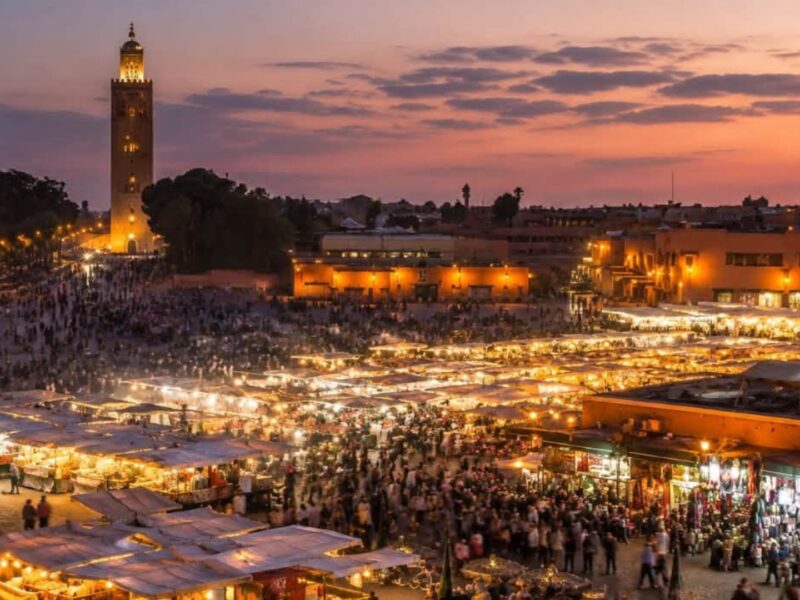
Restaurants that sat dark and quiet all afternoon suddenly blaze with light and bustle with servers. Street food stalls materialize in squares and along medina streets. The smell of harira soup, fresh bread, and grilled meats fills the air. The entire country seems to exhale and reach for sustenance simultaneously.
For travelers, iftar offers the best dining value and experience of the day. Many restaurants prepare special Ramadan menus featuring traditional dishes served specifically during the holy month. The quality often exceeds regular offerings as chefs put extra care into these significant meals. Prices sometimes include multiple courses that would cost more if ordered separately during ordinary times.
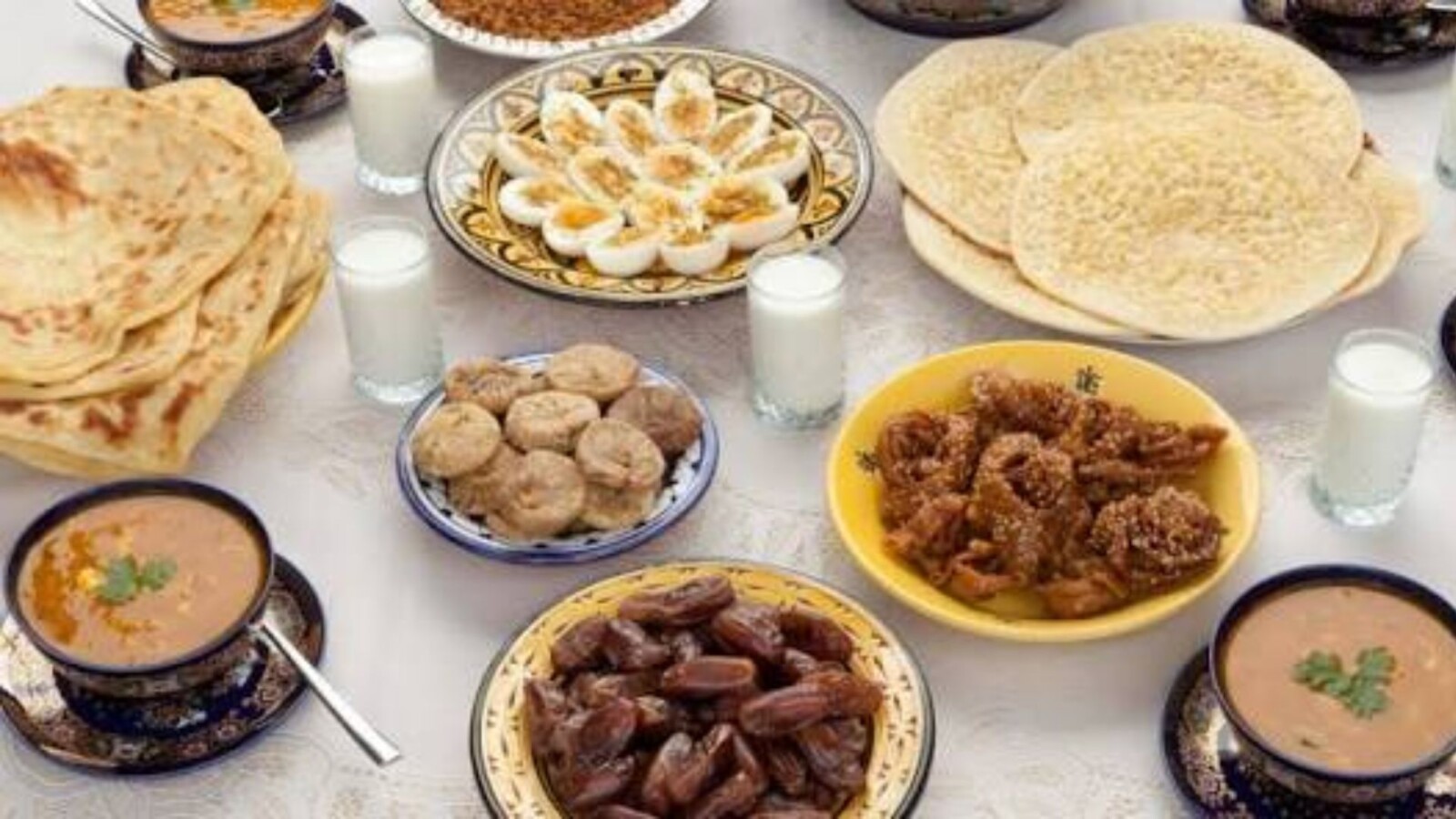
The traditional iftar sequence follows a specific pattern. Moroccans typically break their fast with dates and milk, following the Prophet’s example. Harira soup comes next, the tomato and lentil based broth that appears on virtually every Ramadan table. Chebakia, honey-soaked pastries shaped like flowers, provide sweetness. The main meal follows, often featuring tagines, couscous, or grilled meats, the same staples explored in our guide to Moroccan food.
Restaurant iftar experiences
Many restaurants offer set iftar menus that guide visitors through the traditional progression. These prix fixe options simplify ordering and ensure you experience the authentic sequence of dishes. Prices typically range from modest at local establishments to premium at upscale restaurants and hotels.
Booking ahead becomes important for popular iftar spots. Moroccans themselves dine out more frequently during Ramadan for the evening meal, competing with tourists for tables at desirable restaurants. Making reservations, especially for Friday and Saturday evenings, prevents disappointment.
Some of the most memorable iftar experiences happen in unexpected places. A friend who visited Fes during Ramadan described finding a small family restaurant where the grandmother prepared everything herself. “She brought out dish after dish for two hours,” he recalled. “By the end I could barely move, but I had tasted things I never knew existed. She refused to let us pay full price because we were guests in her country during a holy time.”
Suhoor and late night eating
The pre-dawn meal called suhoor creates another dining window that adventurous travelers can explore. Eaten before the fast resumes at sunrise, suhoor ranges from simple breakfasts at home to elaborate meals at restaurants that stay open through the night.
In major cities, certain areas buzz with activity well past midnight during Ramadan. Restaurants serving suhoor often stay open until three or four in the morning. The atmosphere differs from iftar, feeling more relaxed and less rushed as diners fuel up for the fasting day ahead.
For travelers who enjoy nightlife, the Ramadan evening schedule aligns surprisingly well. After iftar around seven or eight, the hours until midnight feel vibrant and active. Those who want to push further can experience suhoor culture before finally sleeping as dawn approaches. The schedule inverts normal patterns but creates its own rhythm once you adjust.
Respecting those who fast
While options exist for eating during daylight hours, discretion matters. Consuming food or beverages openly in public while Moroccans fast around you shows disrespect for their sacrifice. This does not mean hiding in shame, but it does mean being thoughtful about context.
Eating inside restaurants, hotels, or private spaces presents no problem. Walking through the medina with a sandwich in hand does. Drinking water on a street corner while fasting shopkeepers work nearby misses the point of cultural sensitivity. The distinction lies between meeting your needs privately and flaunting consumption publicly.
Most Moroccans understand that tourists are not Muslim and do not fast. They do not expect visitors to starve. What they appreciate is awareness that something significant is happening and that their guests acknowledge it. A simple recognition that you understand the sacrifice they are making goes further than perfect adherence to every custom.
The culinary opportunity
Travelers who approach Ramadan eating as an opportunity rather than a challenge often discover their best food experiences happen during the holy month. The iftar meals feature dishes prepared with extra care. Family recipes emerge that restaurants do not serve during ordinary times. The communal spirit of eating together amplifies the pleasure of good food.
Understanding the practical aspects of iftar experiences for tourists helps visitors participate fully rather than observing from the sidelines. Knowing what to expect, how to behave, and where to find the best meals transforms a potential obstacle into a highlight.
The question is not whether you can eat well during Ramadan in Morocco. The question is whether you will embrace the different rhythm and discover flavors that ordinary visits never reveal.
Have you ever adapted your eating schedule to match a local cultural practice while traveling, and how did that change your experience of the destination?