
Morocco with kids: best destinations and what to expect
The moment a Moroccan shopkeeper crouches down to offer your seven-year-old a piece of msemen from the morning’s batch, still warm from the griddle, and your child takes it without hesitation and says shukran because you taught them that word on the plane, you understand why Morocco works for families in a way that is hard to articulate in advance.
It is not an obvious family destination. The medinas are chaotic. The distances are significant. The food is unfamiliar. The cultural norms require more parental attention than a European beach resort demands. None of that is a reason to avoid bringing children. All of it, handled with the right expectations, becomes the reason the trip stays with them longer than any resort holiday ever would.
Morocco with kids requires a different kind of itinerary than Morocco solo or Morocco as a couple. The pacing changes. Some destinations earn their place in a family trip that would not make the cut in other contexts. Some classic Morocco experiences work better with children than the travel discourse suggests, and a few work considerably worse. This guide covers all of it with the honesty that parents planning a significant international trip with children actually need.
Why Morocco works for families?
The foundational reason Morocco functions well as a family destination is one that rarely appears in travel writing: Moroccan culture is genuinely child-centered in a way that creates a social environment where traveling with kids is an asset rather than a complication.
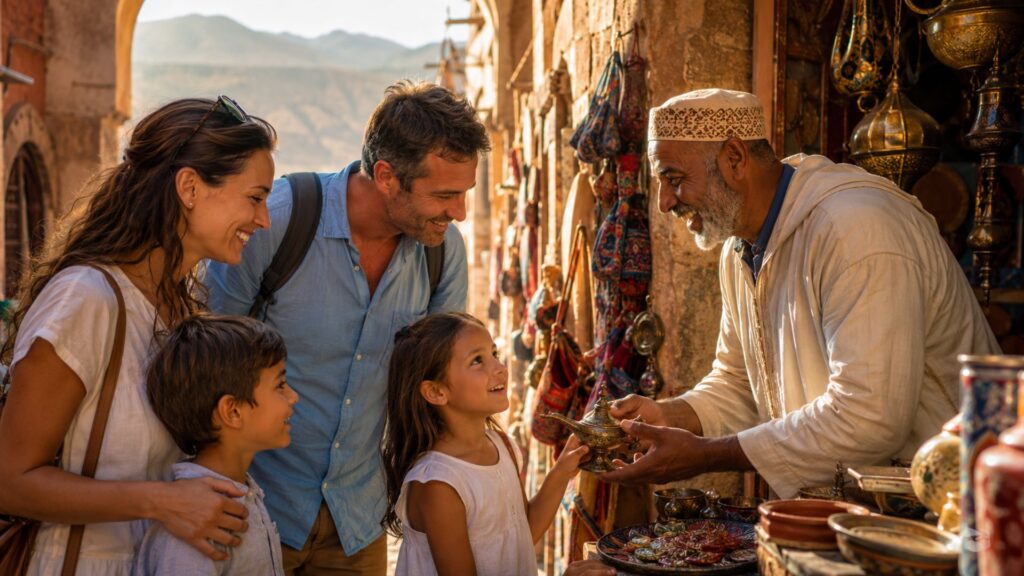
Children in Morocco are welcomed everywhere. At restaurants, in souks, in riads, in the communal spaces of medinas where Moroccan families gather in the evenings, the presence of a child opens interactions that would not otherwise happen. Moroccan adults engage with children directly and warmly, and for kids accustomed to being treated as a peripheral element of adult travel, that attention is both noticeable and meaningful.
The second reason Morocco works for families is geographic variety. Within a single trip, children can experience a medieval walled city, a desert of genuine sand dunes, mountain villages accessible by mule track, a working fishing harbor, and an Atlantic beach. That range of environment keeps the experience stimulating in a way that a single-location trip cannot sustain for children who need novelty to stay engaged.
The third reason, more practical than cultural, is that Morocco’s child-friendly infrastructure has improved substantially over the past decade. Family rooms in riads are increasingly common. Dietary flexibility is available in most tourist-facing restaurants. Medical facilities adequate for routine childhood illness exist in all major cities. The country is not without its logistical challenges for families, but it is considerably more navigable than its reputation among cautious parents suggests.
Adjusting the standard Morocco itinerary for families
The single biggest adjustment a family itinerary requires is pace. The standard independent traveler Morocco trip moves at a speed that children find exhausting and parents find stressful when managing young travelers simultaneously.

The practical rule is to plan for roughly 70 percent of the daily activity you would include on a solo trip and build the remaining 30 percent as buffer. That buffer absorbs the slower morning when someone needs extra time at breakfast, the afternoon when the seven-year-old hits a wall and needs an hour at the riad pool, and the unexpected detour when your twelve-year-old becomes genuinely fascinated by a leather workshop and wants to stay longer than the itinerary allows.
Two nights minimum in any destination is the family travel standard that most parents discover the hard way on their first trip. Arriving somewhere, settling in, and leaving the following morning does not give children enough time to form any relationship with a place. Three nights in a destination is the threshold at which kids start to develop the kind of familiarity that makes them comfortable enough to actually enjoy where they are rather than simply transit through it.
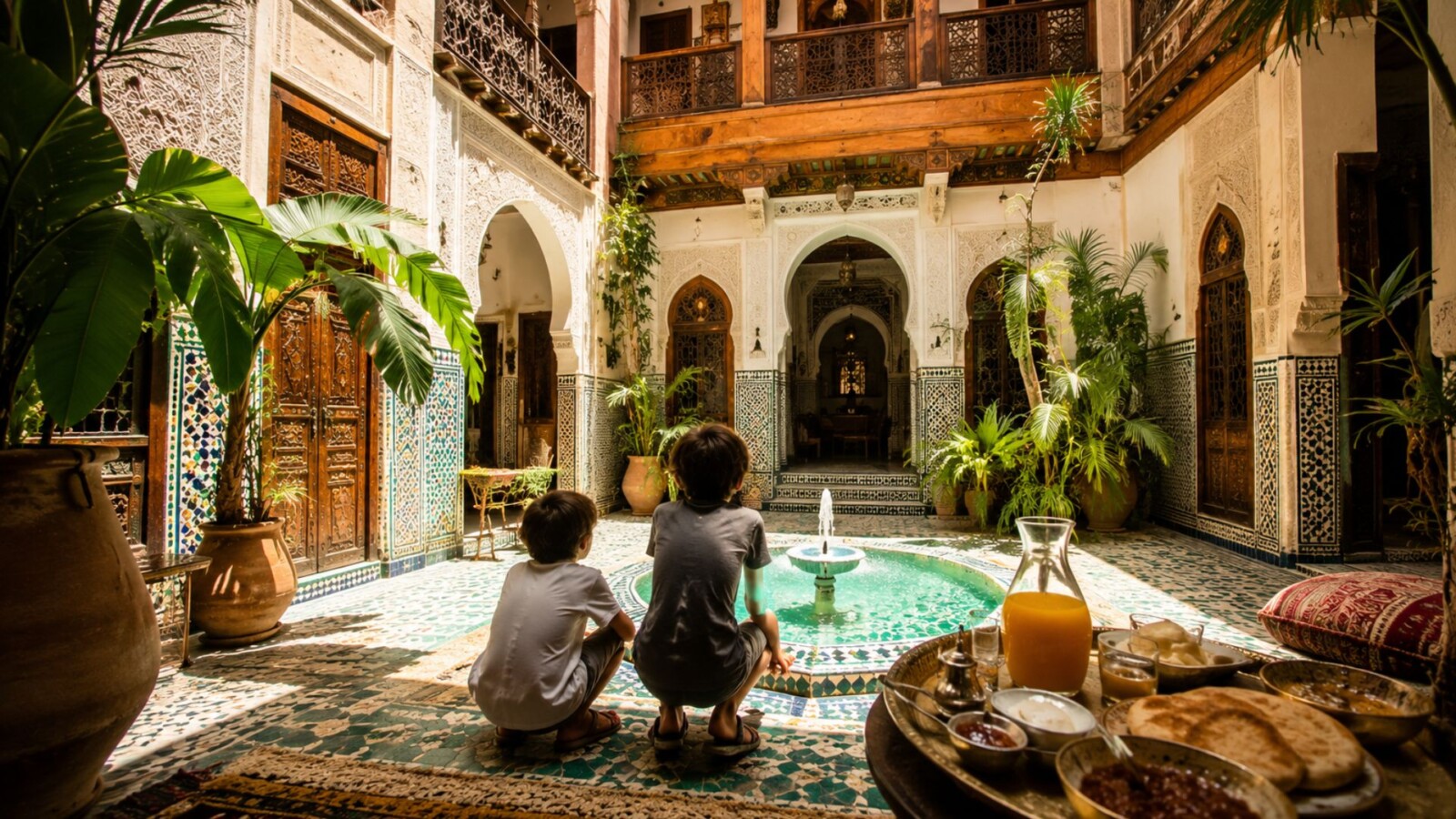
The medina riad is the right accommodation choice for families in Morocco, not despite the unfamiliar environment but because of it. A riad with an internal courtyard gives children a safe, contained outdoor space where they can run and be loud without the restrictions that apply in a hotel corridor. The architecture is stimulating in a way that a standard hotel room is not. And the riad breakfast, typically served in the courtyard with Moroccan bread, amlou, honey, olive oil, and fresh-squeezed juice, is the kind of morning experience that children remember as one of the specific sensory details of the trip.
The Sahara: the family experience that exceeds all expectations
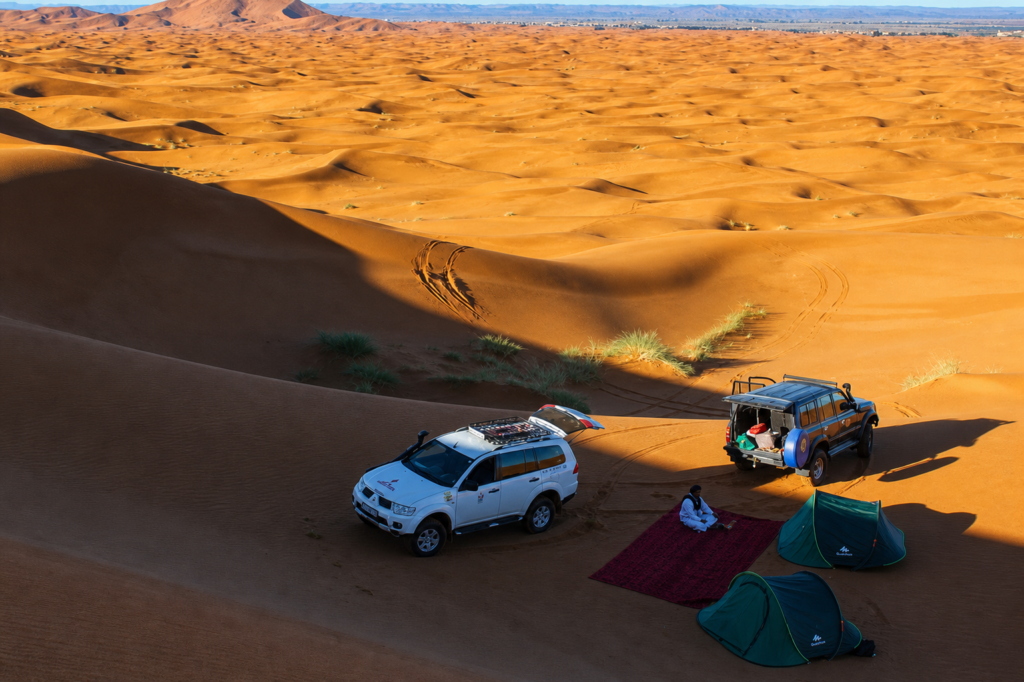
The overnight desert experience at Merzouga is the Morocco activity that families with children over six consistently describe as the highlight of the trip, and it is worth understanding why before dismissing it as too logistically complex for a family journey.
The camel trek from the edge of Merzouga to a desert camp takes between 45 minutes and 90 minutes depending on the camp’s location. Children find camel riding immediately and completely absorbing. The height, the swaying gait, the specific smell of the animals, the landscape changing around them as they move deeper into the dunes: all of it lands with children in a way that adult travelers can observe happening in real time.
The desert camp itself, for families who book a private tent arrangement rather than a dormitory option, provides a contained and secure environment where children can climb dunes, watch the sunset change the color of the sand from gold to copper to deep red, eat dinner around a fire, and fall asleep to silence so complete it registers as a sound of its own.
The star visibility at Erg Chebbi on a clear night is among the best available anywhere without specialist equipment. For children who have grown up in cities where the night sky is orange and flat, looking up at the Milky Way in the Saharan desert is the kind of experience that recalibrates their understanding of scale in a way that no classroom can replicate.
Practical family considerations for the desert: bring headlamps for every member of the group. Bring more warm layers than you think you need for the night. Bring antihistamines if any child has dust or pollen sensitivity. The sand is fine and gets everywhere, which children find delightful and parents find manageable with the right preparation.
Marrakech with kids: managing the intensity
Marrakech is Morocco’s most visited city and its most sensory overwhelming, which creates a particular challenge for families with young children who have lower thresholds for the kind of stimulation the medina delivers continuously.
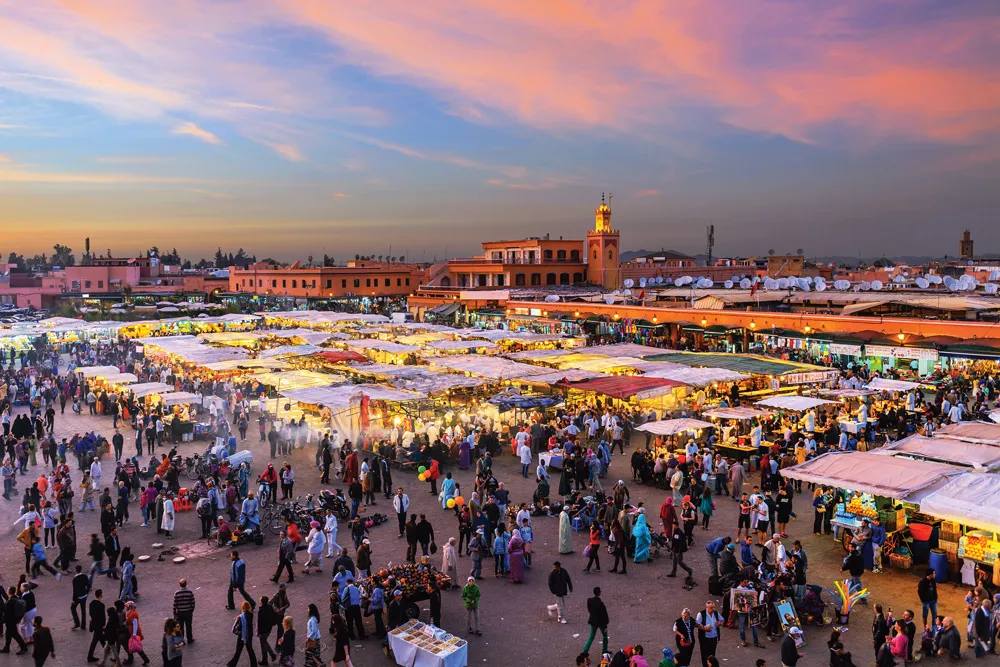
The Djemaa el-Fna at peak evening hours, with the food stalls, the musicians, the snake charmers, the henna artists, and the crowd density that characterizes a busy Friday night, is a genuinely intense environment for children under eight. It is not dangerous. It is loud, crowded, and relentless in a way that can push a tired child toward a meltdown with very little warning.
The solution is timing rather than avoidance. The Djemaa el-Fna at 8 a.m. is a completely different place than at 8 p.m. The square in the morning is quiet, used primarily by locals buying produce and catching up with neighbors. Walking through it in the morning with children is entirely manageable and gives them a sense of the space before the evening intensity arrives.
The Majorelle Garden is one of Marrakech’s most family-compatible attractions. The enclosed garden, with its cobalt blue buildings, cactus garden, reflecting pools, and exotic plantings, holds children’s attention in a way that the Bahia Palace, which requires more historical context to appreciate, does not. The garden’s clear boundaries and the visual stimulation of the plant collection make it the most reliably successful Marrakech attraction for families with children of any age.
The Marrakech Museum of Photography and Visual Arts, if your children are in the eight-and-above range, offers interactive elements that engage older kids while delivering genuine cultural content. The museum building itself, a converted nineteenth-century palace, is worth seeing regardless of what is on the walls.
Cooking classes for families are available at several riads and culinary schools in Marrakech and represent one of the best family activity investments in the city. Learning to make tagine or bastilla alongside a Moroccan cook, in a family kitchen setting rather than a formal classroom, is the kind of participatory experience that children engage with fully and parents rarely regret booking.
Chefchaouen: the most family-friendly medina in Morocco
If you take one piece of location-specific advice from this guide, let it be this: Chefchaouen is the best medina destination in Morocco for families with young children, and it deserves more weight in family itinerary planning than it typically receives.
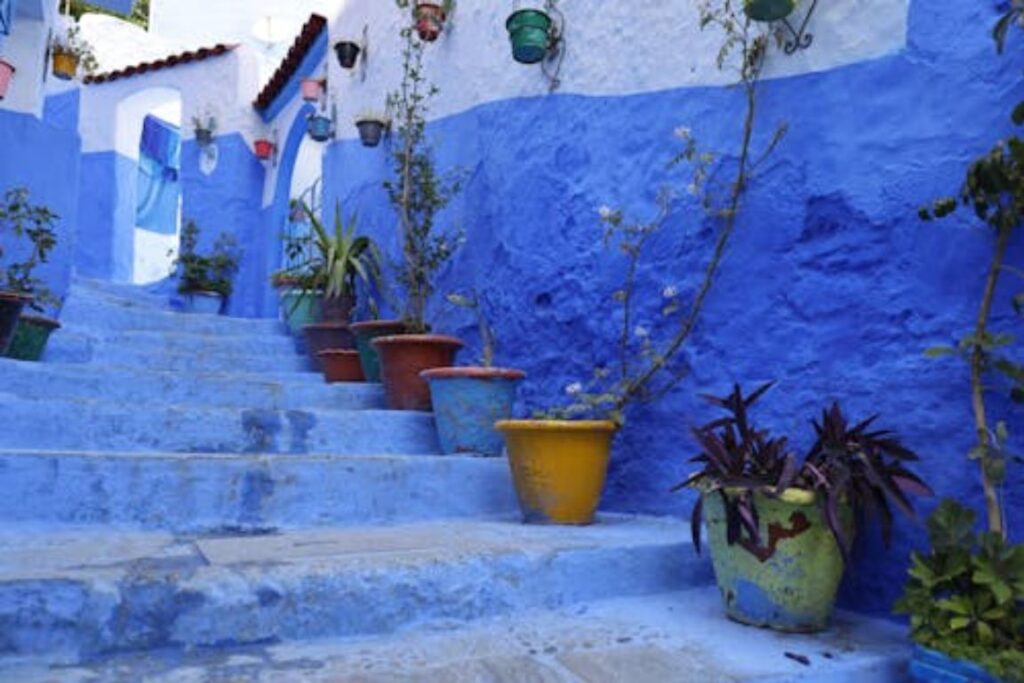
The reasons are structural. The Chefchaouen medina is small, roughly 15 minutes across at a relaxed walking pace, which means children do not reach the point of exhaustion that the Fes or Marrakech medinas produce before you have seen the parts worth seeing. The streets are wide enough, particularly in the main plaza and the central market area, for children to move without the press of crowds that narrower medinas create. The layout is genuinely navigable, even for parents managing a stroller or carrying a small child.
The blue paint is the detail that children respond to most immediately and most viscerally. The saturated blues and whites of the medina walls, the doorways in every shade from pale sky to deep indigo, the flower pots and cats and tile patterns: the visual environment of Chefchaouen is stimulating in precisely the right way for children, complex enough to keep attention engaged, beautiful enough to produce genuine wonder rather than just novelty.
The pace of the city reinforces the family-friendly character. Chefchaouen moves slowly. The cafe culture is relaxed. The shopkeepers are less aggressive than in Marrakech. The overall atmosphere is the opposite of overwhelming, which means parents can actually look up from managing logistics and experience the place alongside their children rather than merely shepherding them through it.
The hike to the Spanish mosque above the city takes 45 minutes on a clear path and delivers a panoramic view of the entire medina and the Rif Mountains beyond. Children who are comfortable with moderate terrain manage it without difficulty and the view at the top is the kind of payoff that makes physical effort feel worthwhile to young travelers in a way that flatter destinations do not.
Fes with kids: selective and strategic
Fes is the Morocco destination that requires the most honest assessment for family travelers, because the standard Fes experience, two days of intensive medina exploration with a guide, is considerably more challenging with children than without.
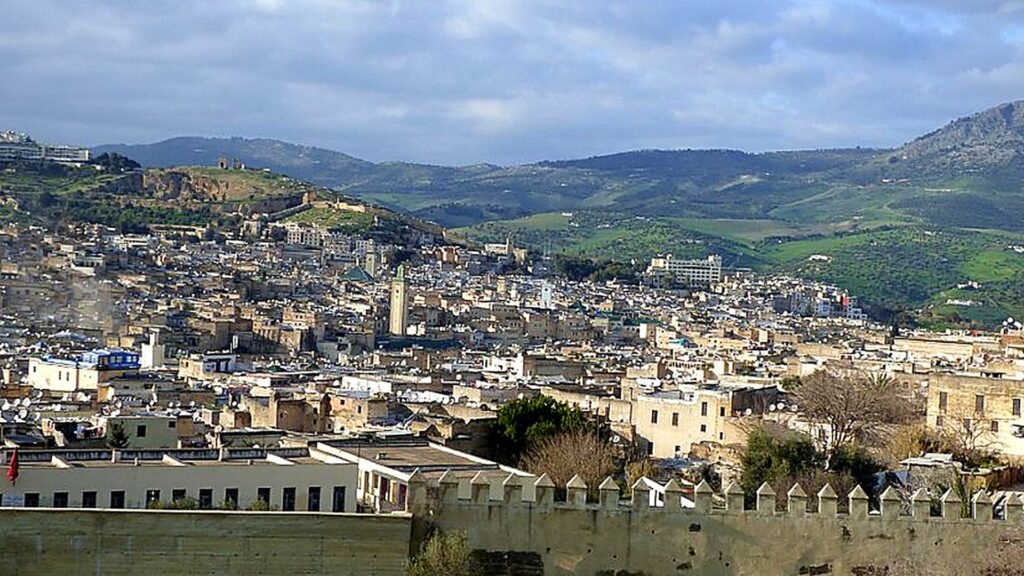
The Fes medina is large, complex, and relentless. The 9,000 alleyways that make it the most complete medieval urban environment in the world also make it an environment where children tire more quickly than adults and become harder to manage as the hours accumulate. The Chouara tannery, Morocco’s most celebrated single sight, requires climbing a steep staircase and standing on a narrow terrace above the dye vats in conditions that are warm and pungent. Children over ten generally find it fascinating. Children under eight often find it overwhelming.
The selective approach for families in Fes is to identify three or four specific things to see rather than attempting a comprehensive medina circuit. The Bou Inania Madrasa is architecturally extraordinary and children respond to the carved plaster and painted cedar and the reflective pool in the courtyard in a way that suggests the visual impact reaches across age groups. The pottery and ceramic workshops on the hill above the medina, where artisans demonstrate the full process from raw clay to painted tile, are genuinely engaging for children of any age and involve the kind of watching-things-being-made experience that holds attention reliably.
A late afternoon walk through the Andalusian quarter of the medina, quieter and less trafficked than the main commercial arteries, gives families a sense of Fes at a pace that children can sustain. The light in that part of the medina in the late afternoon is beautiful and the streets are manageable.
One night in Fes is honest for families with children under eight. Two nights works comfortably for families with older children or teenagers.
Practical considerations for families
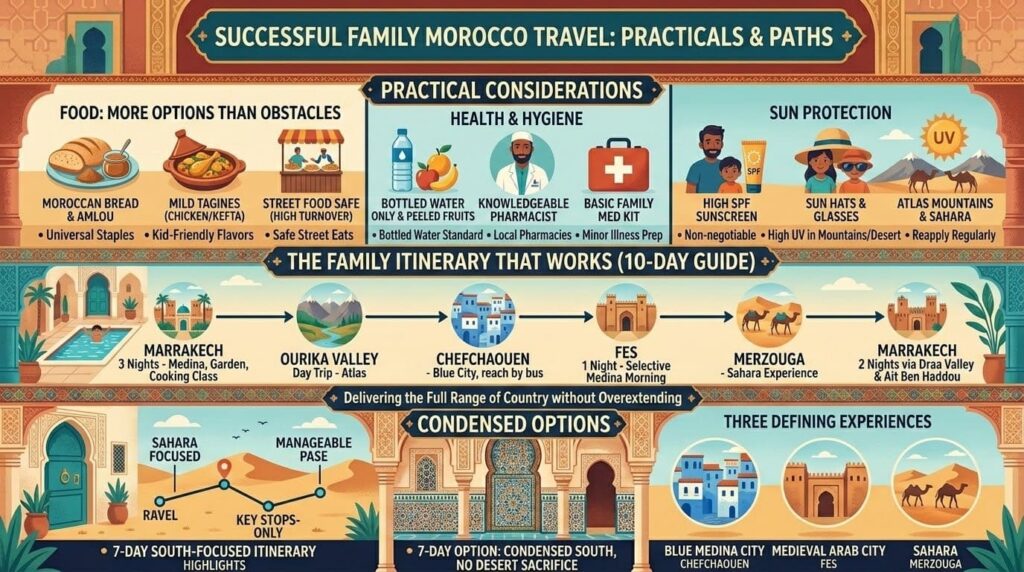
Food is the practical concern that parents raise most frequently in Morocco trip planning and that turns out to be less of an obstacle than anticipated.
Moroccan cuisine is genuinely family-friendly in its base forms. Bread, olive oil, honey, fresh orange juice, and eggs are universal breakfast staples available at every riad in the country. Tagines, the slow-cooked stews that define Moroccan lunch and dinner, come in versions mild enough for most children: chicken with preserved lemon, lamb with prunes, kefta meatballs in tomato sauce. The spice levels in tourist-facing restaurants are calibrated for international palates. The genuinely spicy Moroccan dishes are regional specialties rather than default menu items.
Street food is broadly safe at established stalls with high turnover, which describes most of the food options in the Djemaa el-Fna and the main medina markets. The standard caution about water applies: stick to bottled water, avoid ice in drinks at local establishments, and peel fruit rather than eating the skin.
Medical facilities adequate for routine childhood illness exist in all major Moroccan cities. Pharmacies are well-stocked, pharmacists are knowledgeable, and French-speaking medical staff are available in city hospitals. Carrying a basic family medical kit including fever medication, oral rehydration salts, antihistamines, and any prescription medications your children require eliminates the most common minor health anxieties.
Sun protection is more important in Morocco than many families anticipate. The combination of altitude in mountain destinations and the intensity of the desert sun means UV exposure is higher than at equivalent temperatures in northern Europe or the northeastern United States. Broad-spectrum sunscreen applied generously and reapplied through the day is non-negotiable for children, particularly in the Sahara and at Atlas Mountain elevations.
The family itinerary that works
A ten-day family Morocco itinerary that delivers the range of the country without overextending children or parents runs as follows.
Three nights in Marrakech to begin, using the first day for gentle medina exploration and the Majorelle Garden, the second for a cooking class and the Bahia Palace, and the third for a day trip to the Ourika Valley in the Atlas. Two nights in Chefchaouen, reached by overnight CTM bus or a one-night stop in Fes. One night in Fes with a selective medina morning. Two nights in Merzouga for the Sahara experience. Two nights returning to Marrakech via the Draa Valley and Ait Ben Haddou.
That structure gives children the three defining Morocco experiences, the blue medina city, the medieval Arab city, and the Sahara, without requiring the kind of daily movement that exhausts families and produces the diminishing returns that turn travel into attrition.
If you are building this trip around a tighter timeline, the 7-day Morocco itinerary offers a condensed version of the south-focused route that families with less time find manageable without sacrificing the desert experience that children respond to most strongly.
What age do you think is the ideal age to take children to Morocco for the first time?


