
7-Day Morocco itinerary: desert, mountains, and Marrakech
Seven days in Morocco is not a limitation. It is a permission slip to stop pretending you can see everything and start actually experiencing something. It is one of several routes in our complete Morocco itinerary guide.
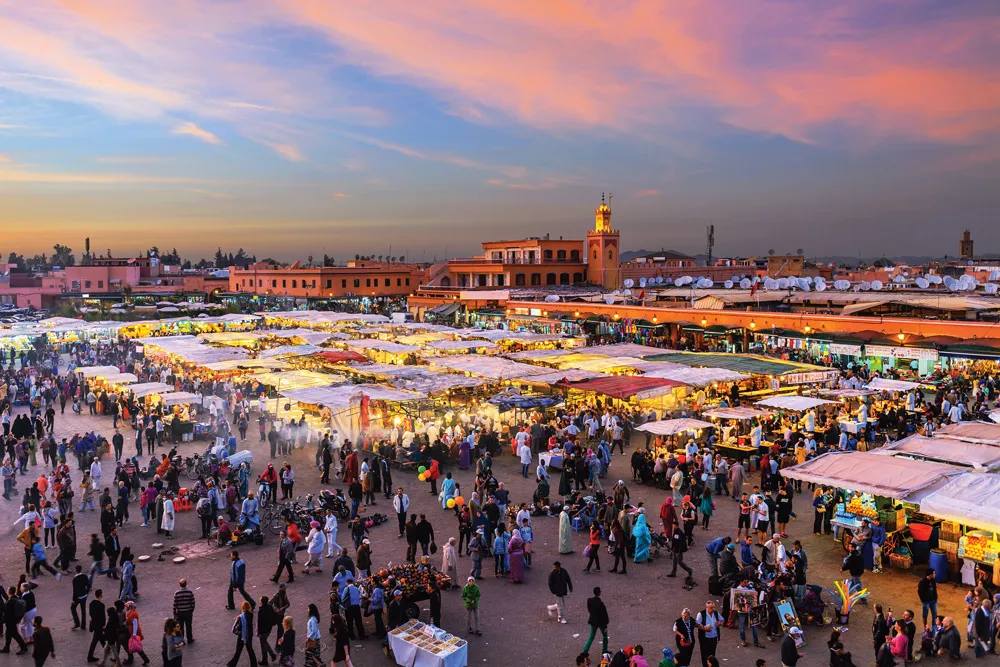
Most first-time visitors make the same mistake. They build an itinerary that touches Casablanca, Fes, Chefchaouen, Marrakech, the Sahara, and Essaouira in seven days, then spend the entire trip on buses wondering why Morocco feels like a blur. The country does not reward that approach. It rewards the traveler who slows down long enough to get lost in a souk, eat a second bowl of harira because the first one was that good, and watch the light change over the Djemaa el-Fna from the same cafe terrace two evenings in a row.
This seven-day route is built around one guiding principle: go south. Start in Marrakech, cross the Atlas, reach the edge of the Sahara, and come back through the gorges. It is geographically coherent, logistically manageable, and consistently delivers the kind of trip people describe as one of the best they have ever taken.
Day 1 and 2: Marrakech, the city that hits you immediately
Marrakech does not ease you in. The moment you step out of your riad into the medina for the first time, the noise, the color, the smell of cumin and leather and woodsmoke, all of it arrives at once. That is not a problem. That is the point.
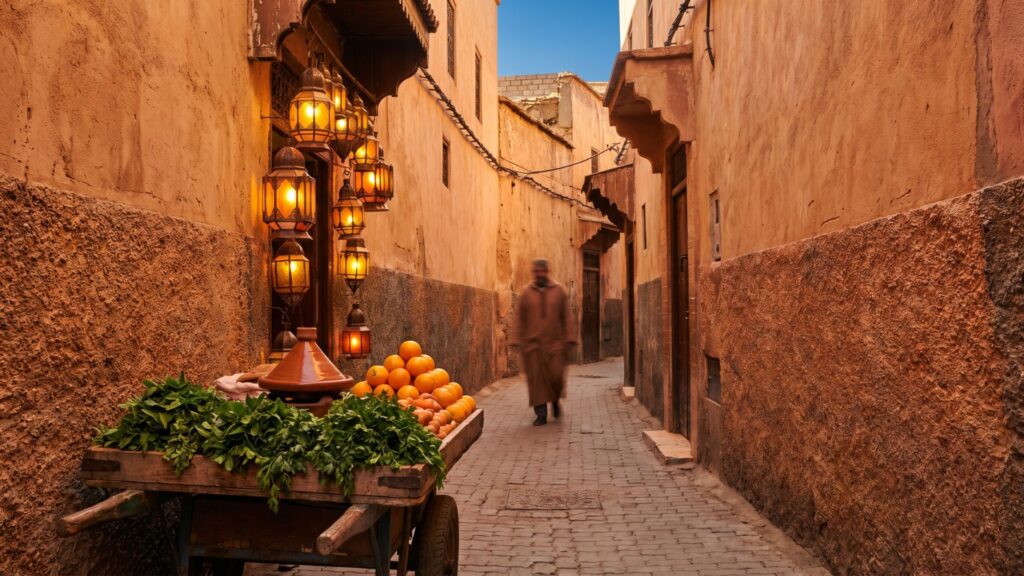
Spend your first afternoon without an agenda. Walk in the general direction of the Djemaa el-Fna and let the medina redirect you. You will get turned around. That is fine. The medina of Marrakech is a UNESCO World Heritage Site, and one of the most complex urban environments in the world, but it is also surprisingly navigable once you stop fighting its logic and start following your instincts.
Save the structured sightseeing for day two. The Bahia Palace earns its reputation. The Saadian Tombs are quieter than you expect and genuinely moving. The Majorelle Garden is worth the entrance fee if you go early before the tour groups arrive. The souks are best explored with nothing to buy and no time pressure, which is the only state in which you can actually appreciate them.
Eat at a restaurant in the medina, not on the Djemaa el-Fna itself where the food is mediocre and the prices reflect the view. Walk ten minutes into any residential alley and you will find something better at half the cost.
Day 3: Over the Atlas and into the Draa Valley
This is the driving day, and it is one of the best drives in North Africa.
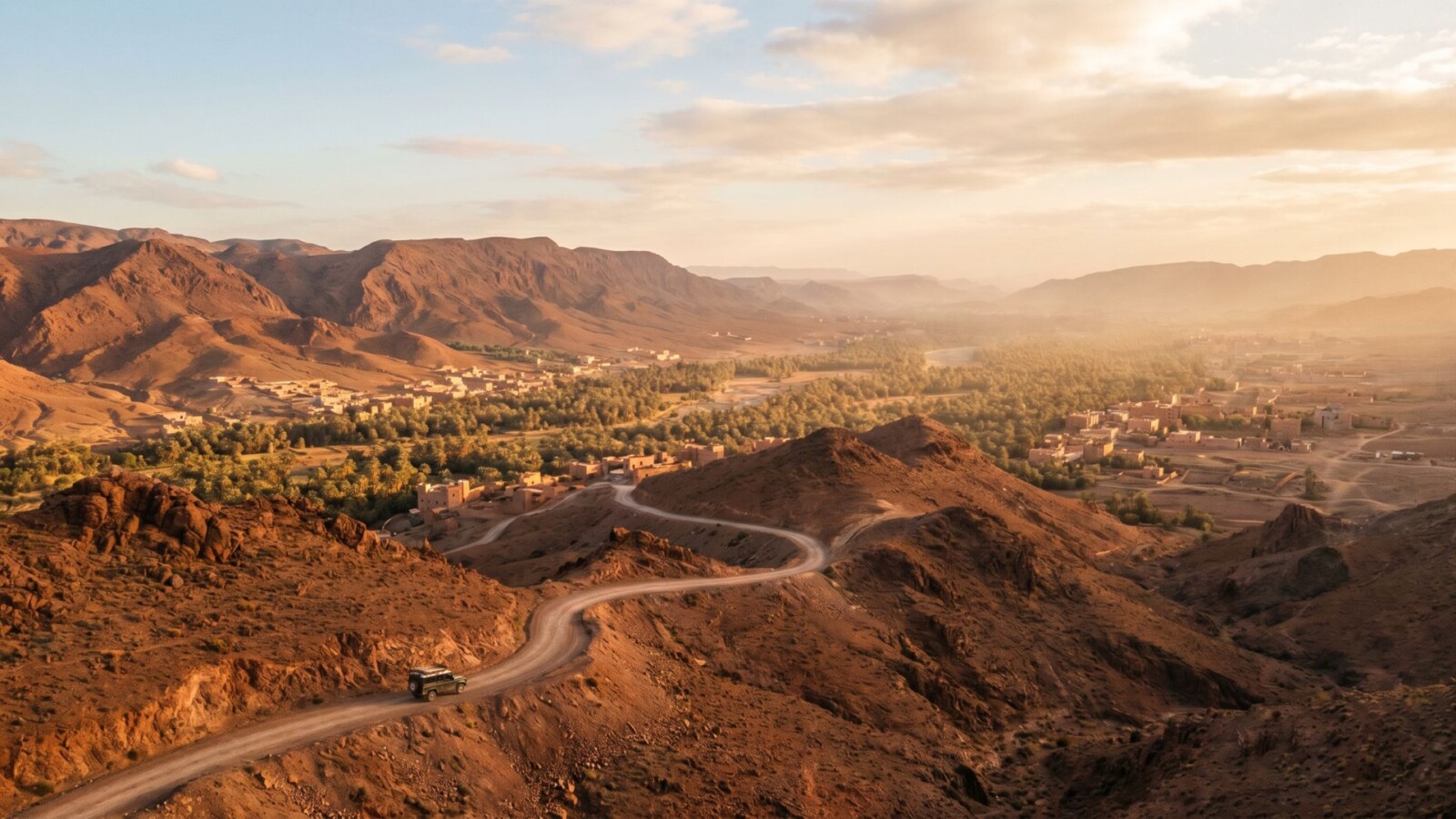
The route from Marrakech to Ouarzazate over the Tizi n’Tichka pass climbs to 2,260 meters through a landscape that shifts from ochre flatlands to snow-dusted peaks to terraced Berber villages clinging to the sides of gorges. The road is well-maintained, the distance is about 200 kilometers, and the journey takes three to four hours depending on how often you stop, which should be often.
Ait Ben Haddou sits just before Ouarzazate and deserves at least two hours. This UNESCO-listed ksar, a fortified Berber village built from pisé, the mixture of clay, straw, and water that defines Saharan architecture, has been used as a filming location for Gladiator, Game of Thrones, and dozens of other productions. The crowds know this. Go in the morning before the tour buses arrive from Marrakech.
Spend night three in Ouarzazate or, better, in a small guesthouse in the Draa Valley south of the city. The valley is planted with date palms for kilometers in every direction and the light at dusk turns everything a warm copper that photographs badly and looks extraordinary in person.
Day 4 and 5: The Sahara at Merzouga
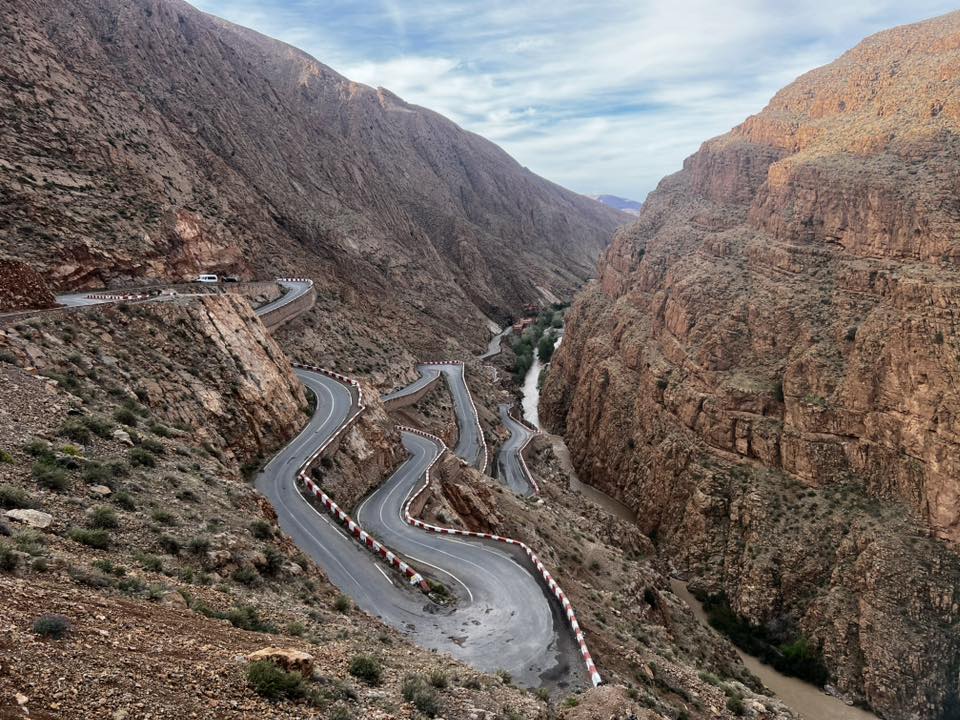
The drive from Ouarzazate to Merzouga takes five to six hours through a landscape that becomes progressively more austere and more beautiful as the vegetation thins and the hammada, the flat rocky desert, opens up ahead of you. The Dades and Todra gorges are along this route. Stop at Todra. The canyon walls rise 300 meters on either side of a narrow river crossing, and standing at the base of them in the morning light is one of those Morocco moments that does not make it into the promotional material but stays with you longer than anything on the postcard.
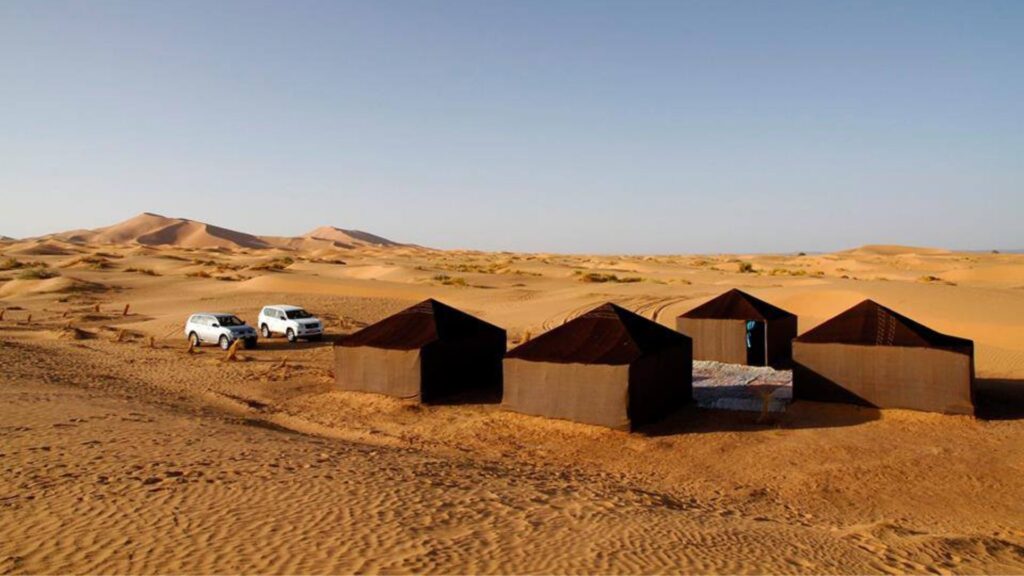
Merzouga is a small town at the edge of Erg Chebbi, the great sea of dunes that most people picture when they think of the Moroccan Sahara. The dunes rise to 150 meters at their highest point and shift color through the day from pale gold at midday to deep amber at sunset to a blue-gray silver under a full moon.
Book two nights here. The first night, take the camel trek at sunset and sleep in a desert camp. It is touristy in the best possible sense, meaning it became popular because it is genuinely worth doing. The second night, skip the camp and stay in town. Walk out to the dunes early in the morning, before anyone else is there, and watch the light arrive. It is a different experience entirely.
| Merzouga Practical Info | Details |
| Distance from Ouarzazate | 370 km / approx. 5.5 hrs |
| Best time to visit | October to April |
| Camel trek duration | 45 to 90 minutes each way |
| Desert camp cost | $80 to $150 per person |
| Recommended nights | 2 minimum |
Day 6: The Gorges on the way back
The return route from Merzouga toward Marrakech runs through the Dades Gorge, which most seven-day itineraries treat as a windshield view. Do not make that mistake.
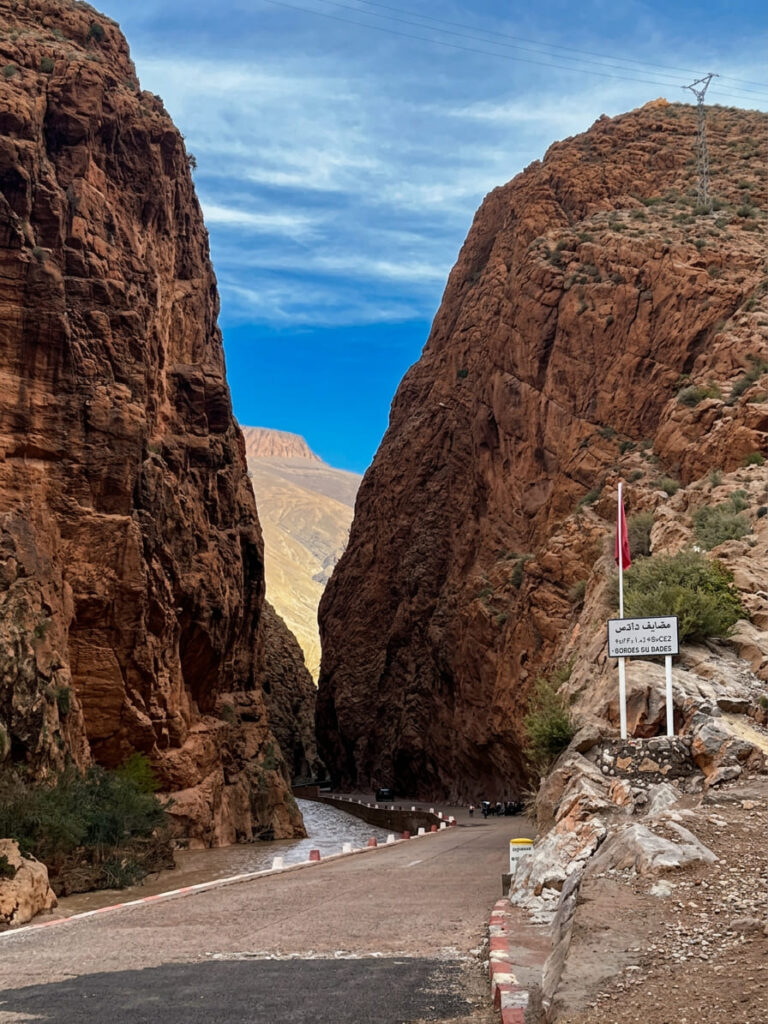
The Dades Valley blooms pink in May. Roses fill the entire region with a scent that seems impossible given the surrounding landscape. The gorge narrows further up into a series of dramatic bends called the Monkey Fingers. The name comes from the eroded rock formations lining the canyon walls. At the top of the gorge road, a small guesthouse serves lunch on a terrace above the valley. Stopping there for an hour is the kind of simple, unhurried decision that retroactively becomes the highlight of the trip.
Drive back toward Ouarzazate and continue west. Night six works best in Skoura, a small oasis town in the palmeraie where a handful of genuinely excellent kasbahs have been converted into guesthouses. After two nights in a desert camp, sleeping in a 400-year-old fortified house with walls a meter thick is a satisfying contrast.
Day 7: Back to Marrakech
The final drive over the Atlas is shorter from the Skoura side, roughly three hours to Marrakech with the pass behind you and the city spreading out below the mountains as you descend.
Use what is left of day seven to return to one specific place in the medina that earned a second visit. Maybe it is the souk where you saw the carpet you did not buy. The tea house on the roof terrace comes to mind too, where the afternoon light hits the rooftops just right. Or the small restaurant where the owner told you about his family, where the food was nothing special but the conversation turned out to be the best part of the meal.
Morocco has a way of giving you something specific to come back for. Seven days is enough to find yours.
Making the most of your first Morocco trip
A week here teaches you things no itinerary can prepare you for. Negotiating without causing offense is its own art form. It takes half a day to learn and stays with you permanently. The difference between a good riad and a mediocre one reveals itself in the first thirty seconds at the door. Nothing prepares you for the call to prayer on a medina street. Hard to describe. Impossible to ignore. A country this complex somehow feels, by the end of a well-built week, like somewhere you have only just started to understand.
If seven days leaves you wanting more, the natural next step is adding the north. Chefchaouen and Fes require their own time and their own attention, and they reward it differently than the south does. A full 10-day Morocco itinerary that adds the imperial cities and the mountain towns of the Rif is where most people find themselves planning their return trip, usually somewhere between the Atlas and the Sahara on day four of this one.
What would you add to a seven-day Morocco itinerary if you had the chance to do it again?


