
10-Day Morocco itinerary: cities, desert, and the Draa valley
The traveler who tries to do Morocco in a week almost always leaves wanting more. The one who takes ten days almost always leaves satisfied. For the bigger picture across every trip length, see our complete Morocco itinerary guide.
That is not a coincidence. Ten days gives Morocco enough room to show you what it actually is. A rushed itinerary produces a highlight reel. This one produces something closer to the real thing. You can stand in the medieval leather tanneries of Fes in the morning. Four days later, you fall asleep to total silence in a Saharan desert camp. The geographic distance is enormous. The atmospheric distance is even greater. That contrast is what makes Morocco one of the most compelling travel destinations on earth in 2026.
This itinerary is built for two types of travelers. The first is the first-time visitor who wants to do it right from the start. The second is the returning traveler who rushed through the south on a previous trip and knows something was left unfinished. The route follows a counterclockwise loop. It starts in Casablanca, moves north to Fes, swings south through the desert, and returns to Marrakech. There is no excessive backtracking. No days are wasted in transit. Each destination gets enough breathing room to feel like you actually arrived somewhere.
Day 1: Casablanca, a city worth one honest day
Most Morocco itineraries treat Casablanca as a transit hub and nothing more. That is mostly fair, but slightly unfair to the city itself.
Casablanca is Morocco’s economic capital and its most modern city. It has art deco architecture, wide boulevards, and a working port that processes more freight than any other in Africa. The medina drama of Fes is absent here. So is the sensory overload of Marrakech. That is actually a reasonable place to begin a trip. Those experiences will arrive soon enough.
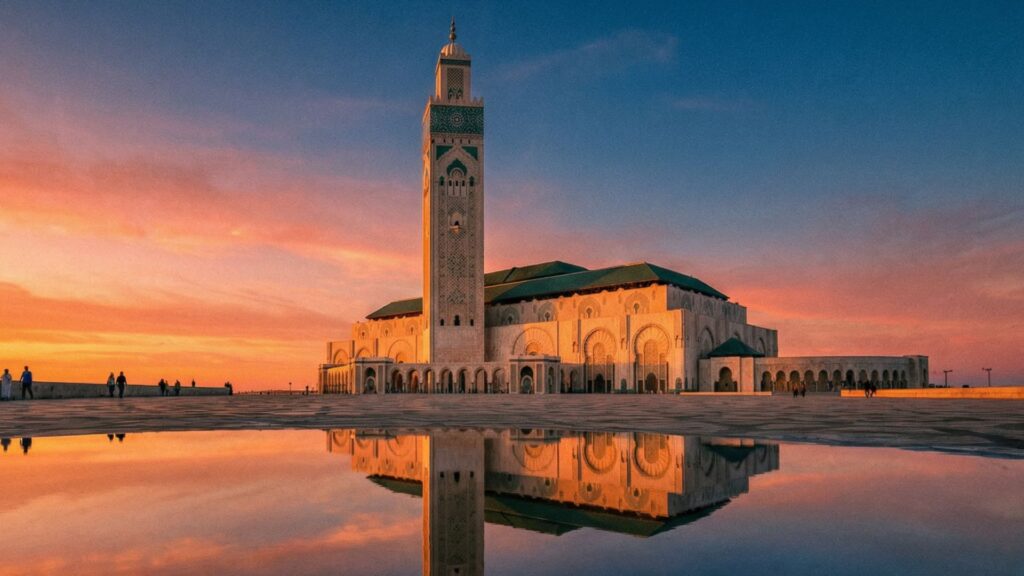
The Hassan II Mosque is not optional. It is one of the largest mosques in the world and one of the few in Morocco open to non-Muslim visitors. The guided tour takes about 45 minutes and is worth every minute of it. The minaret stands 210 meters tall and is built over the Atlantic on a platform that extends over the ocean, a decision that is either audacious or impractical depending on your architectural sympathies. The craftsmanship inside, the hand-carved cedar, the Italian marble floors, the zellij tilework covering every surface, belongs to a tradition of Moroccan artisanship that you will see echoed in smaller forms throughout the rest of the trip.
After the mosque, walk the Corniche, eat lunch at a restaurant facing the ocean, and board the afternoon train to Fes. The ONCF high-speed train connects Casablanca and Fes in under four hours and is comfortable, reliable, and among the best rail infrastructure in Africa.
Day 2 and 3: Fes, the city that requires your full attention
Fes requires two full days, and many people who have been there wish they had taken three.
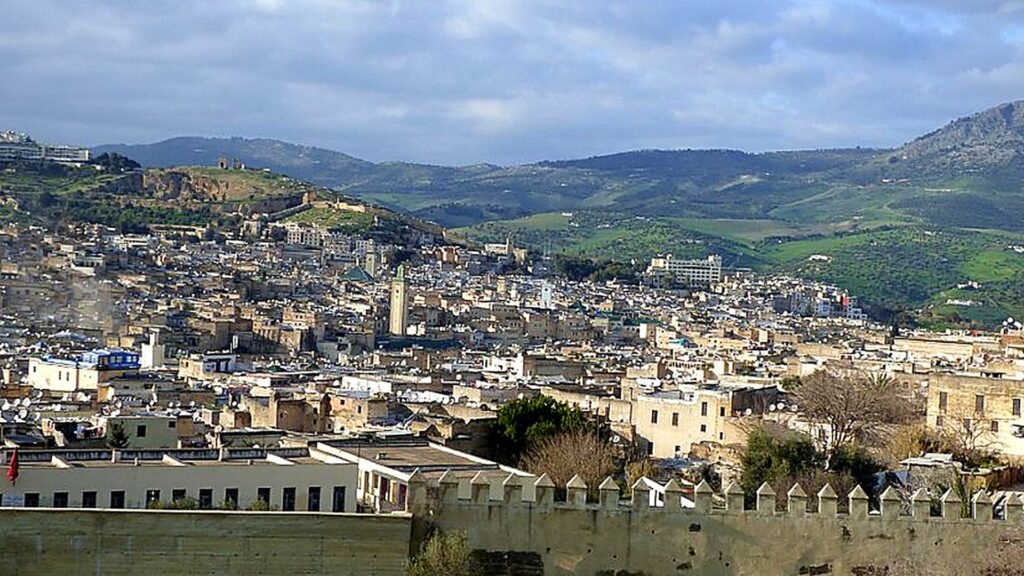
The medina of Fes el-Bali is the largest car-free urban area in the world and has been continuously inhabited for over 1,200 years. Those two facts alone tell you something about what you are walking into. The streets inside the medina are not streets in any conventional sense. They are pathways, some wide enough for a loaded donkey and a pedestrian to pass each other with difficulty, some narrow enough to touch both walls simultaneously. There are estimated to be over 9,000 alleyways inside the medina walls. Navigation apps lose accuracy quickly. Getting turned around is not a failure of preparation. It is part of the experience.
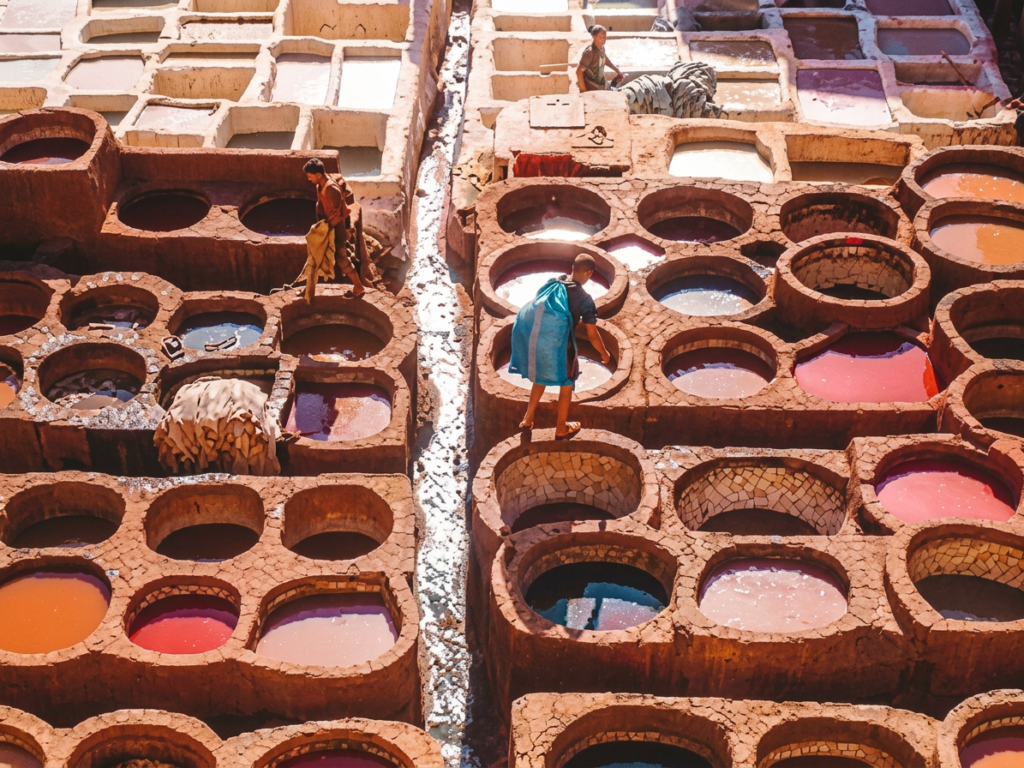
Hire a local guide for the first morning. This is one of the few genuinely non-negotiable recommendations in Morocco travel. The difference between wandering Fes with a guide and wandering without one is the difference between understanding what you are seeing and being a confused tourist who missed everything significant. A good guide will take you to the Chouara tannery, the oldest in Morocco, where leather has been processed using the same natural dye pits since the eleventh century. The smell hits you before the sight does. Workers stand knee-deep in vats of saffron yellow, poppy red, and indigo blue, treading hides in a scene that has not changed visually in a thousand years.
The Bou Inania Madrasa, the Al-Attarine souk, the brass and copper workshops of the medina, the ceramic quarter on the hill above the old city, all of these deserve time. Spend your second afternoon in Fes wandering without a guide. By that point, the medina’s logic will have started to make sense in a way that only comes from hours of walking it.
Eat dinner at a riad restaurant in the medina on night two. The setting, an open courtyard lit by candlelight with a mosaic fountain at the center and the sound of the city muffled by ancient walls, is the kind of atmospheric experience that justifies the entire trip.
Day 4: South through the Middle Atlas
The drive from Fes south toward the Sahara is one of the best driving days in Morocco and one of the least celebrated.
The route passes through Ifrane, a small city in the Middle Atlas. It looks inexplicably like a Swiss Alpine village. Sloped roofs and stone facades sit inside a cedar forest at 1,700 meters above sea level. The French built it during the protectorate period as a mountain retreat. It remains a popular weekend destination for Moroccan families from Fes and Rabat. The contrast with the medina you left that morning is jarring in the best possible way.
Continue south through Midelt, a market town in the high plains between the Middle and High Atlas ranges, where the light is flat and bright and the landscape feels enormous. Stop for lunch and keep moving toward Er Rachidia and the Ziz Valley, where the road drops into a canyon lined with date palms growing in dense rows along both sides of the river. The Ziz Valley is one of those Morocco landscapes that travelers who have seen it reference for years afterward. Book a guesthouse in the valley for night four rather than pushing all the way to Merzouga.
Day 5 and 6: Merzouga and the Sahara
Everything said about Merzouga and Erg Chebbi in the seven-day itinerary applies here with one important addition: take the second day.
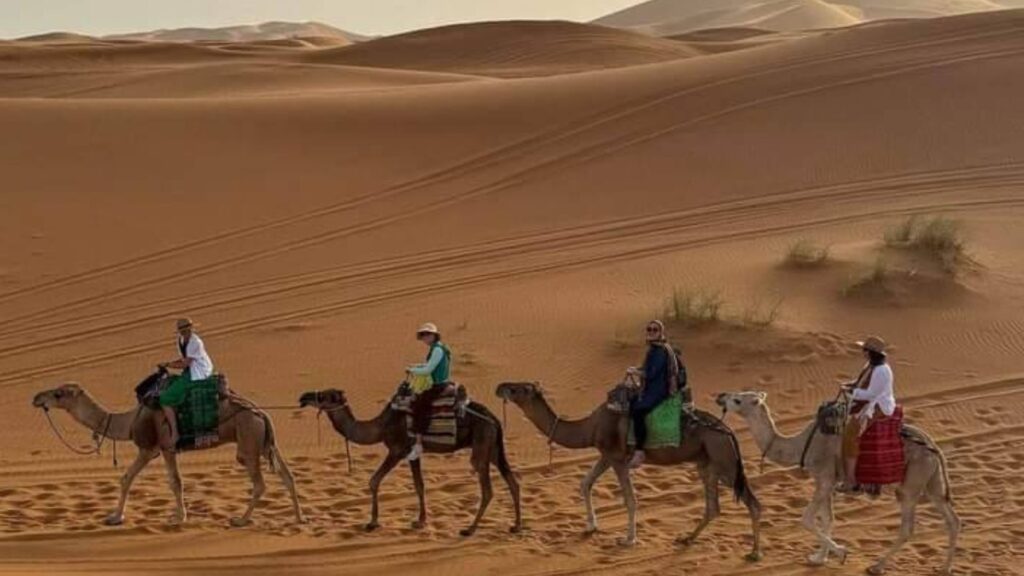
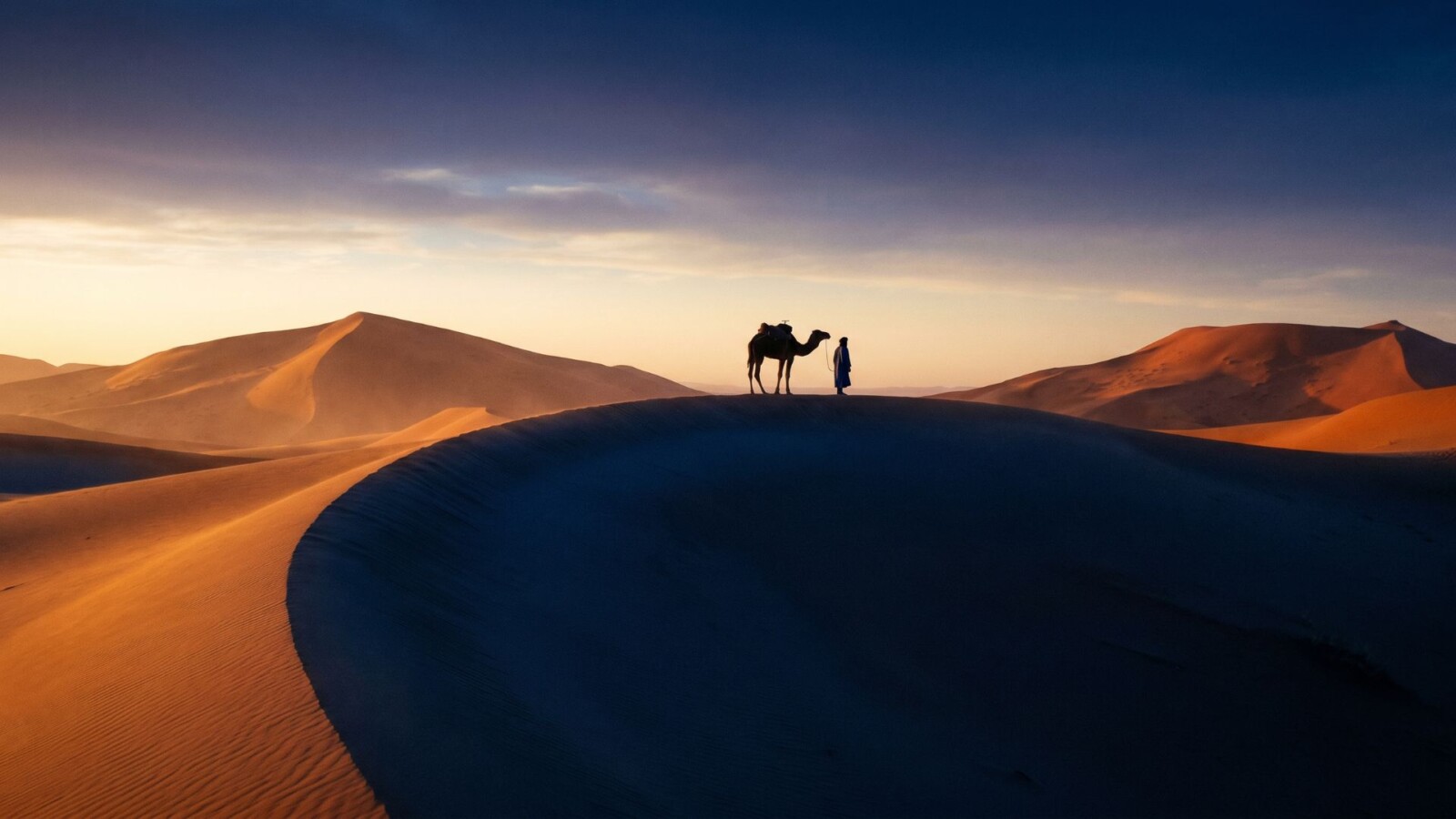
Most short itineraries spend one night in the desert and rush back the next morning. Two nights at Merzouga produces a fundamentally different experience. The first night in a desert camp is extraordinary. The second morning, when you walk out to the dunes alone before the sun is fully up and the sky moves through a sequence of colors that no photographer has quite captured accurately because the human eye perceives it differently than a lens does, that is the morning that stays with you.
Spend the afternoon of day six at the dunes at your own pace. The village of Merzouga has a small market, a few good cafes, and a handful of local families who have been welcoming desert travelers for generations. The ksar of Rissani, 22 kilometers west, is one of the oldest settlements in southeastern Morocco and a major historical trading post on the trans-Saharan caravan route. It receives a fraction of the attention it deserves.
Day 7: The Draa Valley and the Gorges
The route west from Merzouga toward Ouarzazate passes through a landscape that changes character every hour. Rocky hammada gives way to the Dades Valley, which opens into the gorge system that most travelers treat as a scenic drive rather than a destination worth stopping in.
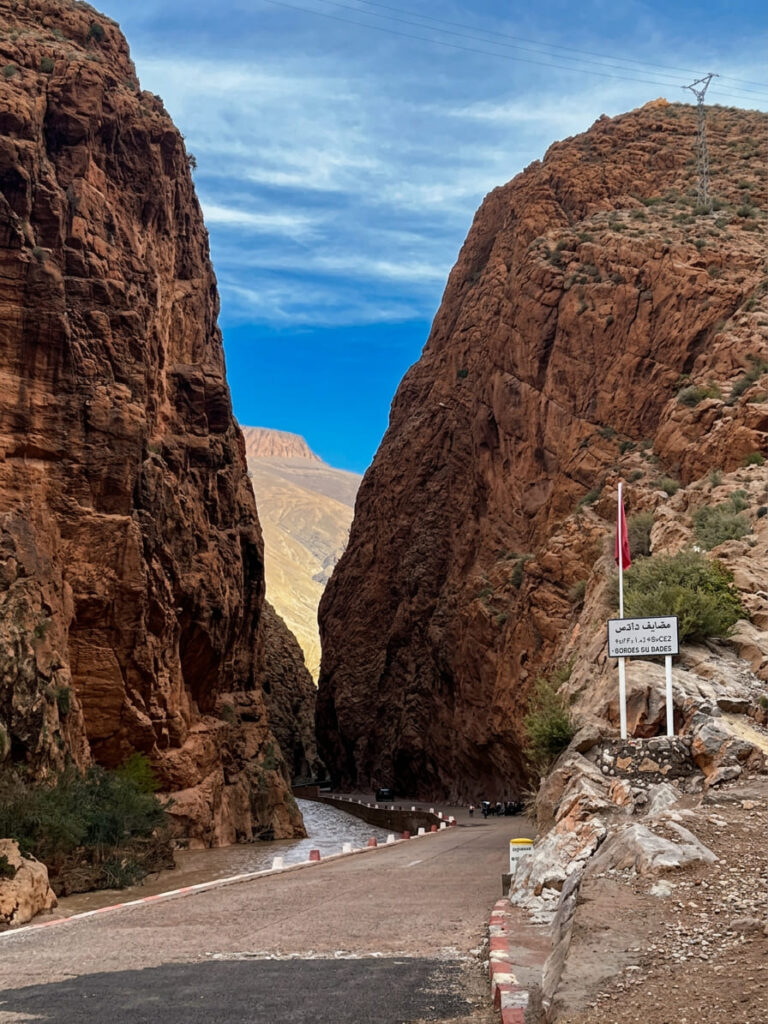
Stop in the Todra Gorge for at least two hours. The walls of the canyon rise 300 meters on either side of a narrow river that runs cold even in summer. Local rock climbers work the vertical faces above, and a cluster of small guesthouses and cafes line the river at the gorge’s narrowest point. The light inside the canyon at midday is extraordinary, sharp and directional in a way that makes even bad photography look deliberate.
Continue to Kelaat M’Gouna in the rose valley, where the entire region blooms pink in May, and through Skoura to a guesthouse or small kasbah for night seven.
Day 8: Ait Ben Haddou and Ouarzazate
Ait Ben Haddou is 30 kilometers northwest of Ouarzazate and earns every superlative it receives. The UNESCO-listed ksar rising from the desert floor, its pisé towers glowing amber in the morning light, its narrow streets leading to a granary at the summit with views across the Ounila River valley, is one of the defining images of southern Morocco for a reason.
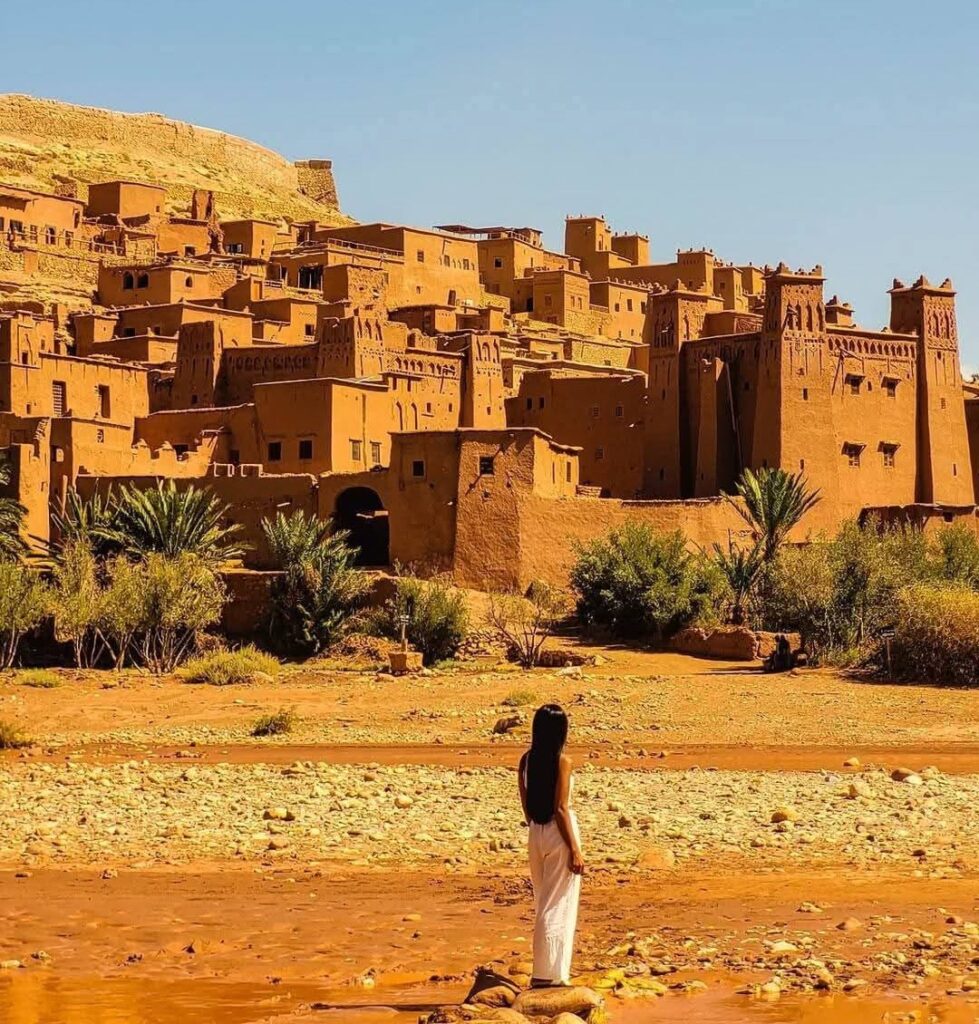
Go early. The site fills with tour groups from Marrakech by mid-morning. Two hours before the crowds arrive, the ksar is almost entirely quiet, and the atmosphere is something the tour groups never experience.
Ouarzazate itself is worth an afternoon. Ouarzazate is Morocco’s film production hub. Atlas Studios has hosted productions including Lawrence of Arabia, Babel, and dozens of others. The Taourirt Kasbah sits in the center of town. It is one of the best-preserved examples of southern Moroccan fortified architecture. It also sees far fewer visitors than Ait Ben Haddou.
Day 9 and 10: Marrakech, returning with different eyes
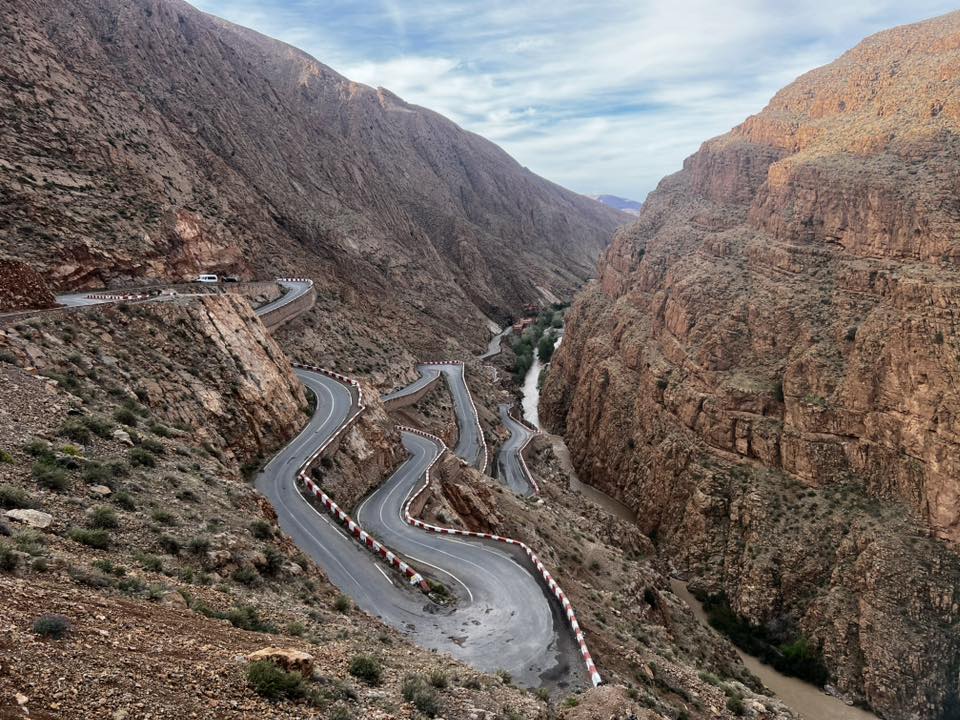
The drive over the Tizi n’Tichka pass from Ouarzazate to Marrakech takes three to four hours. The scenery ranks among the most dramatic in North Africa. The High Atlas in the morning is something else entirely. Cloud shadows move across the peaks. The road switchbacks up through Berber villages perched on impossible slopes. It feels like a reward for the journey south.
Arriving in Marrakech on day nine with a full day ahead of you is a different experience than arriving on day one. The medina makes more sense now. The souks feel navigable rather than overwhelming. The Djemaa el-Fna at night, which hit you like a wall of sound on the first evening, now feels like a place you know, a place with its own rhythms that you have learned to read.
Use day nine for everything Marrakech that the opening days did not reach. The Yves Saint Laurent Museum adjacent to the Majorelle Garden is one of the best-designed museum experiences in Morocco. The hammam experience, a traditional steam bath and scrub that Moroccans use as a weekly ritual, is accessible to visitors at dozens of establishments in the medina and is not the intimidating experience most first-timers expect.
Day ten is your departure day. Go back to one specific place before you leave. That is not a sentimental instruction. It is a practical one. The place you go back to in Morocco is usually the place you understand you need to return for.
What ten days actually teaches you
There is a particular kind of clarity that arrives toward the end of a well-structured Morocco trip. It is not the feeling of having seen everything. Nobody sees everything in ten days. It is something more honest than that. You leave with a sense of the country’s pace. You understand its hospitality in a way guidebooks cannot fully prepare you for. Morocco carries a particular combination of influences: Berber and Arab, French and Spanish, ancient and contemporary. Mountain, desert, and Atlantic coast all fold into a country the size of California. That is what stays with you.
Ten days is enough to get there. The travelers who arrive at that clarity are almost always the ones who resisted the urge to add one more city, took the second night in the desert, and ate lunch somewhere that was not on any list.
If you are already thinking about what comes next, the answer is the north. Chefchaouen and Tetouan add a completely different dimension to everything covered here. Most people who make that trip spend the next few years recommending it to everyone they know. The 14-day Morocco itinerary builds directly from this foundation. It takes the country as far north as the Rif Mountains and the Mediterranean coast.
What part of Morocco would you add to ten days if you had the flexibility?


