
Morocco road trip: the best route from Tangier to Agadir
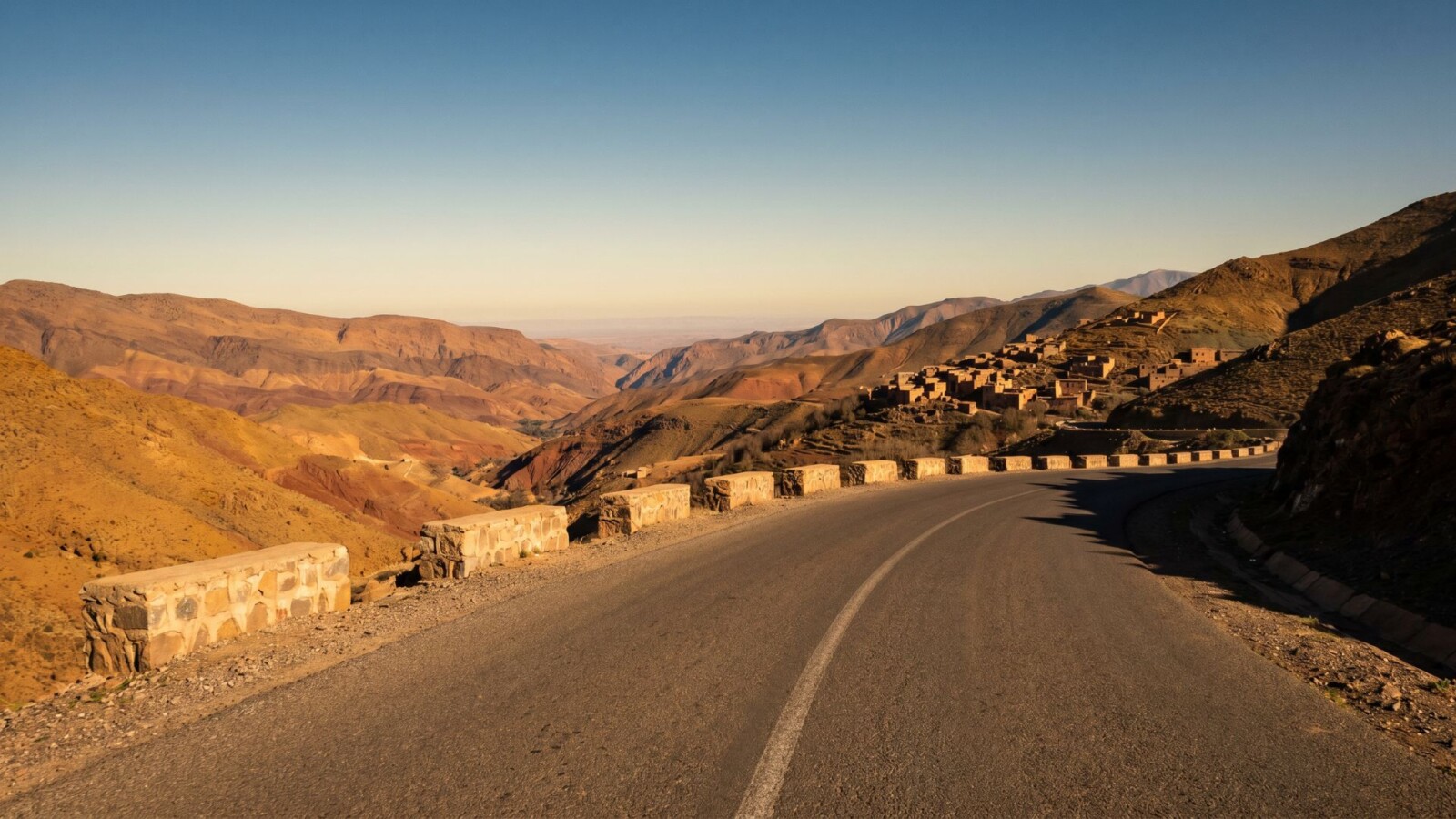
There is a moment somewhere on the road between Midelt and Er Rachidia when the last cedar tree disappears behind you and the landscape ahead becomes something else entirely.
The Middle Atlas is gone. The high plains stretch south in every direction. The road ahead is straight and pale and flanked by nothing for as far as you can see, and the Sahara is still two hours away but you can feel it coming in the quality of the light and the temperature of the air and the particular silence that descends when you roll down the window and the wind carries no moisture at all. That is a Morocco moment that no bus window delivers the same way. That is why you drive. For how this route fits alongside train-based and shorter trips, see our complete Morocco itinerary guide.
A Morocco road trip is not the logistical challenge that cautious travel planning resources suggest. The roads on major routes are excellent. The signage is adequate once you understand that distances are marked in kilometers and directions in French and Arabic. Fuel is available in every town of consequence. The driving culture takes some adjustment, particularly on mountain passes where overtaking happens with a confidence that occasionally defies physics, but it is navigable for any driver who has handled traffic in a large American city.
This route runs from Tangier in the north to Agadir on the Atlantic coast, covering roughly 1,800 kilometers over ten to fourteen days. When you reach the finish line, the Agadir travel guide helps you make the most of the coast. It connects every major region of Morocco in a single logical sweep and gives you the freedom to stop when a valley earns it, stay an extra night when a kasbah is too good to leave, and find the places that do not appear on any list because they require a turn off the main road that only a driver can make.
Before you leave: rental car practicalities
Renting a car in Morocco is straightforward but requires attention to a few specifics that affect the experience significantly.
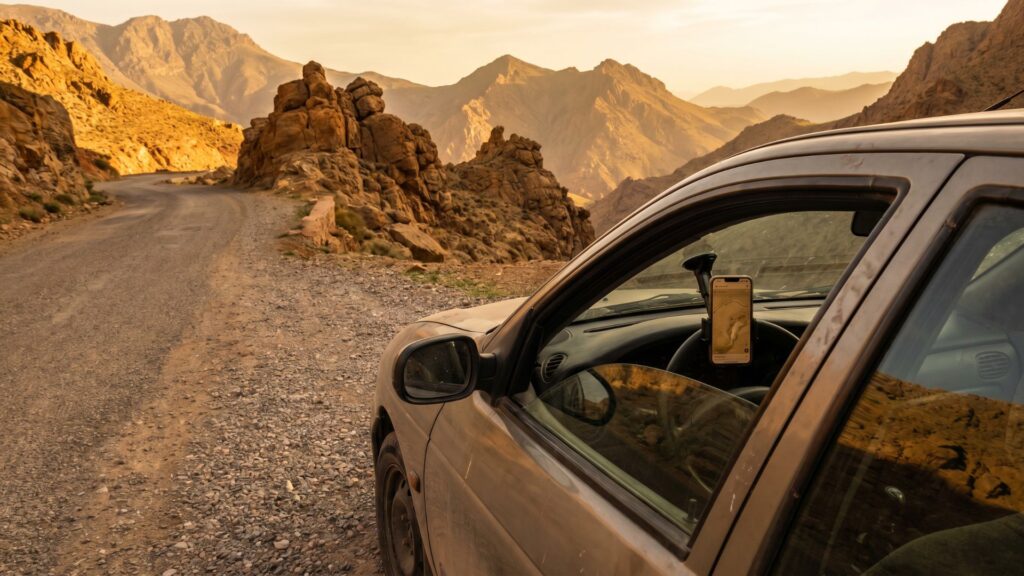
Book through an international rental company rather than a local agency if you plan to cross mountain passes or drive unpaved roads to remote destinations. International companies carry better insurance coverage and have more reliable roadside assistance networks. The price difference is real but worth it for the peace of mind on mountain routes where a breakdown in the afternoon has different consequences than one in a city.
Take the full insurance option. This is not optional advice. Moroccan roads are generally good, but the driving culture includes behaviors that can result in minor damage to your vehicle through no particular fault of your own. The excess on a standard insurance policy can be substantial.
An international driving permit is technically required alongside your US license and is worth obtaining before departure. In practice, it is rarely requested, but having it eliminates any ambiguity at checkpoints or in the event of an accident.
A GPS or downloaded offline maps are essential. Google Maps works in Morocco and is generally accurate on main routes. For secondary roads in the desert south and mountain regions, download offline maps before you leave the city. Signal disappears in gorges and on mountain passes with no warning.
Never drive in Marrakech or Fes medina areas. The medinas are car-free and the surrounding streets are among the most chaotic driving environments in the country. Park outside the medina walls in a guarded parking lot, which every major city provides, and use your feet inside.
Day 1 and 2: Tangier, where the continent begins
Tangier is the natural starting point for a north-to-south road trip and a more interesting city than its transit reputation suggests.
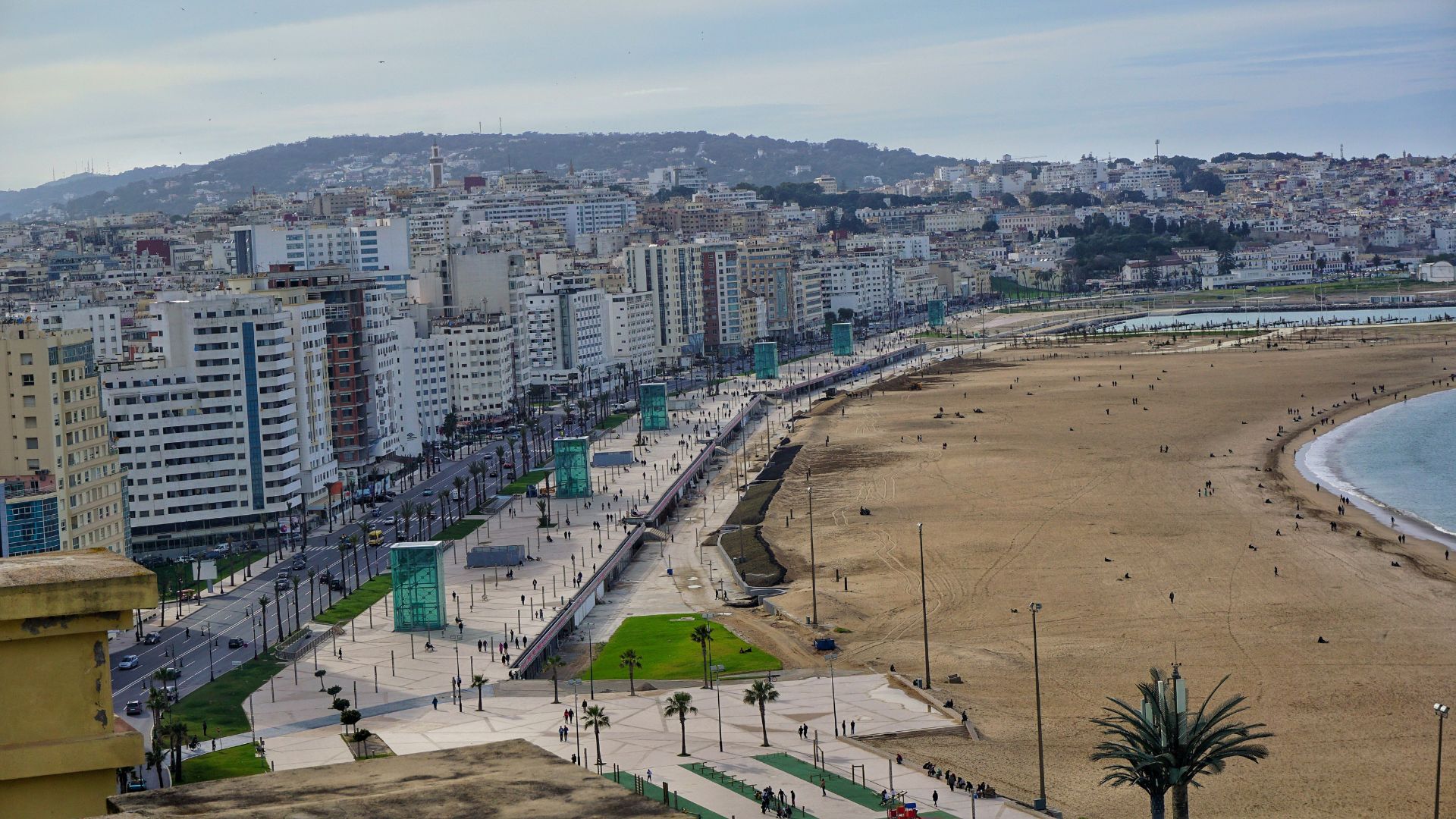
The drive from Tangier Mohammed Ibn Abdallah Airport into the city takes twenty minutes and immediately establishes the visual character of northern Morocco: whitewashed buildings stacked on hillsides, the Strait of Gibraltar visible from elevated roads, the mix of Spanish and Arabic signage that reflects the city’s particular history as an international zone administered by competing powers through much of the twentieth century.
Spend night one and the morning of day two in Tangier proper. The medina is compact and manageable, a good entry point before the more complex medina environments further south. The kasbah sits at the highest point of the medina and offers views over the Strait on clear days that extend to the Spanish coast. The American Legation Museum in the medina is the only American National Historic Landmark located on foreign soil and worth an hour of anyone’s time regardless of nationality.
Leave Tangier on the afternoon of day two heading south on the N2 toward Chefchaouen. The drive takes about two hours through the foothills of the Rif Mountains as the landscape transitions from coastal Mediterranean to forested highland. Arrive in Chefchaouen before dark and park outside the medina walls.
Day 3 and 4: Chefchaouen and the Rif Mountains
Chefchaouen sits in a natural amphitheater in the Rif Mountains at around 600 meters above sea level, and the drive into town from the north is the kind of arrival that makes you understand immediately why the place has the reputation it does.
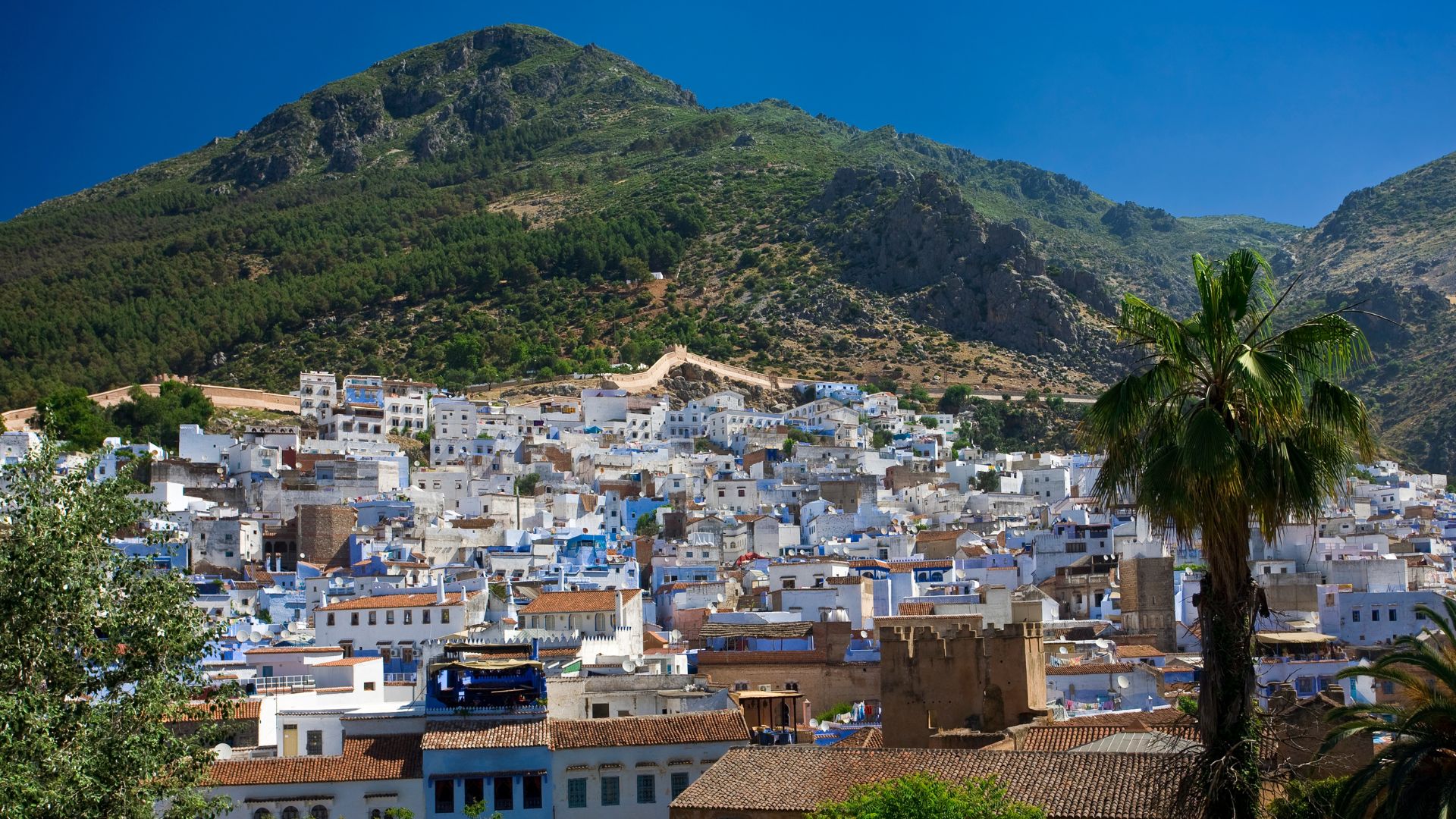
The blue medina is best experienced on foot, which means your car is irrelevant for these two days. Park it, leave it, and walk. The morning light in the upper medina streets, the ones that tourists reach less frequently because the slope becomes genuinely steep, is the best photographic light in the city and arrives early. Be there before 8 a.m. and you will have significant sections of the medina to yourself.
Use the car on the afternoon of day four to drive up into the Rif above the city. The cedar forest above Chefchaouen is home to Barbary macaques, the only wild primates in Africa outside of sub-Saharan Africa, and the road through the forest delivers views back down over the medina and the valley that the hiking trail does not reach as efficiently.
Leave Chefchaouen on the morning of day five heading east on the N2 toward Fes.
Day 5 and 6: Fes, park the car and walk
The drive from Chefchaouen to Fes takes about three hours on the N2 through the Rif foothills and delivers you to Morocco’s most complex medina city by midday if you leave at a reasonable hour.
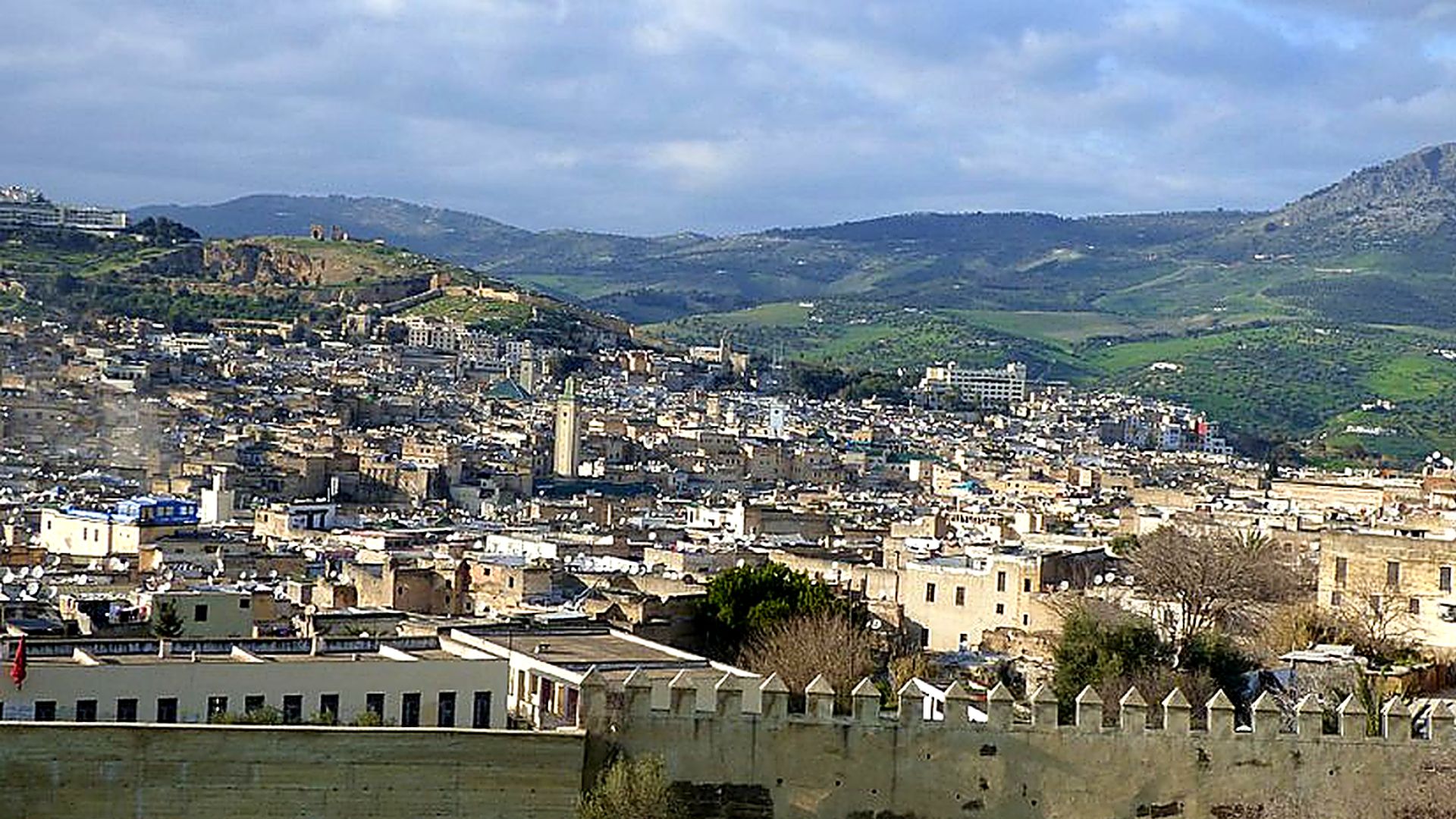
Park in the guarded lot near Bab Boujloud, the main western gate of the medina, and do not move the car again until you leave Fes. The medina is car-free and the surrounding streets are not suited to unfamiliar drivers. Everything in Fes worth seeing is accessible on foot from the medina gates.
The road trip advantage in Fes is primarily logistical: you can carry more luggage than public transport travelers without paying for it, you can depart exactly when you choose rather than working around bus or train schedules, and you can stop at the ceramic workshops in the hills above the medina, which require either a taxi or a car to reach comfortably.
Two days in Fes. The first with a guide. The second on your own terms. This applies regardless of how you arrived.
Day 7: The Middle Atlas and the drive south
This is the day that most road trip itineraries undervalue and experienced Morocco drivers describe as one of the best driving days on the continent.
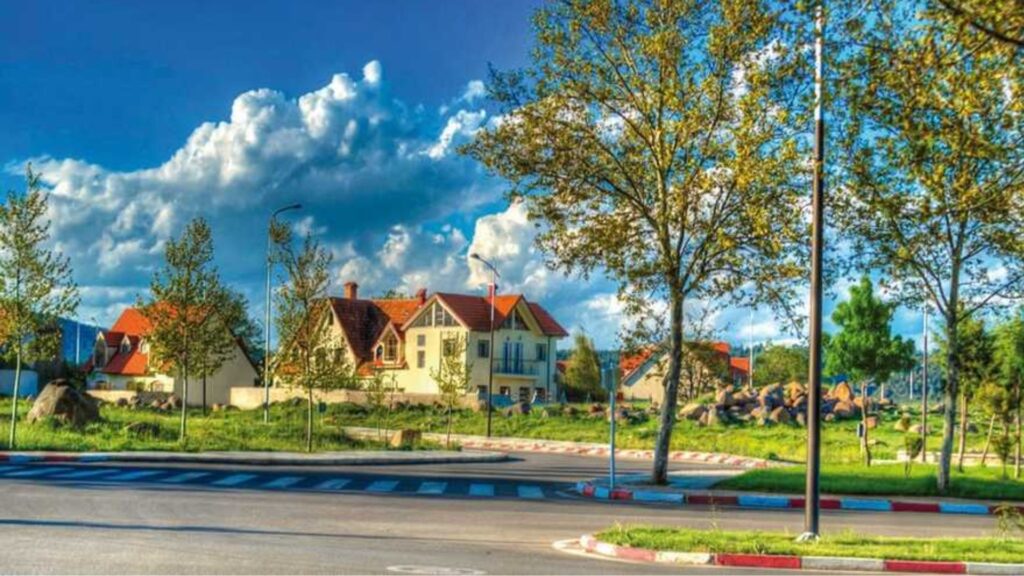
Leave Fes early. The route south on the N8 climbs immediately into the Middle Atlas, passing through Ifrane and its incongruous Alpine architecture before entering the cedar forests that cover the upper slopes of this range. The forest here is genuinely ancient in places, with Atlas cedar trees that have been growing for centuries on slopes that see snow in winter and carry a particular quality of cool, resinous air that feels nothing like the Morocco the postcards advertise.
Midelt is worth a stop for lunch. The town sits in the high plains between the Middle and High Atlas ranges at around 1,500 meters above sea level, and the light there is flat and clear and makes everything look slightly more real than usual. The palmerie south of Midelt, where the Moulouya River feeds a narrow corridor of cultivation in an otherwise arid landscape, is the first indication that the desert is coming.
Continue south through Er Rachidia and into the Ziz Valley as the afternoon light begins to lower. The canyon walls on either side of the valley road are ochre and amber and deep red depending on the hour. Book a small guesthouse in the valley or push to Merzouga for night seven.
Day 8 and 9: the Sahara
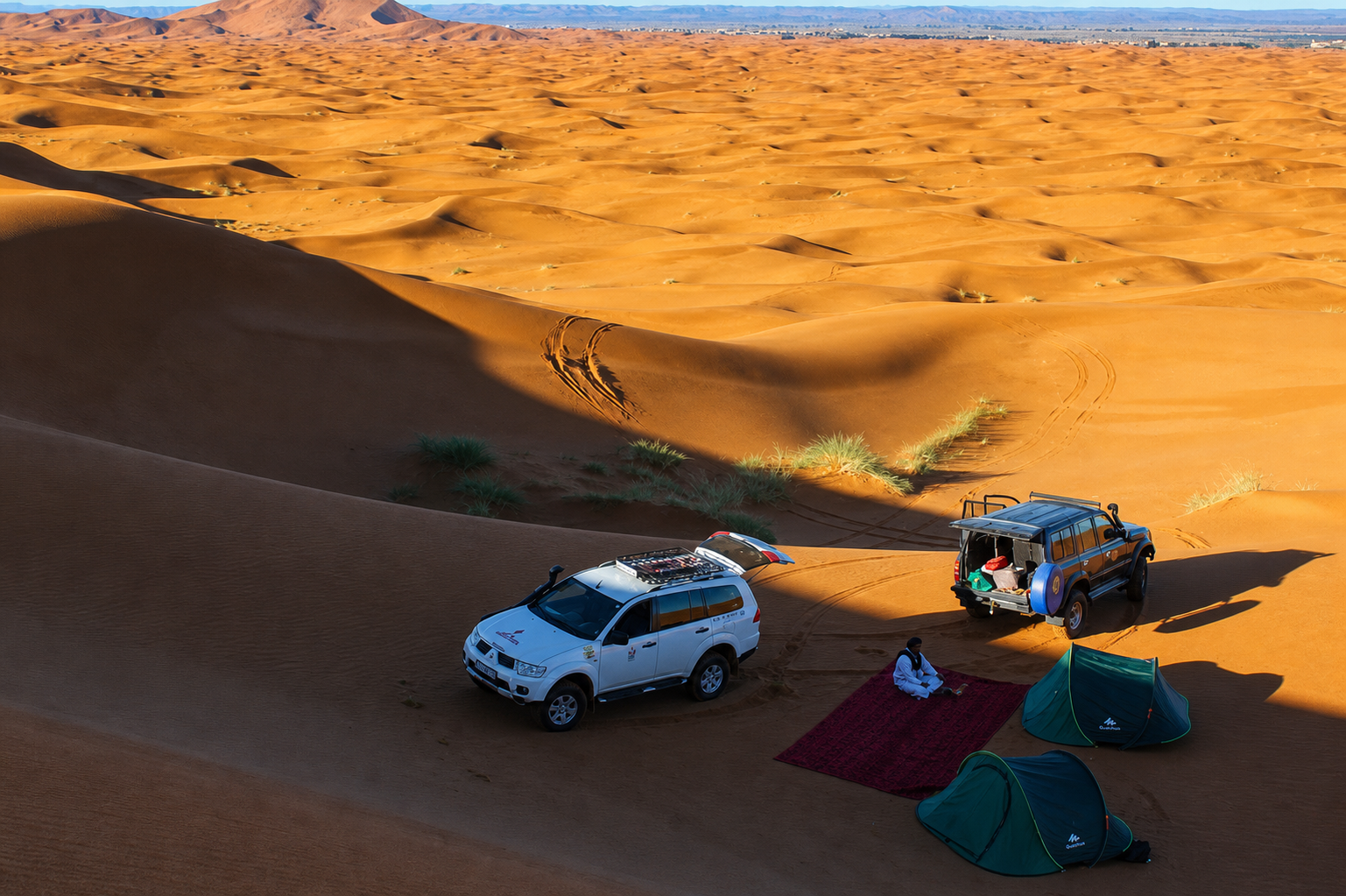
The road from the Ziz Valley to Merzouga crosses a flat hammada, the rocky desert pavement that precedes the sand, and delivers you to the edge of Erg Chebbi with no particular warning. The dunes simply appear on the horizon and grow as you approach until the road ends at the edge of a sea of sand that rises to 150 meters and extends south to the Algerian border.
Park the car at your guesthouse or camp and leave it there for two days. The Sahara is experienced on foot and by camel, not by vehicle, with the exception of the 4WD desert excursions that operate from Merzouga into the deeper dunes.
Two nights at Merzouga. The reasoning is the same as in every Sahara-centered Morocco itinerary: the first night is the experience you planned for; the second morning is the experience you will remember. An early walk to the dunes before any other travelers are moving is the most solitary and atmospheric thing available on this entire road trip, and it costs nothing beyond the willingness to set an alarm at 5:30 a.m.
Day 10: the Gorges
The drive west from Merzouga toward Ouarzazate follows a route through the Tafilalt oasis region, past the historic ksar of Rissani, and into the gorge country that most road trippers treat as a transition rather than a destination.
Stop treating it as a transition.
The Todra Gorge, reached by a side road north of Tinghir, is a 300-meter canyon with walls that glow red and orange in the morning light and turn deep purple in the shade of the afternoon. The road into the gorge ends at a parking area at the narrowest point, and the fifteen-minute walk through the canyon from there is one of the most dramatic short walks in Morocco.
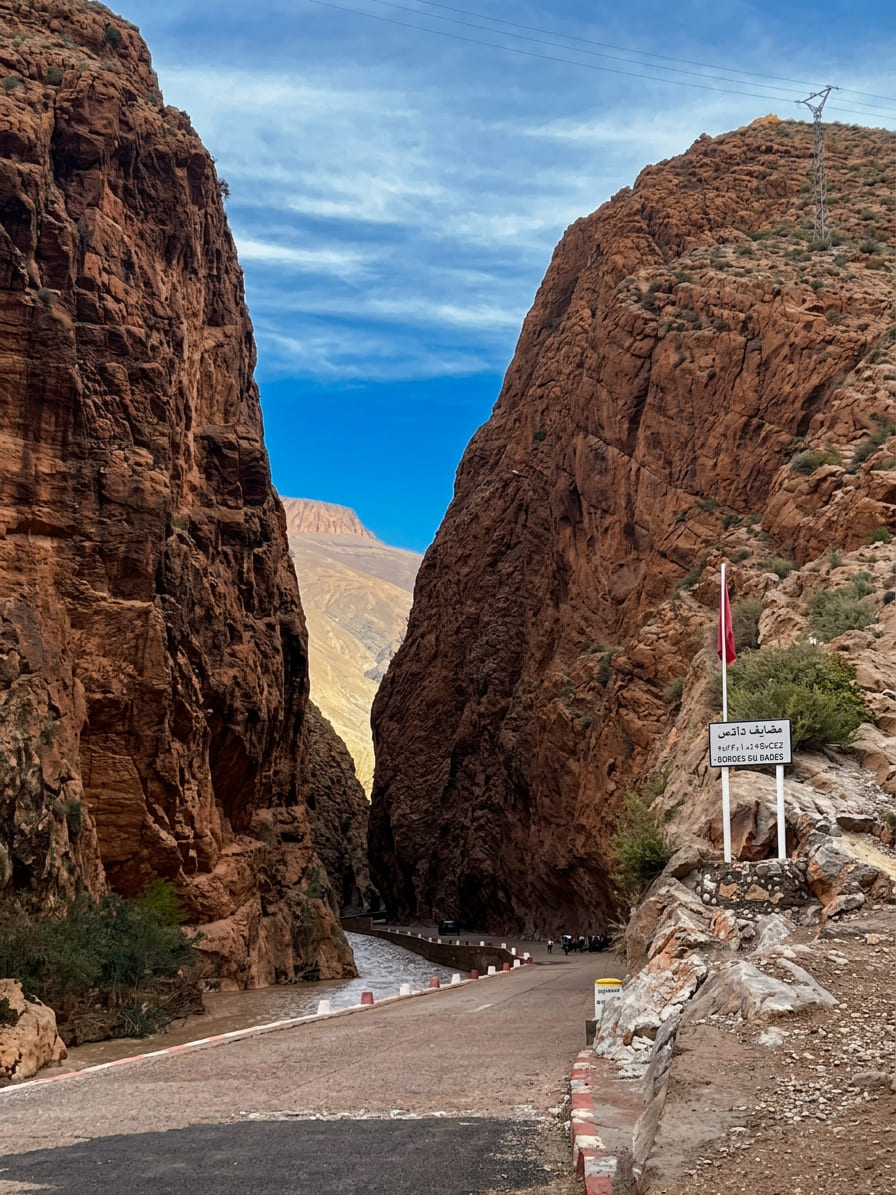
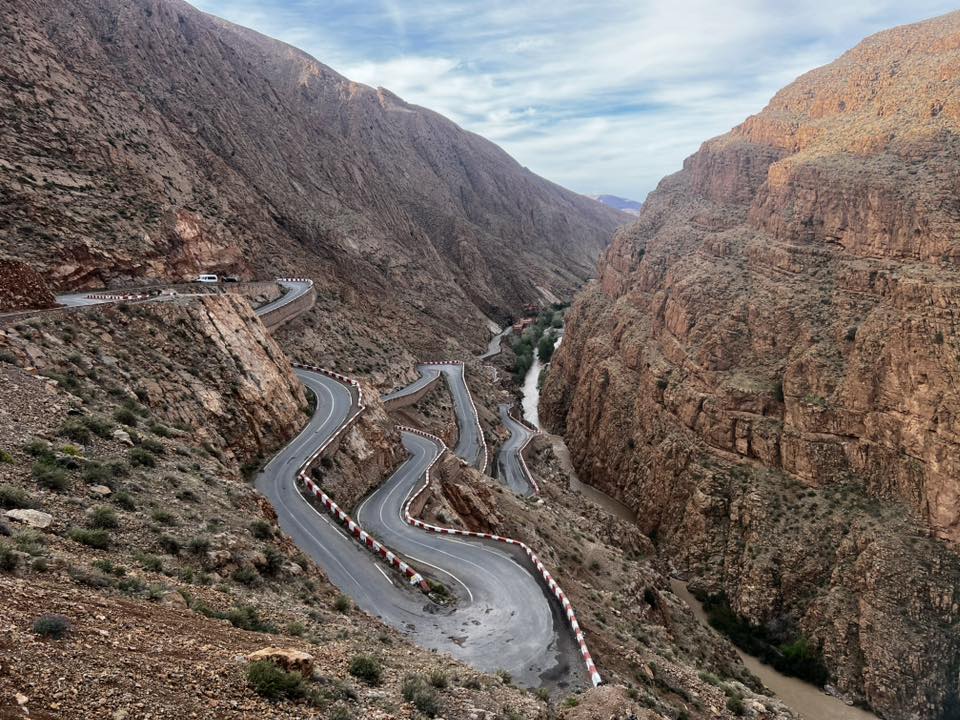
The Dades Gorge runs parallel and west of Todra, and the upper road through its narrowest section, the switchbacks called the Monkey Fingers, requires exactly the kind of vehicle access that makes a road trip the right choice for this particular Morocco experience. The view from the top looking back down the valley toward Boumalne Dades and the desert plains beyond is a Morocco landscape that almost no travel photography captures adequately and that rewards any detour required to reach it.
Night ten in Skoura or a small kasbah in the Dades Valley.
Day 11: Ait Ben Haddou and Ouarzazate
Ait Ben Haddou is 30 kilometers northwest of Ouarzazate on a road that runs through a landscape of hammada and distant mountains that looks nothing like the lush Morocco of the north and everything like the set of a biblical epic, which is roughly what it has been used for in dozens of film productions over the past sixty years.
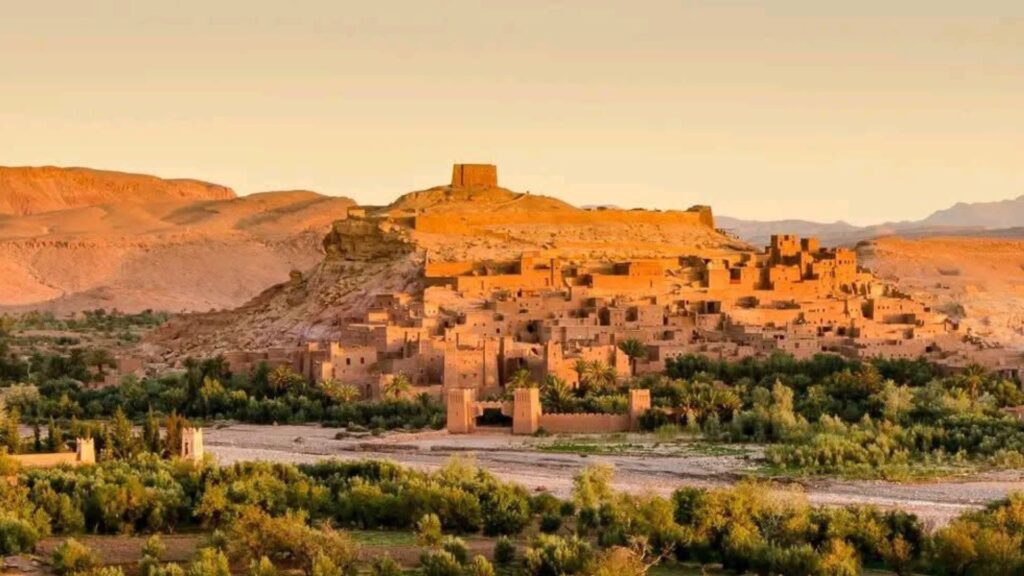
The road trip advantage at Ait Ben Haddou is timing. Day tour buses from Marrakech arrive between 10 a.m. and noon. Arriving before 9 a.m. in your own vehicle gives you an hour in the ksar before the crowds, which is an entirely different experience than arriving with them.
Ouarzazate in the afternoon. The Taourirt Kasbah in the center of town and the Atlas Studios on the outskirts both deserve time. Night eleven in a guesthouse with a view of the Draa Valley if the booking works out.
Day 12 and 13: over the Atlas to Marrakech, then West to Essaouira
The Tizi n’Tichka pass is 2,260 meters above sea level and the most dramatic road in Morocco. The drive from Ouarzazate to Marrakech crosses the High Atlas in a series of switchbacks that deliver views north over the Haouz plain and south over the desert country you have been driving through for the past five days. Allow four hours and stop as often as the views justify it, which is frequently.
Marrakech on day twelve for one night. Use the evening to walk the Djemaa el-Fna and eat well. Leave the car parked. The city is navigable on foot from any riad in the medina.
Day thirteen, drive west to Essaouira on the N1, a three-hour coastal route through argan orchard country where goats sometimes climb the trees to reach the fruit, a sight that seems impossible until you see it and then seems perfectly logical given the landscape. Essaouira is a fortified Portuguese port city on the Atlantic, consistently windy, consistently beautiful, and one of the most relaxed urban environments in Morocco. The ramparts overlooking the ocean, the working fishing port, the medina with its blue and white painted facades: none of it requires a full day to appreciate, but all of it rewards the afternoon you give it.
Day 14: Agadir and the Atlantic coast
The final drive south from Essaouira to Agadir follows the Atlantic coast on a road that delivers ocean views for much of its two-hour length. Agadir is Morocco’s main beach resort city, rebuilt entirely after a 1960 earthquake destroyed the original city, and it is considerably more comfortable and considerably less atmospheric than everything you have been driving through for the past two weeks.
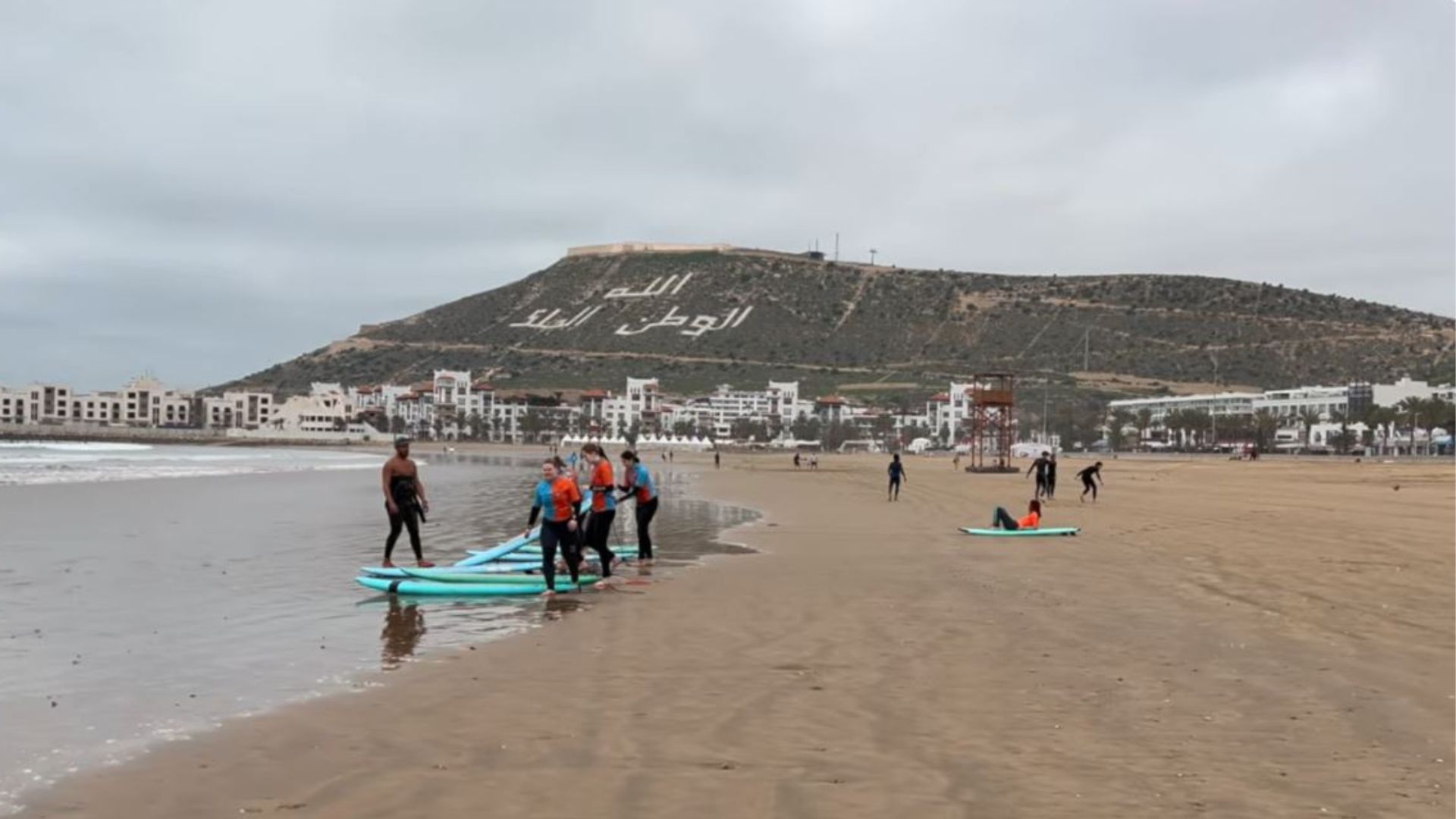
That contrast is not a criticism. After fourteen days of medinas and mountain passes and desert camps, a clean hotel room with a swimming pool and a beach within walking distance has its own particular appeal. Agadir is where you decompress before the flight home, and it serves that function well.
Return the rental car at the Agadir airport and consider, as you hand back the keys, where the road would have taken you if you had turned left instead of right somewhere in the Draa Valley on day ten.
The honest case for driving Morocco
A Morocco road trip gives you something that no other mode of transport replicates: the country at your own pace, on your own terms, with the ability to stop when something catches your eye and leave when you are ready.
The Dades switchbacks at sunrise. The cedar forest above Chefchaouen at dusk. The Ziz Valley in the late afternoon when the palm trees cast long shadows across the road and the canyon walls glow the color of embers. These are driving experiences in the specific sense that they happen through the windshield and the open window and the particular quality of attention that a long road brings out in people.
If the logistics of driving the entire route feel like more than you want to manage on a first Morocco trip, the Morocco without a car guide covers every public transport alternative in detail, and the two approaches are not mutually exclusive. Many travelers drive the south and take trains in the north, which captures the freedom where it matters most without the complication of navigating urban Moroccan traffic.
What stretch of road would you most want to drive in Morocco if you only had three days behind the wheel?


