Morocco becomes founding member of Trump’s peace board: what it means for American tourists
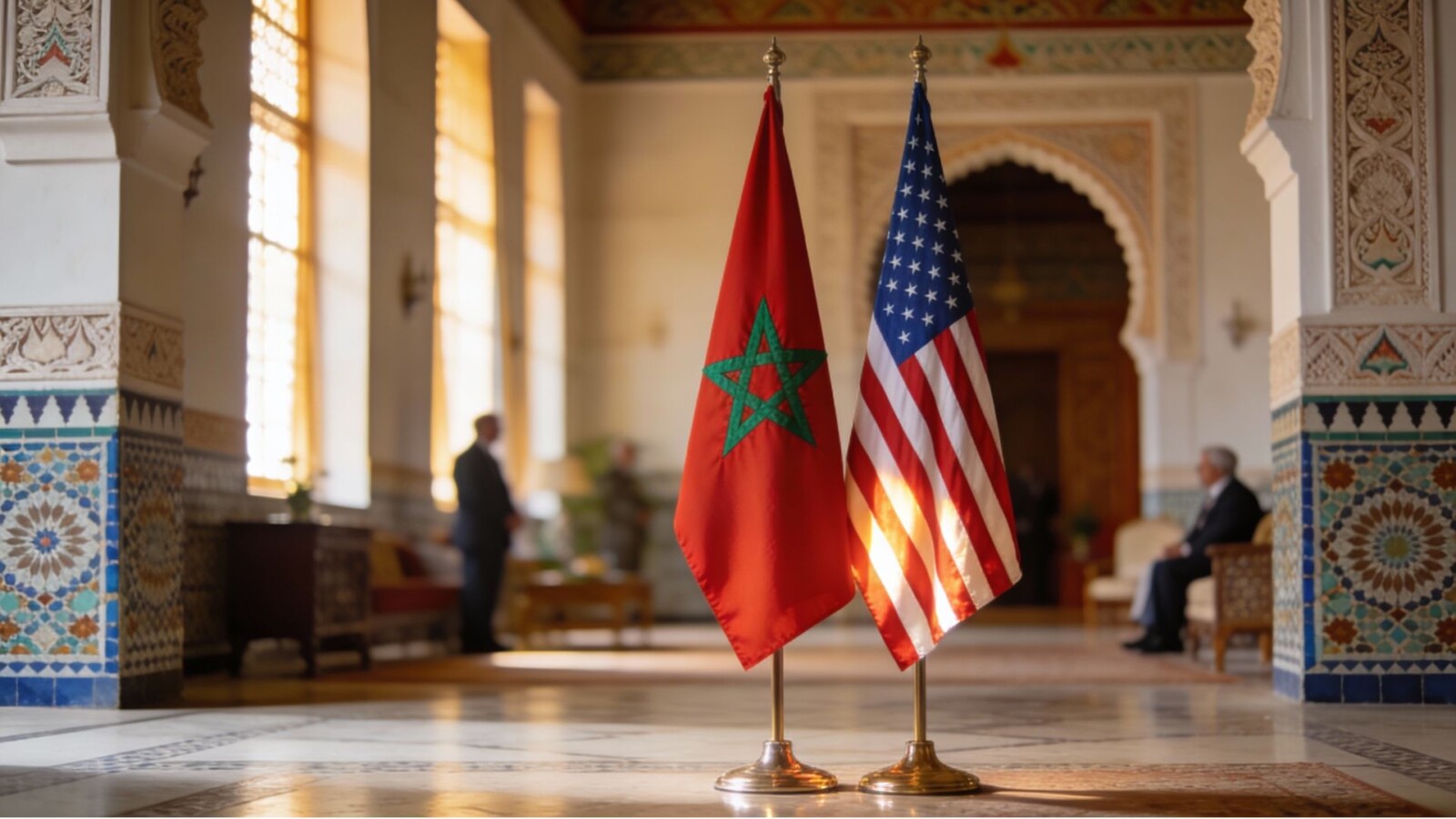
King Mohammed VI just accepted an invitation that positions Morocco at the center of a new international diplomatic architecture.
The announcement came Monday: Morocco will become a founding member of President Donald Trump’s newly launched Peace Board, an initiative designed to reshape conflict resolution approaches worldwide. For travelers and observers tracking Morocco’s evolving role on the global stage, this development signals something significant about the kingdom’s diplomatic trajectory and its implications for regional stability.
The invitation and its weight
President Trump’s invitation wasn’t extended broadly. The Peace Board is explicitly reserved for what the announcement describes as “a restricted group of internationally recognized leaders committed to a secure and prosperous future for coming generations.” Morocco made that list.
King Mohammed VI’s acceptance carries particular resonance given his position as Chairman of the Al-Quds Committee, the Organization of Islamic Cooperation body responsible for safeguarding Jerusalem’s Islamic heritage. That dual role positions him uniquely among world leaders invited to participate in Middle East peace efforts.
The Peace Board itself will take the form of an international organization with a mandate focused on promoting stability, restoring governance, and ensuring lasting peace in conflict-affected regions. Participation comes only through direct invitation from the American president, creating an exclusive diplomatic club with Morocco now counted among its founding members.
Morocco’s diplomatic evolution
This invitation reflects a trajectory that has been building for years. Morocco’s 2020 normalization agreement with Israel, brokered during Trump’s first administration, established the kingdom as a willing participant in reshaping Middle Eastern diplomacy. The Peace Board membership extends that positioning into a more formalized institutional framework.
The kingdom has consistently maintained what might seem like contradictory stances: strong support for Palestinian statehood alongside normalized relations with Israel. Monday’s announcement reiterated Morocco’s commitment to “a just, comprehensive, and lasting peace in the Middle East, enabling the establishment of a Palestinian state within the 1967 borders with East Jerusalem as its capital, living side by side in peace with Israel.”
That balancing act has become Morocco’s diplomatic signature. It allows the kingdom to engage with Israeli economic and tourism partnerships while maintaining credibility within the Arab and Islamic worlds. The Peace Board membership suggests this approach has earned rather than cost international standing.
Practical implications for regional dynamics
The announcement coincided with news that Morocco welcomes the launch of what’s being called the second phase of Trump’s comprehensive peace plan, along with the official formation of a National Committee for the Administration of Gaza as a temporary transitional body.
For travelers following regional developments, these intersecting announcements suggest Morocco will play an active role in whatever Gaza transition unfolds. The kingdom’s history of humanitarian engagement in Palestinian territories, combined with its now-formalized position in American peace architecture, positions it as a potential mediator or contributor to post-conflict stabilization efforts.
| Development | Morocco’s Role | Potential Impact |
|---|---|---|
| Peace Board founding membership | Institutional participant | Enhanced diplomatic influence |
| Al-Quds Committee chairmanship | Islamic world representative | Bridge between Western and Islamic perspectives |
| Gaza transition phase | Supporter of transitional administration | Possible humanitarian or governance contribution |
What this signals about Morocco’s positioning
The language surrounding the invitation is worth noting. The Foreign Ministry statement describes it as reflecting “the recognition of the enlightened leadership of His Majesty the King” and demonstrating “the trust that the Sovereign enjoys with both the President of the United States and the international community.”
Behind the formal diplomatic phrasing lies a practical reality: Morocco has successfully positioned itself as a credible partner for American foreign policy initiatives in a region where such partnerships often prove complicated. The kingdom offers stability in a neighborhood marked by volatility, a track record of managing religious diversity, and demonstrated willingness to engage in normalization processes that other Arab states have approached more cautiously.
For the United States, Morocco provides something increasingly valuable: a Muslim-majority nation with institutional Islamic authority that can participate in peace initiatives without immediately facing domestic legitimacy challenges. The Al-Quds Committee chairmanship gives Moroccan participation a religious credibility that purely secular partners cannot provide.
Tourism and economic dimensions
While Monday’s announcement focused on diplomatic architecture, the implications extend into domains that affect travelers directly. Morocco’s enhanced standing in American foreign policy circles typically correlates with strengthened bilateral relations across sectors including tourism, investment, and cultural exchange.
The kingdom has been pursuing aggressive tourism growth targets, aiming for 26 million annual visitors by 2030 as it prepares to co-host the FIFA World Cup with Spain and Portugal. Diplomatic alignment with major source markets supports those ambitions in ways that pure marketing cannot replicate.
American travelers considering Morocco can view this development as one more indicator of the country’s stability and international integration. Nations actively participating in peace architecture tend to prioritize the security and hospitality infrastructure that supports international engagement.
The broader picture
Morocco’s acceptance of Peace Board membership represents a logical extension of foreign policy choices made over recent years. The kingdom has consistently chosen engagement over isolation, pragmatism over ideological rigidity, and bridge-building over confrontation.
Whether this approach ultimately contributes to meaningful peace outcomes remains uncertain. Diplomatic initiatives in the Middle East carry long histories of raised hopes and disappointing results. The Peace Board’s effectiveness will depend on factors far beyond Moroccan participation.
But the invitation itself, and Morocco’s acceptance, confirms something concrete about the kingdom’s current standing. In a world where great power competition increasingly forces smaller nations to choose sides, Morocco has managed to maintain relationships across divides while enhancing rather than diminishing its diplomatic relevance.
For a country that has built much of its modern identity around openness, hospitality, and cultural bridge-building, Peace Board membership represents those values translated into institutional form on the global stage.
What role do you think Morocco should play in Middle East peace efforts, and how does the kingdom’s unique position as both an Islamic authority and a partner in normalization processes affect its potential contributions?