How to get to Fes: trains, flights, buses and driving tips
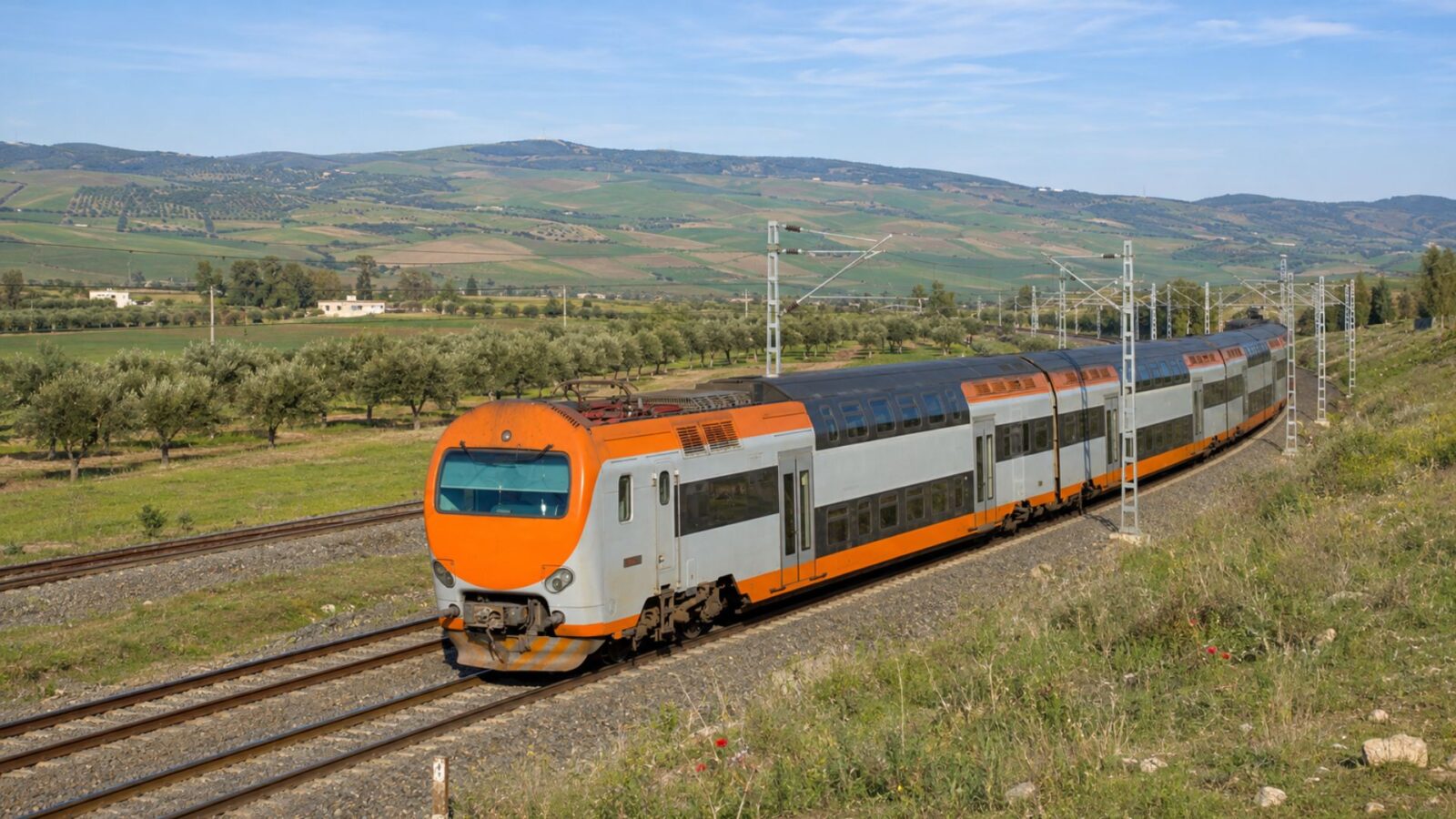
The first thing most travelers notice about Fes is not a minaret or a gate but the moment the train slows past olive groves and the city’s ochre walls slide into view. Getting to Fes is easier than its medieval reputation suggests. Direct trains run from Casablanca, Rabat and Tangier, Fes-Saïss Airport handles flights from Europe, and comfortable CTM buses link the city with Chefchaouen and Marrakech. The real puzzle is the last mile into a medina where cars simply cannot go. Once you know your route, our complete guide to visiting Fes helps you plan everything that happens after you arrive.
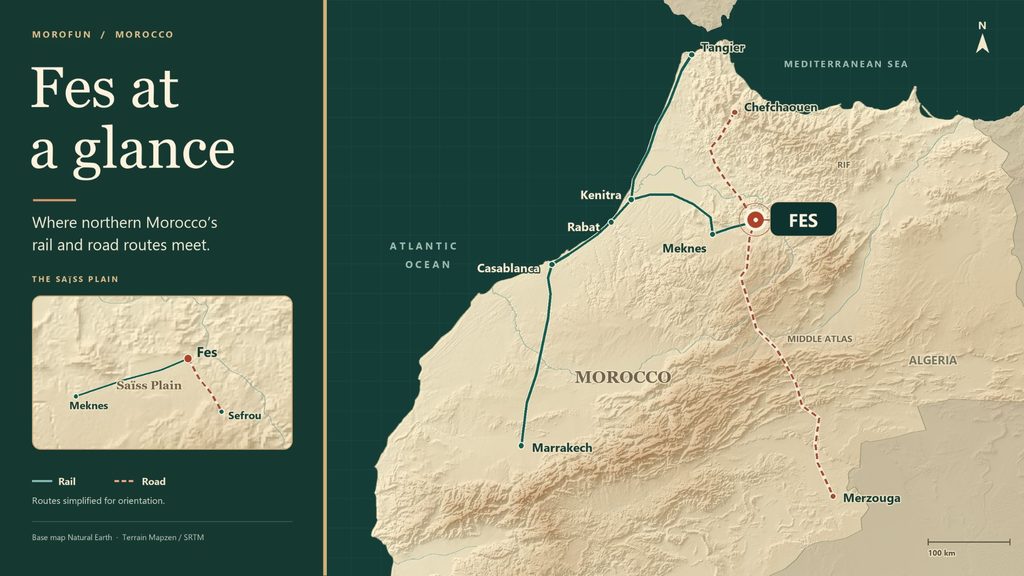
Fes at a glance: how the city connects
Fes sits in the fertile Saïss plain of northern Morocco, roughly halfway between the Atlantic coast and the Middle Atlas. For more than a thousand years that position made it a crossroads for caravans, scholars and pilgrims. Today the same geography makes it a natural hub for rail and road.
| From | Best option | Typical time | Rough cost |
|---|---|---|---|
| Casablanca | Train | 3 h 45 to 4 h | $10 to $30 |
| Rabat | Train | 2 h 30 to 3 h | $8 to $25 |
| Tangier | Al Boraq + train via Kenitra | About 3 h 30 | $20 to $45 |
| Marrakech | Train | About 7 h | $20 to $45 |
| Chefchaouen | CTM bus or private driver | About 4 h | $8 to $80 |
| Merzouga | Tour, bus or car | 7 to 9 h | Varies widely |
Fares on Moroccan trains now change with demand, so booking a few days ahead usually saves money. Treat these figures as a planning range rather than a quote.
Arriving by train: the most relaxing way in
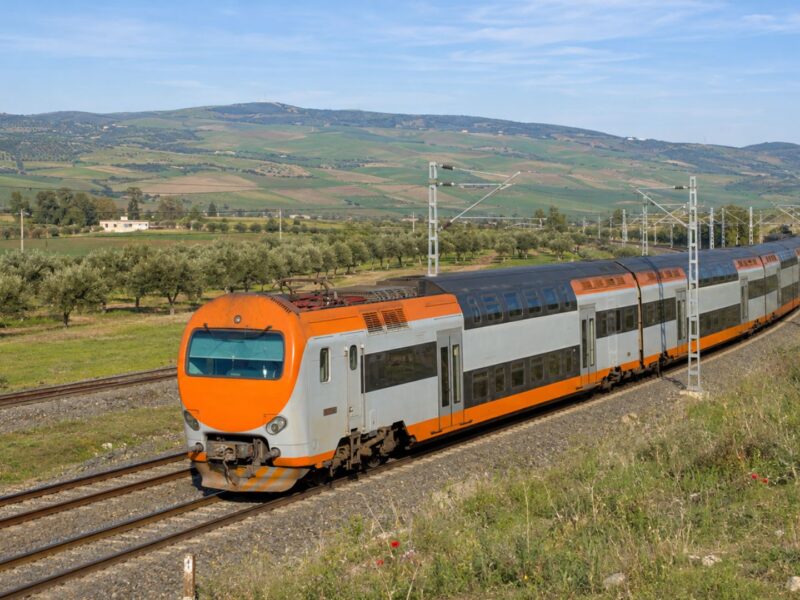
If you ask frequent Morocco travelers how they reach Fes, most will say the train. ONCF, the national rail company, runs regular Al Atlas services from Casablanca and Rabat, and the ride is pleasantly unhurried. You watch wheat fields, cactus hedges and small farm towns roll past while vendors sometimes wander the aisles with coffee and snacks.
From Tangier you have two choices. The fastest is the Al Boraq high-speed train to Kenitra, where you change to a conventional train east to Fes. The whole trip takes about three and a half hours. A handful of direct trains follow the classic line in a little over four hours, which suits travelers who would rather not juggle a connection with luggage.
Coming from Marrakech takes patience. The trip is roughly seven hours, which makes sense only if you enjoy long rail journeys or want to avoid a domestic flight.
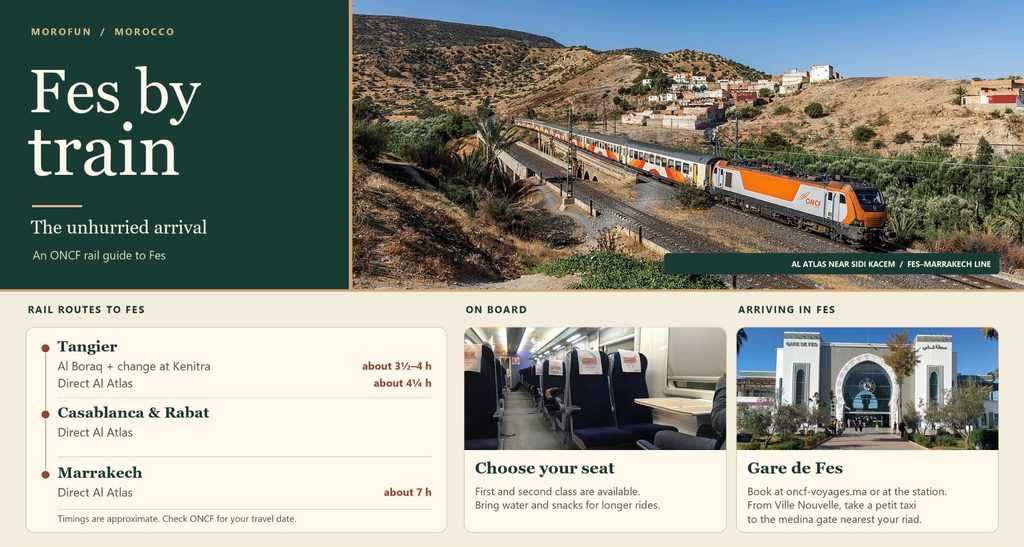
A few practical points make the experience smoother:
- Buy tickets on the official ONCF site or at the station. Foreign cards are sometimes rejected online, so keep a backup card or buy at the counter the day before.
- Consider first class on longer runs. It costs a bit more but gives you a reserved seat in a quieter, air-conditioned compartment.
- Fes station is in the Ville Nouvelle, not the medina. A red petit taxi will take you to the medina gates for a small fare. Insist on the meter.
Flying into Fes-Saïss Airport
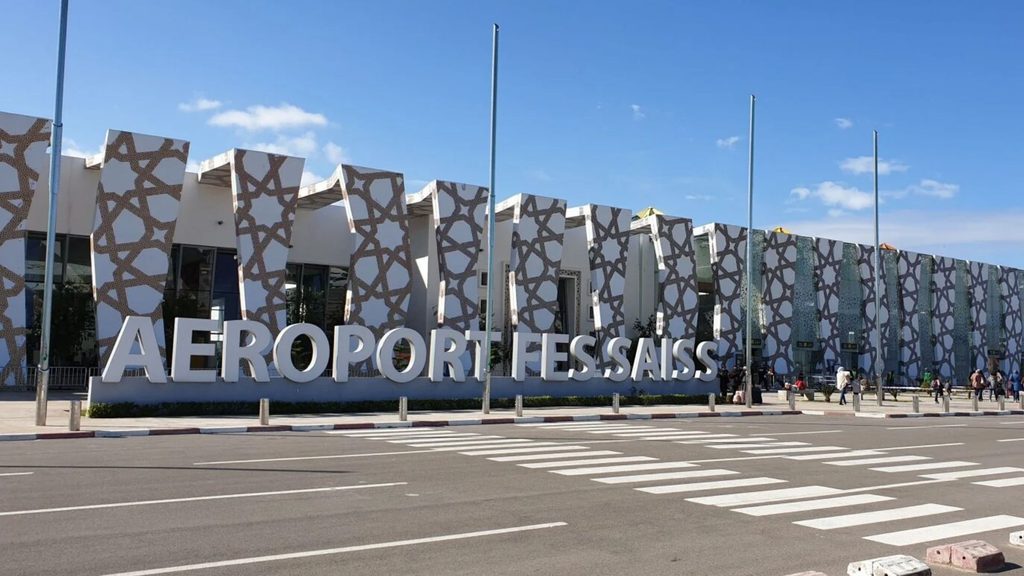
Fes-Saïss Airport (FEZ) sits about 15 kilometers south of the city. It mainly receives flights from Europe, including low-cost carriers, along with domestic and regional routes. There are no nonstop flights from the United States, so American travelers usually fly into Casablanca on Royal Air Maroc and either connect on a short domestic flight or take the train north.
From the arrivals hall you can take a taxi straight to the medina. Expect to pay roughly 150 to 200 dirhams, a little more at night. A city bus links the airport with the train station for a few dirhams, but it is awkward with suitcases and you will still need a taxi afterward. If you arrive late, ask your riad to arrange a pickup. Someone holding a sign with your name feels like a small luxury after a long day of travel.
Taking the bus: cheap, reliable and surprisingly comfortable
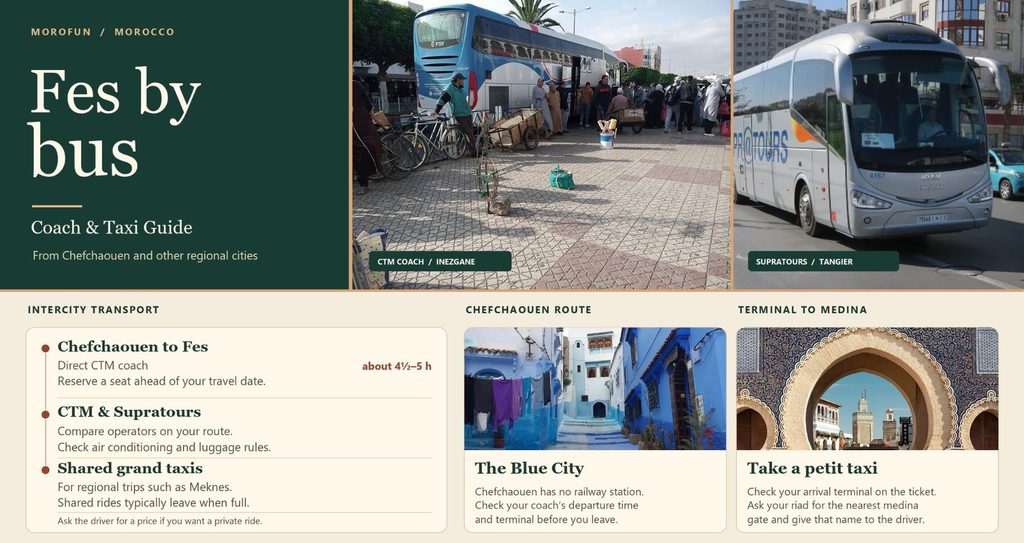
Buses fill the gaps that trains do not cover, especially from Chefchaouen, which has no railway. CTM is the operator most travelers trust, with assigned seats, air conditioning and a proper luggage hold. Supratours, a partner of ONCF, also runs coaches on several routes.
The Chefchaouen to Fes run takes about four hours through green Rif foothills and is one of the most scenic bus rides in the north. Buy your ticket a day ahead in busy months, because seats on this route sell out. CTM has its own station in Fes, and a short petit taxi ride connects it to the medina.
Grand taxis, the shared sedans you see waiting at city stations, are another option for shorter hops such as Meknes. They leave when full, so travelers in a hurry sometimes pay for the empty seats and ride alone.
Driving to Fes and parking near the medina
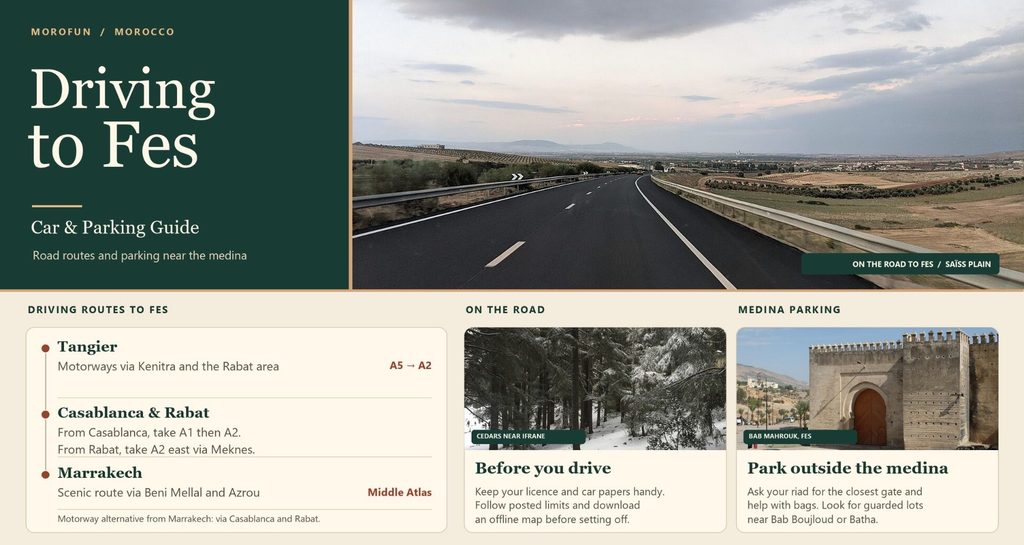
Renting a car makes sense if Fes is one stop on a wider road trip. Toll motorways link Fes with Casablanca, Rabat and Tangier, and the drives take roughly three to four hours on smooth, well-signed roads. Routes south across the Middle Atlas toward the desert are slower but spectacular, with cedar forests near Ifrane and Azrou.
The challenge starts at the city walls. Fes el-Bali is one of the largest car-free urban areas in the world, and no vehicle will get you to your riad door. Guarded parking lots sit near the main gates such as Bab Boujloud, Bab Ftouh and R’cif. Attendants charge a modest daily fee, and your riad can usually send someone with a handcart to collect your bags.
A few driving tips are worth knowing:
- Police checkpoints are common and speed limits are enforced, so keep your passport, license and rental papers within reach.
- Avoid driving inside the city during rush hour, when traffic around the Ville Nouvelle can be chaotic.
- Use an offline map, but trust your riad’s directions to the right gate more than your GPS.
The last mile: reaching your riad inside the medina
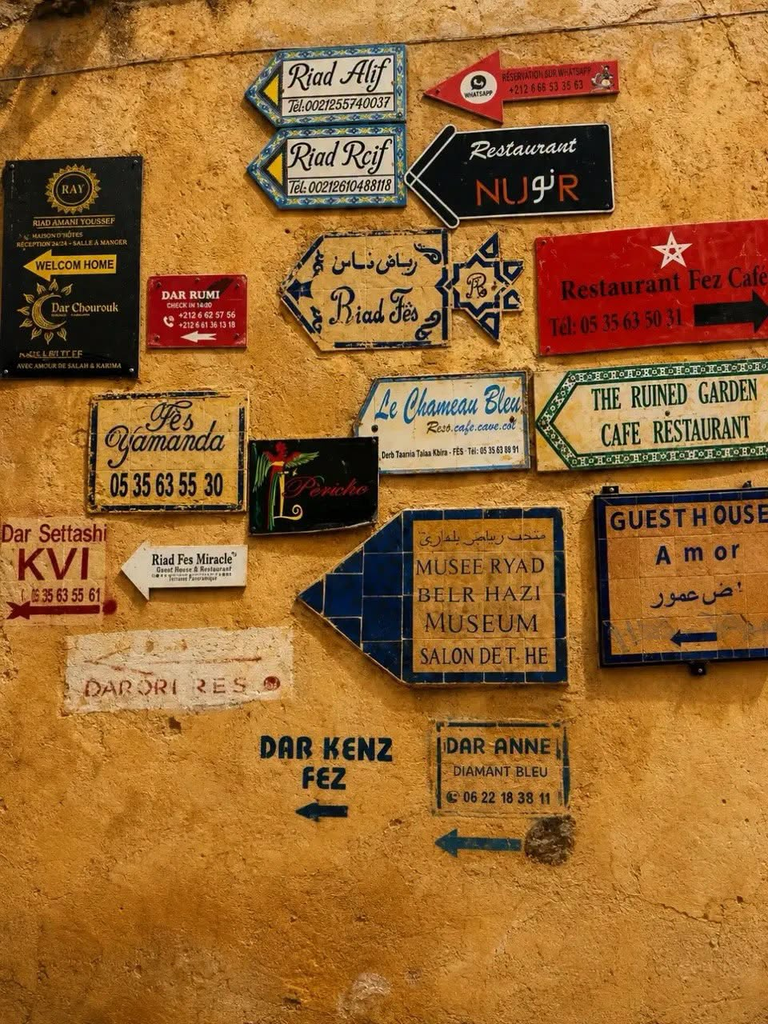
Every route into Fes ends the same way. A taxi drops you at a gate, the noise of the street fades and you step into lanes so narrow that donkeys still carry goods through them. This is where first-time visitors feel lost before they have even unpacked.
The simplest fix is to ask your riad to meet you at a named gate or landmark. Many hosts send a staff member for free or for a small tip. You will also meet young men offering to guide you or carry your bags. A polite “no, thank you” is usually enough, but if you accept help, agree on a price first. Twenty to thirty dirhams is fair for a short walk with luggage.
Choosing the route that fits your trip
There is no single best way to reach Fes, only the way that fits your pace. Rail suits travelers who want to arrive rested and read a book along the way. A car gives freedom to linger in the Middle Atlas. Buses keep costs low and connect the blue lanes of Chefchaouen with the old imperial capital in an easy afternoon.
What matters more is where you land at the end of the journey. A riad near the right gate can turn a confusing arrival into a calm one, so it pays to look at the best areas to stay in Fes before you lock in your tickets.
So which way would you choose to arrive in Fes: the slow train through the wheat fields or the open road over the Middle Atlas?